Seated Windshield Wipers On A Chair
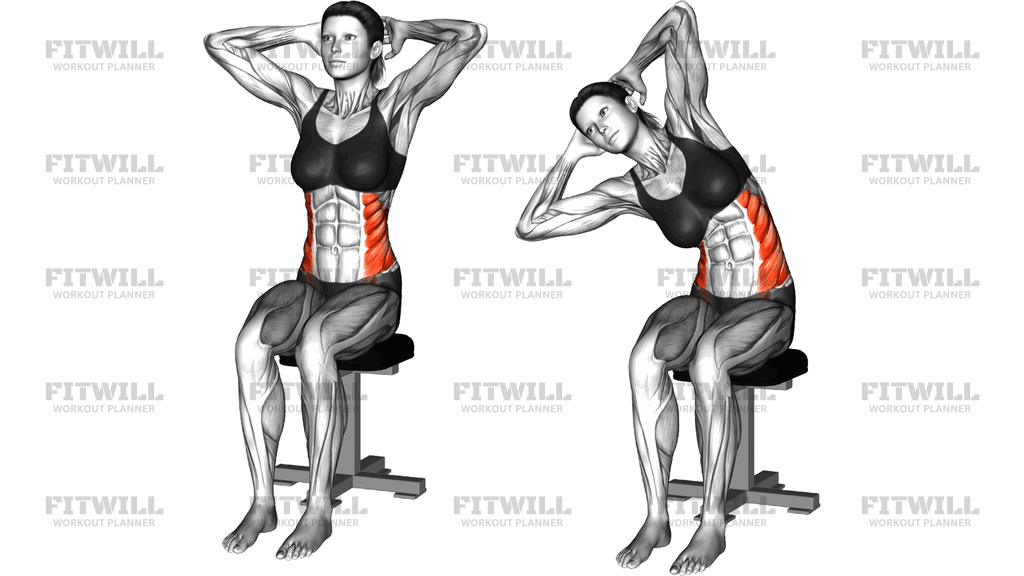
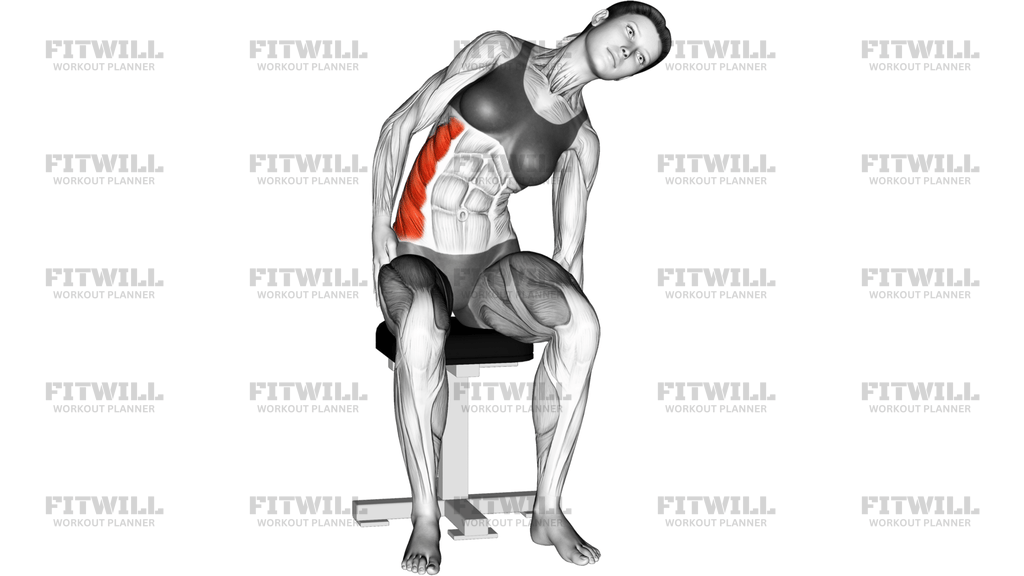
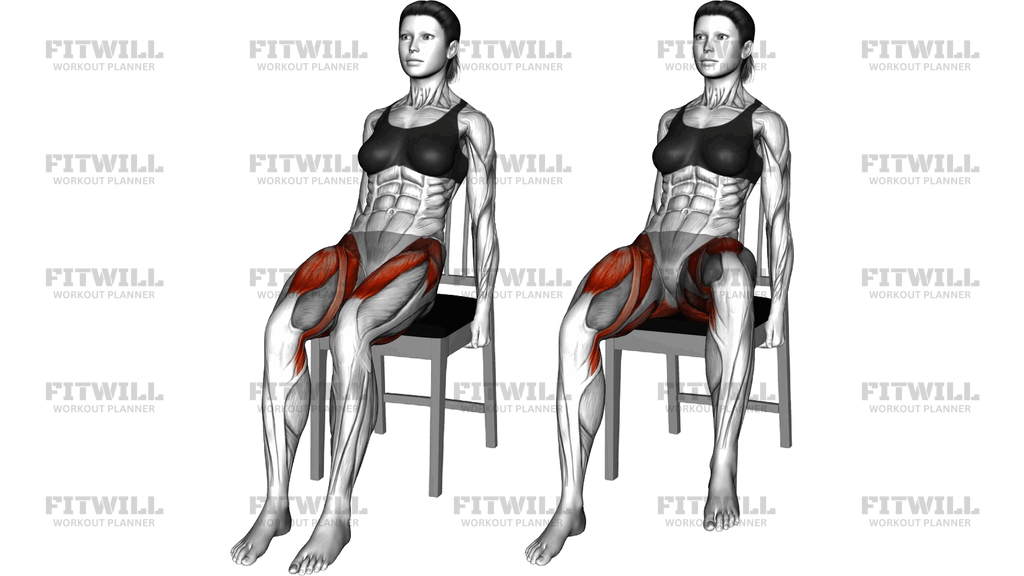
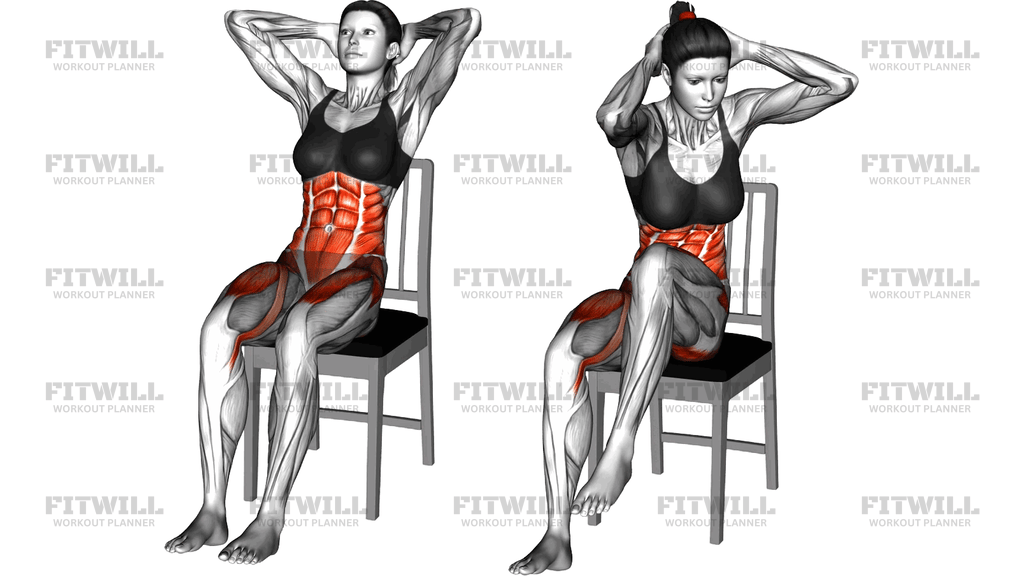
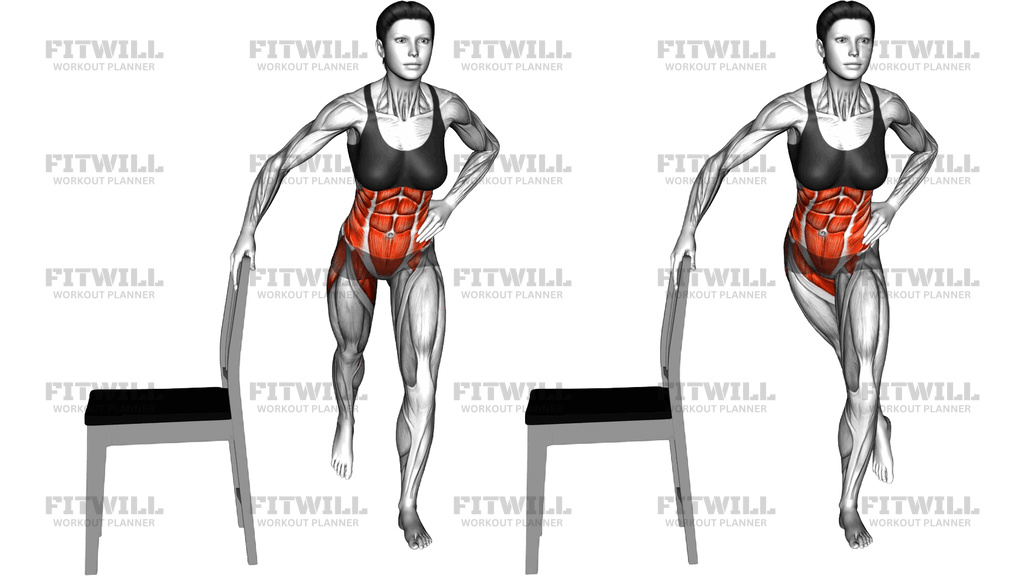
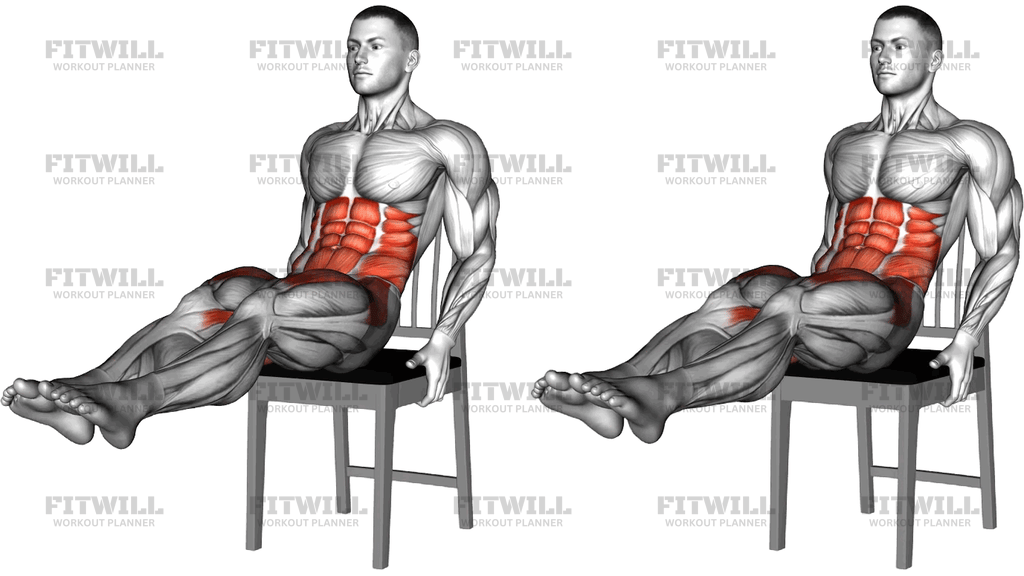
Seated Windshield Wipers On A Chair is a core rotation exercise performed from a sturdy chair. You sit near the front edge, grip the sides of the seat for support, lean your torso back slightly, and hold both legs extended straight out in front of you with the feet off the floor. From there, you sweep both legs together from side to side like the wipers on a car windshield, keeping the legs elevated the entire time. Just holding that extended-leg position already demands a lot from the abdominal wall; the side-to-side sweep is what shifts the emphasis into the obliques.
This movement is especially useful for people who find lying windshield wipers or hanging leg swings too aggressive on the lower back or shoulders. The chair removes gravity's full pull on the legs, so you can train rotational core control with far less spinal load. It also suits desk workers and beginners who want to build midsection strength without getting down on the floor, as well as anyone rehabilitating general core endurance who has been cleared to rotate against light resistance.
The primary muscles at work are the obliques on both sides of the waist, which control the rotation and slow the legs down as they cross to the far side. The rectus abdominis and deeper core muscles brace continuously to hold the torso still, while the hip flexors and quadriceps work hard simply to keep the legs extended and lifted. The upper body stays relatively passive, but the grip on the seat and the stabilized shoulders carry real isometric tension throughout the set.
Setup quality determines whether this exercise trains your abs or your joints. Sit close enough to the front edge that your thighs clear the seat completely, but keep enough of your hips on the chair that you feel stable. Your hands should press firmly down into the sides of the seat, not just rest there, because the arms anchor the torso while the legs move. A slight backward lean is normal and expected, but your chest should stay proud and your upper back should not collapse.
To execute it well, think of the sweep coming from your waist rather than from momentum in the feet. Lower the legs a few degrees toward one side, feel the opposite oblique engage to check the movement, then sweep smoothly to the other side. The range only needs to be as wide as you can control without the shoulders twisting or the hips lifting off the seat. Slower, smaller sweeps beat fast, floppy ones every time.
Because the legs stay extended and unsupported, this is a harder exercise than it looks. Start with short sets of controlled sweeps and a modest range of motion, and only widen the arc once you can stop the legs at any point without wobbling. If you feel the work shifting into your lower back or neck, shorten the range or bend the knees slightly until your midsection is strong enough to handle the full version.
[ Workout Log & Planner ]
Put your next workout in Fitwill
Keep your plan and training log ready when you are.


Instructions
- Sit on a sturdy chair with your buttocks near the front edge and your hands gripping the sides of the seat, fingers wrapped around the edge for a firm hold.
- Lean your torso back slightly, keep your chest up, and extend both legs straight out in front of you so your thighs clear the front of the seat.
- Lift your feet off the floor and squeeze your quads so the knees stay straight and the legs stay together.
- Brace your abs firmly, as if preparing for a light punch, and press down through your hands to lock your shoulders in place.
- Sweep both legs together toward one side, rotating through your waist while keeping your upper body facing forward.
- Pause briefly at the end of the arc, then sweep the legs smoothly across the middle to the opposite side.
- Continue alternating side to side in a controlled windshield-wiper rhythm, keeping the feet at a consistent height throughout.
- Exhale as the legs sweep across the midline and inhale as they reach the far side of each arc.
- When finished, lower both feet to the floor together before releasing your grip on the seat.
Tips & Tricks
- The most common mistake is letting momentum do the work. If the legs swing loosely, the obliques never get a real challenge, so slow the tempo down until you can stop the legs at any point in the arc.
- Keep your toes pulled back and your knees fully straight. Bent, drooping knees usually mean your hip flexors have taken over because your abs have stopped pulling their weight.
- Watch your shoulders. If one side of your chest twists toward the moving legs, your torso is rotating instead of staying anchored, so press harder into the seat with both hands.
- Do not let your hips slide forward on the seat as the set gets hard. If you feel yourself sinking, stop the set, reset to the front edge, and resume with better positioning.
- Keep the arc narrower than you think you need at first. A wide sweep with the legs extended creates a long lever arm, and your lower back will usually complain before your obliques do.
- Breathe steadily instead of holding your breath. Holding it on each sweep spikes tension and makes the set feel far harder than it should.
- If the extended-leg version is too demanding, bend the knees to roughly 90 degrees. This shortens the lever and lets you practice the same rotation pattern with less strain.
- Grip the seat from the sides, not the front. Holding the sides keeps your elbows slightly behind your torso and gives you a much more stable anchor for the rotation.
Frequently Asked Questions
What muscles does Seated Windshield Wipers On A Chair work?
The obliques do most of the rotational work, while the abs brace to keep the torso still. The hip flexors and quads work hard to hold the legs extended and lifted off the floor.
Is this exercise suitable for beginners?
Yes, as long as you shorten the lever and limit the range. Beginners should bend the knees and sweep through a narrow arc before progressing to straight legs.
Why do my hip flexors cramp during Seated Windshield Wipers On A Chair?
Holding straight legs off the floor loads the hip flexors heavily, and they fatigue quickly if your abs are not sharing the load. Bend the knees slightly and keep the sets short while your strength builds.
How is this different from lying windshield wipers?
The seated position supports your torso and reduces the load on the lower back, and your hands anchor you on the seat instead of your arms being spread on the floor. It is a more accessible variation with the same rotational pattern.
What kind of chair should I use?
Use a stable chair without wheels, ideally one heavy enough that it will not tip as your legs swing to the sides. Make sure the seat edge is padded enough to be comfortable under your thighs.
Should my shoulders rotate with my legs?
No, your chest and shoulders should stay facing forward while only the legs and waist rotate. If your upper body twists, you are losing the oblique emphasis and straining your spine.
How high should my feet be during the sweep?
Hold your feet a few inches off the floor at a consistent height, rather than letting them dip toward the ground on each side. Consistent height means your core, not gravity, controls the legs the whole time.
Can I do Seated Windshield Wipers On A Chair every day?
Because the resistance is your own body weight, frequent practice is reasonable, but treat it like any strength work. Two to four focused sessions per week with rest days will produce better progress than daily fatigue-chasing sets.
What can I use if I do not have a suitable chair?
A sturdy bench, the edge of a bed with a firm mattress, or a stable box works the same way as long as your thighs can hang clear of the edge. You can also perform the rotation lying on your back with knees bent if no seat is available.
Is it safe for my lower back?
For most people, yes, because the chair supports the torso and the range is self-limited. Stop if you feel sharp pain rather than muscular effort, and keep the arc small if you have a history of back sensitivity.