Seated Lean Back Cycling On A Chair
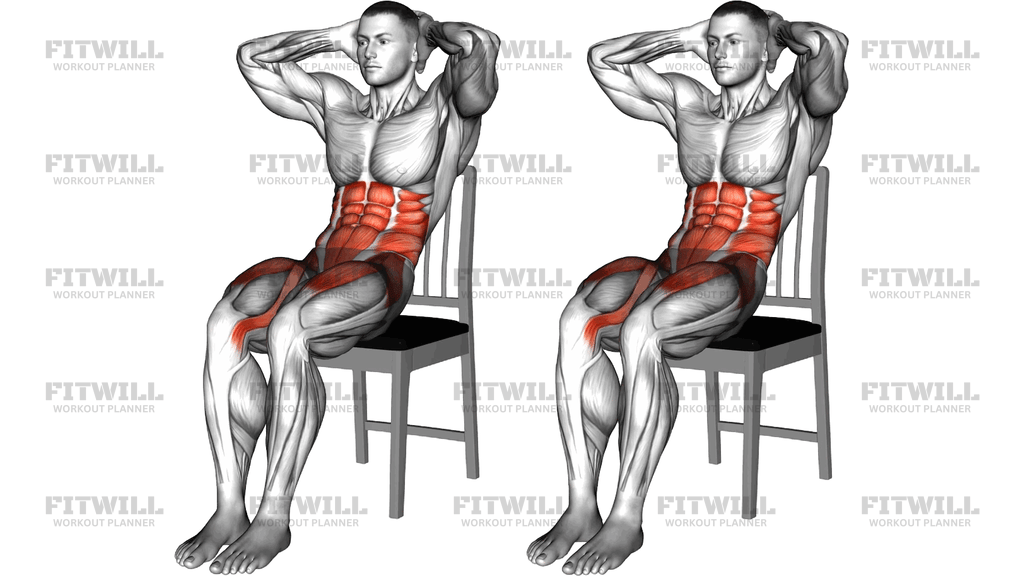
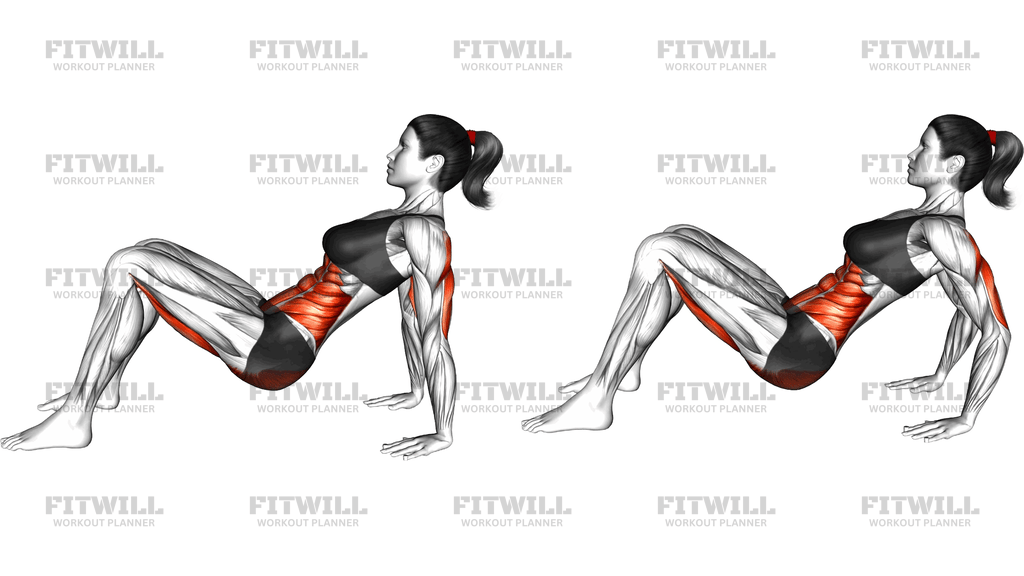
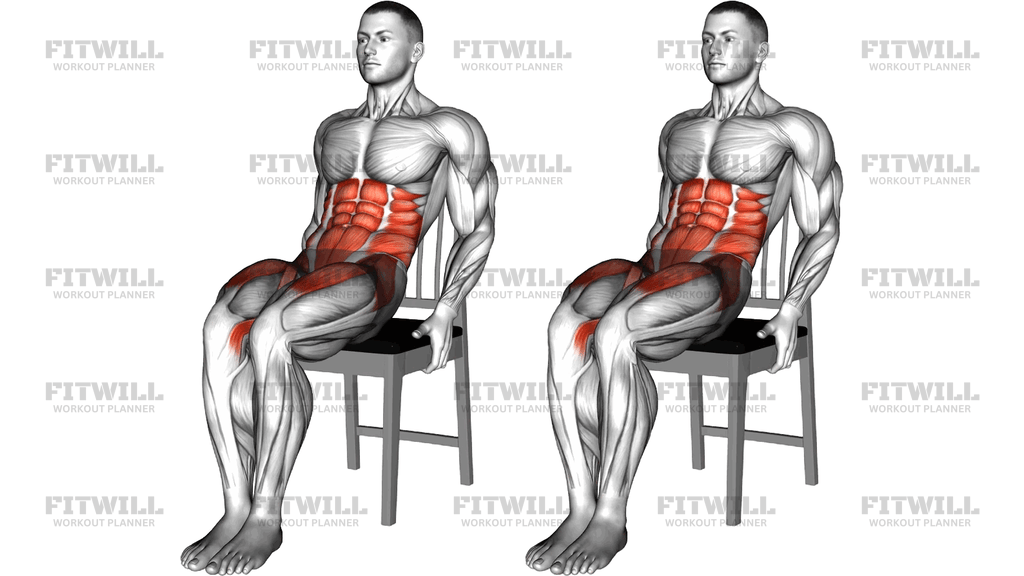
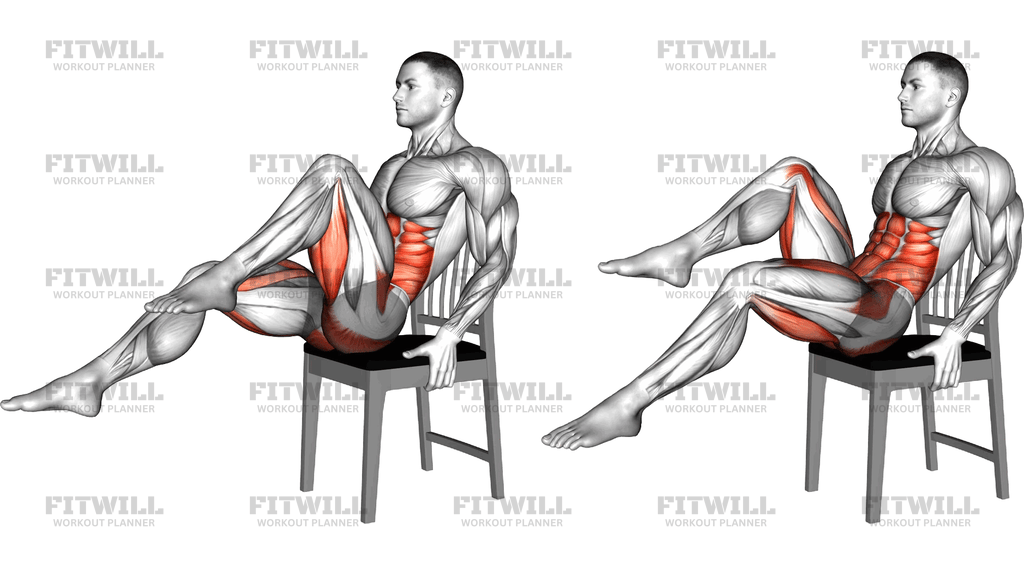
Seated Lean Back Cycling On A Chair is a core and hip flexor drill performed entirely on a sturdy chair. You sit near the front edge, grip the sides of the seat for support, lean your torso back, lift both feet off the floor, and pedal your legs in the air as if riding an invisible bicycle. The chair replaces the floor, which makes the position easier to hold than a mat-based reverse crunch or hollow-body variation while still demanding real control from your trunk.
The main work comes from the hip flexors driving each leg forward and the abdominal wall holding your ribs, spine, and pelvis steady while the legs move. Your quads extend the knee on every pedal stroke, and your obliques work quietly to stop your torso from twisting as one leg and then the other lifts. Because the torso is leaned back but supported by the arms, the lower back is spared some of the loading it takes in floor versions, which is exactly why this variation suits people who find supine leg work uncomfortable.
Setup matters more than it looks. A chair without wheels, with a stable base and enough weight to stay planted, keeps the movement safe. Sitting too far back on the seat gives you nothing to grip and rounds your lower back; perching too close to the edge with no brace makes you tip forward. Aim for a position where your hands can press down into the seat on either side of your hips and your torso can lean back at roughly 45 degrees without slumping.
Execution is about rhythm and control, not speed. Extend one leg out long and low, then draw the opposite knee in toward your chest, and keep trading positions in a smooth pedaling cycle. If your lower back arches and your hips tilt forward, your legs are extending too far or dropping too low — shorten the range until your trunk stays braced.
This exercise fits well into home workouts, desk-bound training breaks, warm-ups for leg days, and rehab-style or beginner core circuits. It needs no gear beyond a chair, takes up almost no space, and scales easily: slow the tempo for more control work, or lengthen the leg extension for a tougher version.
A few practical points keep it honest. Breathe steadily instead of holding your breath, keep your shoulders relaxed away from your ears even though your arms are supporting you, and stop the set when your lower back starts taking over or your pedaling turns jerky. Quality repetitions with a quiet, stable trunk beat a long set performed with a swaying torso.
[ Workout Log & Planner ]
Put your next workout in Fitwill
Keep your plan and training log ready when you are.


Instructions
- Place a sturdy, armless chair on a non-slip floor and check that it cannot slide or rock.
- Sit on the front third of the seat and grip the front or side edges of the seat firmly with both hands, fingers pointing forward.
- Lean your torso back to about 45 degrees, keep your chest lifted, and draw your shoulder blades down so your shoulders are not shrugging into your ears.
- Brace your abdominal wall as if bracing for a light punch, and tilt your pelvis slightly back so your lower back stays long rather than arched.
- Lift both feet off the floor with your knees bent, then extend one leg forward and slightly down while pulling the opposite knee in toward your chest.
- Switch positions in a smooth pedaling cycle, trading the extended leg for the bent knee each stroke, as if cycling in mid-air.
- Keep the pedal path tight and controlled — the extended leg should not drop below a point where your lower back starts arching or your hips tilt forward.
- Exhale as each knee drives in, inhale as the leg extends, and keep the breathing rhythm continuous throughout the set.
- When you finish, slow the cycle, bring both knees in together, and lower your feet to the floor one at a time before releasing your grip on the seat.
Tips & Tricks
- If the chair slides forward, put it against a wall — the forces push you back and the chair forward on every knee drive.
- A common mistake is pedaling fast and letting momentum swing the torso. Count a two-second beat per leg change; if you cannot keep the count, slow down.
- Watch for the ribs flaring and the lower back arching when the leg extends. Fix it by not extending the leg as far out — a shorter pedal stroke with a flat trunk beats a longer one with a sway.
- Press your hands down into the seat rather than only gripping it. That downward pressure recruits your lats and triceps and takes strain off your shoulder joints.
- Keep your head in line with your leaned-back torso. Craning the chin up to look forward is a frequent habit that fatigues the neck before the core is challenged.
- Point your toes lightly or keep the foot neutral, but do not let the extended leg go limp — an active foot helps you track the pedal path cleanly.
- If one knee drifts outward as you pull it in, your hip is rotating. Aim the knee straight toward your chest and let the obliques do the stabilizing.
- Start with shorter sets of 15-20 seconds and build time gradually; the hip flexors usually fatigue before the abs in this position.
- Avoid doing this on a chair with wheels, a folding chair, or anything with a loose seat — the setup only works when the chair is dead stable.
Frequently Asked Questions
What muscles does Seated Lean Back Cycling On A Chair work?
The hip flexors drive each pedal stroke, while the abs hold the leaned-back trunk steady and the quads extend the knee. The obliques contribute by keeping the torso from rotating as the legs alternate.
Is Seated Lean Back Cycling On A Chair good for beginners?
Yes, it is one of the more accessible leg-raise style core drills because the chair supports your upper body and reduces the load compared with floor versions. Beginners should keep the pedal stroke short and the tempo slow.
Why lean back against a chair instead of doing cycling on the floor?
The chair supports the torso through the arms, which makes it easier to keep the lower back flat and controlled. It is a useful step for anyone who struggles to hold a supine hollow position or dislikes pressure on the tailbone.
How low should my extended leg go during the pedal cycle?
Extend it only as far as you can while keeping your lower back long and your pelvis still. The moment your back arches or your ribs flare, the leg has gone too low for your current control.
How long should I hold the cycling motion?
Start with 15-30 second sets and rest between rounds, aiming for a smooth, even rhythm. As control improves, build toward 45-60 seconds rather than adding speed.
What kind of chair should I use?
Use a stable, armless chair with a flat seat and no wheels, ideally placed against a wall. The seat edges need to be solid enough to grip and press into without flexing.
My lower back hurts when I do Seated Lean Back Cycling On A Chair. What should I change?
Shorten the range so the extended leg stays higher, and make sure you are tilting the pelvis slightly back and bracing the abs before the legs start moving. If discomfort persists, stop and choose a supported variation with both feet closer to the seat.
Can I substitute this exercise if I don't have a suitable chair?
The same cycling pattern can be done seated on a bench gripping the edge behind your hips, or on the floor with hands planted under the shoulders. The key is a stable surface that lets you lean back and support your torso with your arms.
Should my feet touch the floor during the set?
No — once the set begins, both feet stay off the floor for the whole cycling phase. If you need a break, finish the repetition with both knees drawn in, then set your feet down deliberately.
How is this different from regular seated knee raises on a chair?
Knee raises move both legs together through one path, while the cycling version alternates one leg extending as the other pulls in. That alternating pattern adds continuous hip flexor work and a stabilizing demand on the obliques.