Seated Side Bend On A Chair
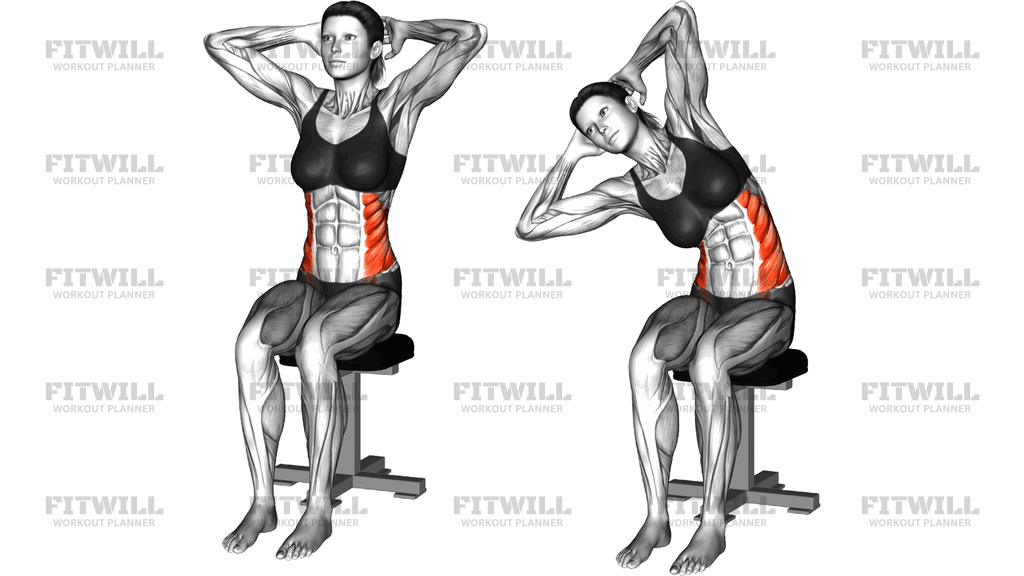
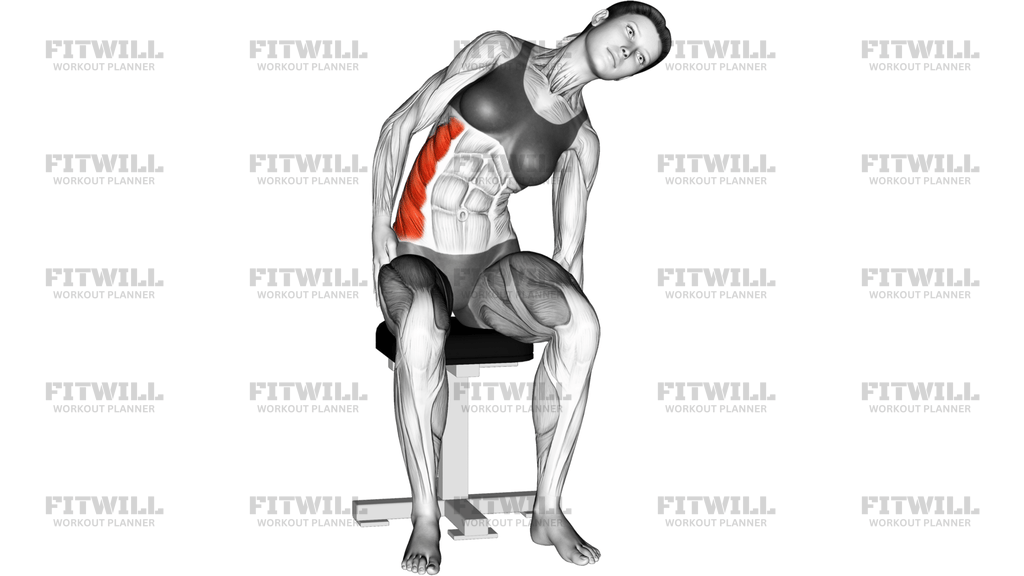
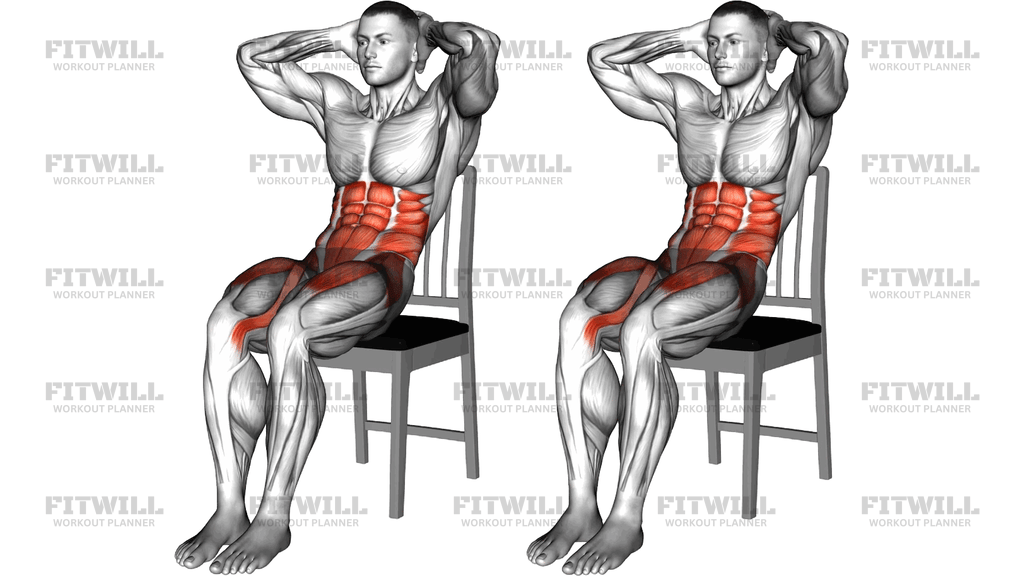
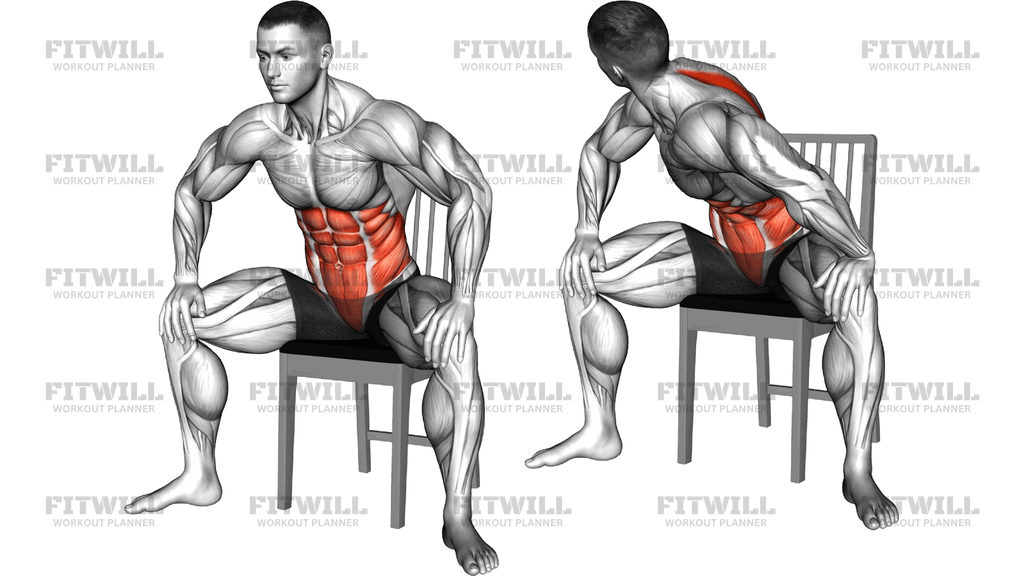
The Seated Side Bend On A Chair is a simple lateral flexion drill performed sitting upright on a chair with your hands placed lightly behind your head. From that tall, seated position, you lean directly out to one side, letting the elbow travel up and over while the opposite side of your waist lengthens, then return to center and repeat on the other side. Because the chair removes the balance and hip demands of a standing side bend, all of the motion comes purely from your spine and waist.
The primary muscles involved are the obliques on the side doing the shortening, while the obliques, quadratus lumborum, and small spinal muscles on the opposite side lengthen under a gentle stretch. The seated position also quietly works your postural muscles, since you have to keep your torso tall and square to the front as you bend sideways rather than twisting or collapsing forward.
This movement is especially useful for people who sit for long hours and feel stiff or compressed through the sides of the trunk, for beginners who want a low-intensity introduction to lateral core work, and for anyone who finds standing side bends difficult due to balance or hip issues. Office workers, older adults, and people easing back into training after time off tend to get the most immediate benefit from it.
Setup matters more than it looks. Sit toward the front half of the chair with both feet flat on the floor, hips square, and spine tall. If you slump or shift your hips during the bend, the waist stops being the pivot and you lose most of the effect. The hands-behind-head position should be light, with elbows wide, so your arms support the head without pulling the neck forward.
To execute it well, think of growing taller before you bend, then arc straight out to the side as if your ribs were sliding along a wall beside you. Keep both shoulders facing forward, both hips planted evenly on the seat, and the opposite glute from the side you are bending toward pressed into the chair. Bend only as far as you can keep that shape, pause briefly at the end range, then pull yourself back up through the same line.
As a practice, it works well as a movement break during the workday, a warm-up before more demanding core or rotational exercises, or a cool-down stretch after training. Move slowly, breathe steadily throughout, and treat the end range as a comfortable stretch or mild contraction rather than a position to force.
A few practical points keep this safe and effective. Never yank the head with your hands, avoid rounding forward or twisting as you bend, and keep the movement symmetrical by giving both sides equal work. If the chair feels unstable or has wheels, pick a sturdier seat, since you want nothing shifting underneath you as you lean.
[ Workout Log & Planner ]
Put your next workout in Fitwill
Keep your plan and training log ready when you are.


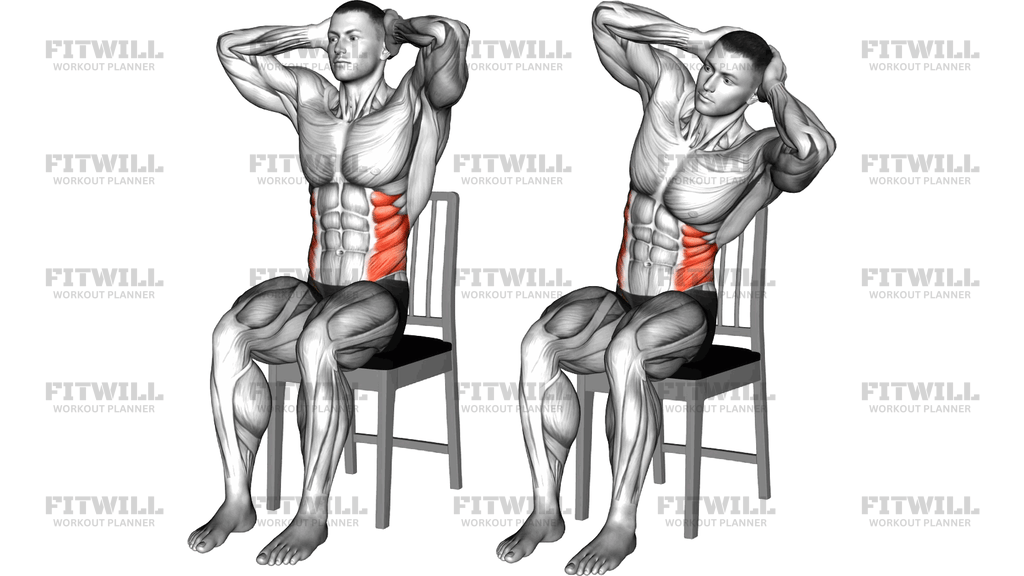
Instructions
- Sit sideways-free on a sturdy, armless chair: place both feet flat on the floor about hip-width apart, and sit up tall on the front half of the seat so your hips are higher than your knees.
- Place your hands lightly behind your head with your fingers near your ears and your elbows flared out wide to the sides.
- Brace your midsection lightly, square your shoulders and hips to the front, and lengthen your spine as if the crown of your head were being lifted straight up.
- Keeping your hips planted and facing forward, bend directly out to one side, letting that side's elbow rise while the opposite side of your waist lengthens.
- Continue the arc until you feel a clear stretch along the ribs and waist of the upper side, keeping both shoulders pointed forward and both glutes on the seat.
- Pause for one to two seconds at your end range without bouncing or twisting.
- Draw yourself back up to the tall, upright seated position by contracting the same side of your waist, staying on the same straight sideways path.
- Breathe in as you lengthen into the bend and breathe out as you return upright; never hold your breath mid-bend.
- Complete your repetitions on one side, then reset your posture, re-square your hips, and perform the same number of reps bending to the other side.
Tips & Tricks
- The most common mistake is drifting forward into a crunch instead of bending sideways; cue yourself to send the elbow out, not down toward the opposite knee.
- Check that the glute on the side you are bending away from stays pressed into the seat. If it lifts, your hips are tipping instead of your waist bending.
- Keep your fingers resting behind your head rather than laced and pulling. Pulling on the neck turns a waist exercise into a neck strain.
- Exaggerate the lengthening cue before each rep. A tall spine bends sideways cleanly, while a slouched spine just collapses.
- If your shoulders creep up toward your ears, consciously pull the elbows slightly back and down so the upper traps stay relaxed.
- Do not chase a huge range. A moderate, controlled arc with a square torso beats a dramatic lean where your ribs flare and twist.
- If the chair back is in the way of your elbow at the bottom of the bend, sit slightly further forward so the arm has room to travel freely.
- Use a chair without wheels or padding that shifts. A firm, stable seat keeps your hips level so both sides can work evenly.
- Alternate which side you start with between sessions, since the first side usually gets slightly better quality reps.
Frequently Asked Questions
Which muscles does the Seated Side Bend On A Chair work?
The obliques along the side of your waist do most of the work, with the quadratus lumborum and small spinal muscles assisting. The side you bend away from gets a lengthening stretch through the same area.
Is this exercise suitable for complete beginners?
Yes, it is one of the most accessible lateral core drills because the chair handles balance for you. Start with small, slow bends and build range only as the movement stays comfortable and controlled.
Should I hold my hands behind my head or cross them over my chest?
Hands lightly behind the head with elbows wide, as shown for the Seated Side Bend On A Chair, keeps your chest open and gives your arms a frame to follow. Just avoid pulling the head or neck with your hands.
Why do my hips lift off the chair when I bend?
That usually means you are bending too far or initiating from the hips rather than the waist. Sit a little taller, reduce the range slightly, and think of pressing both glutes down evenly as you lean.
How is this different from a standing side bend with a dumbbell?
The seated version has no external load and no balance demand, so it targets pure spinal side-bending and is far gentler on the lower back. It is better for stretching and motor control, while the loaded standing version builds strength through the same pattern.
How many repetitions should I do?
For a stretch or movement break, 8 to 12 slow bends per side with a brief pause at the top works well. If you use it as a warm-up, one or two controlled sets per side is plenty.
Can I do the Seated Side Bend On A Chair at my desk during the workday?
Yes, as long as your chair is stable and armless. Two or three short sets spread through the day are a practical way to loosen the sides of the trunk after long sitting.
What should I do if I feel pinching in my lower back?
Stop at a smaller range and refocus on keeping your hips square and your spine tall before bending. If discomfort persists, skip the movement and choose a gentler seated stretch that does not compress the same area.
Can I turn this into a strength exercise by holding a weight?
Holding weight while seated side bending is not recommended, since the chair back and seated hip position limit the safe path under load. If you want loaded side bending, progress to standing dumbbell side bends with a free range of motion.