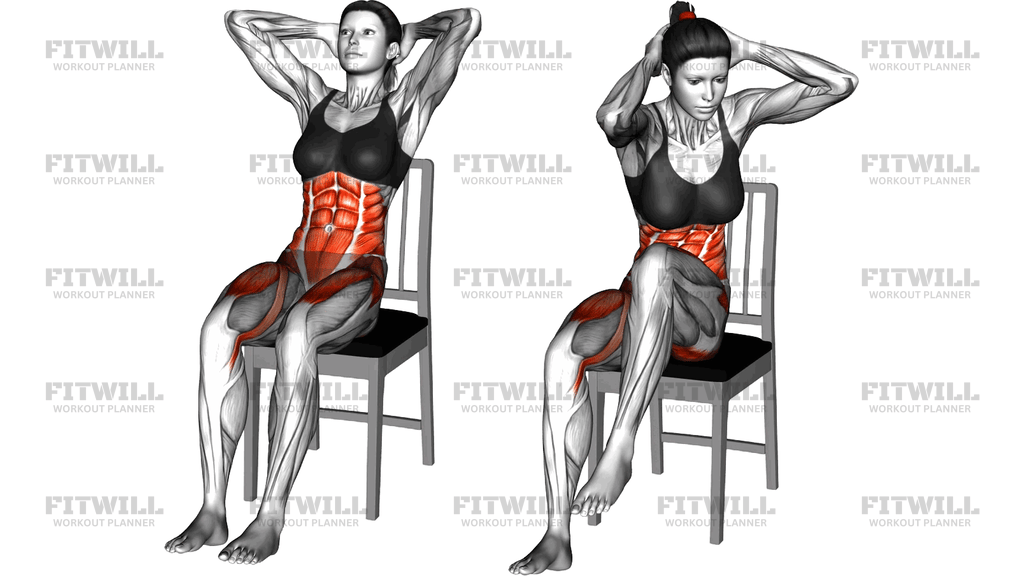
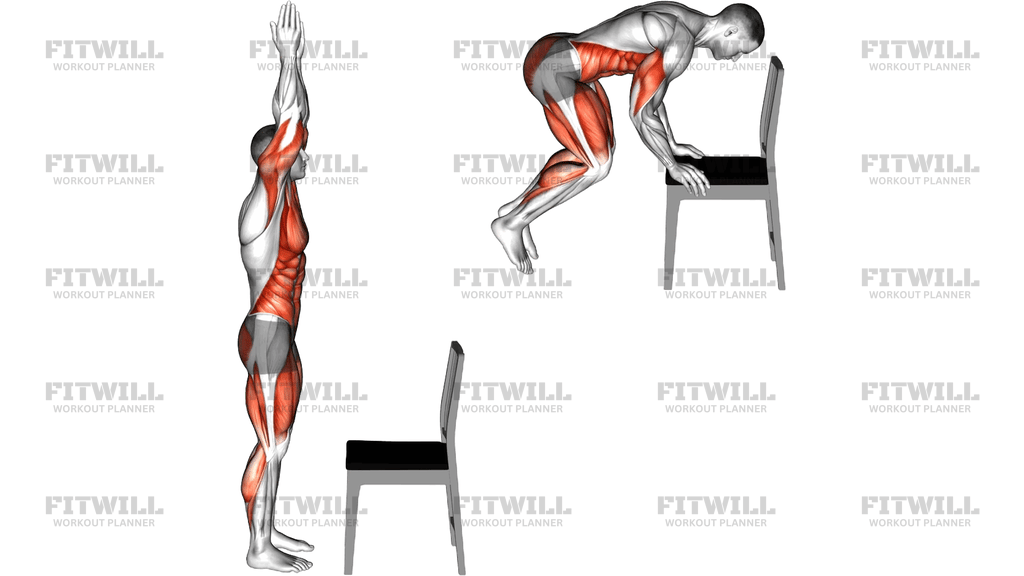
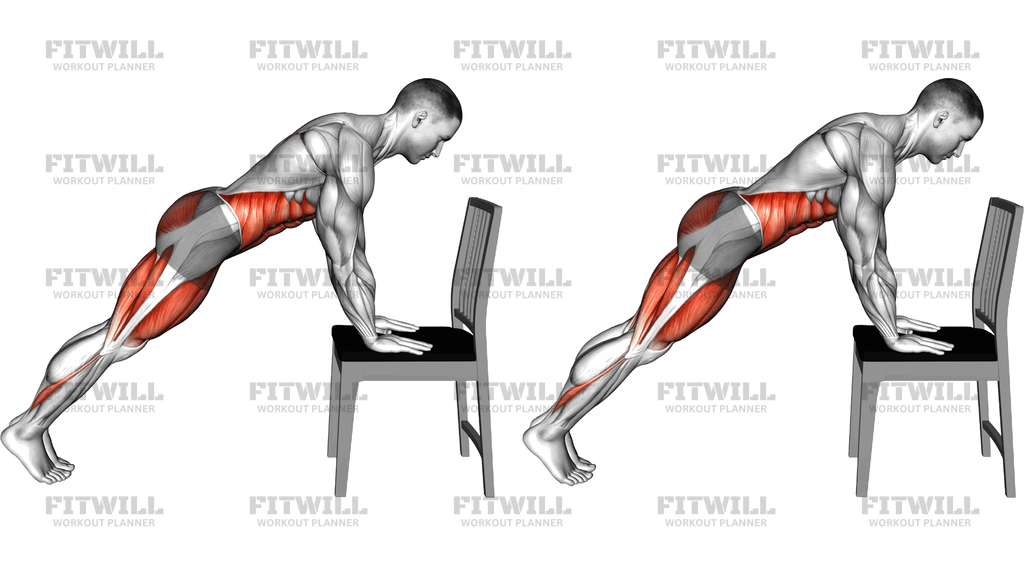
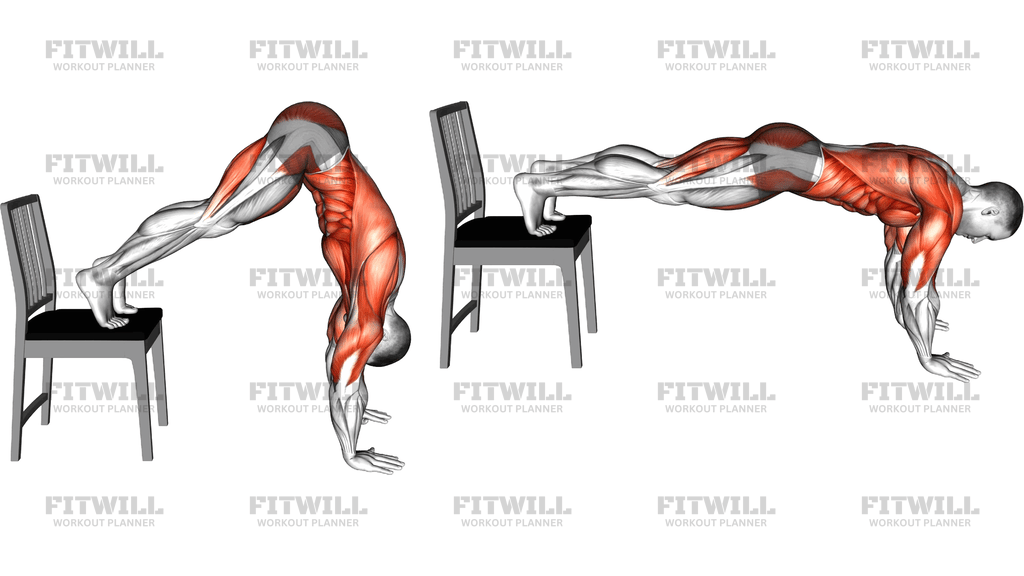
Seated Criss Cross Legs On A Chair
The Seated Criss Cross Legs On A Chair is a seated core exercise where you perch on the front edge of a chair, grip the sides of the seat, lean your torso back slightly, and extend both legs out in front of you so your feet hover above the floor. From there, you scissor the legs back and forth, crossing one over the other in a continuous alternating pattern. It looks simple, but holding your legs off the ground for the whole set is what makes it demanding.
Because you are seated rather than lying on your back, this is one of the few ab exercises that works well in an office, at home, or anywhere you only have a sturdy chair. The chair also changes the challenge compared to a floor criss-cross: with your torso more upright, your hip flexors have to hold the legs up against gravity while your abdominals brace to keep your trunk from collapsing or swinging.
The main work comes from the abs, which hold your spine steady and control the position of your trunk as the legs move underneath you. The hip flexors drive and support the lifted legs through every crossing, and the inner thighs contribute as the legs pass each other. Your hands gripping the seat provide balance only — if you find yourself pulling or slumping onto your arms, the legs are doing less and the set is losing its point.
Setup matters more than people expect. Sitting too far back on the chair removes the leverage your abdominals need, while sitting too far forward makes balancing on the tailbone the limiting factor. Aim to sit on the front third of the seat so your sit bones stay supported but your thighs clear the edge completely. A slight backward lean, around 15 to 20 degrees from vertical, gives you room for the legs to move without your heels dragging the floor.
This exercise suits people who want a low-equipment core drill, desk workers building short movement breaks into the day, or anyone who finds floor-based ab work uncomfortable on the lower back or tailbone. Because the legs stay straight and elevated, people with tight hamstrings may find their lower back rounds to compensate — a small bend in the knees fixes this without removing the challenge.
Keep the movement small and controlled rather than wide and fast. Each leg only needs to cross a few inches past the other for the abs and inner thighs to stay engaged. Exhale as the legs cross, keep your shoulders down away from your ears, and stop the set when your lower back starts to arch or your feet start sagging toward the floor — those are signs the brace has given out, not cues to push harder.
[ Workout Log & Planner ]
Put your next workout in Fitwill
Keep your plan and training log ready when you are.


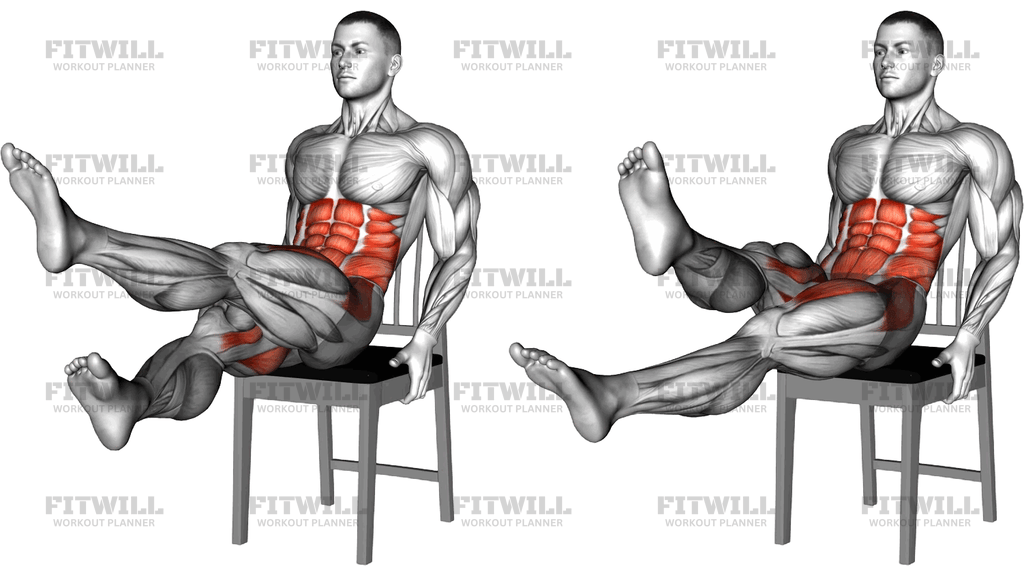
Instructions
- Sit on the front third of a sturdy chair with your feet flat on the floor and your hands gripping the sides of the seat beside your hips.
- Lean your torso back about 15 to 20 degrees, keep your chest lifted, and slide forward slightly so your thighs clear the front edge of the seat.
- Brace your abs as if bracing for a light poke to the stomach, then extend both legs straight out in front of you until your heels hover just above the floor.
- Point your toes forward or pull them back slightly — either way, keep both feet at the same height so neither leg rests on the ground.
- Cross one leg over the other in a scissor motion, then immediately switch, crossing the opposite leg on top in a continuous alternating rhythm.
- Keep each crossing small and deliberate, roughly a few inches past the opposite leg, so the abs stay loaded the entire time.
- Exhale as the legs cross and inhale on the switch, keeping the breathing steady instead of holding your breath.
- Keep your shoulders relaxed and your hands supporting you on the seat — avoid pulling down on your arms or rounding your upper back.
- At the end of the set, lower one foot at a time back to the floor, sit upright, and rest before the next round.
- Reset your brace before each set; do not start a new set with your back already rounded or your legs already sagging.
Tips & Tricks
- If your heels keep touching the floor, raise the legs slightly higher and shorten the crossing range — height beats range for keeping the abs under tension.
- Rounding into a slump mid-set is the most common failure point here; once your lower back rounds, the chair edge is doing the bracing for you, so end the set rather than grind through it.
- Squeeze the seat lightly with your hands for balance, but imagine your torso is held up by the abs, not suspended from your arms.
- Tight hamstrings often pull the pelvis backward in this position; a soft bend in the knees keeps your back neutral without removing the core demand.
- Move at a tempo of roughly one crossing per second — fast scissoring turns this into a leg swing driven by momentum instead of a braced core exercise.
- If you feel this only in the front of your hips and not your abs, lean your torso back a few more degrees so the abdominals must work harder to hold your position.
- Place the chair against a wall if the seat slides on a smooth floor when you grip the sides.
- Start with 15 to 20 second sets and build time gradually; this exercise responds better to longer quality holds than to rushed extra reps.
- Keep your head in line with your torso — jutting the chin forward to watch your legs usually signals the upper back is rounding.
Frequently Asked Questions
Which muscles does the Seated Criss Cross Legs On A Chair work?
The abdominals do most of the bracing work, supported strongly by the hip flexors holding the legs off the floor. The inner thighs contribute as the legs pass each other, and the obliques help stabilize the trunk as the legs cross side to side.
Is the Seated Criss Cross Legs On A Chair suitable for beginners?
Yes, with modifications. Beginners can bend the knees slightly, keep the legs a bit higher, and start with short 10 to 15 second sets before extending the duration.
Why do my hip flexors burn more than my abs during the Seated Criss Cross Legs On A Chair?
With your torso fairly upright, the hip flexors carry the weight of the lifted legs, so they fatigue first. Lean your torso back a little more and focus on keeping your lower back from arching to shift more of the demand onto the abdominals.
How wide should the criss-cross motion be?
Keep it narrow — each leg only needs to pass a few inches over the other. A wide, fast swing uses momentum and lowers the continuous tension on the abs.
What kind of chair should I use for the Seated Criss Cross Legs On A Chair?
Use a stable chair without wheels, with a flat seat and no armrests blocking your hands at your sides. A chair placed against a wall prevents it from sliding if you grip the seat firmly.
How is this different from a floor-based criss cross or scissor kick?
On a chair your torso is more upright and your hands support you, so the hip flexors take a larger share of holding the legs up while the abs work to keep the trunk from collapsing. Floor versions generally load the abs more directly through a fuller range.
My lower back hurts when my legs are extended on the chair — what should I change?
Bend your knees slightly and keep the feet higher, which reduces the pull on the pelvis from tight hamstrings and hip flexors. Also make sure you are leaning back only slightly and not letting the lower back arch as the legs lift.
Can I use the Seated Criss Cross Legs On A Chair as a desk break exercise?
Yes, that is one of its best uses. A few 20 to 30 second sets require no floor space, no changing clothes, and only a sturdy chair, making it easy to slot between tasks.
How long should I hold the legs up during a set?
Start with 15 to 20 seconds and progress toward 45 to 60 seconds as your tolerance improves. When your heels start dropping or your back rounds, the effective set is over even if the clock says otherwise.
Should I grip the seat hard during the movement?
Grip just enough to stay balanced. If you are pulling down hard on the seat to hold yourself up, the set has drifted away from a core exercise toward an upper-body hold, so reduce the lean or shorten the set.