Kettlebell Single Arm Clean And Push Press
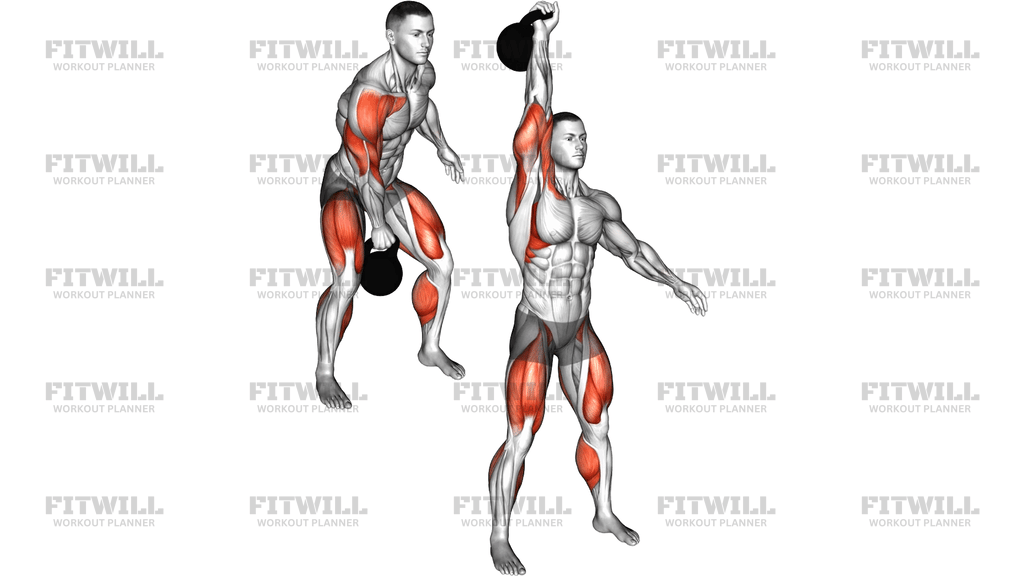
The Kettlebell Single Arm Clean And Push Press is a two-phase compound lift that takes a kettlebell from the floor or a hang position to your shoulder, then drives it straight overhead with help from your legs. The clean brings the bell into the rack position at your chest, and the push press uses a short, forceful knee dip followed by an explosive hip and leg extension to launch the weight upward. Because the legs supply most of the overhead power, you can handle more load than a strict press while still training the shoulders and triceps hard.
This lift rewards full-body coordination. The clean phase works the hamstrings, glutes, quads, grip, and upper back as you hike the bell back and pull it into your forearm. The push press phase then loads the front shoulders and triceps while your quads, glutes, and calves generate the drive. Your core ties it all together, bracing to transfer force from the ground through your torso and out through a locked-out arm overhead.
Setup matters more with this movement than with most single-arm lifts. The kettlebell sits between your feet, and the clean must guide the bell around the wrist so it lands on the back of your forearm rather than smacking into it. A sloppy rack position leaks power and makes the press far harder, so take the time to learn where the bell should rest: close to your midline, elbow tucked down by your ribs, wrist straight.
Execution comes down to timing. Hike the bell back between your legs like a football snap, then snap your hips forward and let the bell float up, rotating your hand around it as your elbow drops to catch it in the rack. From there, take a quick, shallow dip, then stand up hard and press the bell to a full lockout with your bicep near your ear and the handle resting across your palm. Let the bell come back to the rack under control, repeat the press, then re-clean or lower the bell back between your legs to finish the set.
This exercise suits lifters who want a time-efficient strength and conditioning tool. One kettlebell and a few square feet of floor are enough, which makes it a favorite for home training, kettlebell circuits, and conditioning finishers. It also teaches the hip hinge and overhead drive patterns that carry over to barbell work, sport performance, and everyday lifting.
Keep the load honest. A bell you can press strictly for a handful of reps is plenty when you are learning the clean, because the swinging path punishes poor technique quickly. Stay tight through the ribs, keep your lower back neutral during the hinge, and never let the bell pull your shoulder forward out of the socket.
[ Workout Log & Planner ]
Put your next workout in Fitwill
Keep your plan and training log ready when you are.


Instructions
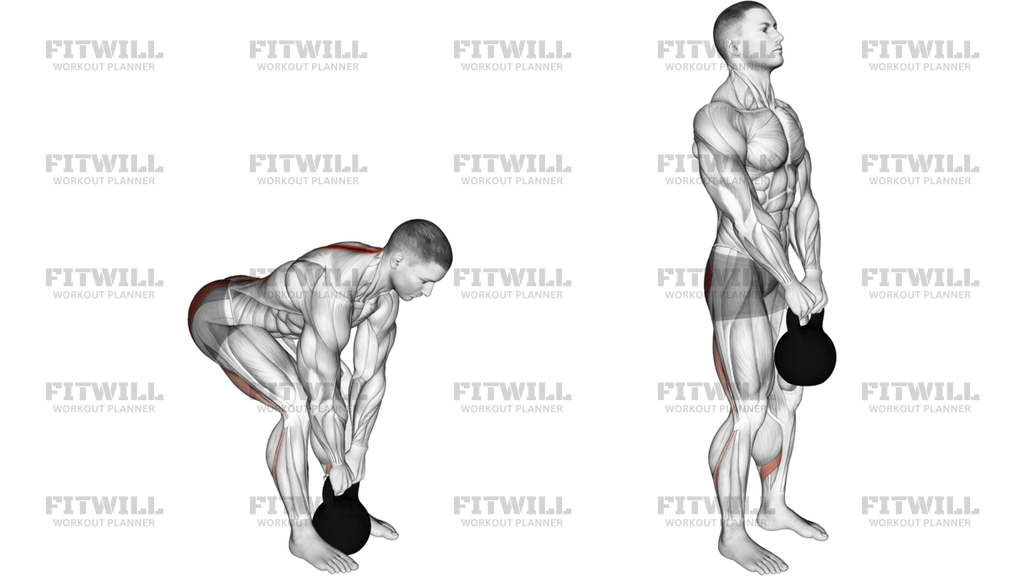
- Place one kettlebell on the floor between your feet, which are set about hip-width apart with toes angled slightly out.
- Hinge at your hips, soften your knees, and grip the handle with one hand using a firm overhand grip, keeping your shoulders higher than your hips and your back flat.
- Hike the bell back between your legs like a football snap, loading your hamstrings and glutes while your weight shifts toward your heels.
- Drive your hips forward hard and stand tall, guiding the bell up the front of your body as you rotate your hand around the handle so the bell rolls onto the back of your forearm.
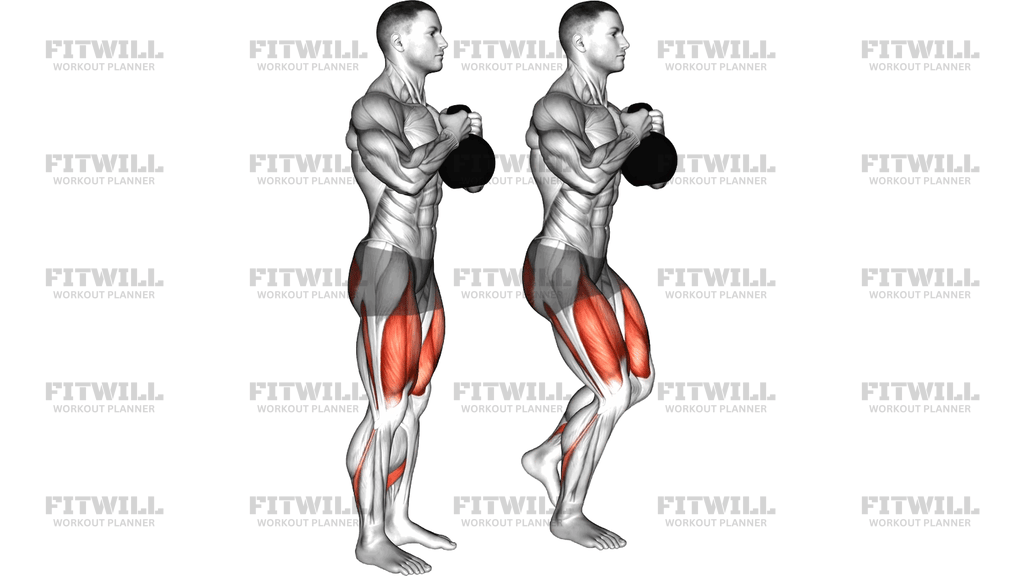
- Catch the bell in the rack position: handle resting diagonally across your palm, elbow tucked close to your ribs, wrist straight, and the bell sitting against your chest and shoulder.
- Inhale and brace your core, then perform a quick, shallow dip by bending your knees a few inches while keeping the bell racked and your torso upright.
- Explode out of the dip by driving through the floor with your legs, and as your hips reach full extension, press the bell straight up until your arm is locked overhead with your bicep beside your ear.
- Lower the bell under control back to the rack position, absorbing it with a slight knee bend, and take your next breath at the rack before pressing again.
- After your final press, re-hinge and swing or lower the kettlebell back between your legs to set it down on the floor, then switch arms or rest before the next set.
Tips & Tricks
- If the kettlebell bangs your forearm on the clean, you are flipping it too late and too far. Start rotating your hand earlier so the bell arcs around the wrist instead of over it.
- Do not let the rack position drift to the side of your shoulder. Pull the bell close to your midline so the press travels straight up rather than out at an angle that stresses the shoulder.
- Keep the dip in the push press short, around a quarter of a squat. A deep dip turns the lift into a thruster and lets the bell drift away from your body.
- Grip the handle with just enough force to control it. Squeezing the handle at full pressure during the clean fatigues your grip early and makes the rack uncomfortable.
- Keep your free arm active and slightly out to the side or in front of you, as shown in the locked-out position, to help you balance rather than letting it hang dead.
- Exhale sharply through the sticking point of the press, not at the start of the dip, so your core stays braced while your legs load.
- If your lower back rounds during the hike, shorten the back swing and focus on pushing your hips back instead of reaching the bell forward.
- Rest the bell on the heel of your palm and the back of your forearm at lockout rather than holding it away from your wrist, which strains the grip and shifts load onto the shoulder joint.
- Practice the clean alone for several sessions before adding the press. A clean you can land quietly and smoothly makes the push press dramatically easier.
Frequently Asked Questions
Which muscles does the Kettlebell Single Arm Clean And Push Press work?
The front shoulders and triceps do the overhead pressing, while the glutes, hamstrings, and quads power the clean and the driving dip. Your traps, upper back, grip, and core work throughout to control the bell and transfer force.
Is the Kettlebell Single Arm Clean And Push Press good for beginners?
It can be, but learn the kettlebell clean on its own first. Once you can land the bell smoothly in the rack without forearm contact, add the push press with a light weight.
How is the push press different from a strict press in this exercise?
The push press uses a short knee dip and a hard leg drive to start the bell moving, so your legs contribute most of the initial force. A strict press relies only on the shoulders and triceps with no leg help, which limits the weight you can use.
Why does the kettlebell hit my forearm during the clean?
The bell is flipping over your hand instead of around it. Begin rotating your hand earlier in the arc so your elbow drops and the bell rolls onto the back of your forearm as a controlled landing, not a slap.
Where should the kettlebell rest in the rack position?
The handle should lie diagonally across your palm with the bell resting against your chest and the back of your forearm, elbow tucked near your ribs. This keeps the wrist straight and lines the bell up with your midline for a stronger press.
How heavy should the kettlebell be for the Kettlebell Single Arm Clean And Push Press?
Pick a bell you could strict press for several clean reps, because the clean requires control that pressing power alone does not guarantee. You can always move up once the technique is consistent.
Can I use a dumbbell instead of a kettlebell for this movement?
A dumbbell works in a pinch, but the clean is harder to land cleanly because the weight sits in front of the hand rather than behind it. Expect a clumsier rack and start lighter than you would with a kettlebell.
How many reps and sets should I do?
For strength, work in sets of 3 to 6 presses per arm with a challenging bell. For conditioning, use a lighter bell and longer sets or timed intervals, always stopping when your rack position or lockout starts to break down.
Should I clean the bell before every press?
No. Clean once, then perform multiple push presses from the rack before lowering or re-cleaning the bell. Re-cleaning every rep turns the set into a clean-and-press and fatigues your hips before your shoulders.