Cable Cross Body Hammer Curl
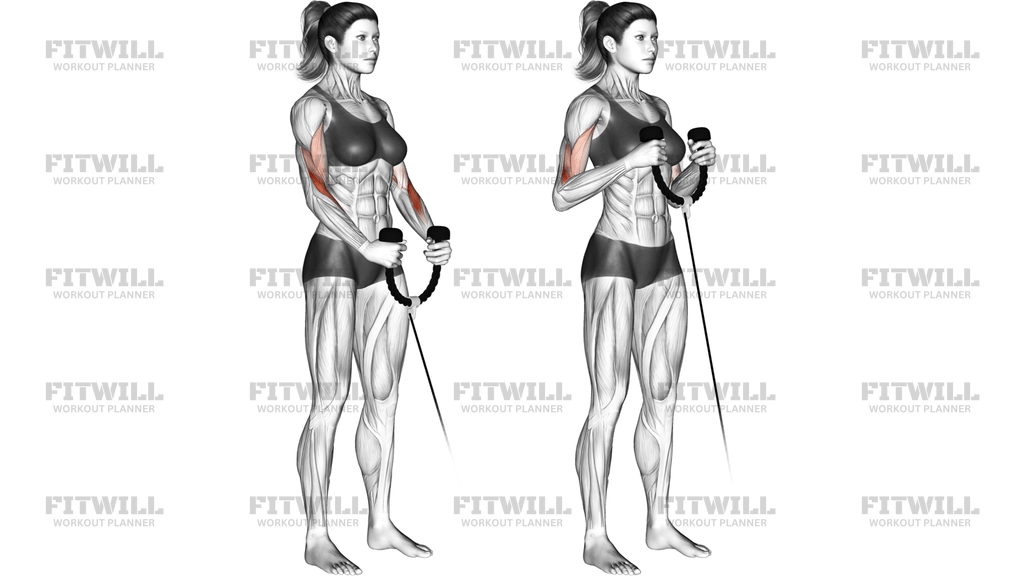
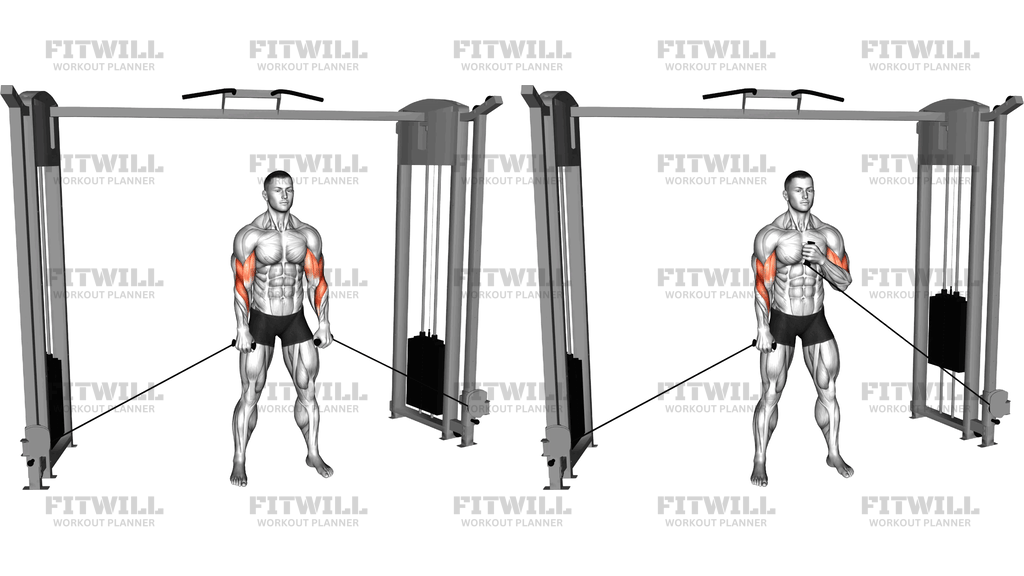
The Cable Cross Body Hammer Curl is a unilateral arm exercise performed on a dual-pulley cable machine set at the lowest positions. You stand centered between the two low pulleys with a handle in each hand, using a neutral, thumbs-up grip, then curl one hand up and across your body toward the opposite side of your chest while the other arm stays extended at your side holding its handle. That anchored arm does more than wait its turn — it keeps your torso squared and gives you something to brace against as the working side pulls across the midline.
The neutral grip and the cross-body path are what set this variation apart. With the palm facing inward, the brachioradialis along the top of the forearm and the brachialis underneath the biceps do a large share of the work, and pulling toward the opposite side changes the resistance angle compared with a standard dumbbell hammer curl. Because the cable pulls from the low pulley behind and beside you, tension stays on the elbow flexors even at the bottom of the rep, where a dumbbell's resistance drops off.
This movement suits lifters who want thicker, more complete-looking arms, since the brachialis sits beneath the biceps and its growth pushes the biceps peak upward. It also works well for people whose wrists complain during fully supinated curls — the neutral position is one of the most wrist-friendly grips available. Anyone with dumbbells available can do hammer curls, but the cable setup gives constant tension and prevents the swinging and body English that often creep into freeweight curling.
Setup matters more here than in most curl variations. The pulleys need to be at the bottom, you need to stand far enough forward that the cable clears your thighs, and the handle weight needs to be even on both sides so you don't get pulled off center between reps. Keep your feet about hip-width apart with a slight bend in the knees, ribs down, and shoulders back, so the curl comes from the elbow rather than the trunk rotating.
Aim to finish each rep with your hand near the opposite shoulder or upper chest, elbow staying low and close to your ribs rather than drifting up and forward. Lower the handle back along the same diagonal path under control until the arm is nearly straight, then either complete all reps on one side or alternate arms rep for rep, depending on your preference. If you feel it in your front shoulders or your torso starts twisting toward the working arm, the weight is probably too heavy — this exercise rewards strict form over load.
[ Workout Log & Planner ]
Put your next workout in Fitwill
Keep your plan and training log ready when you are.


Instructions
- Set both pulleys of the cable crossover machine to the lowest position and attach a single handle to each one.
- Select an even, light-to-moderate weight on both stacks, then stand centered between the pulleys facing forward with a handle in each hand and your palms facing your sides.
- Step forward slightly so the cables run behind your arms, and set your feet hip-width apart with a soft bend in the knees and your torso upright.
- Brace your core, pull your shoulders back and down, and let both arms hang fully extended at your sides to establish the starting position.
- Keeping your working elbow pinned near your ribs, exhale and curl that hand up and across your body toward the opposite shoulder, holding the neutral, thumbs-up grip throughout.
- Squeeze briefly at the top with the hand near the far side of your chest and the elbow still low, avoiding any upward drift of the elbow.
- Inhale and lower the handle back down along the same diagonal path, resisting the cable's pull until the arm is almost straight at your side.
- Complete the target reps on one side before switching, or alternate arms rep by rep, keeping the non-working hand gripping its handle for stability.
- After your final rep, release both handles, let the weight stacks settle fully, and re-rack or reset before stepping away.
Tips & Tricks
- Choose a noticeably lighter weight than your standard dumbbell hammer curl — the cross-body angle and constant cable tension make the same load feel far heavier on the brachioradialis.
- If your torso twists toward the working arm, consciously squeeze the glutes and brace the core before each rep; the non-working hand holding the opposite handle is your anchor, so grip it firmly.
- Stop the curl at the opposite shoulder or upper chest rather than yanking the handle all the way across — pulling too far usually means the shoulder is doing the finishing work instead of the elbow.
- Keep the elbow within a few inches of your ribs; if it swings forward and up, the rep turns into a front raise and the brachialis loses its contribution.
- Control the eccentric for two to three seconds — the low pulley keeps tension on the forearm flexors at full extension, so rushing the return wastes the hardest part of the stretch.
- Watch the cable path near your thigh; standing too close to the pulley can make the cable drag against your leg, so take a half step forward until the line runs clean behind your arm.
- Alternate arms rep for rep if you notice one side fatiguing faster, since alternating forces the weaker arm to match the stronger one under the same tension.
- If your wrists ache, check that you're not rolling them inward or outward during the curl — the neutral grip should stay locked from bottom to top.
Frequently Asked Questions
What muscles does the Cable Cross Body Hammer Curl work?
The brachioradialis on the top of the forearm and the brachialis beneath the biceps do most of the work, with the biceps brachii assisting and the forearm flexors handling grip. The cross-body path also lightly involves the front shoulder on the working side.
Why does this exercise pull across the body instead of straight up?
The diagonal path changes the resistance angle so the cable keeps tension on the elbow flexors through a longer portion of the range, and it biases the brachialis and brachioradialis differently than a vertical dumbbell hammer curl.
Is the Cable Cross Body Hammer Curl good for beginners?
Yes, but start with light weight on both stacks. The setup on a dual-pulley machine is simple, and the cable's fixed path makes it easier to learn strict form than with a barbell or heavy dumbbells.
What should the non-working arm do during the exercise?
It stays extended at your side holding the opposite handle, which stabilizes your torso and stops you from rotating toward the curling arm. Keep a firm grip on it for the entire set.
How is this different from a regular dumbbell hammer curl?
The cable provides constant tension from the low pulley even when the arm hangs down, where a dumbbell's resistance nearly disappears. The cross-body angle and the anchored opposite arm also make cheating with body swing much harder.
Why do my shoulders take over during the movement?
That usually means the weight is too heavy or the elbow is drifting up and forward as you pull across. Keep the elbow glued near your ribs and finish the rep with the hand at the opposite chest, not pulled past it.
Can I do this exercise if standard curls bother my wrists?
Often yes — the neutral, thumbs-up grip keeps the forearm in its most comfortable alignment and avoids the wrist extension that fully supinated curls can demand. Keep the grip locked and avoid rotating the handle during the rep.
Should I finish all reps on one arm or alternate sides?
Either works. Completing one side first creates more fatigue per set, while alternating rep for rep helps keep both arms honest if one side tends to lag behind.
Where should the cable pulleys be set for this exercise?
Both pulleys belong at the lowest position so the cables pull upward from behind and beside your hips. Higher pulley settings change the movement into a different curl variation entirely.