Bodyweight Standing Straight Arm Chest High Fly
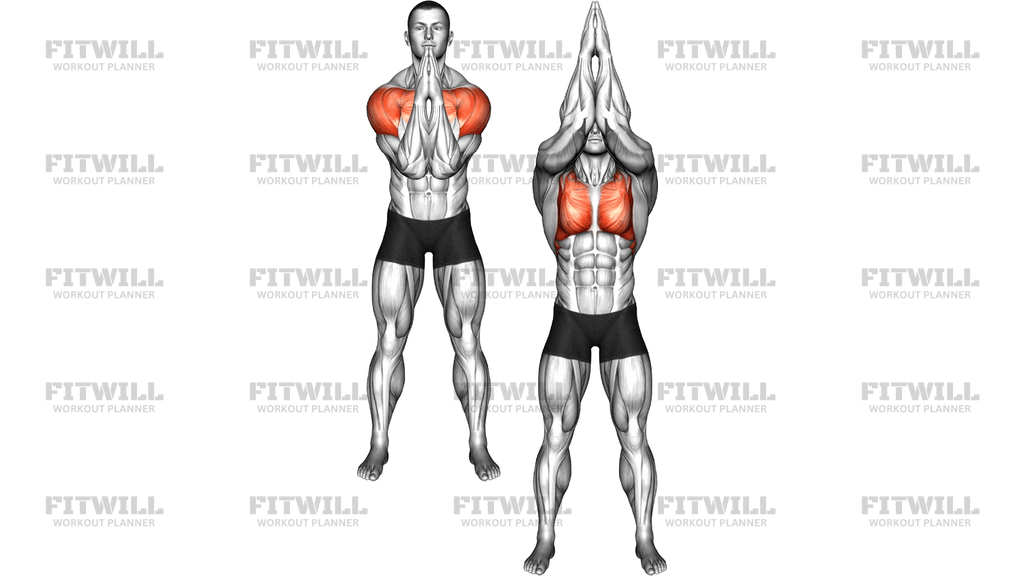
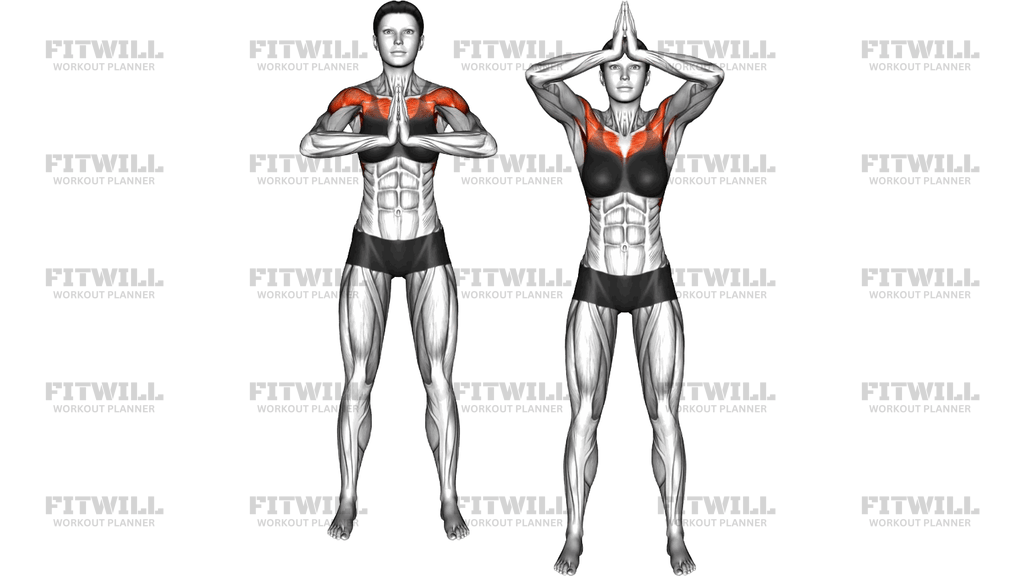
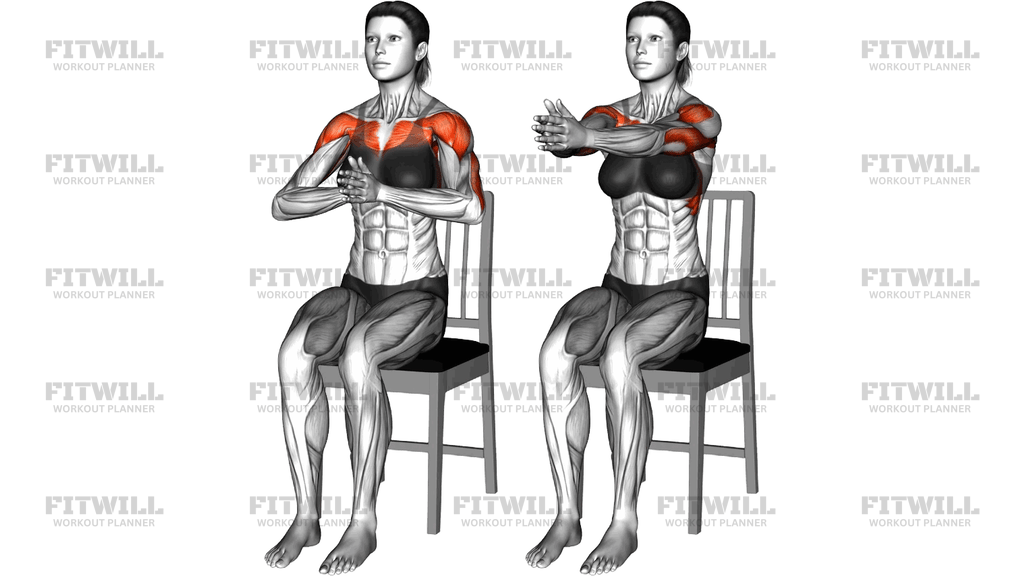
The Bodyweight Standing Straight Arm Chest High Fly is a bodyweight chest exercise performed standing with no equipment at all. You start with both arms straight out to your sides at shoulder height, then sweep them forward and upward in a wide arc until your hands meet in front of you above shoulder level, as if giving yourself a big overhead clap. Because your arms stay straight the whole time, the chest has to drive the movement through adduction — pulling the upper arm across the body — rather than relying on a bent-elbow press.
This movement is especially useful when you have no equipment but still want to fatigue the chest with direct work. It suits beginners learning to feel their chest contract, travelers or home trainers with zero gear, and more experienced lifters who want a high-rep finisher or a warm-up activation before pressing. Since the hands finish high, above the line of the shoulders, the upper portion of the chest and the front delts take on a meaningful share of the work alongside the sternal fibers.
The setup matters more than most people expect. A stable stance, a braced torso, and shoulders pulled slightly down and back determine whether the chest actually does the work or whether the arms just wave around. Because there is no external load, tension comes entirely from deliberately squeezing the arms together and resisting on the way back out, so posture and intent are what turn this from a mobility drill into a strength stimulus.
To execute it well, sweep the arms along a wide, deliberate arc rather than snapping the hands together. Imagine pushing your palms through resistance the entire way in, then pulling them back out under control. Keep the elbows locked but not rigidly hyperextended, the chest tall, and the ribs stacked over the pelvis. The contraction at the top — hands meeting overhead with the chest squeezed — is the peak of the rep, so pause there briefly instead of rushing past it.
In practice, this exercise shows up in equipment-free chest circuits, as an activation drill before bench pressing or push-ups, and in higher-volume protocols where the chest is fatigued without joint stress. The straight-arm position also lightly challenges the shoulders and the stabilizers around the shoulder blade, which is a useful side benefit.
A few practical points keep it safe and effective. Stay within an arm arc that feels comfortable at the shoulder, avoid shrugging as the hands rise, and keep the movement smooth rather than ballistic. If you feel the work shifting into your neck or the fronts of your shoulders, lower the end position slightly and reduce the speed. As with any high-rep bodyweight movement, quality of squeeze beats quantity of sloppy reps.
[ Workout Log & Planner ]
Put your next workout in Fitwill
Keep your plan and training log ready when you are.


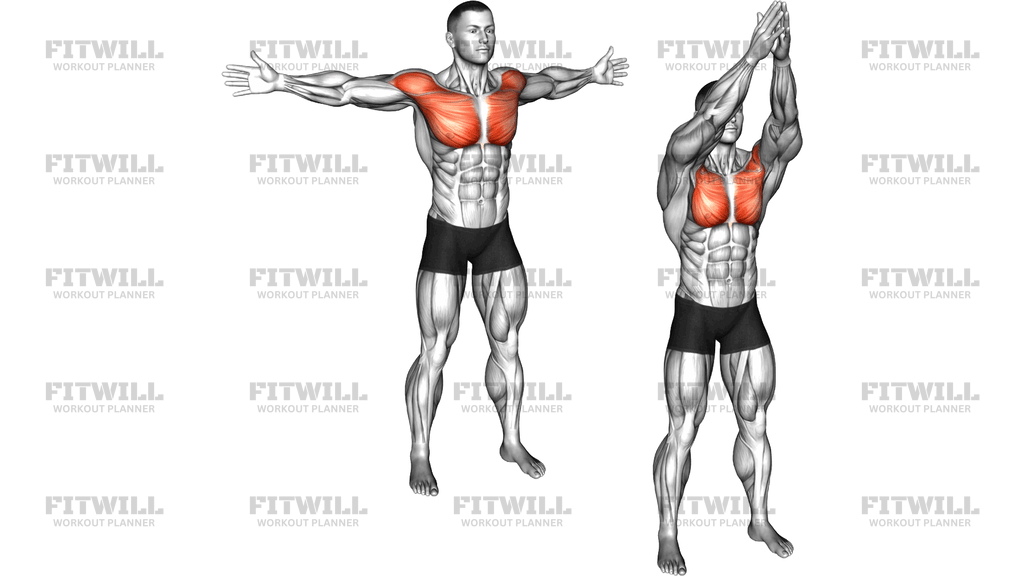
Instructions
- Stand with your feet about hip-width apart, weight spread evenly across both feet, and your knees soft but not bent.
- Raise both arms straight out to your sides until they are level with your shoulders, palms facing forward and elbows fully extended.
- Pull your shoulders down and back, lift your chest, and brace your abdominals so your torso stays upright and still throughout the set.
- Inhale to prepare, then sweep both arms forward and upward in a wide arc, keeping the elbows locked and the palms leading the way.
- Continue the arc until your hands meet in front of you above shoulder height, roughly toward an overhead clap, and squeeze your chest hard at that top position.
- Hold the squeezed position for a beat, consciously pressing your palms together to keep tension in the pectorals.
- Exhale as you sweep the arms back out and down along the same wide path, resisting the return as if pushing through a thick medium.
- Stop when your arms are back out to the sides at shoulder height, without letting them drop or swing behind your torso.
- Reset your posture — shoulders down, chest tall, ribs stacked — and begin the next rep with the same deliberate tempo.
Tips & Tricks
- Think of the move as a hug that travels upward: the arms should carve a wide arc, not a flat sideways clap at shoulder level.
- If your hands slam together, you are losing most of the tension; slow the last third of the sweep so the chest works right up to the meet point.
- Shrugging as the hands rise is the most common fault — check that the space between your ears and shoulders stays long at the top of every rep.
- Do not let your elbows bend to make the arc easier; a soft bend creeps in quietly and turns the fly into a partial arm movement.
- Lean your torso back slightly to cheat the hands overhead and you will shift work to the front delts and lower back — keep the torso vertical and simply lower the meet point if overhead is too much.
- Because there is no external resistance, the return path is where many reps go to waste; actively pull the arms back out instead of letting them fall.
- Add an isometric hold of two to three seconds with the palms pressed together to make the set meaningfully harder without adding reps.
- Keep the palms facing forward on the way out; turning them down early rotates the shoulders inward and reduces the chest stretch.
- A moderate pace of about two seconds in, one-second squeeze, two seconds out keeps the chest under tension without turning it into a shoulder-speed drill.
Frequently Asked Questions
Which muscles does the Bodyweight Standing Straight Arm Chest High Fly work?
The pectorals are the prime movers, pulling the straight arms across and up the body. Because the hands meet above shoulder height, the upper chest and front shoulders assist noticeably, and the shoulder blade stabilizers work to keep the arms controlled.
Why are the arms kept straight instead of bent like in a push-up or press?
Straight arms force the chest to work through shoulder adduction, which is exactly what a fly is designed to train. Bending the elbows would let the pressing muscles take over and turn it into a different movement.
Is this a good chest exercise for beginners?
Yes, it is low-skill and joint-friendly, making it a good way to learn what a chest contraction feels like before loading presses. Beginners should focus on a slow tempo and a strong squeeze rather than high speed.
How can I make the Bodyweight Standing Straight Arm Chest High Fly harder without equipment?
Slow the tempo, pause for two to three seconds with the palms pressed together at the top, or hold light isometric squeezes between reps. Adding volume with short rest periods also raises the challenge quickly.
My hands meet easily but I feel nothing in my chest — what is wrong?
You are most likely moving too fast and letting the arms relax on the way in. Push your palms through the entire arc as if dragging them through water, and actively press them together at the meet point to create tension.
What can I substitute if standing straight-arm flys bother my shoulders?
Lower the meet point so the hands come together at chest or face height instead of overhead, which shortens the arc at the shoulder. Wall pushes or floor-based fly variations are also gentler alternatives for the same muscles.
Should I feel this in the front of my shoulders as well?
Some front shoulder involvement is normal because the arms travel above shoulder level. If the shoulders dominate or feel strained, reduce the height of the arc and check that you are not shrugging as the hands rise.
How many reps should I do?
Since resistance is limited, this movement works best in higher ranges, roughly 15 to 30 controlled reps or timed sets of 30 to 45 seconds. Stop when the squeeze at the top becomes hard to maintain with good posture.
Can this replace push-ups or weighted presses for chest development?
It is a valuable addition but not a full replacement, since presses and push-ups provide heavier loading through a pressing path. Use the fly for activation, finishers, and equipment-free days alongside those movements.
Where should my feet and torso be during the set?
Stand with feet hip-width apart and firmly planted, torso upright with the abdominals braced so nothing sways as the arms sweep. A still lower body keeps the work on the chest instead of leaking into momentum.