High Knee Jump Rope
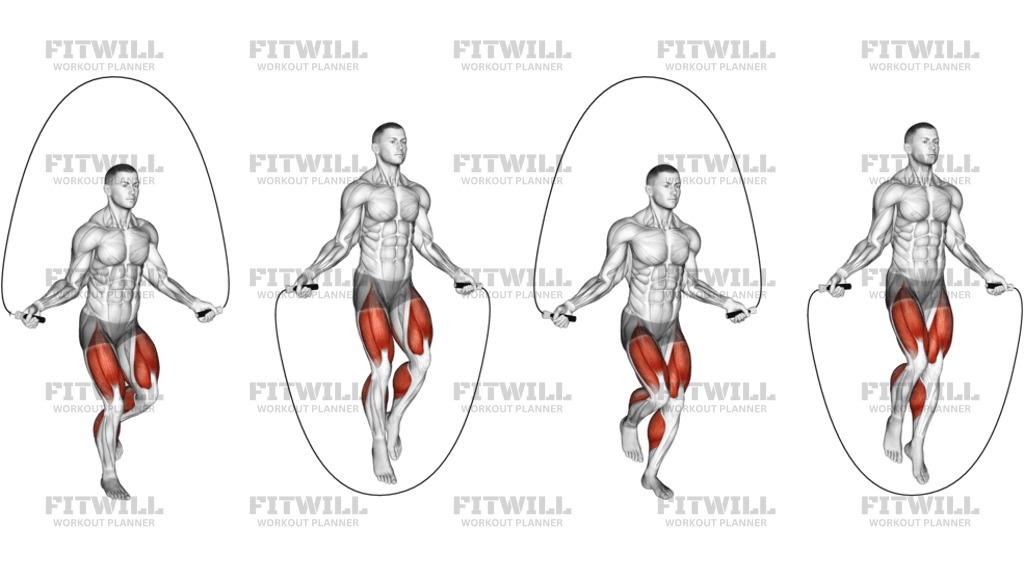
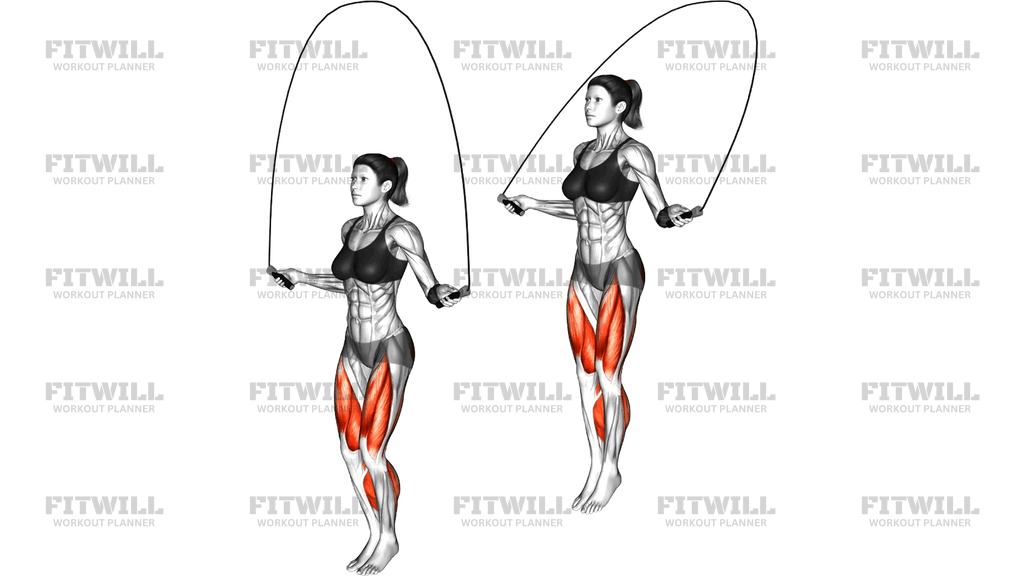
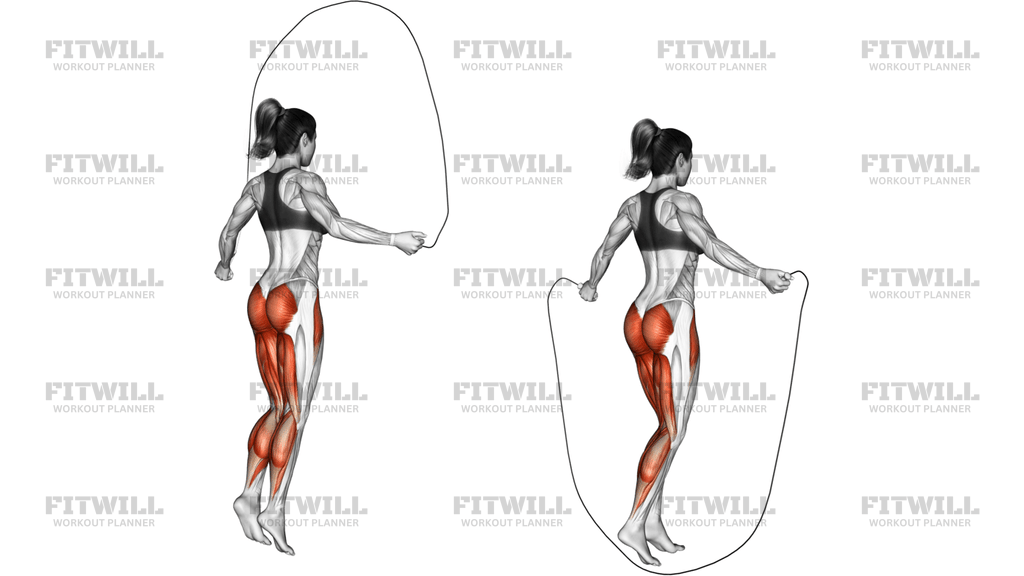
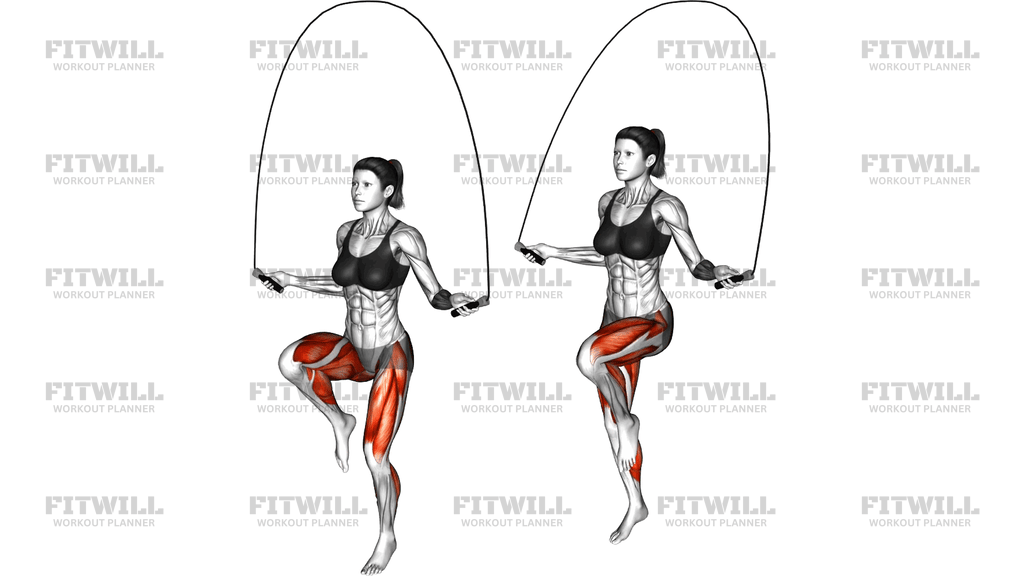
High Knee Jump Rope is a demanding jump rope variation where every turn of the rope is cleared with an exaggerated knee drive, lifting each knee roughly to hip height instead of performing the small hops of a basic bounce. The hands stay low and close to the hips, the wrists spin the rope, and the legs do the extra work of driving upward against gravity on every revolution. Compared with standard skipping, the higher knee lift means greater hip flexion, more vertical displacement, and a noticeably higher heart rate for the same time on the rope.
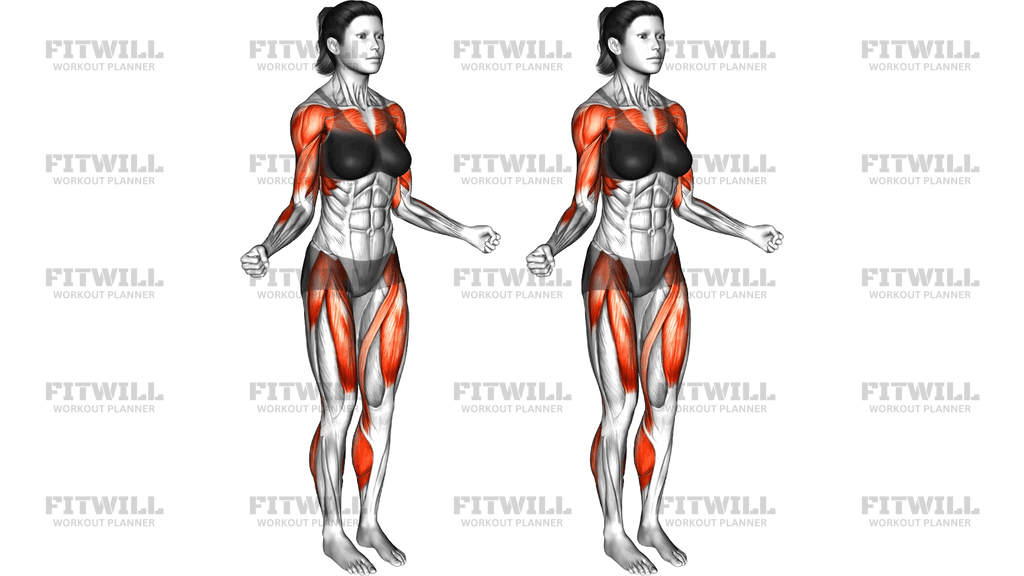
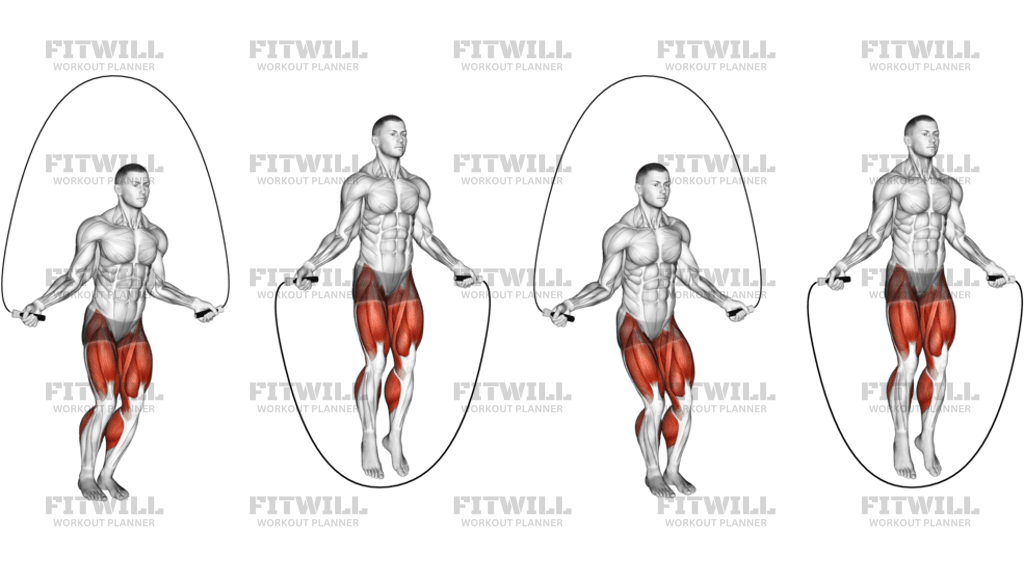
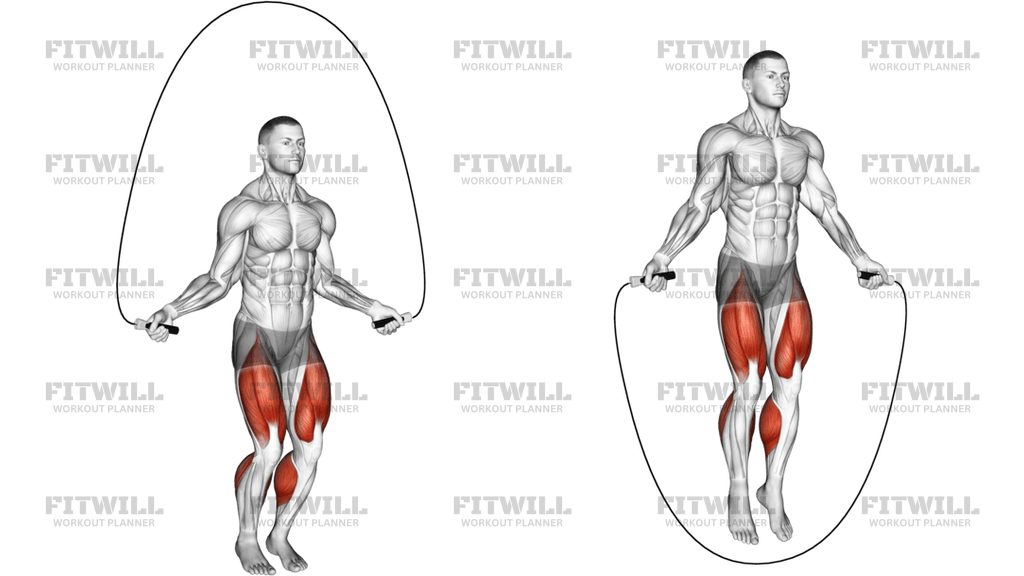
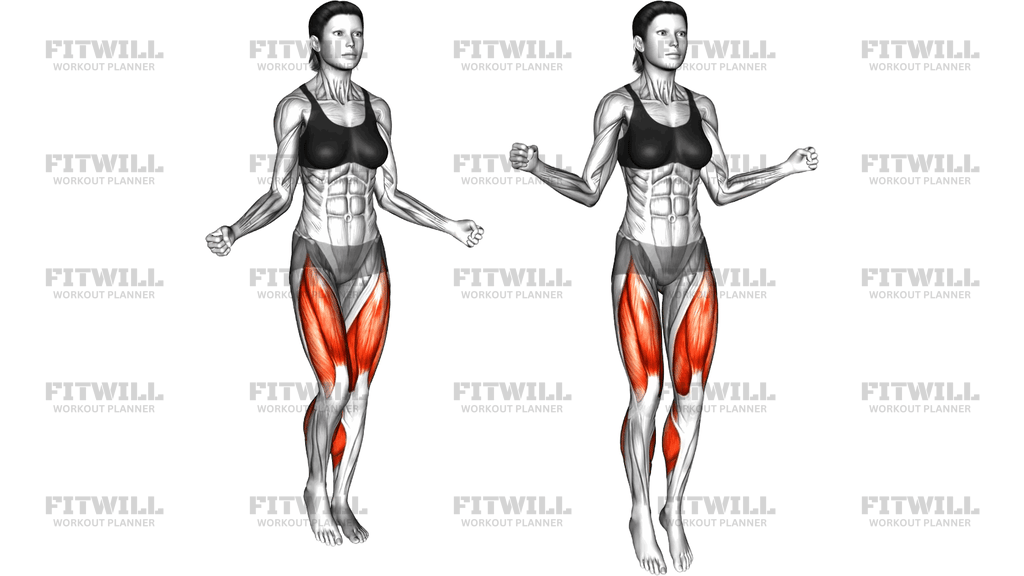
The main demand lands on the calves, which power each takeoff and absorb each landing, but the quads and hip flexors do the heavy lifting on the drive phase — literally, in the case of the hip flexors pulling the knee up toward the torso. The core works constantly to keep the torso upright and stop the lower back from arching as the knees rise, and the shoulders and forearms hold a stable rope-turning rhythm throughout. Because every contact is on one foot at a time, the ankle stabilizers get far more work than in a two-foot bounce.
This drill suits people who already skip at a steady basic rhythm and want to raise the intensity without buying equipment or adding impact volume through longer sessions. It appears regularly in boxing and martial arts conditioning, in warm-ups for field and court sports, and in circuit and interval training where a compact, high-output cardio movement is needed. It is also a practical way to strengthen the lower legs for running, since the one-foot landings train the Achilles and calf complex under load.
Setup matters more than most people expect. A rope that is too short forces a cramped, hunched posture; too long and the rope drags on the floor, tempting you to jump higher than necessary. Stand on the middle of the rope with the handles reaching roughly to armpit height for a good general length. Elbows stay near the ribs, wrists do the turning, and the torso stays tall so the knee drive can happen freely underneath you.
Execution comes down to timing: drive one knee up as the rope passes overhead, land softly on the ball of that foot while the opposite knee rises, and let the rope's rhythm set the pace of your legs rather than the other way around. Start with short intervals — 15 to 30 seconds — because the elevated knee position fatigues the hip flexors quickly, and tired hip flexors usually show up as a shortened knee lift and a leaning torso. Stay on a forgiving surface such as a rubber floor, wooden deck, or mat, wear cushioned shoes, and stop if your calves or Achilles feel sharp or localized discomfort rather than general working effort.
[ Workout Log & Planner ]
Put your next workout in Fitwill
Keep your plan and training log ready when you are.


Instructions
- Set your rope length so the handles reach roughly armpit height when you stand on the middle of the rope, then hold one handle in each hand with a relaxed grip.
- Stand tall with feet about hip-width apart, elbows tucked close to your ribs, and both handles angled slightly forward at waist level so the rope hangs just behind your heels.
- Brace your core lightly and pull your ribs down over your hips so your torso stays upright — avoid leaning back as the knees come up.
- Start turning the rope with small wrist circles and begin with two or three basic two-foot bounces to lock in the rhythm.
- As the rope passes overhead, drive one knee up to roughly hip height and hop just high enough for the rope to pass under that foot.
- Land softly on the ball of the foot with a bent knee, and immediately drive the opposite knee up as the rope comes over again, alternating legs each turn.
- Keep the rope speed moderate at first; the higher knee lift needs more air time, so slow wrists with clean knee drives beat fast spinning with knees barely rising.
- Exhale steadily as you skip and breathe in a relaxed rhythm through the nose and mouth rather than holding your breath during the knee drive.
- When fatigue shortens your knee lift or you start tripping, transition to basic two-foot bouncing for a few turns, then stop and reset before the next set.
- Rest 30 to 60 seconds between intervals and build from 15 to 30 second blocks up to a minute as your coordination and calf endurance improve.
Tips & Tricks
- A shortened knee drive is the most common breakdown — once your knees drop below halfway to hip height, end the set or drop back to basic bounce instead of grinding through sloppy reps.
- If you keep catching the rope on your feet, slow the wrist speed down rather than jumping higher; high Knee Jumps need clearance from the knee lift, not big vertical hops.
- Stop the rope with your hands, not your arms — if your elbows drift backward or your shoulders start shrugging toward your ears, your grip has tightened and your rhythm is about to go.
- Landing flat-footed or on the heels turns this into a shin-bashing grind; cue yourself to land on the balls of the feet with the ankles acting like springs.
- An arched lower back during the knee drive is a sign the core has disengaged — shorten the knee lift slightly and tighten the brace before continuing.
- Practice the knee drive without the rope first, marching in place at hip height, then add the rope at half speed so the leg timing develops before the speed does.
- Tripping usually happens when the hands travel in big circles; keep the turning arc small and the wrists close to the hips so the rope path stays predictable.
- Do this drill on a mat, rubber floor, or wooden surface rather than bare concrete, and replace worn rope bearings — a jerky rope turn forces extra jump height.
- Alternating knee every turn is the standard version; once that is smooth you can vary it with two drives on the same leg or double knee hops, but earn those progressions first.
Frequently Asked Questions
Which muscles does High Knee Jump Rope work the most?
The calves take the largest share through repeated takeoffs and landings, while the quads and hip flexors do most of the work of driving each knee to hip height. The core, shoulders, and forearms work continuously to hold posture and rope rhythm.
Is High Knee Jump Rope suitable for beginners?
It is best treated as a step up from basic bouncing. If you can skip continuously for a minute or two with a steady two-foot bounce, start with short 15-second blocks of High Knee Jump Rope and mix them back into basic bounces to recover.
How high should I lift my knees during High Knee Jump Rope?
Aim to bring each knee to roughly hip height, which is what separates this from a standard bounce. If hip height shortens your timing and causes trips, lift slightly lower and rebuild the height as your coordination improves.
Why do I keep tripping on the rope when my knees come up?
The most common cause is spinning the rope too fast for the extra air time the knee drive needs. Slow your wrist speed, exaggerate the knee lift rather than the jump height, and make sure your hands stay low near your hips so the rope path stays consistent.
How long should I do High Knee Jump Rope for?
Because it is far more intense than basic skipping, 15 to 30 second intervals work well, building toward 45 to 60 seconds as your calf endurance and timing develop. Quality knee drives matter more than total time on the rope.
Can High Knee Jump Rope help with calf and ankle strength?
Yes — the one-foot-at-a-time landings load the calf complex and ankle stabilizers more than a standard two-foot bounce. This is one reason it shows up in warm-ups for running and court sports, but build volume gradually to let the Achilles adapt.
What can I use instead if I do not have a jump rope?
High knee running in place or high knee marching delivers a similar hip flexor and calf demand without the rope timing. If you have the rope but not the coordination, high knee skips — where you hop forward with each exaggerated knee drive — are a good bridge.
Should my lower back stay neutral during High Knee Jump Rope?
Yes, keep your torso tall with ribs down over the hips. If the lower back arches as the knees rise, your core has loosened or your knee lift has exceeded what your hip flexors can control — reduce the height and re-brace.
Is High Knee Jump Rope hard on the knees?
Done with soft ball-of-foot landings, bent knees, and moderate volume on a forgiving surface, it is generally well tolerated. Limiting factors are usually the calves and Achilles rather than the knees, so if you feel sharp joint discomfort rather than muscle effort, stop and reassess your surface, shoes, and landing mechanics.
How does High Knee Jump Rope compare to regular jump rope?
The higher knee drive increases hip flexion, raises the heart rate more for the same rope speed, and adds a one-foot landing demand that basic bouncing lacks. It burns more effort per turn but fatigues you faster, so most people use it in intervals rather than long continuous sets.