Seated Forward Roll Up On A Chair
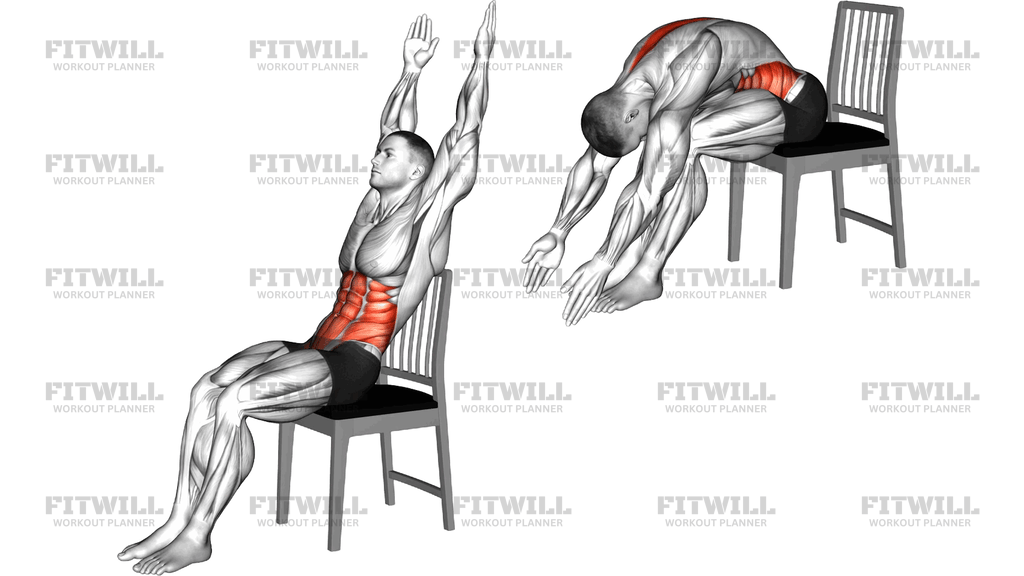
The Seated Forward Roll Up On A Chair is a slow, controlled trunk-curling movement performed from a chair with the legs extended straight in front of you. You start sitting tall with both arms reaching overhead, then peel your spine forward one segment at a time until your torso folds over your thighs and your hands reach toward your feet. From the folded position, you reverse the motion and stack yourself back up to the tall seated start. The work comes from the abs controlling the descent and pulling you back up, which makes this a classic core-control drill rather than a momentum-based movement.
The extended-leg position is what makes this exercise demanding. With your legs straight out in front of you, the hamstrings and lower back are placed on a mild stretch, and your center of gravity sits further forward than in a normal seated curl-up. That means the abdominal muscles have to work through a longer range while also keeping you stable on the chair. If you have ever done a Pilates roll-down on a mat, this is the chair-based version: same segment-by-segment curling, but with the seat giving you feedback about where your weight sits.
This movement suits people who want to train abdominal control without getting on the floor, including older adults, office workers, beginners building core strength, and anyone rehabbing general trunk strength after a floor-based program feels too much. It also doubles as a mobility drill for the spine and hamstrings, since the folded position lengthens the whole back line of the body. Because the chair provides a stable seat, it is often used in group classes, senior fitness, and desk-break routines.
Setup matters more than it looks. Sit on the front half of the chair so your tailbone is free to move, plant your feet about hip-width apart, and keep your arms reaching long overhead rather than pulling with your hands. Initiate the roll by tucking the pelvis under and drawing the ribs down, then let the head follow the spine, not lead it. The return is where most people lose the movement: instead of jerking the chest up or swinging the arms, think of curling up from the bottom of your spine while your abs stay engaged the entire way.
The most common mistakes are dropping forward too fast, rounding into a slump instead of curling with control, and using the arms to yank the torso up. Move slowly enough that each inch of the roll feels deliberate, and stop the fold at whatever depth lets you come back up cleanly. If you feel the work shifting into your neck or lower back, reduce the range rather than pushing deeper. Done well, this exercise builds genuine trunk control that carries over to sit-ups, deadlifts, and everyday bending.
[ Workout Log & Planner ]
Put your next workout in Fitwill
Keep your plan and training log ready when you are.


Instructions
- Sit on the front half of a sturdy chair with your legs extended straight in front of you, feet about hip-width apart and heels resting on the floor.
- Reach both arms straight overhead with palms facing forward or slightly inward, and sit tall so your spine is stacked over your pelvis.
- Brace your abs lightly and take a breath in at the top to set your trunk before moving.
- Exhale and begin the roll by tucking your pelvis under and drawing your ribs down toward your hips.
- Continue curling forward one vertebra at a time, letting your head follow your spine as your arms travel forward and down past your knees.
- Fold as far as you can control, letting your hands reach toward your shins or feet while your torso rests toward your thighs.
- Reverse the motion by pressing your lower back to curl up first, then your mid back, then your shoulders and head, keeping your arms reaching overhead.
- Exhale as you roll down and inhale as you curl back up, or simply breathe steadily without holding your breath.
- Finish each rep fully stacked in the tall seated position with arms overhead, then pause briefly before starting the next repetition.
Tips & Tricks
- Move as if peeling a sticker off a surface: if you cannot feel each section of your spine curling separately, you are moving too fast.
- Keep your shoulders relaxed even though your arms are overhead. Shrugging toward your ears shifts tension into your neck and steals work from your abs.
- If the chair slides or tips forward, your weight has moved too far ahead of your seat. Sit slightly further back and slow the descent.
- Tight hamstrings will pull your pelvis backward and flatten the movement. Bend your knees slightly if your lower back rounds hard before your torso even starts to fold.
- Do not drop into the fold and let gravity do the work. The lowering phase is where most of the abdominal control is built.
- On the way up, resist the urge to swing your arms or lift your chest with your head. Lead with the pelvis curling under and let the rest of the spine stack on top.
- Stop the fold at knee or shin level if coming back up feels jerky. A smaller, smoother range beats a deep fold you cannot control.
- Keep your heels planted and your toes relaxed. Pushing through the floor with your feet can turn this into a hip-hinge move instead of a trunk curl.
Frequently Asked Questions
What muscles does the Seated Forward Roll Up On A Chair work?
The abdominal muscles, especially the rectus abdominis, do most of the work curling the trunk down and pulling it back up. The lower back muscles control the spine between segments, and the hamstrings and hip flexors assist and stretch in the extended-leg position.
Why are the legs extended straight instead of bent on the chair?
Straight legs lengthen the hamstrings and shift your weight forward, which makes the abs work through a longer range and demands more trunk control. If the stretch is too strong, bend your knees slightly and build up over time.
Is the Seated Forward Roll Up On A Chair good for beginners?
Yes, it is one of the more accessible ways to learn segmental spinal control because the chair supports your weight and limits how far you can roll. Beginners should use a partial range, folding only to knee level until the return trip feels smooth.
How is this different from a sit-up or crunch?
A sit-up and crunch shorten the abs against resistance while lying down, while this exercise curls and uncurls the spine from a tall seated position with gravity pulling you forward. The extended-leg setup also adds a hamstring and lower back stretch that floor crunches do not provide.
My lower back aches when I fold forward. What should I change?
You are likely rounding hard into the fold or sitting too deep into the chair with a tight pelvis. Sit on the front half of the seat, reduce the folding depth, and focus on curling your pelvis under first rather than reaching your head down.
Can I use the Seated Forward Roll Up On A Chair as a stretch too?
Yes, the folded position lengthens the hamstrings, lower back, and entire posterior chain, and many people hold the bottom briefly for extra mobility. Just come out of the stretch under muscular control instead of collapsing.
How many reps and sets should I do?
Because the value comes from slow control rather than speed, 5 to 10 slow repetitions for 2 to 3 sets is plenty for most people. Each full roll down and up should take roughly 8 to 15 seconds.
What kind of chair works best for this exercise?
Use a stable chair without wheels, ideally with a flat seat and no arms, so your legs can extend freely and your pelvis can move. A chair with a backrest is fine since you only need it for safety, not for leaning against during the movement.
I keep jerking back up from the bottom. How do I fix that?
The fold has gone deeper than your abs can control. Reduce the range so your hands reach only your knees, and practice the return from that shallower position until you can curl up without any swing in your arms or chest.
Is this exercise safe for people with back problems?
It is gentle and chair-supported, but repeated spinal flexion is not right for everyone. If you have a diagnosed back condition or pain that worsens during the roll, check with a qualified professional before adding it to your routine.