Backkick Side Step
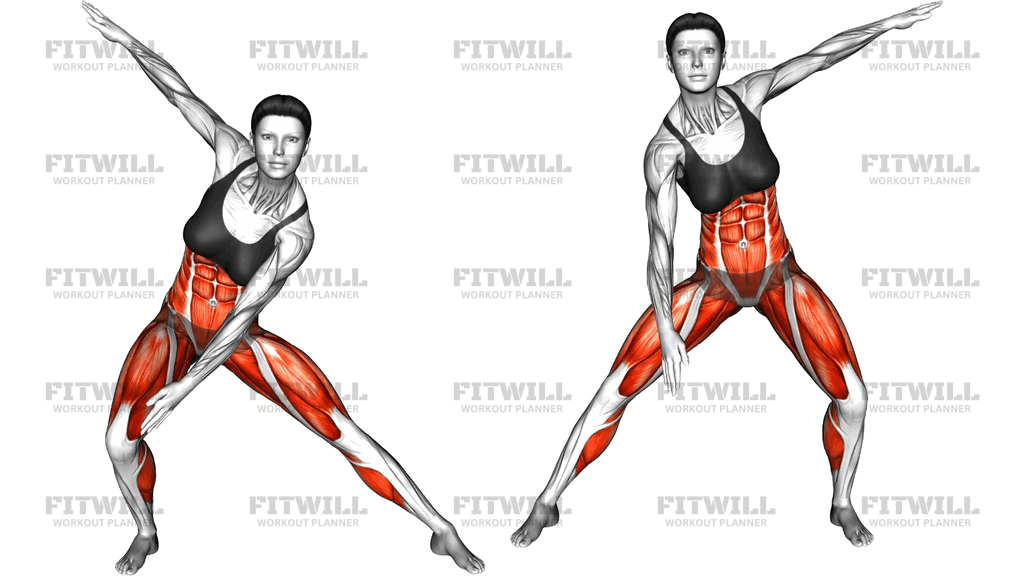
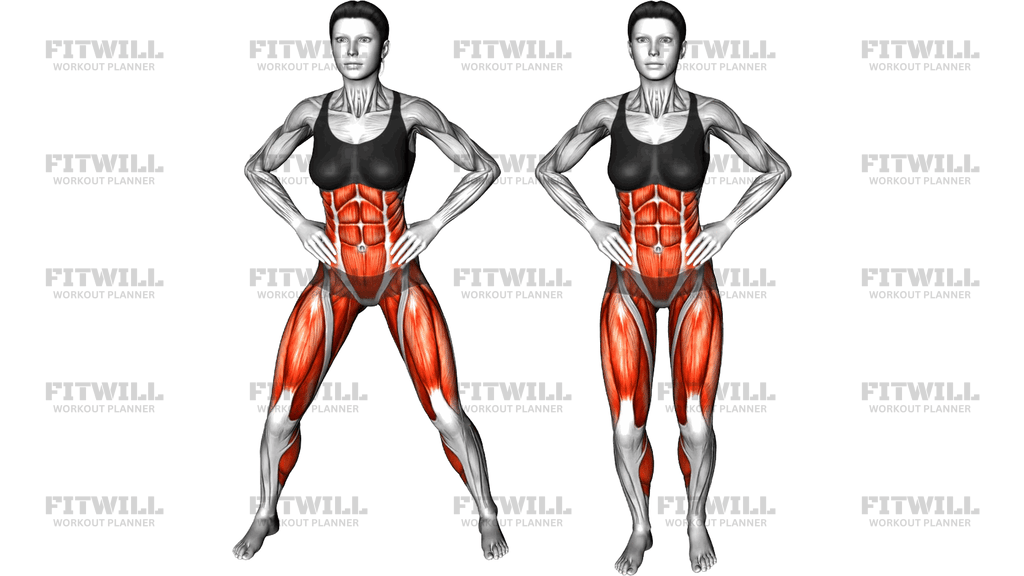
The Backkick Side Step is a body weight rhythm drill that combines a rear heel kick with a lateral step, taking you from a narrow standing stance out to a wide stance and back again. Each rep starts with one heel flicking up toward your glutes behind you, followed immediately by a side step that opens your legs into a wide, soft-knee position. Stepping back in with another backkick on the opposite leg closes the loop, so the whole pattern flows as one continuous, alternating movement.
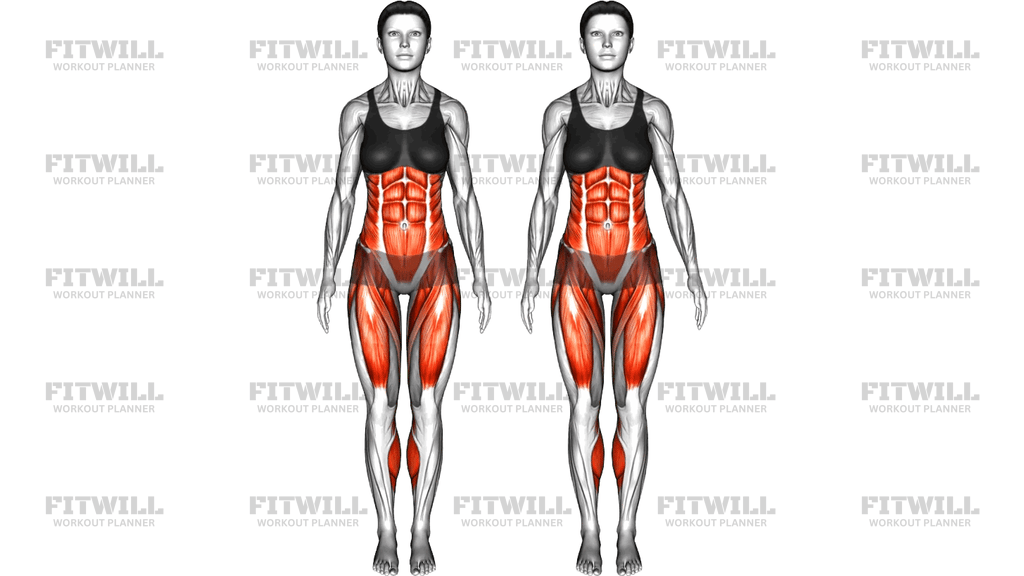
This is a low-equipment, low-impact way to wake up the entire lower body. The backkick recruits the glutes and hamstrings on the kicking leg, while the side step loads the quads, inner thighs, and outer hip muscles as you control your body weight over a wider base. Because you keep stepping and landing with control, your calves, ankle stabilizers, and core are working the whole time to keep you upright and balanced.
The setup matters more than it looks. Starting with feet about hip-width apart, hands resting lightly on your hips or at your sides, and your torso tall gives you a stable reference point. If your torso leans or your knees collapse inward on the wide stance, you lose the hip work that makes this drill worthwhile. Think of the wide stance as a controlled landing, not a sprawl: knees track over the toes, weight stays in the mid-foot, and your chest stays up.
The Backkick Side Step fits naturally into warm-ups, cardio circuits, and active recovery days. It raises your heart rate gently, loosens the hips after sitting, and rehearses the kind of lateral footwork that carries over to sports and everyday movement. Beginners can do it slowly with a shallow step; more experienced trainees can speed it up, widen the stance, or add a slight squat on the wide position for extra challenge.
Stay honest with the tempo. The most common fault is snapping the heel back so fast that your lower back arches and the kick becomes a lower back movement instead of a hip one. Keep the kick crisp but controlled, let the glute do the lifting, and breathe steadily throughout. If your knees complain on the wide stance, narrow it slightly and keep the bend shallow until your legs adapt.
[ Workout Log & Planner ]
Put your next workout in Fitwill
Keep your plan and training log ready when you are.


Instructions
- Stand tall with your feet about hip-width apart, arms relaxed at your sides or hands resting lightly on your hips, and your gaze forward.
- Brace your core lightly and shift your weight onto one leg so the other foot is ready to move.
- Kick your free heel back and up toward your glutes, bending the knee and letting the hip extend slightly without arching your lower back.
- As that foot lands, step it out to the side into a wide stance, softening both knees and keeping your chest upright.
- Hold the wide position for a moment with your weight balanced evenly across both mid-feet and your knees tracking over your toes.
- Kick the opposite heel back toward your glutes and use that momentum to step the feet back together to the narrow starting stance.
- Continue alternating sides, moving at a steady rhythm you can maintain without holding your breath.
- Exhale on each side step and inhale as you bring the feet back together.
- Reset your posture between sets: stand tall, shake out the legs, and check that your knees stayed quiet and pain-free.
Tips & Tricks
- If your lower back arches during the backkick, shorten the kick and focus on squeezing the glute of the working leg instead of flicking the heel higher.
- Knees caving inward on the wide stance is the most common fault here; cue yourself to push the floor apart with your feet as you land.
- Keep the backkick on the same side as the stepping leg so the pattern stays clean, rather than mixing up opposite-side coordination.
- Land the side step softly through the mid-foot, not the toes, so your calves and ankles are not doing all the shock absorption.
- Your hands should rest on your hips, not press into them; pushing on your thighs or hips changes the balance demand of the drill.
- If you wobble on the wide stance, narrow it by a few inches before adding speed, a deeper knee bend, or faster alternations.
- Wear shoes with a flat, grippy sole or do the drill barefoot on a non-slip surface, since the lateral step needs traction.
- Start with 20 to 30 seconds of slow reps to groove the rhythm before turning it into a faster cardio interval.
- Stop and shorten your stance if you feel pinching at the front of either knee during the wide position.
Frequently Asked Questions
Which muscles does the Backkick Side Step work the most?
The glutes and hamstrings drive the backkick, while the quads, inner thighs, and outer hip muscles control the wide side step. Your abs and calves stay active throughout to keep you balanced and moving.
Is the Backkick Side Step a cardio exercise or a strength exercise?
It sits in between, but it leans toward aerobic work when done continuously. Slower reps with a deliberate wide stance shift it toward muscle endurance for the hips and legs.
Can beginners do the Backkick Side Step?
Yes. Start with a shallow side step and a gentle kick, moving slowly enough to stay balanced. Once the pattern feels natural, widen the stance and pick up the pace.
Why do my knees drift inward when I step out to the wide stance?
That usually means the outer hip muscles are not controlling the landing. Slow the step down, think about pressing the floor apart with your feet, and keep the knee bend shallow until the position feels stable.
Should I feel the backkick in my lower back?
No. If your lower back arches or aches, the kick is too big or coming from the spine instead of the hip. Keep the heel flick modest and squeeze the glute on the kicking leg to do the work.
What can I use instead of the Backkick Side Step?
Standard butt kicks, side-lying leg raises, lateral band walks, or slow side lunges all train similar hip and thigh muscles. The Backkick Side Step is simply a standing way to combine the rear kick with lateral footwork.
Do I need any equipment or much space for the Backkick Side Step?
No equipment is needed, and you only need enough room to step your feet out to a comfortable wide stance. A non-slip floor or supportive shoes are the main practical requirements.
How long should I perform the Backkick Side Step in a warm-up?
Around 30 to 60 seconds of continuous, controlled reps is enough to raise your heart rate and loosen the hips. Keep the pace moderate so the pattern stays clean rather than rushed.
Is it safe to do the Backkick Side Step every day?
For most people, yes, since it is a low-impact body weight drill. Reduce the volume or widen your recovery days if your hips, knees, or calves feel persistently sore afterward.