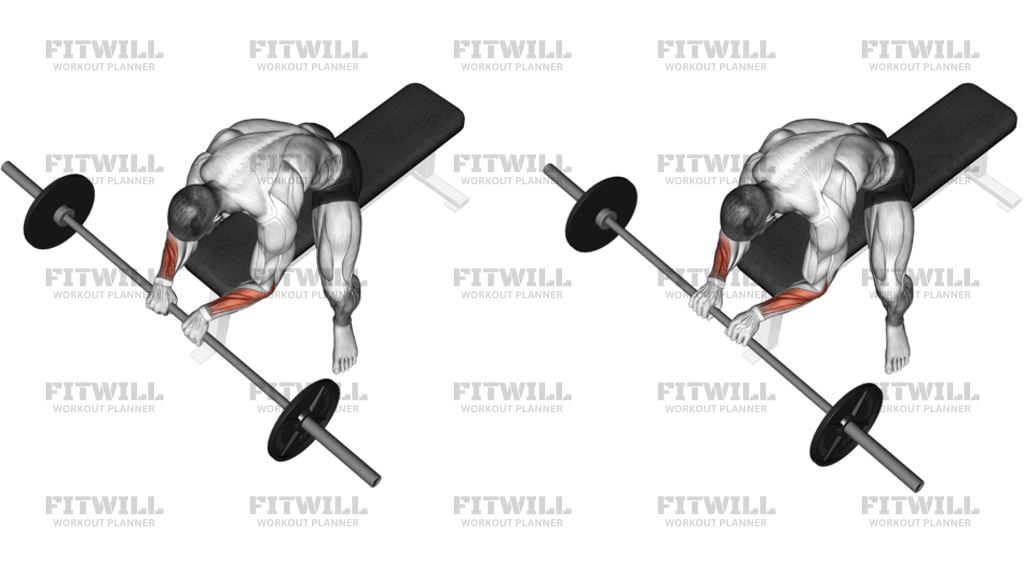
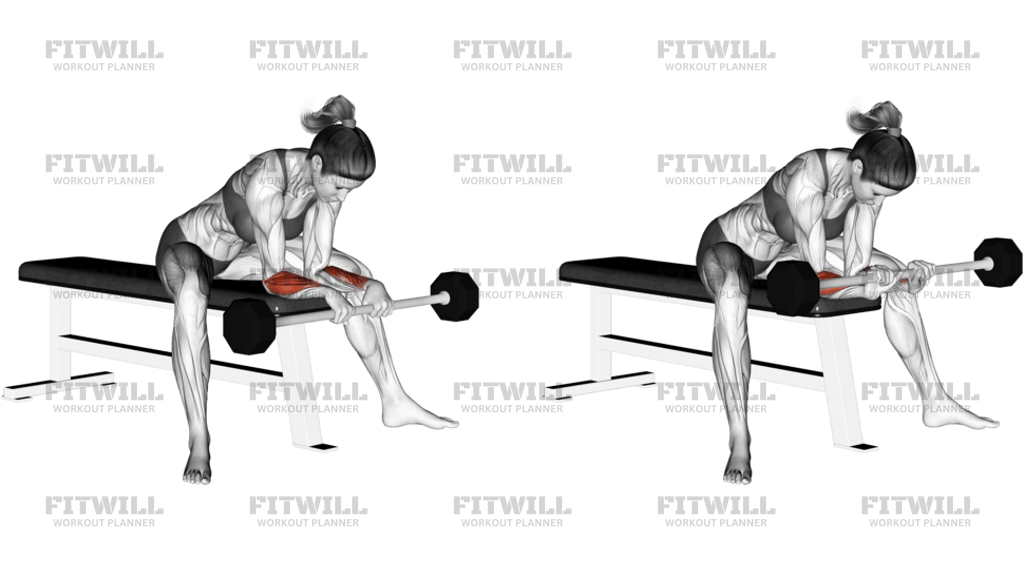
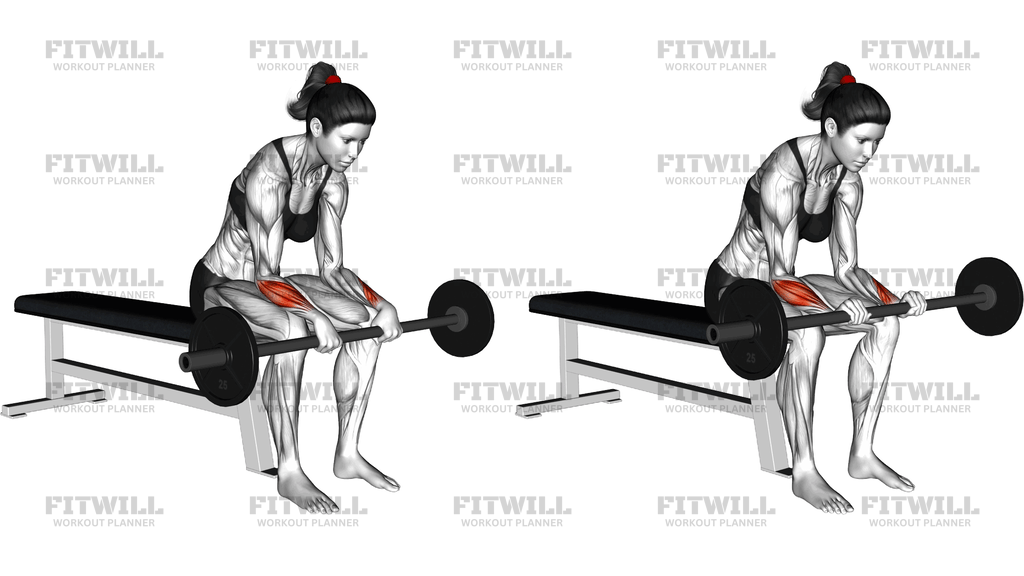
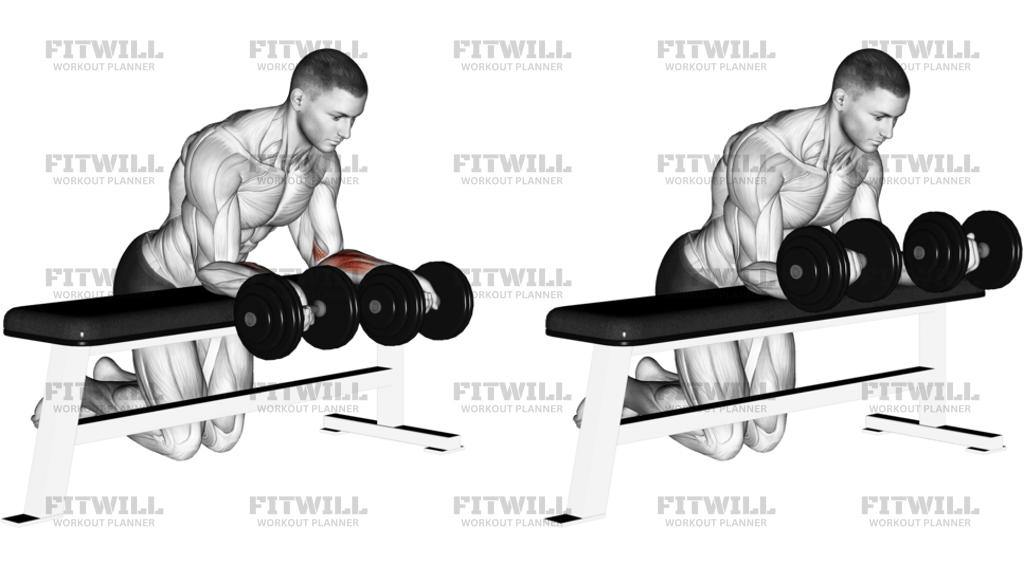
Bodyweight Wrist Ulnar Deviation With Elbow Suppor
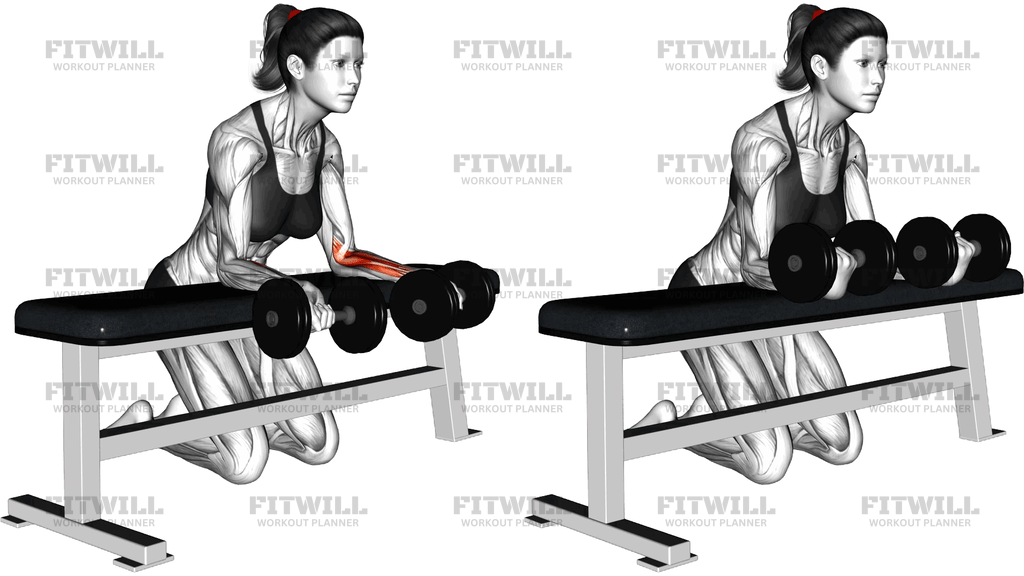
Bodyweight Wrist Ulnar Deviation With Elbow Support is a small, focused forearm exercise that trains the wrist's ability to bend sideways toward the pinky finger, a motion known as ulnar deviation. You kneel beside a flat bench, lay one forearm along the pad with the elbow bent and the hand closed in a relaxed fist, and use your free hand to steady the working forearm. From there, you tilt the wrist up and across the body toward the little-finger side, then lower it back down under control. Because the bench supports the elbow, the only moving joint is the wrist, which makes this one of the cleanest ways to isolate the ulnar deviation muscles.
The main muscles at work are the extensor carpi ulnaris on the top-outer forearm and the flexor carpi ulnaris on the underside, with a network of smaller wrist stabilizers helping to control the path. These are the same muscles that brace your wrist when you swing a racquet, hammer a nail, carry a heavy bag, or absorb contact in sports like tennis, hockey, and climbing. Most people train wrist flexion and extension but skip the sideways plane entirely, which leaves a noticeable gap in grip and wrist durability.
This movement suits lifters who want stronger wrists for pressing, athletes recovering general wrist condition after a layoff, and anyone whose wrists ache from typing or repetitive gripping. The kneeling bench setup makes it very beginner friendly: the range is short, the resistance is only the weight of your own hand and forearm, and the supported elbow removes any need to fight gravity or stabilize the upper arm.
Setup matters more here than in most forearm work. Your forearm should rest flat on the bench with the elbow roughly at a right angle and the hand hanging just past the edge so the wrist can move freely. If the elbow drifts or the forearm rolls, the motion turns into a shoulder or elbow movement and the target muscles stop doing the work. Keep the fist relaxed rather than clenched so the effort stays in the deviation muscles instead of shifting into a static grip squeeze.
Execute the rep by tilting the hand upward toward the pinky side as far as it comfortably goes, pausing briefly, then lowering it slowly back past neutral toward the thumb side before starting the next rep. The tempo should feel deliberate, almost slow-motion, because the muscles involved are small and respond better to control than to speed. Breathe steadily throughout and keep the shoulders relaxed.
Use this exercise near the end of an upper-body or grip session for two to three sets of fifteen to twenty controlled reps per side. Stop short of any sharp wrist pain, and if the joint feels irritated, reduce the range before reducing the reps. Mild working fatigue in the outer forearm is the goal; pinching at the wrist line is a signal to ease off and reset your forearm position on the bench.
[ Workout Log & Planner ]
Put your next workout in Fitwill
Keep your plan and training log ready when you are.


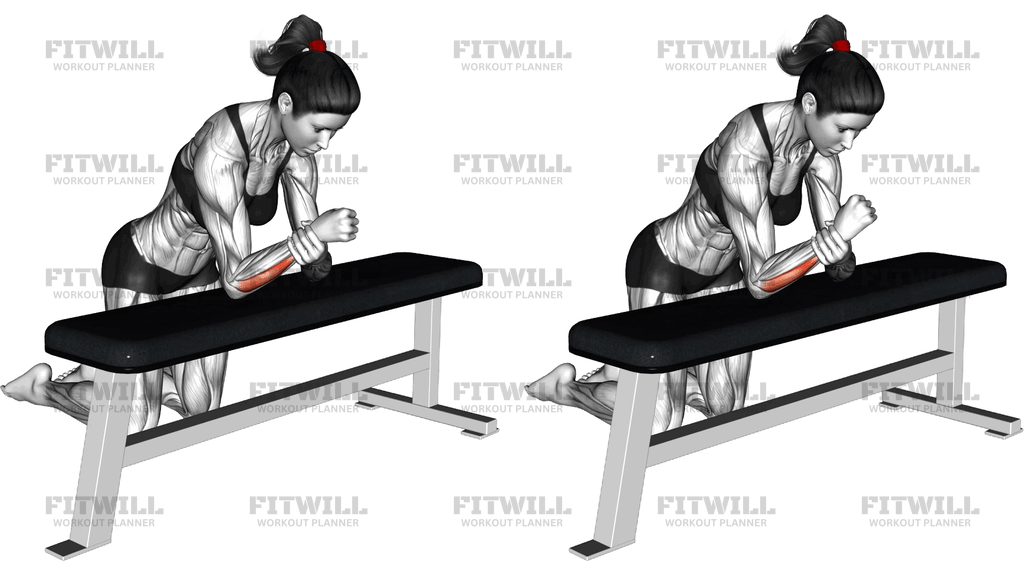
Instructions
- Kneel beside a flat bench and place your working forearm along the pad, elbow bent so the forearm runs across the bench and the closed hand extends just past the edge.
- Grip the working forearm just above the wrist with your free hand to pin it lightly against the bench and keep the elbow from drifting.
- Let the hand hang in a relaxed fist, wrist roughly straight, and settle your shoulders down away from your ears.
- Brace your core lightly and keep your torso still so the shoulder and elbow stay planted for the whole set.
- Tilt your hand up and toward your pinky finger, bending the wrist sideways into ulnar deviation as far as it moves comfortably.
- Hold the top position for a beat and feel the contraction along the outer edge of the forearm.
- Lower the hand slowly back through straight and slightly toward the thumb side before starting the next rep.
- Exhale as you tilt up and inhale as you lower, keeping the breath steady and the fist loose.
- Complete all reps on one side, then reposition the bench or your stance and repeat on the other forearm.
- Between sets, gently open and close the hand a few times to reset the wrist before the next set.
Tips & Tricks
- Keep the fist soft; squeezing hard recruits the grip muscles and steals work from the ulnar deviation muscles you are targeting.
- If your elbow slides forward on the bench, shorten your position so the forearm sits fully on the pad with the elbow directly under the shoulder line.
- The sideways range of motion is short by nature; chasing extra distance by rolling the forearm only strains the joint, so stop where the tilt naturally ends.
- Do not let the wrist collapse toward the thumb side at the bottom; control the descent past neutral instead of dropping it.
- If the bench edge digs into your wrist, shift the forearm so the bony wrist crease clears the edge and only the forearm contacts the pad.
- Resting the whole body weight through the working elbow can numb the arm; keep only light contact pressure on the bench.
- Slow the lowering phase to two or three seconds; the small forearm muscles respond to controlled tempo far more than to fast reps.
- If one side feels weaker or stiffer, start your sets on that side and match the reps with the stronger arm.
- Warm the wrists up with a few gentle circles before starting; cold ulnar deviation reps can feel pinchy even at light resistance.
Frequently Asked Questions
Which muscles does the Bodyweight Wrist Ulnar Deviation With Elbow Support work?
It primarily targets the extensor carpi ulnaris on the outer forearm, with the flexor carpi ulnaris assisting on the underside. Smaller wrist stabilizers help control the sideways path.
Why does this exercise use a bench for elbow support?
Supporting the forearm and elbow on the bench removes movement from the shoulder and elbow, so the wrist joint alone travels through the deviation. This isolates the target muscles and makes the exercise easy to learn.
Is the Bodyweight Wrist Ulnar Deviation With Elbow Support suitable for beginners?
Yes. The resistance is only the weight of the hand and forearm, the setup is stable, and the short range is easy to control, making it a good first wrist exercise.
How is ulnar deviation different from a regular wrist curl?
A wrist curl bends the wrist up and down, while ulnar deviation tilts the hand sideways toward the pinky finger. The two motions train different muscle groups along the edges of the forearm.
Should my hand be in a fist during the movement?
A loose fist works best. Clenching tightly turns the exercise into a static grip hold and reduces the isolation of the ulnar deviation muscles.
How many reps and sets should I do?
Two to three sets of fifteen to twenty slow reps per side works well. Because the resistance is light, higher reps with strict control beat low-rep effort.
What is the most common mistake in this exercise?
Letting the elbow slide or the forearm roll on the bench, which turns the tilt into a shoulder and elbow motion. Pin the forearm with your free hand and keep the movement only at the wrist.
What can I use if I do not have a bench?
Any padded surface at about knee height works, such as a sturdy table edge with a towel on top or your own thigh while seated. The key is that the forearm is supported and the hand hangs free.
My wrist clicks or pinches when I tilt toward the pinky side. Is that normal?
A painless click is common and usually harmless, but pinching or sharp discomfort means you should shorten the range and slow down. If the discomfort persists, skip the exercise and have a professional assess the wrist.
Who benefits most from training ulnar deviation?
Racquet sport players, climbers, golfers, and manual workers who grip and twist all day benefit most, since the pinky-side wrist muscles brace the joint under load in all of those activities.