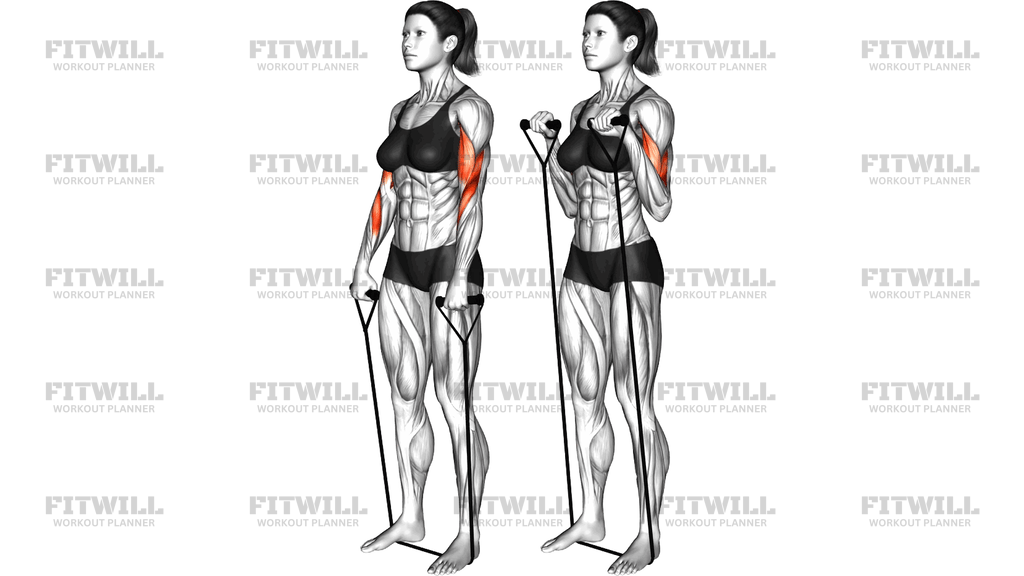
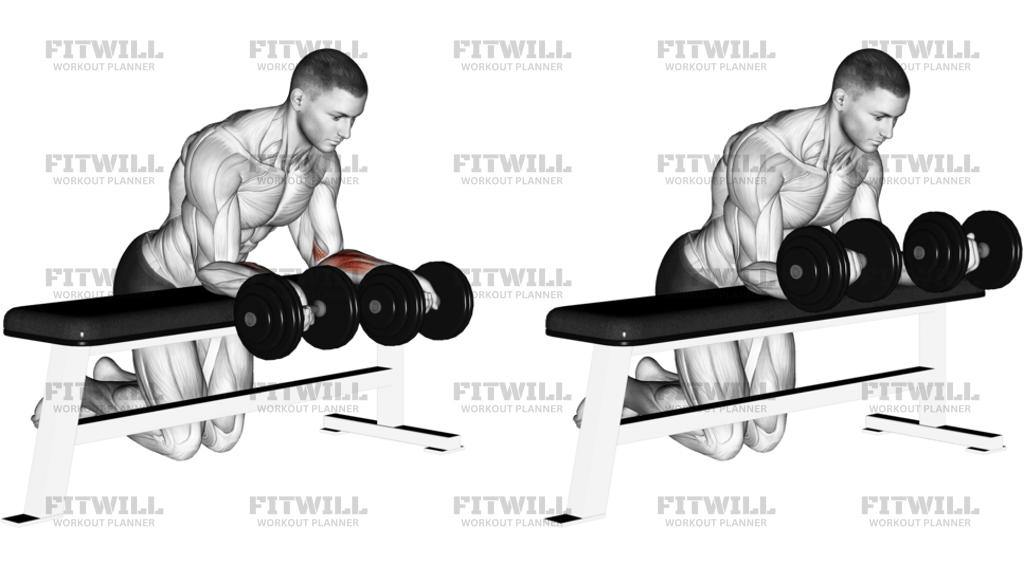
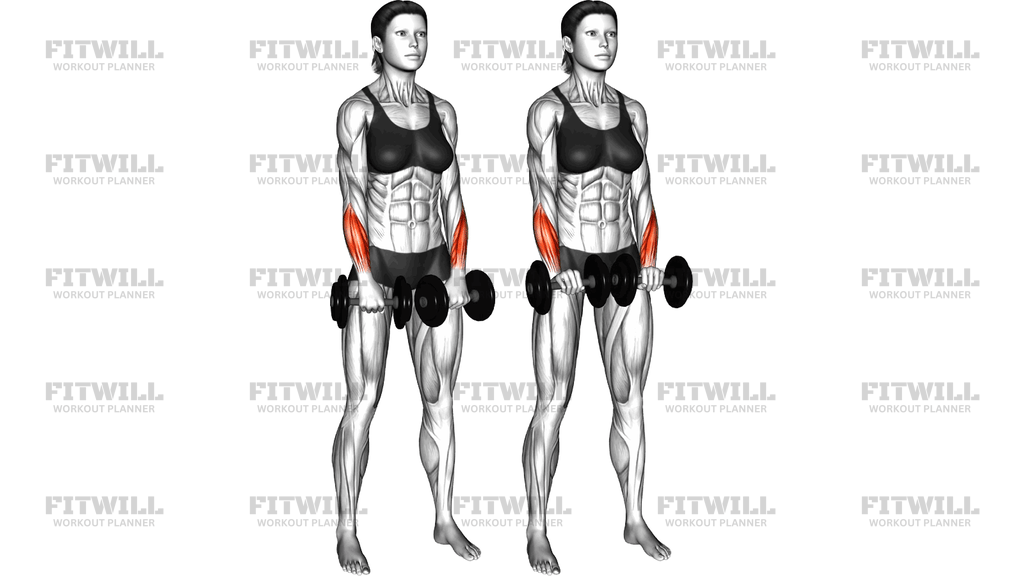
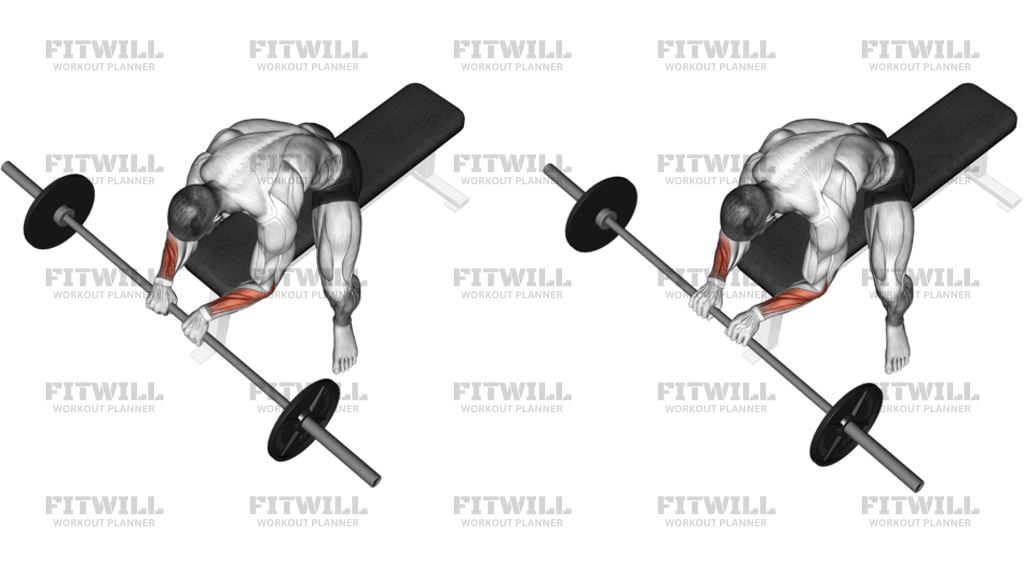
Dumbbell Reverse Wrist Curl
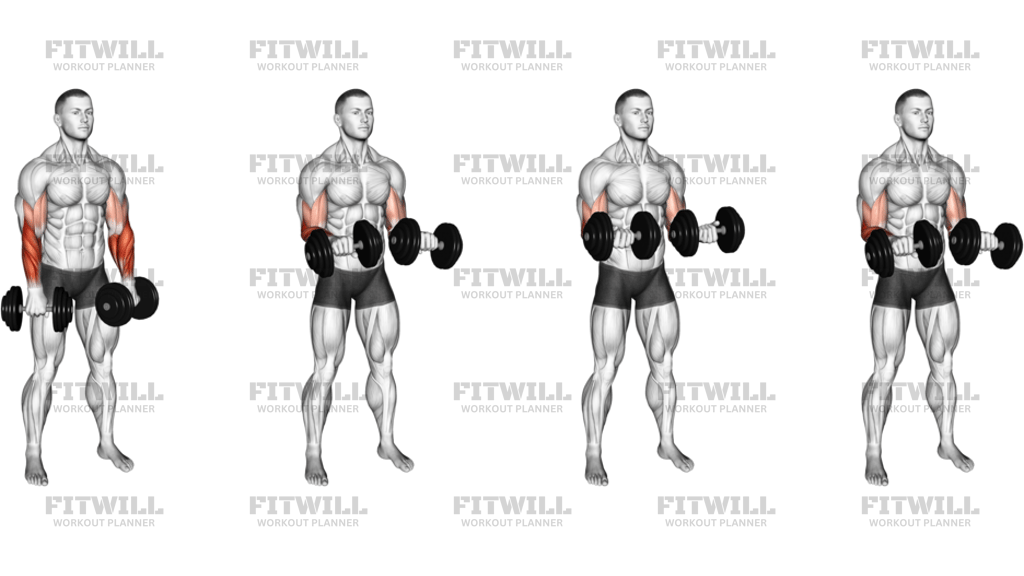
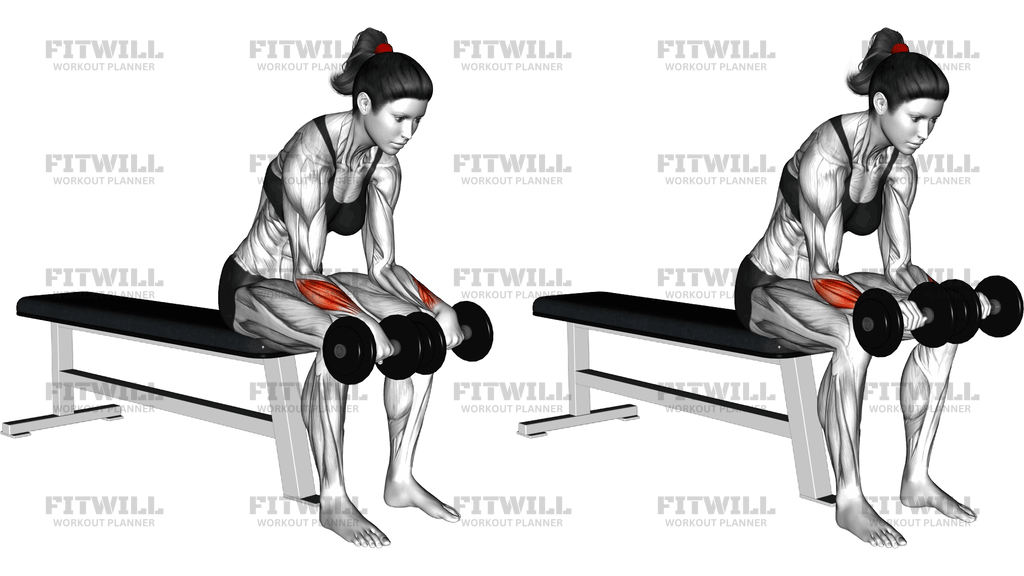
The Dumbbell Reverse Wrist Curl is a forearm isolation exercise performed seated on a flat bench, with your forearms resting on your thighs and a dumbbell in each hand held with an overhand grip. Unlike the standard wrist curl, which trains the flexors on the underside of the forearm, this version works the muscles on the top of the forearm — the wrist extensors — by hinging the wrist backward and returning it under control. It is a small, precise movement, but the muscles it targets play a large role in grip strength, wrist health, and overall arm development.
This exercise is especially useful for anyone whose training or daily life loads the hands heavily. Climbers, martial artists, and golf or tennis players all benefit from stronger extensors, and lifters often find that balanced forearm work improves how their wrists feel during pressing and pulling. Because the flexors usually get more work than the extensors in regular training, this movement fills a common gap and helps keep the forearm development even on both sides of the arm.
Setup matters more here than in most exercises. Sitting at the end of the bench with your feet flat on the floor, lean forward and lay the backs of your forearms along your thighs so the wrists hang just past the knees, free to move through their full range. The overhand grip means the dumbbells sit in your fingers at the bottom of the movement, so keep the weight moderate — the extensors are smaller muscles and respond better to strict reps than to heavy, sloppy ones.
To perform the movement, let the wrists slowly bend downward so the knuckles drop toward the floor, then curl the backs of your hands up toward the ceiling as high as they will comfortably go, squeezing the top of the forearm at the peak. Lower the dumbbells back down with control, allowing a full stretch at the bottom before starting the next rep. The path is short — the wrists only travel a few inches — but that short arc should feel deliberate from start to finish.
Keep the movement isolated to the wrists. If your elbows lift off your thighs or your shoulders hunch to help the weight up, the load is too heavy or the set has run its course. Because the wrists stay unsupported beyond the knees, jerking or bouncing the dumbbells places unnecessary stress on the joint, so smooth tempo and honest weight selection are the real keys to progress here.
[ Workout Log & Planner ]
Put your next workout in Fitwill
Keep your plan and training log ready when you are.


Instructions
- Sit at the end of a flat bench with your feet flat on the floor about hip-width apart.
- Hold a dumbbell in each hand with an overhand grip, palms facing down, and lean forward from the hips.
- Rest the backs of your forearms along your thighs so your wrists hang just past your knees with the dumbbells free to move.
- Keep your back flat and your core lightly braced; your torso should stay still for the entire set.
- Slowly let your wrists bend downward, lowering the dumbbells toward the floor until your knuckles point down and you feel a stretch across the top of the forearms.
- Curl the backs of your hands upward toward the ceiling, lifting the dumbbells as high as your wrists allow without lifting your forearms off your thighs.
- Pause briefly at the top and squeeze the muscles along the top of your forearms.
- Lower the dumbbells back down over two to three seconds until the wrists are fully bent again.
- Exhale as you curl the wrists up and inhale as you lower them back down.
- Finish the set, then set the dumbbells on the floor before standing, and shake out your wrists between sets.
Tips & Tricks
- The most common mistake is turning this into a row or hammer curl by lifting the elbows off the thighs — once the forearms leave your legs, the wrists stop doing the work, so lighten the load and pin the forearms back down.
- Let the dumbbell roll slightly into your fingertips at the bottom of each rep; this lengthens the working muscles before they contract, which is part of what makes the exercise effective.
- Choose dumbbells you can control for 12–15 strict reps rather than weights that force jerky reps — the wrist extensors are small and the joint is exposed when momentum takes over.
- Keep a neutral spine as you lean over the bench; rounding your upper back to get your forearms into position fatigues the back long before the forearms get their stimulus.
- Move through the top of the range with intent — most people can lift the hands slightly higher than they realize, and that last bit of extension is where the muscles work hardest.
- If your wrists click or ache during the movement, reduce the range slightly and slow the tempo rather than stopping entirely; the discomfort usually comes from rushing a heavy weight through the end range.
- Pair this exercise with regular wrist curls in the same session so both sides of the forearm are trained and the wrist stays balanced in both directions.
- Set the dumbbells down before you stand up — getting to your feet with loaded hands while your forearms are fatigued is an easy way to drop a dumbbell on your foot.
Frequently Asked Questions
Which muscles does the Dumbbell Reverse Wrist Curl work?
It primarily targets the wrist extensors along the top of the forearm, with support from the brachioradialis and the gripping muscles of the hand. The forearm flexors are largely uninvolved because the overhand grip reverses the direction of the wrist movement.
Why is the overhand grip used instead of an underhand grip?
With palms facing down, bending the wrists upward works the extensor muscles on top of the forearm, which is what distinguishes this exercise from the standard wrist curl. An underhand grip would shift the effort to the flexors on the underside instead.
Is the Dumbbell Reverse Wrist Curl suitable for beginners?
Yes, and it is actually a good early exercise for building balanced forearm strength. Beginners should start with very light dumbbells, 1–3 kg, and focus on smooth, controlled reps while keeping the forearms planted on the thighs.
How high should I lift my hands at the top of the movement?
Curl the backs of your hands up as far as your wrists allow comfortably, usually so the knuckles rise above the level of your forearms. Your forearms must stay in contact with your thighs throughout — any lift beyond that comes from the arms, not the wrists.
Can I do the Dumbbell Reverse Wrist Curl standing or with a barbell?
You can perform the same wrist extension with a barbell or while standing with forearms supported on a bench or rack pad, but the seated dumbbell version lets each wrist work independently. That makes it easier to spot and fix a strength difference between your left and right sides.
Why do my forearms stay weak on this exercise even with light dumbbells?
The wrist extensors are small muscles with a short range of motion, so they fatigue quickly and rarely lift impressive loads. Training them in the 12–20 rep range with strict form and progressing slowly works better than chasing heavier dumbbells.
How is this exercise different from the regular Dumbbell Wrist Curl?
The regular version uses an underhand grip and curls the palms upward, training the flexors on the underside of the forearm. The Dumbbell Reverse Wrist Curl uses an overhand grip and lifts the backs of the hands, so the emphasis shifts to the extensors on top.
How often should I include the Dumbbell Reverse Wrist Curl in my training?
Two to three sessions per week is plenty for most lifters, since the muscles recover quickly from light, high-rep work. It slots in well at the end of an upper-body or arm workout when the hands are already warm.
Is it safe if my wrists feel uncomfortable during the exercise?
Mild fatigue or burning in the forearms is normal, but sharp joint discomfort is a signal to adjust. Lighten the weight, shorten the range slightly, and slow the tempo; if discomfort persists, stop and have the wrist assessed before continuing.