Dumbbell Over Bench Reverse Wrist Curl
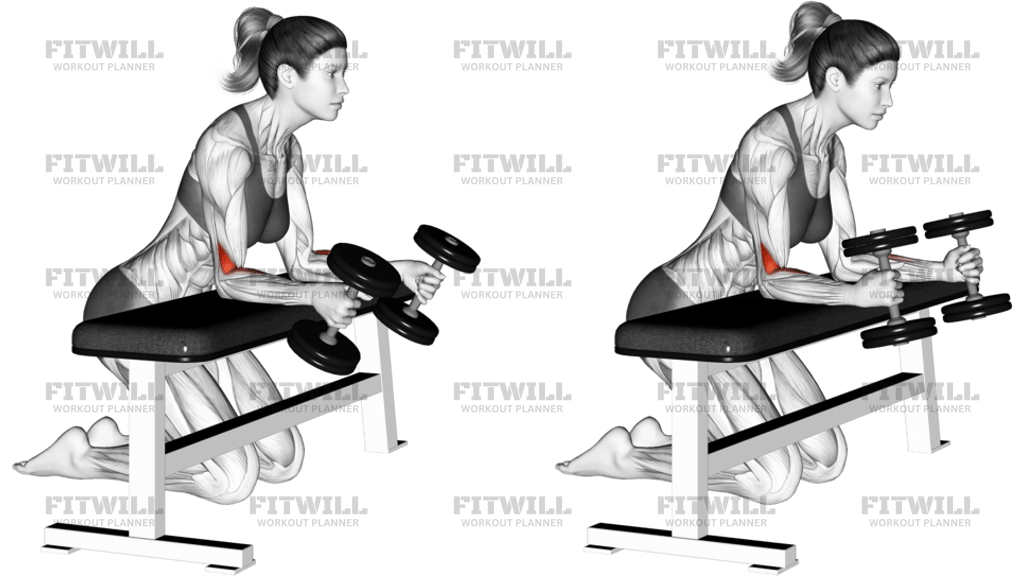
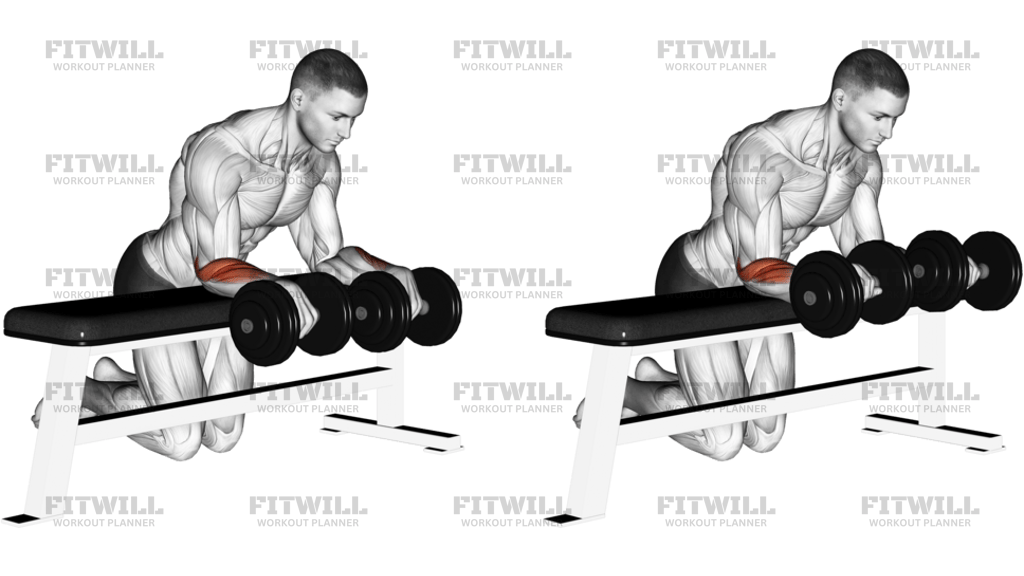
Dumbbell Over Bench Reverse Wrist Curl is a bench-supported wrist extension exercise that targets the forearm muscles on the back of the wrist while also asking the brachioradialis and grip to steady the dumbbells. The image shows a kneeling setup behind a flat bench with the forearms resting on the pad and the hands hanging just past the edge, which keeps the motion honest and isolates the wrist joint.
This variation is useful when you want direct forearm work without involving the shoulders, back, or hips. Because the load sits far from the wrist joint, even a small dumbbell can feel challenging, so the exercise is usually best treated as a controlled accessory movement rather than a heavy strength lift.
The setup matters. Place both forearms flat on the bench, keep the wrists just off the edge, and start with the palms facing down so the backs of the hands can move toward the forearms. From there, the dumbbells should travel only through wrist extension and wrist flexion. The forearms stay planted; the elbows do not slide forward; the torso stays quiet.
At the top, the wrists should be fully lifted but not aggressively cranked back. On the way down, let the hands lower slowly until you feel a clear stretch in the forearm extensors, then reverse the motion without bouncing. That controlled bottom position is where many people rush, but it is also where the movement gets its training effect.
Use Dumbbell Over Bench Reverse Wrist Curl after pulling sessions, direct arm work, or as part of a forearm block. It can help build wrist resilience for gripping, rowing, climbing, and general arm training. Keep the load modest and the tempo deliberate so the forearm muscles do the work instead of the rest of the body compensating.
[ Workout Log & Planner ]
Put your next workout in Fitwill
Keep your plan and training log ready when you are.


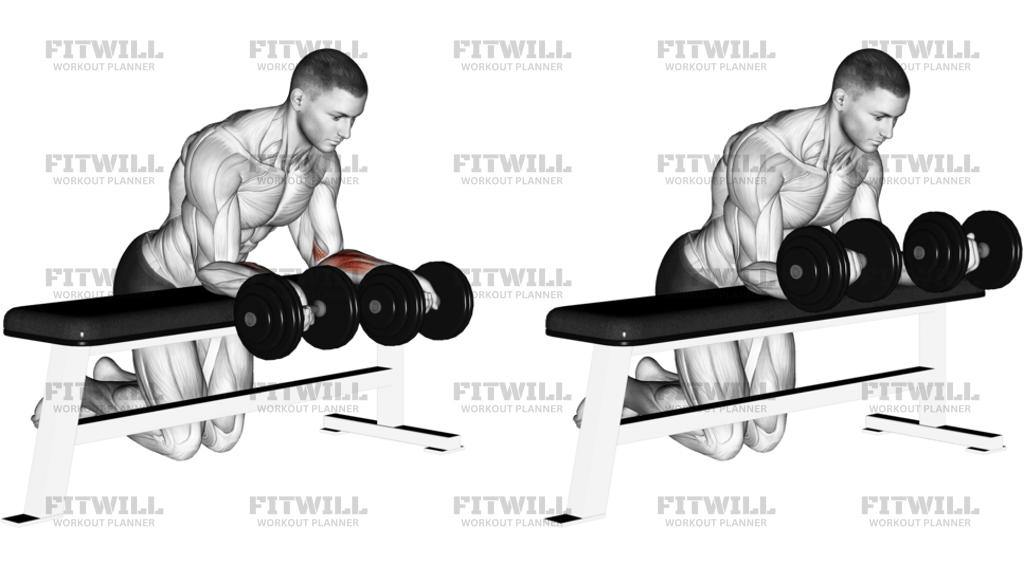
Instructions
- Kneel behind a flat bench and place both forearms across the pad with your wrists and dumbbells hanging just past the near edge.
- Hold a dumbbell in each hand with your palms facing down and your forearms planted firmly on the bench.
- Start with your wrists lowered so the backs of your hands hang below the bench edge in a comfortable stretched position.
- Brace your forearms against the pad and keep your elbows still before you begin the first rep.
- Curl the backs of your hands upward by extending the wrists until the dumbbells come up toward the forearms.
- Squeeze briefly at the top without letting the elbows lift or the shoulders shrug.
- Lower the dumbbells slowly until the wrists drift back below the bench edge under control.
- Repeat for the planned reps, then set the dumbbells down carefully before changing sides or ending the set.
Tips & Tricks
- Keep the bench edge just under the wrist joint so the hand can move freely without the forearm sliding around.
- Choose a lighter dumbbell than you think you need; the long lever makes this movement feel heavier than it looks.
- Let the dumbbell sit deep in the fingers, but do not crush the handle so hard that the forearm flexors take over.
- Move only the wrists; if the elbows start to shift or the shoulders lean in, reset the setup.
- Use a smooth lifting pace and a slower lowering phase to keep tension on the wrist extensors.
- Stop the top position before the wrists bend backward painfully; the goal is extension, not joint strain.
- Match the range on both arms so the weaker side does not shorten the rep to hide the difference.
- If the forearms cramp early, reduce the weight first before shortening the range or speeding up the reps.
Frequently Asked Questions
What muscles does Dumbbell Over Bench Reverse Wrist Curl work?
It mainly trains the wrist extensors on the back of the forearm. The grip and brachioradialis also help stabilize the dumbbells while the wrists move.
Should my forearms stay on the bench the whole time?
Yes. The forearms should stay planted on the pad so the motion comes from the wrists instead of the elbows or shoulders.
Where should the dumbbells sit at the start?
The handles should rest low in your hands with the wrists hanging just past the bench edge so you can get a clear stretch before curling up.
Is this the same as a normal wrist curl?
No. A normal wrist curl usually uses palms-up wrist flexion, while this version uses palms-down wrist extension to hit the opposite side of the forearm.
Can I do this one arm at a time?
Yes. Single-arm reps are a good option if one wrist is weaker or if you want to focus on cleaner control.
How heavy should the dumbbells be?
Light enough that you can keep the forearms pinned to the bench and move the wrists smoothly through every rep.
Why do my forearms burn so quickly on this exercise?
That burn is normal because the wrist extensors are small muscles and the lever arm is long. Reduce load if the burn turns into joint pain or you lose wrist control.
When should I use Dumbbell Over Bench Reverse Wrist Curl in a workout?
It fits well near the end of an upper-body session, after rows, curls, or other pulling work when you want direct forearm accessory volume.