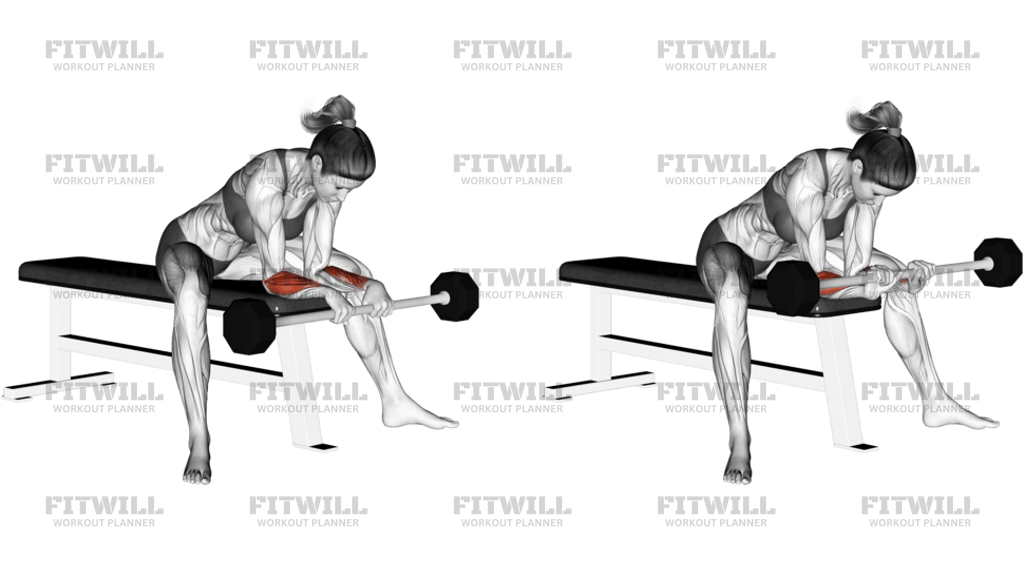
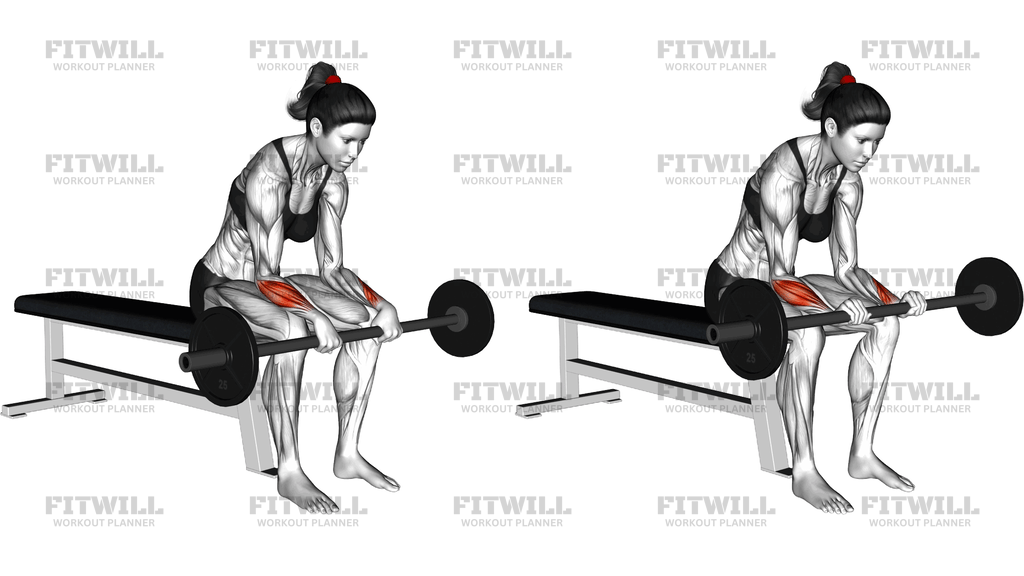
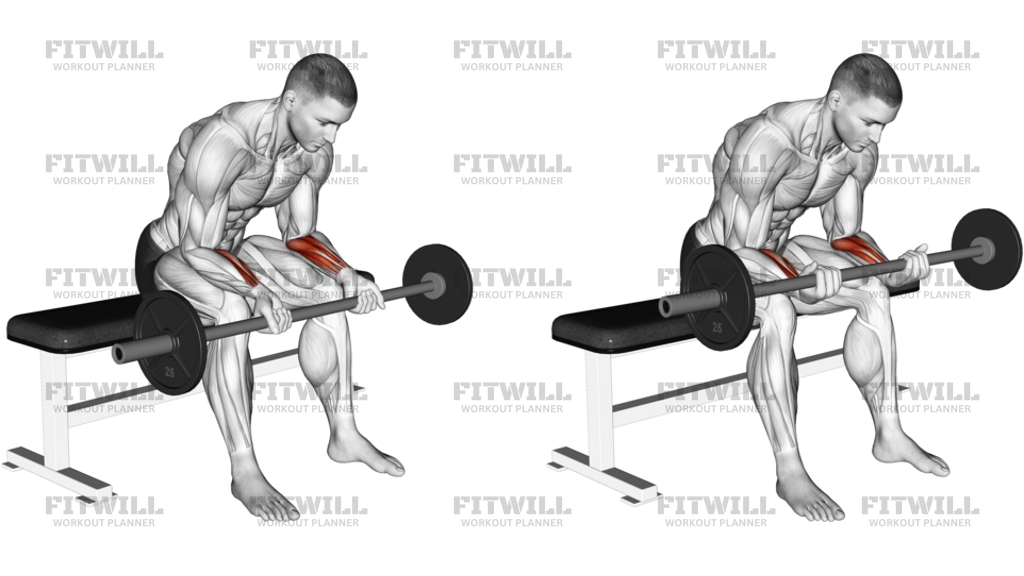
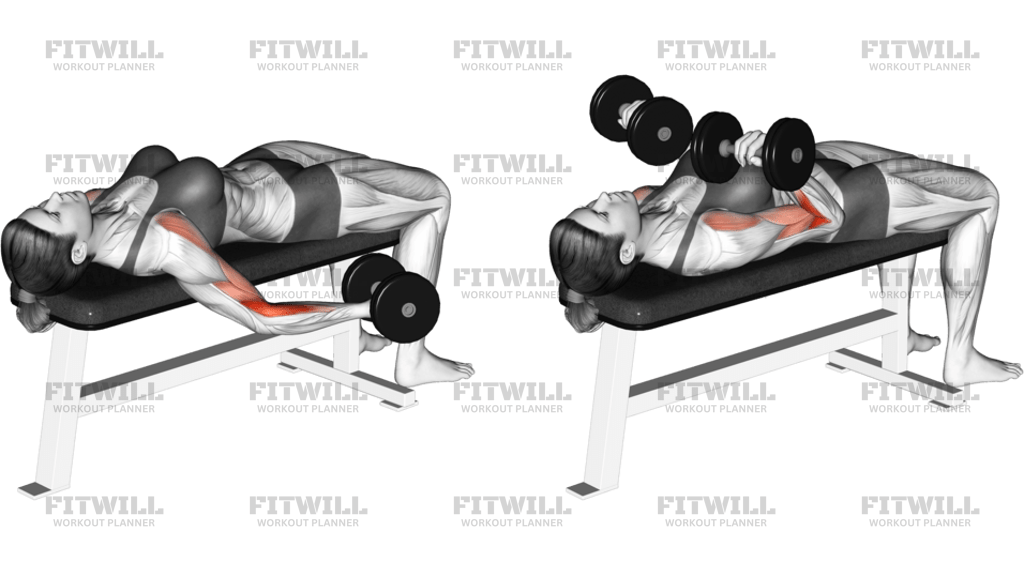
Bodyweight Wrist Radial Deviation With Elbow Suppo
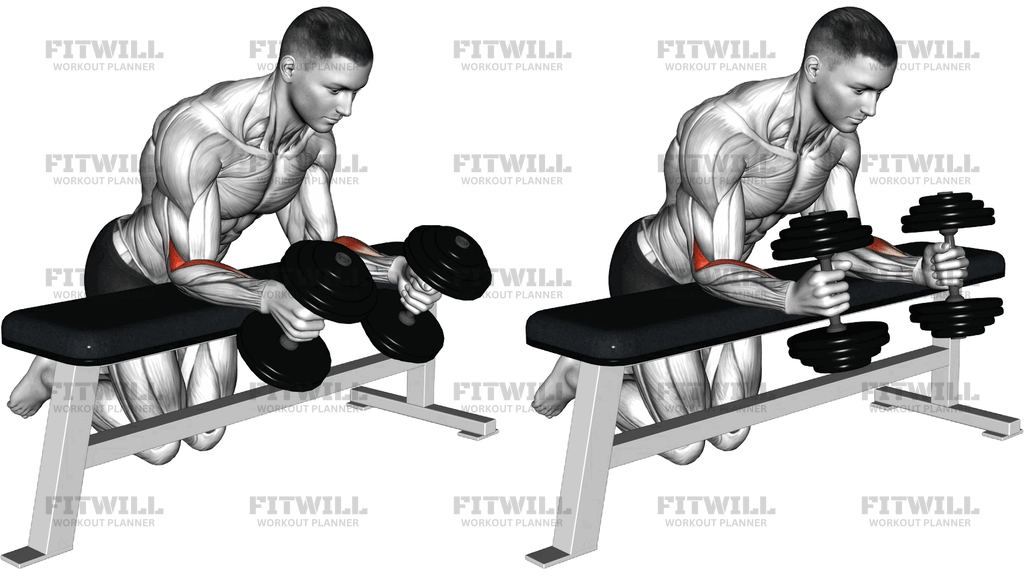
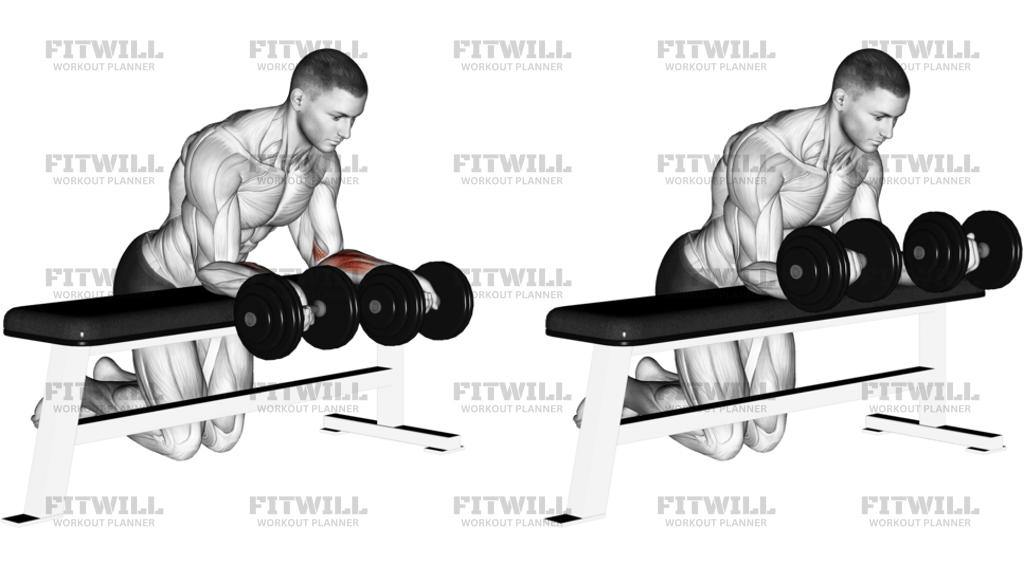
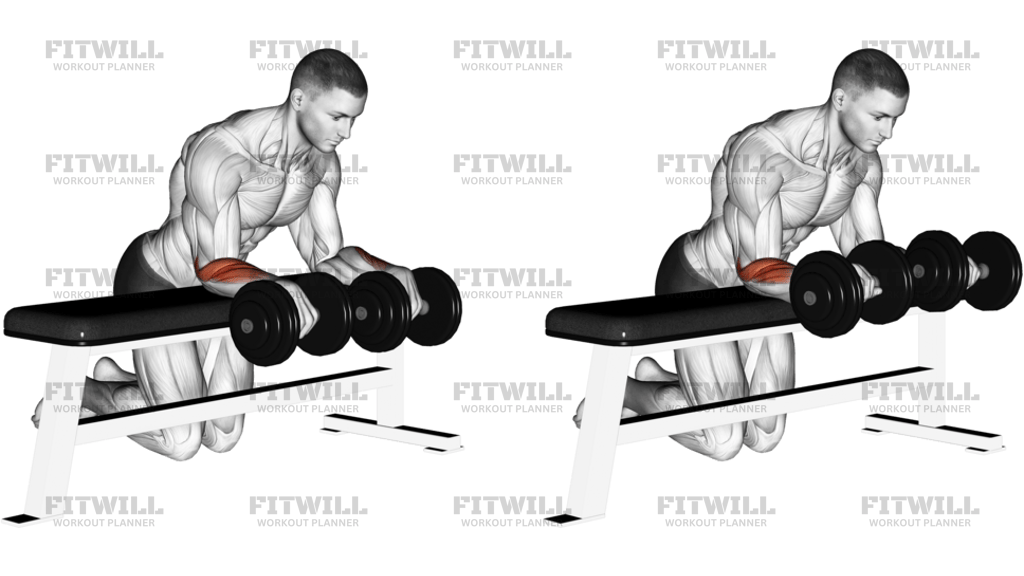
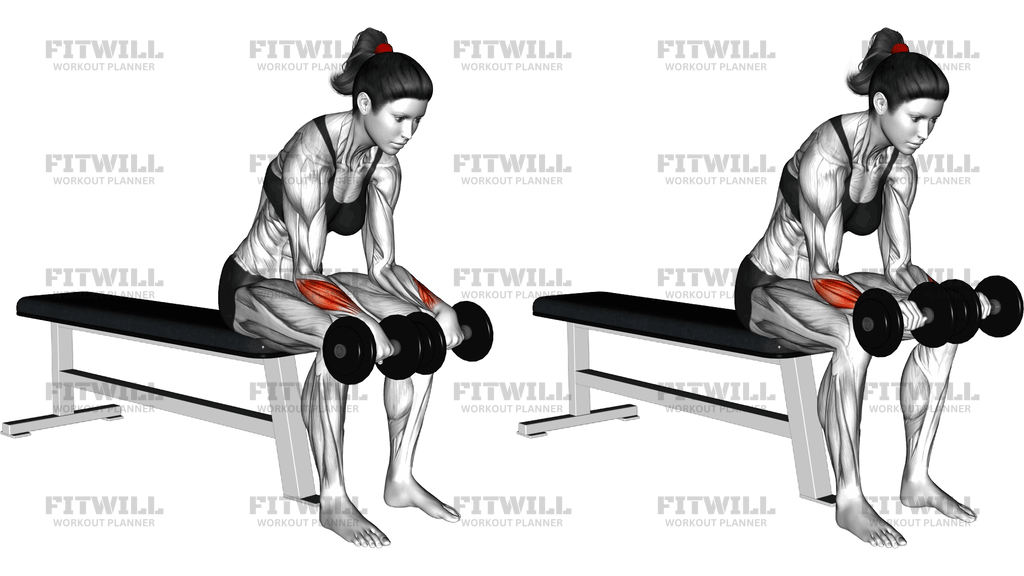
Bodyweight Wrist Radial Deviation With Elbow Support is a self-resisted forearm exercise that targets the muscles responsible for bending the wrist toward the thumb side of the hand. You kneel beside a flat bench, rest your forearm along the padded surface with your elbow bent and your hand closed in a fist, then use your free hand to grip the working wrist and provide manual resistance as the hand tilts upward and inward. Because the forearm is fully supported, the only joint in motion is the wrist, which makes the movement easy to isolate and control.
This drill is especially useful for people who need strong, resilient radial deviation strength: climbers, racket sport players, golfers, gymnasts, and anyone whose training or work loads the wrist on the thumb side. Radial deviation is often the weakest and most neglected of the four wrist movement directions, and the flexor carpi radialis and extensor carpi radialis muscles that drive it rarely get direct work in standard gym routines. Training them in isolation can support better wrist stability under pressing, carrying, and gripping demands.
The setup matters more than it might seem. Supporting the forearm on the bench removes momentum from the equation and pins the elbow so the wrist flexors and extensors do all the work. Closing the fist lets the hand act as a single rigid lever, and placing your resisting hand just above the wrist joint gives you a clean, adjustable point of resistance. If your supporting hand slips onto the hand itself or sits too far up the forearm, the resistance becomes mushy and hard to gauge.
To execute the movement well, keep the range short and deliberate: tilt the fist up toward the thumb side against steady pressure from your free hand, pause briefly at the top, then lower with control. The resistance should come from your own grip pushing against the movement, so you can fine-tune the effort second by second. Slow tempo and honest resistance matter far more here than range or speed.
A few practical points will keep this safe and effective. The wrist is a small joint with small leverage, so start lighter than you think you need to and build up over weeks, not days. Keep the forearm glued to the bench for every rep, breathe normally, and stop if you feel sharp pain rather than muscular effort. Because this is a self-resisted exercise, it works well as a warm-up primer, a strength accessory, or a rehabilitation-style drill, and you can train one side at a time to match the strength of each wrist.
[ Workout Log & Planner ]
Put your next workout in Fitwill
Keep your plan and training log ready when you are.


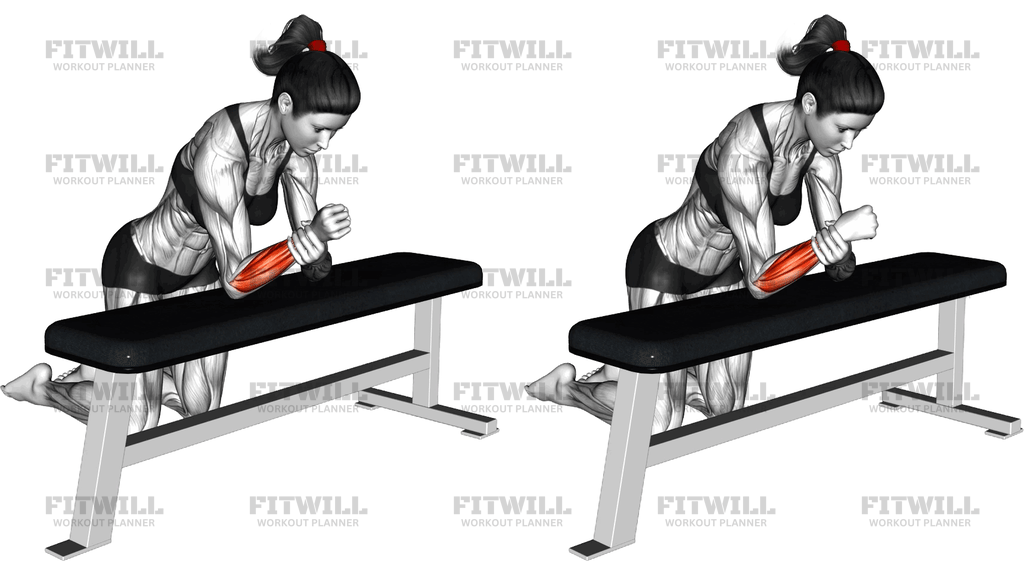
Instructions
- Kneel beside a flat bench and rest one forearm along the bench pad with your elbow bent so the forearm lies flat and the hand hangs just past the edge.
- Close the working hand into a firm fist and rotate it so the thumb side faces up.
- Wrap your free hand around the working wrist just above the joint to act as the point of resistance.
- Brace your torso and keep your shoulder, elbow, and forearm in contact with the bench for the entire set.
- Tilt your fist up toward the thumb side (radial deviation) against steady pressure from your free hand.
- Pause briefly at the top of the tilt when the wrist reaches its comfortable end range.
- Lower the fist back down slowly, keeping tension from the free hand through the whole descent.
- Exhale as you lift the wrist, inhale as you return it to the start.
- Complete all reps on one side, then switch arms and reset your hand position on the bench.
- Adjust the pressure from your free hand between sets so the last reps stay slow and controlled rather than jerky.
Tips & Tricks
- Place your resisting hand directly above the wrist joint; gripping too far up the forearm gives you poor leverage and makes resistance inconsistent.
- Keep the fist clenched the whole time. A loose hand lets the wrist collapse and shifts stress away from the flexor carpi radialis and extensor carpi radialis.
- The most common mistake is rolling the whole forearm off the bench during the lift. If the elbow moves, the wrist is no longer doing the work, so pin the forearm and reduce the resistance if needed.
- Do not let the wrist drift toward the pinky side on the way down; the path should be a straight tilt up toward the thumb and straight back.
- Keep the tilt small at first. Radial deviation has a short natural range, and forcing extra range usually means the elbow or shoulder compensates.
- If you feel pinching on the thumb side of the wrist, ease off the resistance from your free hand before changing anything else.
- Match your self-applied resistance to a level where the lift takes two seconds and the lowering takes two to three seconds; if the fist snaps up, you are resisting too little or moving too fast.
- Treat each wrist separately in volume and effort, since the dominant hand is often noticeably stronger and can mask a weaker side.
- Use this as a prehab or warm-up drill before heavy pressing, pulling, or gripping work rather than as a heavy strength lift.
Frequently Asked Questions
What muscles does Bodyweight Wrist Radial Deviation With Elbow Support work?
The main movers are the forearm muscles that pull the wrist toward the thumb side, primarily the flexor carpi radialis and extensor carpi radialis, with supporting work from the surrounding wrist stabilizers. The grip also stays active because the working hand is held in a fist.
Why does the forearm need to rest on the bench during this exercise?
Supporting the forearm isolates the wrist joint so the small radial deviation muscles do all the work. Without the support, momentum from the elbow and shoulder can take over and the resistance becomes hard to control.
How do I create resistance with just my free hand?
Grip the working wrist just above the joint and apply steady pressure opposite to the direction your fist is tilting. Push harder to make the set more challenging and lighter to make it easier, adjusting within each set as needed.
Is Bodyweight Wrist Radial Deviation With Elbow Support suitable for beginners?
Yes, as long as beginners start with light self-applied resistance and a small range of motion. The supported position makes it one of the more controlled ways to train the wrists, but the joint is small, so progression should be gradual.
How many reps should I do per wrist?
Twelve to fifteen slow, controlled reps per side is a practical starting point. Because the resistance is self-applied, prioritize tempo and consistency over chasing a high number of fast reps.
What is the most common mistake with this movement?
Lifting the forearm or elbow off the bench so the shoulder and elbow generate the motion instead of the wrist. Another frequent error is gripping the hand instead of the wrist, which blurs the resistance point.
Can I do this exercise without a bench?
Yes, any padded surface of similar height works, such as a sturdy chair with a cushion or a stable box with a towel over the edge. The surface just needs to let your forearm lie flat and supported while your hand hangs free.
Who benefits most from training radial deviation?
Climbers, tennis and racket sport players, golfers, gymnasts, and lifters who press or carry heavy loads all place repeated demands on the thumb side of the wrist. Direct radial deviation work is one of the few ways to strengthen that specific motion.
Is it safe if my wrist is sore from training?
Mild muscular fatigue soreness is generally fine, but if the joint itself is painful, skip the session and let the wrist settle. Sharp or pinpoint pain during the tilt means you should reduce the resistance or stop and have the wrist assessed before continuing.
Should the fist move toward the thumb or the pinky?
In Bodyweight Wrist Radial Deviation With Elbow Support, the fist tilts toward the thumb side, which is what defines radial deviation. Moving toward the pinky would be ulnar deviation, a different exercise with a different muscle emphasis.