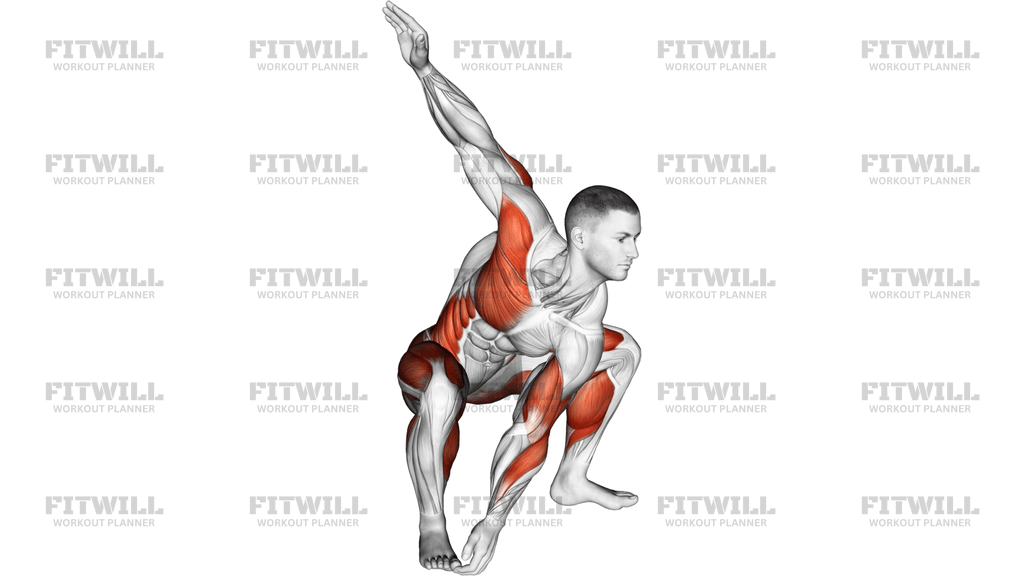
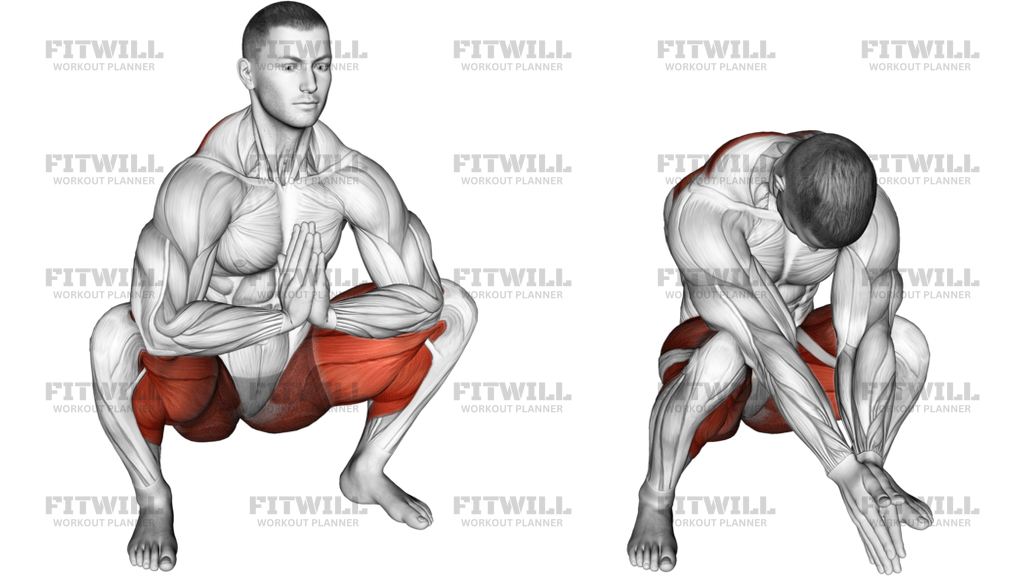
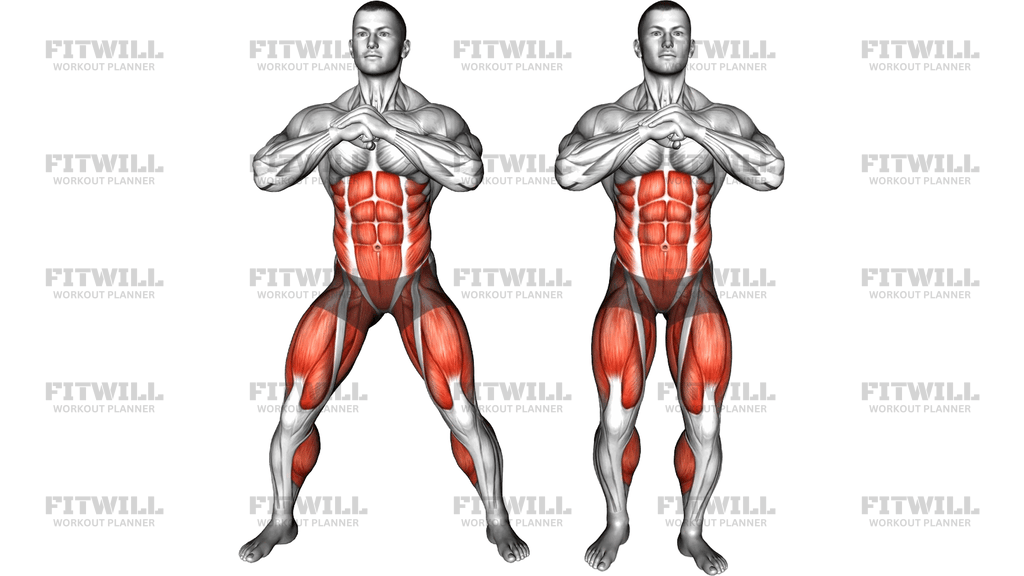
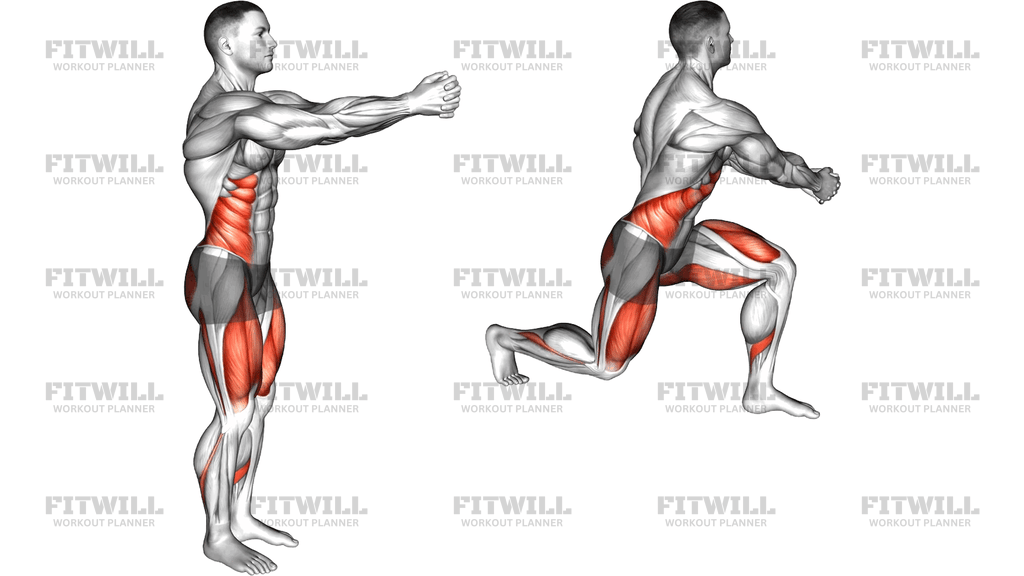
Kneeling Lateral Lunge
The Kneeling Lateral Lunge is a body weight hip movement performed from the floor. You start in a kneeling position, then extend one leg straight out to the side with the foot planted and the toes pointing forward. From there, you shift your hips sideways over the extended leg, lowering into a wide lateral lunge while the opposite knee stays stacked on the ground, then use your inner thigh muscles to pull yourself back to center. The extended leg's adductors work hard through the whole arc, first lengthening under load as you lean out and then contracting to return you upright.
Most people think of lunges as forward-and-back exercises, but this version moves entirely in the frontal plane, which is a direction the inner thighs rarely get trained in. The adductors of the extended leg take the brunt of the work, while the glute of the kneeling side stabilizes your pelvis and the quad of the down leg keeps you tall over your base. Your core stays braced the entire time to keep your torso from collapsing forward as you shift sideways.
This movement is especially useful for anyone with tight or weak inner thighs. Lifters who squat deep often find that loaded adductor work improves their bottom position, and field-sport athletes benefit from the deceleration control the pattern builds. It is also a common inclusion in warm-ups before squats, deadlifts, or any change-of-direction training, because it takes the hips through a wide range without external load.
Setup matters more here than it looks. The kneeling knee should sit directly under the hip, not out to the side, and the extended foot should be flat with the toes facing the same direction as your torso. If the extended foot rotates outward, the stretch shifts away from the adductors and the lunge loses most of its value. Pad the down knee with a mat, because the kneeling side carries your full upper-body weight through the bottom of the rep.
To execute well, think of the movement as a sideways hip shift rather than a lean. Move your hips laterally over the extended foot, keep your chest up, and let the inner thigh of the straight leg lengthen until you feel a strong but tolerable stretch. Pause briefly, then drive through the extended foot and use the adductors to draw your hips back to center. Complete all reps on one side before switching, and expect the two sides to feel different, which is normal and worth tracking.
As for safety, the main risks are rotating the extended foot and forcing range before the tissue is ready. Start with a smaller lateral reach and gradually work toward a deeper lunge over several sessions. If you feel sharp pain in the groin or along the inner thigh, shorten the range immediately rather than pushing through it.
[ Workout Log & Planner ]
Put your next workout in Fitwill
Keep your plan and training log ready when you are.


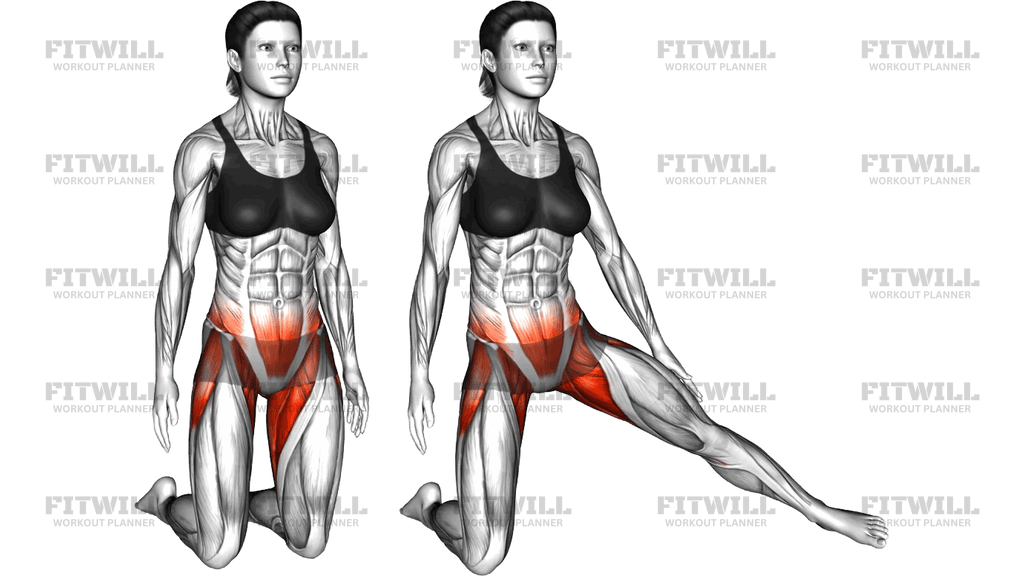
Instructions
- Kneel on an exercise mat with both knees on the floor and your torso upright.
- Extend your left leg straight out to the side, placing the foot flat on the floor with the toes pointing forward and the knee fully straight.
- Keep your right knee stacked directly under your right hip so the down leg forms a vertical support, and place your hands at your sides or lightly on the extended thigh.
- Brace your abdominal muscles and lift your chest so your spine stays long and neutral before you move.
- Shift your hips sideways and slightly back over the extended left foot, letting the left knee bend as your hips travel out and the inner thigh of the straight leg lengthens.
- Lower until you feel a firm stretch along the left inner thigh and your torso is still facing forward, then pause for one or two seconds in the bottom position.
- Press through the entire left foot and use your inner thigh muscles to pull your hips back to the centered kneeling position, bringing the left knee back alongside the right.
- Exhale as you shift out into the lunge and inhale as you return to center, keeping the breathing rhythm steady.
- Complete your target reps on the left leg, then reset both knees together and repeat the full sequence on the right side.
Tips & Tricks
- If your extended foot keeps rolling outward, plant the big toe side of the foot down first and think about spreading the floor with it; the toe direction controls where the stretch lands.
- Let the kneeling knee drift sideways and you lose the lengthening on the down-side glute, so check that the down knee stays under the hip at the bottom of every rep.
- A common mistake is dropping the chest toward the extended thigh to fake extra depth. Keep the torso vertical and accept a shorter lunge until your adductors genuinely open up.
- If the floor hurts your down knee, fold the mat double under that knee rather than shifting your weight away from the kneeling side to avoid the discomfort.
- Do not bounce at the end range. The pause at the bottom is what teaches the adductors to control the stretched position, which is the whole point of the exercise.
- Warm the hips up first with a few gentle hip circles or shallow bodyweight shifts, since cold inner thighs will limit your lateral reach noticeably.
- If one side reaches much further than the other, match your sets to the tighter side instead of letting the loose side set the depth.
- Keep the extended knee completely straight throughout. A soft bend lets the quad take over and shortens the adductor range you are trying to train.
- Progress by pausing longer at the bottom or shifting slightly further out over time, not by adding speed to the movement.
Frequently Asked Questions
Which muscles does the Kneeling Lateral Lunge work the most?
The inner thighs (adductors) of the extended leg do the primary work, lengthening as you shift out and contracting to pull you back. The glute of the kneeling side stabilizes the pelvis, and the quads and core support the position.
Why is the lunge done from kneeling instead of standing?
Kneeling removes the balance demands of a standing lateral lunge, so you can focus entirely on hip range and adductor control. The down knee also anchors your base, which makes it easier to keep the extended foot from rotating.
Is the Kneeling Lateral Lunge suitable for beginners?
Yes, and it is actually a good first lateral-plane exercise because the floor limits how far you can go. Beginners should use a shorter lateral reach and prioritize a vertical torso over depth.
Should my extended foot stay pointed forward during the Kneeling Lateral Lunge?
Yes, keep the toes facing the same direction as your torso. If the foot rotates outward, the load shifts off the adductors and the exercise turns into a much less specific hip opener.
How can I tell if I'm leaning instead of shifting my hips sideways?
Watch whether your chest travels toward the extended thigh or stays stacked over your hips. If your upper body pitches forward or down, the hips are not doing the moving, so reset and use a smaller range.
What can I use instead of the Kneeling Lateral Lunge if kneeling hurts my knee?
A standing lateral lunge or a supported side lunge holding a rack or doorway works the same adductor pattern without floor contact. Thickly padding the down knee is another option if the discomfort is only from pressure.
Can I use the Kneeling Lateral Lunge as a warm-up before squats?
Yes, it works well as a warm-up because it takes the inner thighs through a loaded stretch without external weight. Use shallow reps and no long bottom pauses if you are doing it before heavy lifting.
Why does one side feel tighter than the other in this exercise?
Side-to-side differences in adductor flexibility and hip structure are very common, especially in people with a dominant kicking or cutting leg. Work to the tighter side's range and let the looser side match it rather than the reverse.
Is a sharp groin pull sensation during the Kneeling Lateral Lunge normal?
A deep stretch feeling along the inner thigh is expected, but sharp or sudden pain in the groin is not. Reduce your lateral reach immediately and rebuild the range gradually, and stop the movement entirely if the pain persists.
How many reps and sets should I do?
For mobility and control work, 2 to 3 sets of 6 to 10 controlled reps per side is a solid starting point. Move slowly enough that each rep takes several seconds out and back.