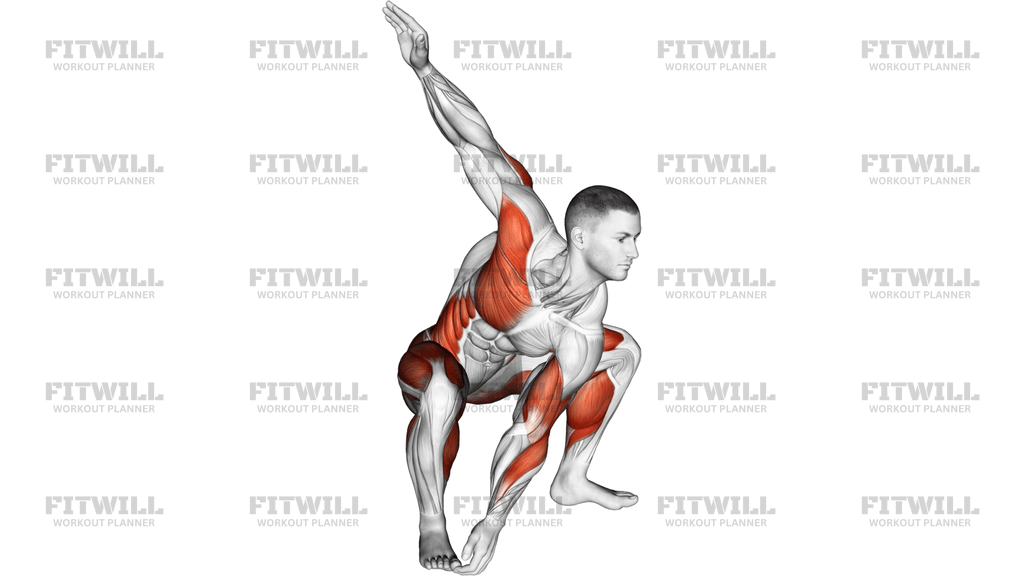
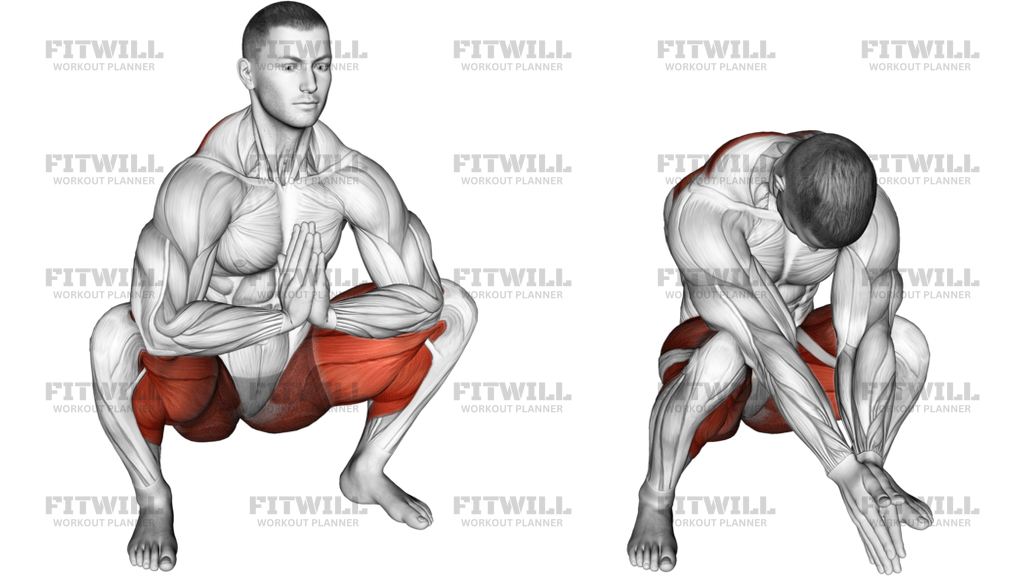
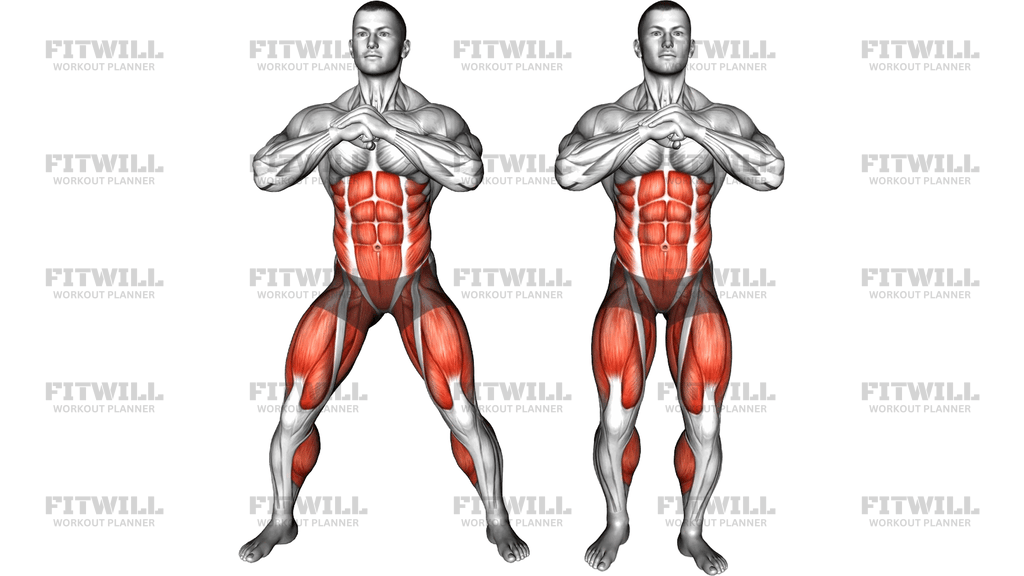
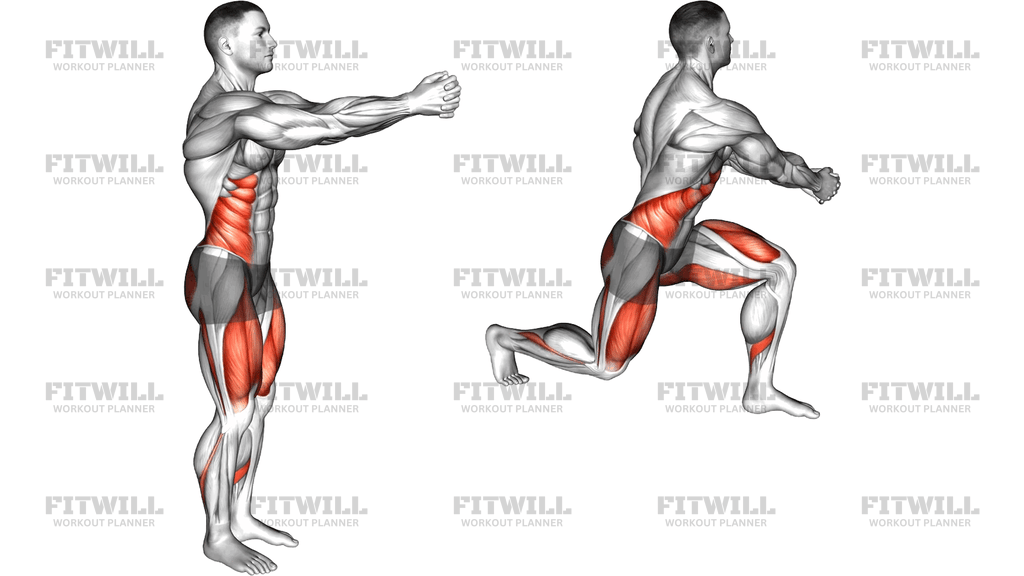
Side Step Arm Circle
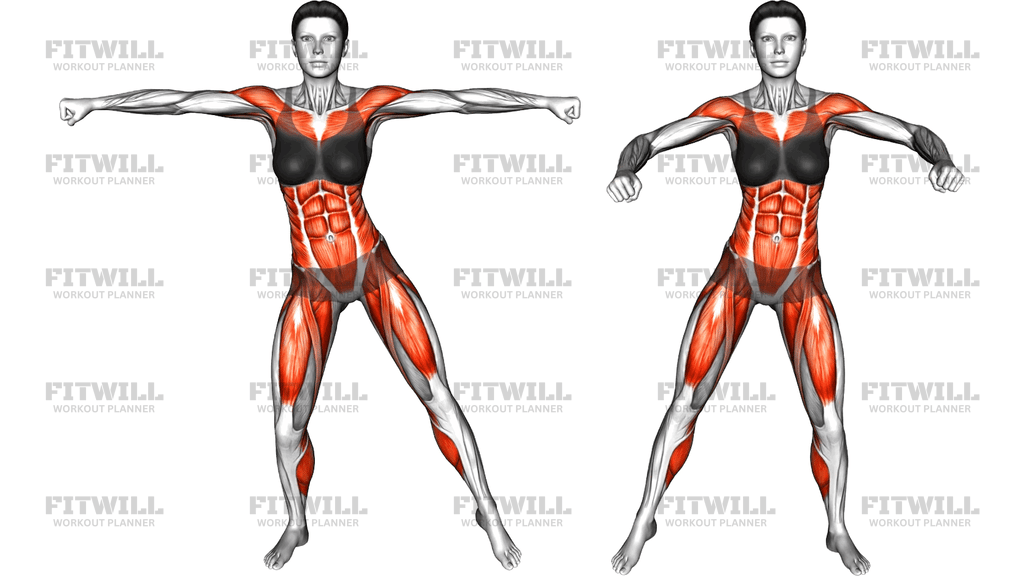
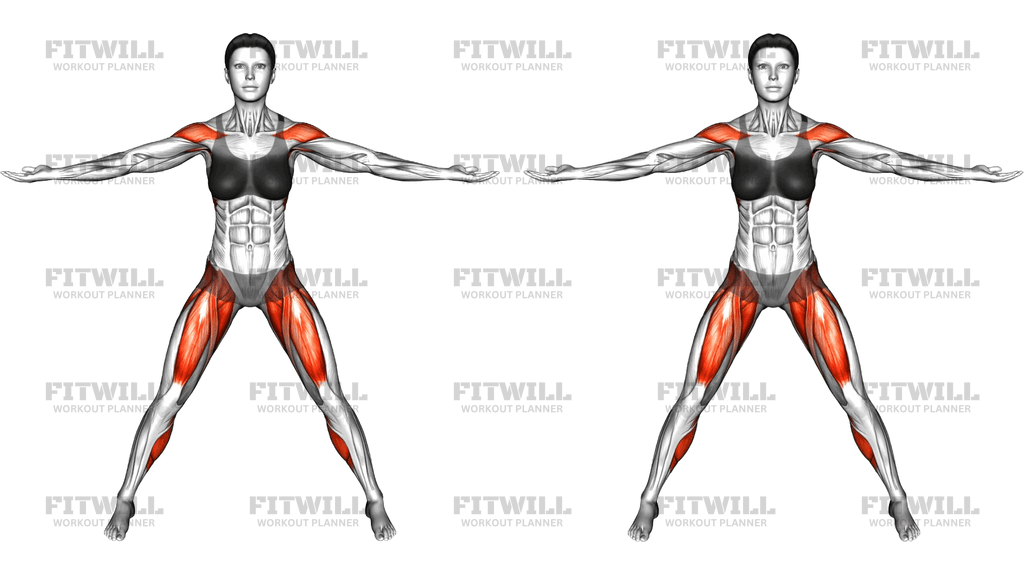
Side Step Arm Circle is a standing body weight movement that pairs a wide side-to-side step with continuous arm circles. You start with your feet spread well beyond shoulder width and your arms lifted straight out to the sides at shoulder height, then repeatedly step one foot in and back out while your arms trace full circles in the air. The two actions run together, which makes this a coordination drill as much as a strength and conditioning one.
The muscular demand sits mainly in the inner thighs. Because the feet travel from a wide stance to a narrower one and back with every repetition, the adductors work hard to control the legs as they come together and to drive them back out. The gluteus medius and outer hip stabilizers manage your balance on the working leg each time you shift, while the quads and calves absorb the constant small weight changes. Holding the arms at shoulder height and circling them keeps the side delts and upper back engaged for the duration of the set.
What makes the setup matter here is the width of the starting stance. If your feet are too close together, the inner thigh involvement largely disappears and the drill becomes a plain step-out. Set them wide enough that stepping one foot toward the middle feels like real work, but not so wide that you lose the ability to press through the floor with control. The arms should stay level with the shoulders rather than drifting up or down, since a lowered arm position takes tension off the delts and makes the circles sloppy.
Execution is about rhythm. Step the foot in, return it out, and let the arms keep turning at a steady pace throughout, rather than circling only when it feels convenient. Keeping the torso upright and the core braced prevents the side-to-side weight shifts from turning into an upper body sway. Move at a pace you can hold for the whole set, breathing steadily instead of holding your breath.
This movement fits well into warm-ups, circuit training, and low-impact conditioning work. It is a useful choice for anyone who wants to wake up the hip adductors before squats or lateral work, or for a cardio-style set that also challenges the shoulders without equipment. Because it is performed standing with no load, it is approachable for beginners, though the balance demands reward a patient, deliberate pace over speed.
A few practical points keep the exercise safe and effective. Land softly with each step, keep your knees tracking over your toes rather than collapsing inward, and stay on a non-slip surface. If your shoulders fatigue before your legs, drop to smaller circles instead of letting your arms sag, and if your knees complain at full width, narrow the stance slightly and rebuild from there.
[ Workout Log & Planner ]
Put your next workout in Fitwill
Keep your plan and training log ready when you are.


Instructions
- Stand tall with your feet spread roughly one and a half to two shoulder widths apart, toes pointing forward or turned out very slightly, arms raised straight out to the sides at shoulder height with palms facing away.
- Draw your belly button in gently, lift your chest, and soften your knees so they are neither locked nor deeply bent.
- Shift your weight onto your left leg as you lift your right foot and step it in toward the middle so your feet are about hip width apart.
- Without pausing, step the right foot back out to the wide starting position and press the floor away to rebalance your weight evenly.
- Keep both arms straight and sweep them in continuous full circles, as if drawing large rings in the air, maintaining shoulder height throughout.
- Repeat the step in and out on the same side for your target number of repetitions, then switch to stepping the left foot in and out while the arms keep circling.
- Exhale on the step in, inhale on the step out, keeping the breath even and never holding it.
- Keep your torso upright and eyes forward so the side-to-side weight transfer does not pitch your shoulders forward.
- Finish the set by letting your arms lower slowly to your sides and standing still for a few breaths before moving to the next exercise.
Tips & Tricks
- The most common mistake is narrowing the stance too much between steps. If your feet come together, the inner thighs stop working; keep the narrow phase around hip width so the adductors stay loaded.
- Letting the arms sink below shoulder level is a quiet way of cheating the side delts. If they drop, either reset the height or switch to smaller circles instead of ending the set early.
- Do not let your knees cave inward as you step out. Think about pushing the floor apart with your feet as you return to the wide stance.
- Speed is the enemy of coordination here. If your arm circles and steps fall out of rhythm, slow the whole pattern down until both move as one continuous flow.
- Keep your weight in the middle of your feet rather than rolling to the outer edges. Constantly shifting side to side on the outer foot border irritates the ankles over time.
- If your shoulders fatigue long before your legs, alternate the circle direction each set instead of enlarging the circles, which multiplies the delt demand.
- Wear shoes with grip or work barefoot on a stable floor. Wide side steps on a slick surface put unnecessary strain on the inner thighs and groin.
- Bend your knees slightly more if your hips feel pinched at full width. A small knee bend lets the hips widen without forcing the range.
- Start with shorter sets, around 20 to 30 seconds per side, and build duration as your balance under the constant weight transfer improves.
Frequently Asked Questions
Which muscles does the Side Step Arm Circle work the most?
The inner thighs (adductors) do the primary work as your legs move in and out of the wide stance. The side shoulders hold the arms up and power the circles, while the glutes, quads, and calves handle the repeated weight shifts.
Is the Side Step Arm Circle good for beginners?
Yes, it is a body weight movement with no equipment, so it is easy to learn. Beginners should start with a slightly narrower stance and slow arm circles to master the coordination before adding speed or duration.
How wide should my starting stance be for the Side Step Arm Circle?
Aim for about one and a half to two shoulder widths, wide enough that stepping one foot in feels demanding on the inner thighs but narrow enough that you can press back out under control. If your hips or knees feel strained, reduce the width slightly.
Should my arm circles go forward or backward?
Either direction works, and each feels slightly different on the shoulders and upper back. Pick one direction per set so the rhythm stays consistent, and you can alternate directions across sets for balance.
Why do my shoulders tire faster than my legs in this exercise?
Holding straight arms at shoulder height for the whole set places a sustained demand on the side delts. Use smaller circles or shorter sets until shoulder endurance improves rather than letting the arms drop.
Can I use the Side Step Arm Circle as a warm-up?
Absolutely. It raises the heart rate, mobilizes the hips and shoulders, and primes the adductors before squats, lunges, or lateral leg work. Keep it light and rhythmic when using it for warm-up purposes.
Is this movement safe for my knees?
It is generally knee friendly because there is no impact or external load, but keep your knees tracking over your toes and avoid a fully wide stance with locked knees. If you feel discomfort, narrow the stance and bend the knees slightly more.
What can I substitute if stepping is uncomfortable for me?
You can hold the wide stance and simply shift your weight side to side while continuing the arm circles, which keeps the adductor and shoulder work with less foot movement. Standing hip abduction work with arm holds is another low-strain option.
How long should I perform the Side Step Arm Circle per set?
Twenty to forty seconds per side is a practical starting range for conditioning, or count 10 to 15 step-outs per side. Rest briefly and repeat for two to four rounds depending on your goal.