Standing Elbow Together Scoop
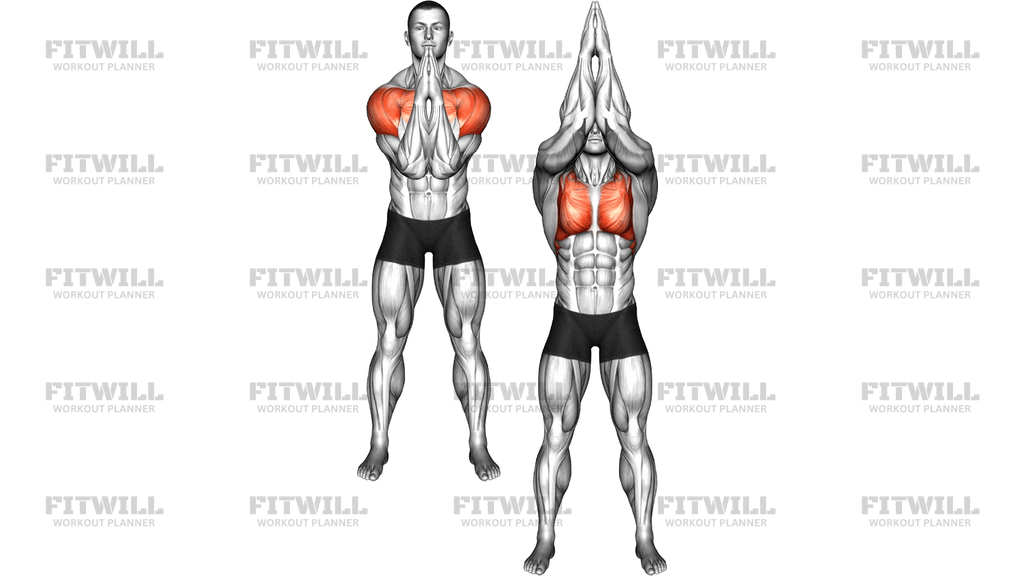
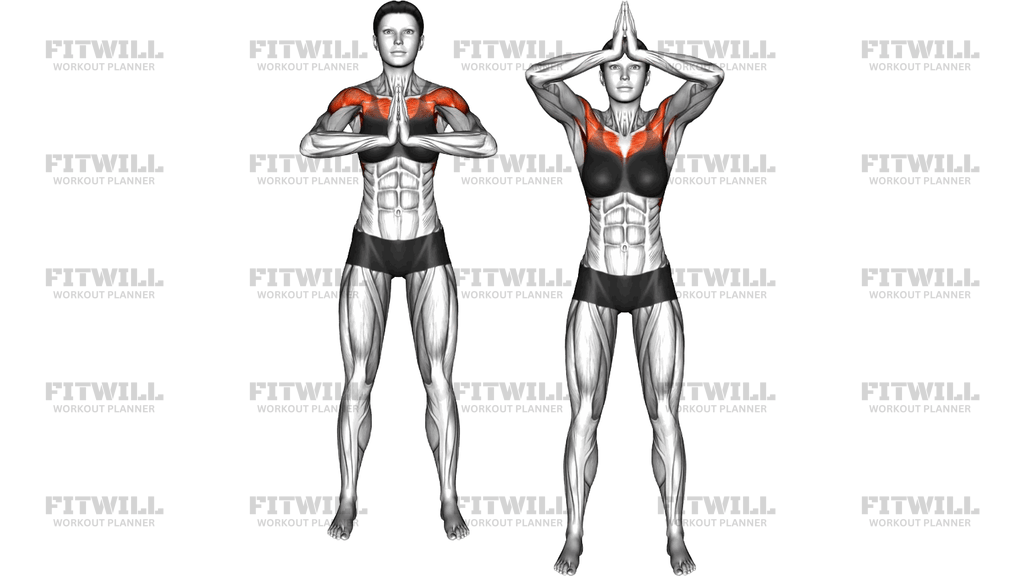
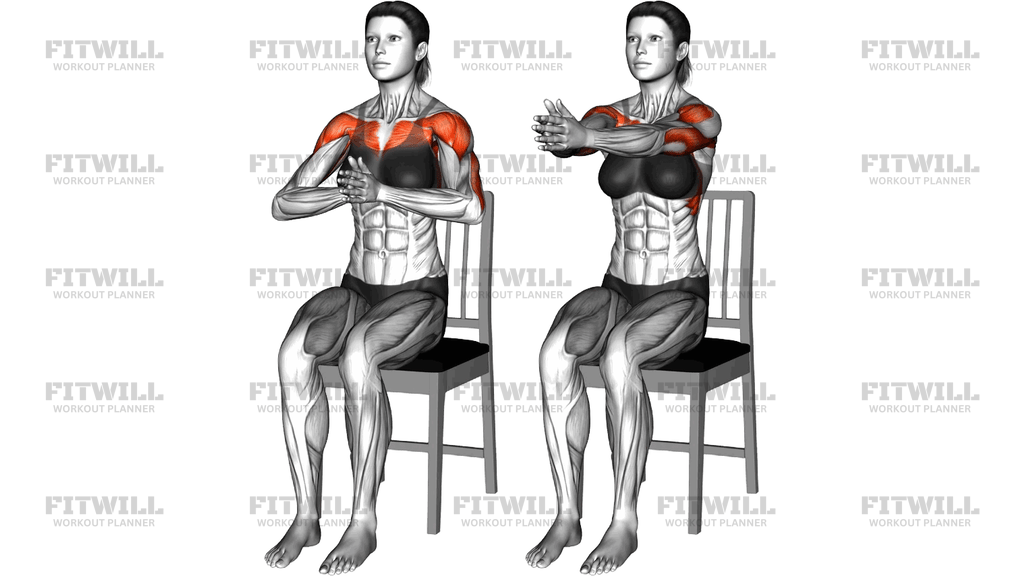
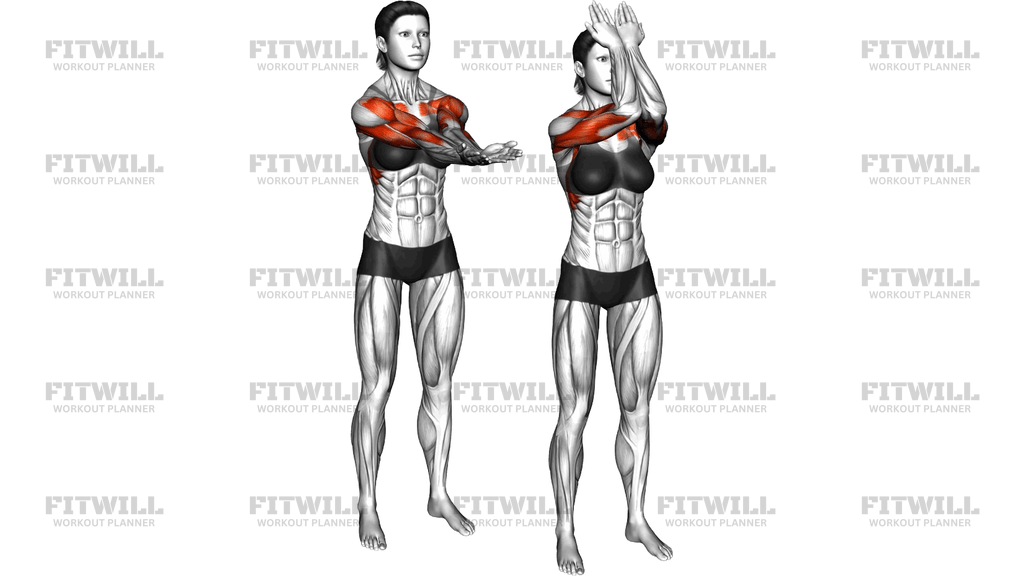
The Standing Elbow Together Scoop is a bodyweight upper-body movement performed from a tall stance with the arms extended straight in front of the chest. From there, the arms trace an upward scooping arc until the elbows draw together in front of the face with the hands stacked above the forearms. The motion works as both a muscle activator and a dynamic mobilizer for the chest and shoulder girdle, which is why it often appears in warm-ups for pressing days and in posture-focused routines.
The main target is the chest, which gets loaded in a shortened, adducted position as the elbows squeeze toward each other at the top. The front shoulders assist through the upward scoop, while the upper back and rear shoulder muscles help control the arms as they return to the extended starting position. Because the forearms rotate from palms-up to palms-forward during the arc, the movement also challenges shoulder rotation control in a way a standard front raise does not.
Setup matters more than it looks. Standing tall with feet about hip-width apart, a soft knee bend, and the arms raised to chest height puts the shoulder joint in a position where the scoop can happen cleanly. If the stance is slouched or the arms start too low, the elbows cannot travel toward each other in front of the face, and the chest loses the squeeze that gives this drill its value.
To execute it well, think of the hands scooping water upward and inward rather than simply lifting the arms. The elbows should converge at eye or forehead level, staying close together without forcing them past a comfortable range, then separate smoothly on the way down until the arms are fully extended in front of you again. The pace should be slow enough that you can feel the chest contract at the top and stretch slightly as the arms return.
This exercise suits beginners learning to feel their chest working without equipment, lifters priming the shoulders and chest before bench or overhead pressing, and desk-bound individuals who need controlled shoulder movement through a full arc. Because it requires no equipment and little space, it is easy to program as a warm-up drill, an active recovery movement, or a high-rep finisher.
Keep the shoulders relaxed and away from the ears throughout, and stop the range short of any pinching at the front of the shoulder. The movement should feel like a smooth squeeze and release across the chest, never a strain at the neck or a jerk of the upper arms.
[ Workout Log & Planner ]
Put your next workout in Fitwill
Keep your plan and training log ready when you are.


Instructions
- Stand with feet hip-width apart, knees soft, and your spine tall with the shoulders relaxed down away from the ears.
- Extend both arms straight forward at chest height, shoulder-width apart, and turn the palms upward so they face the ceiling.
- Brace the core lightly to keep the ribs stacked over the pelvis and prevent the lower back from arching as the arms move.
- Begin the scoop by drawing the hands upward and inward in a smooth arc, as if scooping something up toward your face.
- Continue the arc until the elbows converge in front of your face at roughly eye or forehead level, hands stacked above the forearms with palms facing forward.
- Pause briefly at the top and squeeze the elbows toward each other to feel the chest contract across the front of the body.
- Reverse the path in a controlled manner, separating the elbows and lowering the arms back along the same scoop line until they are fully extended in front of the chest with palms turned up again.
- Exhale as the arms scoop upward and inhale as they return to the starting position.
- Complete the intended repetitions, keeping each rep smooth and avoiding any shrugging of the shoulders toward the ears.
- Reset your stance between sets if you notice your posture rounding forward or your arms drifting below chest height.
Tips & Tricks
- If your elbows will not come close together in front of the face, your arms are likely starting too low; raise them to true chest height before scooping.
- Watch for the head jutting forward at the top to chase the elbows. Keep the head neutral and let the elbows travel to you, not the reverse.
- Avoid turning this into a front raise. The defining feature is the inward elbow convergence, so prioritize the arc inward over how high the hands travel.
- If you feel a pinch at the front of the shoulder, narrow the arc slightly and stop the scoop a few degrees earlier rather than forcing the elbows fully together.
- Shrugging the upper traps is a common giveaway that the weight of the arms is being handled by the neck. Drop the shoulder blades down before each rep.
- Keep the wrist neutral as the palms rotate from up to forward; flopping wrists at the top bleeds off tension from the chest and forearms.
- Move slowly enough that the top squeeze lasts a full second. Rushed reps turn the drill into a momentum exercise with little chest involvement.
- If standing balance is a challenge, widen the stance slightly or place your back near a wall for a light reference point without leaning on it.
- Pair this with a band pull-apart or row variation in your warm-up so the chest squeeze is balanced by upper-back work in the same session.
Frequently Asked Questions
What muscles does the Standing Elbow Together Scoop work?
The chest is the primary target, contracting hard as the elbows squeeze together in front of the face. The front shoulders assist the upward scoop, while the upper back and rear shoulders control the return.
Is the Standing Elbow Together Scoop good for beginners?
Yes. Because it uses only body weight and a simple arc, beginners can learn to feel chest contraction without any load, which carries over to later pressing exercises.
Why do my elbows stop short when I try to bring them together at the top?
Limited chest or shoulder flexibility, or starting the arms below chest height, can restrict the convergence. Check that the arms begin extended at chest level, and work within a range that stays comfortable.
How many reps and sets should I do?
For warm-up purposes, one to two sets of ten to fifteen slow repetitions works well. As a standalone activation drill, two to three sets with a brief pause at the top is a solid approach.
Should my palms face up or forward during the Standing Elbow Together Scoop?
Start with palms facing up as the arms extend in front of the chest, then let them rotate to face forward as the elbows scoop together. That rotation is part of what separates this from a plain arm raise.
Can I use this as a warm-up before bench pressing?
Yes, it is a useful primer because it takes the chest and front shoulders through a full arc and reinforces the adduction you use when pressing. Follow it with an upper-back movement for balance.
What is the most common mistake with this movement?
The most common errors are shrugging the shoulders toward the ears and pushing the head forward to meet the elbows. Keep the neck neutral and the shoulders pulled down throughout the scoop.
What can I substitute if the elbow position feels uncomfortable?
A standing chest squeeze with the arms at chest height, or slow chest fly motions without weight, train a similar pattern with less elbow convergence. Reduce the arc before abandoning the drill entirely.
Is it safe for my shoulders?
For healthy shoulders, moving within a pain-free arc is generally well tolerated. If you have a current shoulder injury or feel pinching at the front of the joint, shorten the range and check with a qualified professional first.
How fast should I perform the scoop?
Keep it deliberate: roughly two seconds up, a one-second squeeze at the top, and two seconds down. The slow pace is what keeps the chest doing the work instead of momentum.