Standing Overhead Claps
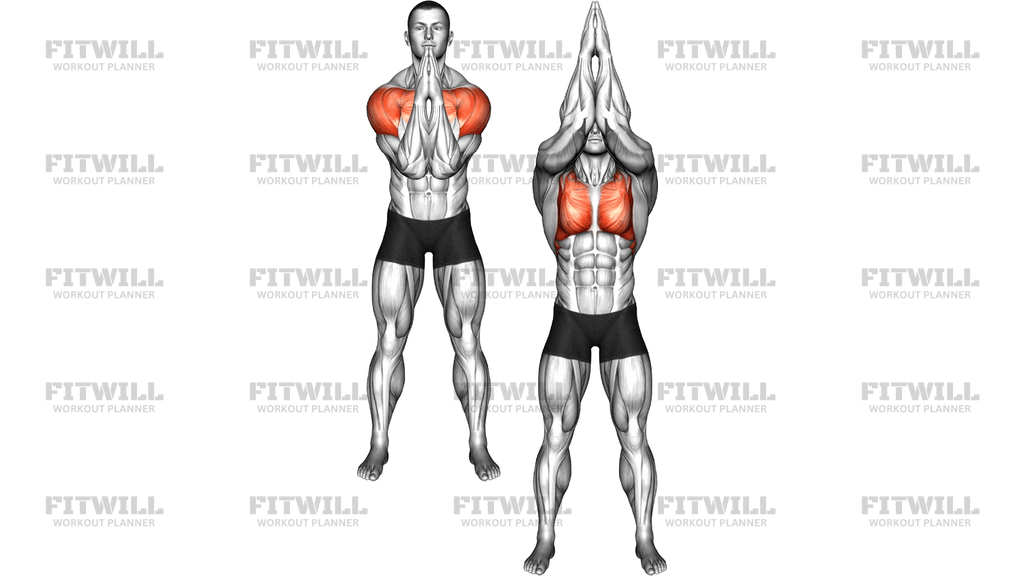
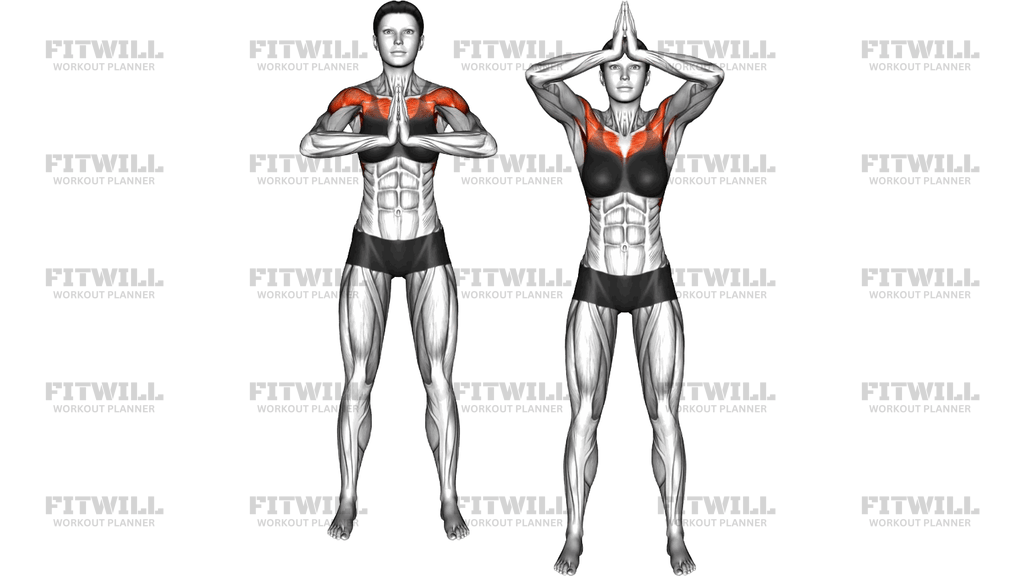
Standing Overhead Claps are a simple bodyweight movement where you sweep your arms from a wide, out-to-the-side position up above your head and clap your hands together overhead, then control them back down. Because your hands meet at the top rather than in front of your chest, the movement takes your arms through a generous arc that asks your chest to adduct against your own arm weight while your shoulders and upper back manage the overhead position. No equipment is needed, which makes it one of the easiest chest-focused movements to slot into a warm-up, a hotel-room workout, or a low-impact training day.
The main muscles working are the pectorals, especially as the arms travel inward and the hands meet overhead. The front delts help lift the arms, the traps and upper back stabilize the shoulder blades through the arc, and the core stays quietly busy keeping your ribs stacked over your hips while your arms move overhead. It is not a heavy strength builder on its own, but it teaches the chest to actively bring the arms together through a long range, which carries over well to pressing and flye variations.
Setup matters more than it looks. Stand tall with feet about hip-width apart, ribs down, and start with your arms extended wide at roughly shoulder height, palms facing forward or slightly up. If you arch your lower back or let your ribs flare as the arms rise, you shift work away from the chest and hang tension on your spine instead. A tall, braced torso is what keeps this a deliberate upper-body movement rather than a loose arm swing.
To perform it well, sweep both arms up in a smooth, rounded arc until your palms clap together directly above your head, keeping the elbows mostly straight but not locked. Squeeze briefly at the clap so the hands meet with intent rather than slapping past each other, then lower the arms back out to the wide starting position under control instead of letting them drop. The return is where a lot of the chest work actually happens, so treat it as half the rep.
This movement shows up most often in warm-ups, rehab-friendly chest activation work, school and group fitness settings, and cardio circuits where you want upper-body involvement without equipment. It also works as a primer before bench presses or push-ups, waking up the chest and shoulder stabilizers so the heavier work feels sharper from the first set. Because the load is just your own arms, the progression comes from tempo, pauses at the clap, and higher repetitions rather than added weight.
Keep the movement pain-free at the shoulder. If clapping overhead pinches at the top, clap slightly in front of the midline of your body instead of directly overhead, or reduce how high you raise your arms and build up gradually. Slow down before you speed up: a controlled two-second lift and two-second lower will do more for you than rapid, sloppier reps.
[ Workout Log & Planner ]
Put your next workout in Fitwill
Keep your plan and training log ready when you are.


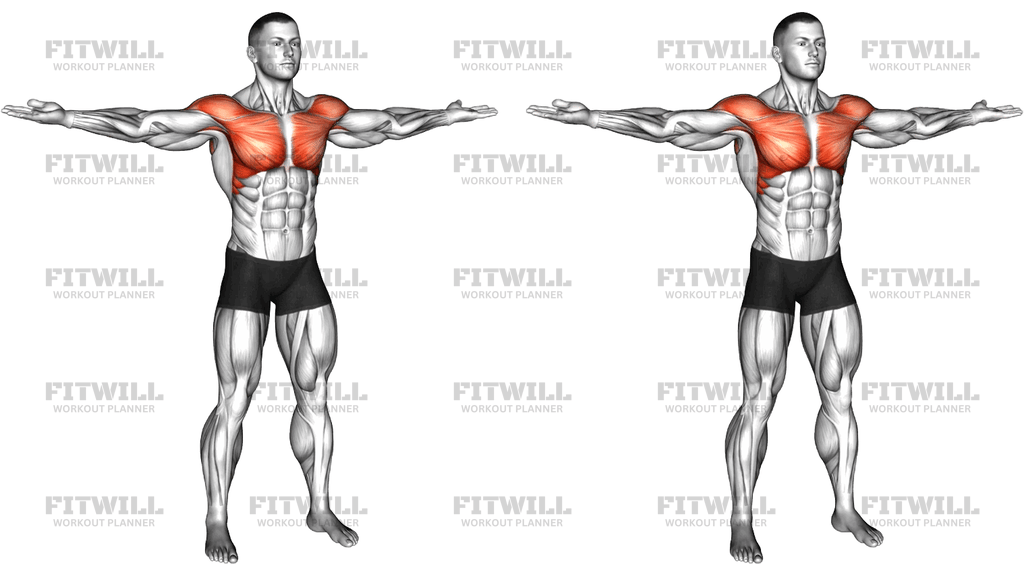
Instructions
- Stand with your feet about hip-width apart, weight spread evenly across both feet, and your torso tall.
- Extend both arms straight out to your sides at roughly shoulder height, elbows soft, palms facing forward.
- Brace your core lightly and pull your ribs down so your lower back is not arched before you start.
- Inhale, then sweep both arms up in a wide, smooth arc toward the ceiling, keeping the elbows nearly straight.
- Clap your palms together directly overhead, finishing with your biceps near your ears and your shoulders down away from your ears.
- Squeeze your chest briefly as the hands meet, holding the clap for a beat rather than bouncing off it.
- Exhale as you lower your arms back out and down along the same arc until they return to shoulder height at your sides.
- Control the descent instead of letting your arms drop, feeling your chest lengthen under tension.
- Reset your posture at the bottom of each rep, then repeat for your target number of repetitions.
- Breathe steadily throughout: inhale on the way up, exhale on the way down.
Tips & Tricks
- A common mistake is clapping in front of your forehead instead of overhead; if this happens, think about reaching for the ceiling with the heels of your palms.
- If your lower back arches as your arms rise, squeeze your glutes slightly and exhale at the top of the clap to keep the ribs stacked.
- Do not lock the elbows hard at the wide position; a soft elbow keeps the shoulders comfortable through the long arc.
- Shrugging the shoulders toward the ears during the clap is a frequent compensation; keep your upper traps relaxed and let your shoulder blades move naturally instead.
- Slow the lowering phase to two or three seconds to turn the return arc into real chest work rather than a free fall.
- If a full overhead clap bothers your shoulders, clap slightly in front of your head and gradually raise the meeting point over time.
- Add a one-second pause at the clap before lowering to increase the squeeze without adding equipment.
- Avoid rushing reps until your arms fatigue; quality arcs beat fast, sloppy ones, especially in warm-up sets.
- Keep your neck neutral by looking straight ahead rather than craning up to watch your hands meet.
Frequently Asked Questions
What muscles do Standing Overhead Claps work?
The chest is the primary mover as your arms sweep together overhead, with the front delts lifting the arms and the traps and upper back stabilizing the shoulder blades. Your core works lightly to keep your torso upright while your arms travel overhead.
Why do the hands clap overhead instead of in front of the chest?
Meeting overhead forces the arms through a longer, more rounded arc, which challenges the chest through a bigger range and also trains shoulder mobility. Clapping at chest height would shorten the path and make it a much smaller movement.
Are Standing Overhead Claps good for beginners?
Yes. The resistance is only the weight of your own arms, so most people can learn the movement safely on day one. Beginners should focus on a tall posture and a smooth, controlled arc before adding speed or reps.
Can Standing Overhead Claps build muscle?
They can contribute modestly, mainly as high-rep or tempo work, but the load is limited since you are only moving your arms. Treat them as an activation or assistance exercise alongside push-ups, presses, or flyes for real muscle growth.
Should my elbows be straight during the clap?
Keep them nearly straight but soft, not rigidly locked. Locking the elbows at the wide position can strain the joint and reduces your control through the arc.
What is the most common mistake with Standing Overhead Claps?
Arching the lower back and flaring the ribs as the arms rise overhead. Fix it by bracing your core, squeezing your glutes slightly, and exhaling as your hands come together.
How many reps should I do?
For a warm-up, 10 to 15 smooth reps work well. For a standalone set, aim for 20 to 30 reps with a slow lowering phase, stopping when your form or arc height starts to slip.
What can I use instead of Standing Overhead Claps?
Standing chest flyes with or without a light band, or floor-based chest squeezes, cover similar ground. If overhead reach is uncomfortable, clapping in front of the chest keeps the adduction pattern at a friendlier angle.
Is it safe to do Standing Overhead Claps with a shoulder injury?
If overhead positions cause pain, reduce the height of the arc or clap in front of your body until you can move without symptoms. Check with a qualified professional before returning to overhead work after an injury.
Do Standing Overhead Claps count as cardio?
They can raise your heart rate in high-rep circuits, but on their own they are primarily a chest and shoulder activation exercise. Pair them with squats, jumping jacks, or stepping for a fuller cardio effect.