Bodyweight Standing Outer Push
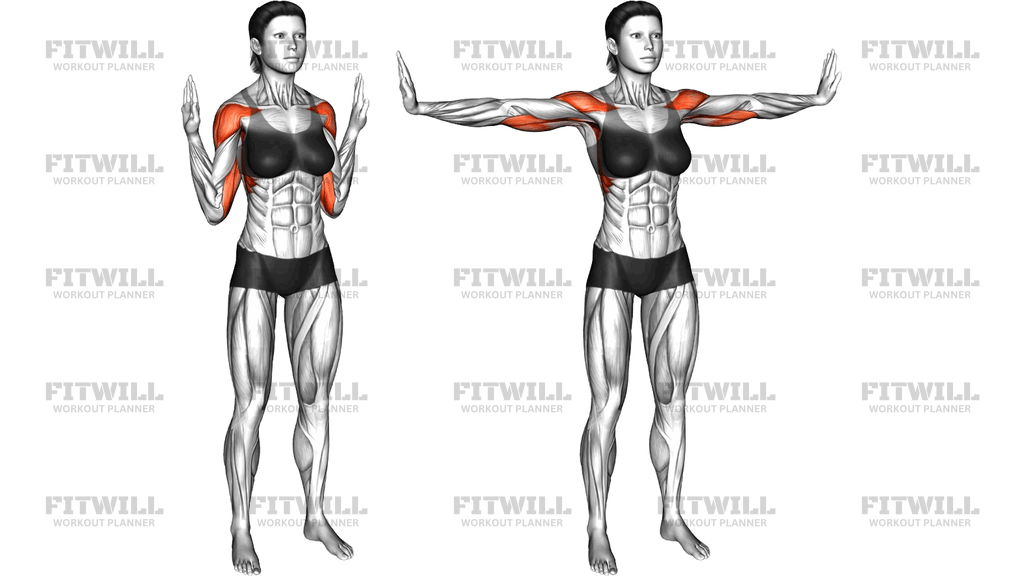
The Bodyweight Standing Outer Push is a shoulder-focused movement performed entirely without equipment. You stand tall with your elbows bent at your sides and palms facing forward, then press your arms out and away from your body until they are fully extended at shoulder height, as if pushing two invisible walls outward. The return comes from drawing the elbows back down to the starting position under control, which keeps the working muscles engaged through the whole range.
Because there is no external load, the exercise relies on your own muscular tension and control to create resistance. This makes it a useful choice for beginners learning what a lateral raise should feel like, for anyone warming up the shoulders before pressing or lifting work, and for people training at home or on the road where dumbbells and cables are not available. It also works well as a high-repetition finisher after a heavier shoulder session.
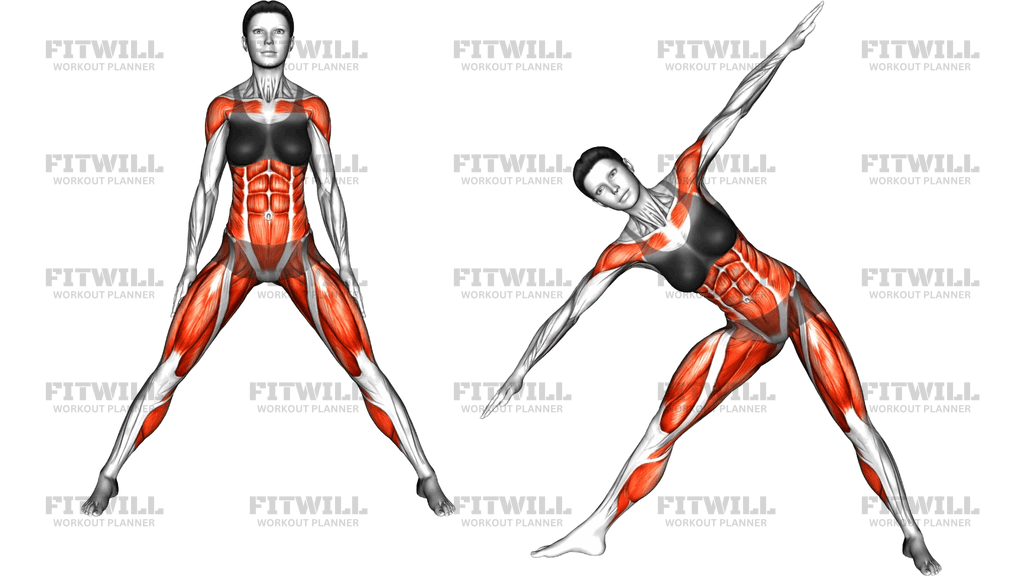
The primary muscles at work are the lateral deltoids, the caps of the shoulders that create width and lift the arms out to the sides. The front shoulders and chest assist during the outward push, the triceps extend the elbows as the arms straighten, and the muscles of the core and upper back hold your torso steady so the movement happens at the shoulders rather than through swinging or leaning. Highlighting these muscles in anatomy views of the exercise shows exactly why keeping the torso still matters: once the body starts swaying, the shoulders stop doing the work.
Setup matters more than it might seem in an unloaded movement. Standing with the feet about hip-width apart, a tall spine, and relaxed shoulders down away from the ears gives the deltoids a clean line of pull. If you start with the elbows tucked low and the palms turned forward, the outward press follows a natural arc up and out to shoulder level. Rushing the setup usually leads to shrugged shoulders and a shortened range, both of which reduce the benefit.
To execute the movement well, think about pushing outward with intent rather than simply flinging the arms open. Imagine the air around you has weight and you are pressing through it. Pause briefly with the arms extended at shoulder height, then lower the elbows back to your sides at a slower speed than the press. That controlled return is where most of the muscle-building stimulus lives in bodyweight training, so it deserves your attention on every repetition.
Common use cases include home shoulder workouts, active recovery days, physical-therapy-style shoulder conditioning with light effort, and as a teaching progression before adding dumbbell lateral raises. Because the resistance is low, sets of fifteen to thirty controlled repetitions tend to work better than low-rep strength attempts. Stop the set when your form changes, not when your arms simply feel tired, and expect the burn to sit right on the outside edge of each shoulder.
[ Workout Log & Planner ]
Put your next workout in Fitwill
Keep your plan and training log ready when you are.


Instructions
- Stand with your feet about hip-width apart, weight spread evenly across both feet, and your arms relaxed at your sides.
- Bend your elbows and raise your upper arms so the elbows sit close to your ribs at roughly waist-to-lower-chest height, with your palms facing forward and fingers pointing up.
- Roll your shoulders back and down, lengthen your spine, and brace your abdominal muscles lightly so your torso is steady before you move.
- Press both arms outward to the sides at the same time, pushing your hands away from your body as if forcing two objects apart.
- Continue the outward press until your arms are nearly straight and level with your shoulders, palms facing out to the sides.
- Pause for one breath at the extended position without shrugging your shoulders toward your ears.
- Reverse the path by drawing your elbows back in toward your ribs, keeping tension in the shoulders as you return instead of letting the arms drop.
- Exhale as you press outward and inhale as you bring the elbows back to the starting position.
- Complete your repetitions with the same timing on each rep, then lower your arms fully and shake out the shoulders between sets.
Tips & Tricks
- If your shoulders creep up toward your ears during the press, consciously pull your shoulder blades down before each repetition and keep the neck long.
- Do not let your elbows drift behind your torso as you press out; keeping them in line with the shoulders targets the lateral deltoids instead of turning it into a rear-shoulder movement.
- Slow down the return rather than the press. Letting the arms fall back to your sides removes most of the training effect in this exercise.
- If your lower back arches when your arms reach shoulder height, tighten your abs and imagine your ribs drawn down toward your hips.
- A slight forward lean or backward sway usually means the set is too fatiguing to control; shorten the range or stop the set and resume with better posture.
- Keep the wrists neutral with fingers pointing up rather than letting the hands flop back, which protects the wrist joints during the push.
- For more challenge without equipment, hold the extended position for three to five seconds on each rep or add isometric presses where your hands try to push further outward at shoulder height.
- If full extension at shoulder height is uncomfortable, press out slightly below shoulder line and increase the height gradually as mobility allows.
- Breathe continuously instead of holding your breath during the press; breath-holding often coincides with unwanted tension in the neck and jaw.
Frequently Asked Questions
Which muscles does the Bodyweight Standing Outer Push work?
The lateral deltoids on the outside of the shoulders are the primary movers, with support from the front shoulders, chest, and triceps. Your core and upper back stabilize the torso so the pressing effort stays at the shoulders.
Can the Bodyweight Standing Outer Push build muscle without any equipment?
It can strengthen and condition the shoulders, especially for beginners or during high-repetition sets with slow returns. Because the resistance comes only from your own muscle tension, it will not replace weighted lateral raises for maximal strength gains.
How many repetitions of the Bodyweight Standing Outer Push should I do?
Fifteen to thirty controlled repetitions per set works well, since the load is light. Focus on a deliberate outward press and a slower return, and stop the set when your form starts to slip.
Why do my shoulders shrug up toward my ears during the exercise?
The upper traps take over when the deltoids fatigue or when the starting posture is slouched. Set your shoulders down and back before each rep and keep the press within a height you can reach without lifting the shoulder girdle.
Should my palms face forward or sideways during the Bodyweight Standing Outer Push?
Start with the palms facing forward at your sides with the elbows bent, and let the hands stay open with fingers pointing up as you press out. This wrist position keeps the push comfortable and aligned with the shoulder.
Is the Bodyweight Standing Outer Push a good warm-up before dumbbell lateral raises?
Yes, it activates the lateral deltoids and takes the shoulder joints through the same arc with no load, which makes it an efficient preparatory movement. Two light sets of fifteen to twenty reps before pressing or raising work is usually enough.
What can I substitute if the movement bothers my shoulders?
Try pressing out to just below shoulder height, reduce the speed and range, or perform the same outward push with your elbows slightly more forward. If discomfort persists, stop and have a qualified professional assess the shoulder.
How is the Bodyweight Standing Outer Push different from a lateral raise?
A lateral raise lifts an external weight from a hanging-arm position, while this exercise starts with bent elbows at the ribs and pushes outward without load. The deltoids work through a similar arc, but here you must generate the tension yourself.
Can beginners do the Bodyweight Standing Outer Push every day?
Light, controlled sets are generally well tolerated daily because the resistance is low, but muscles still need recovery to adapt. Two to four sessions per week with rest days in between is a sensible starting point.