Seated External Rotation On A Chair
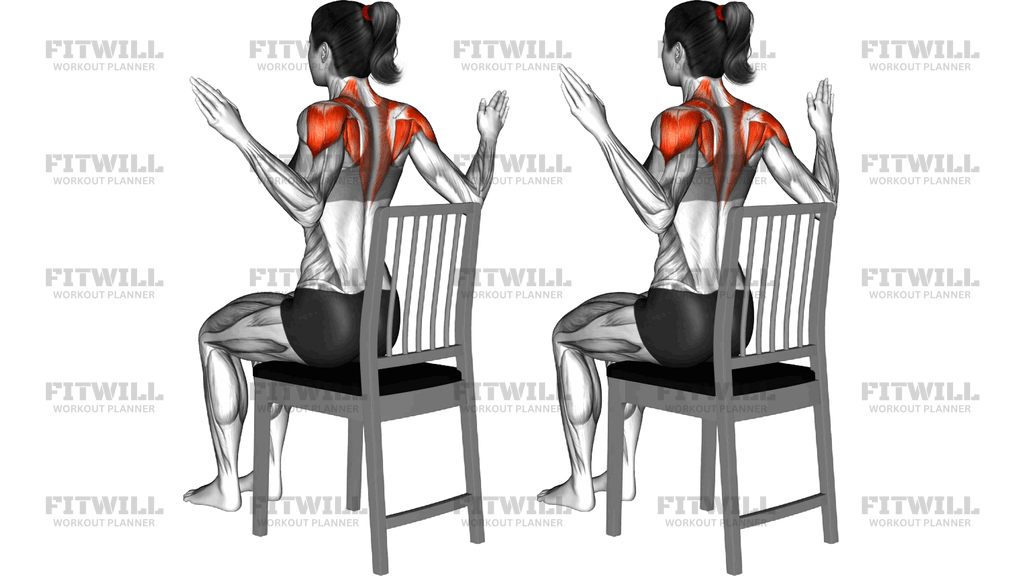
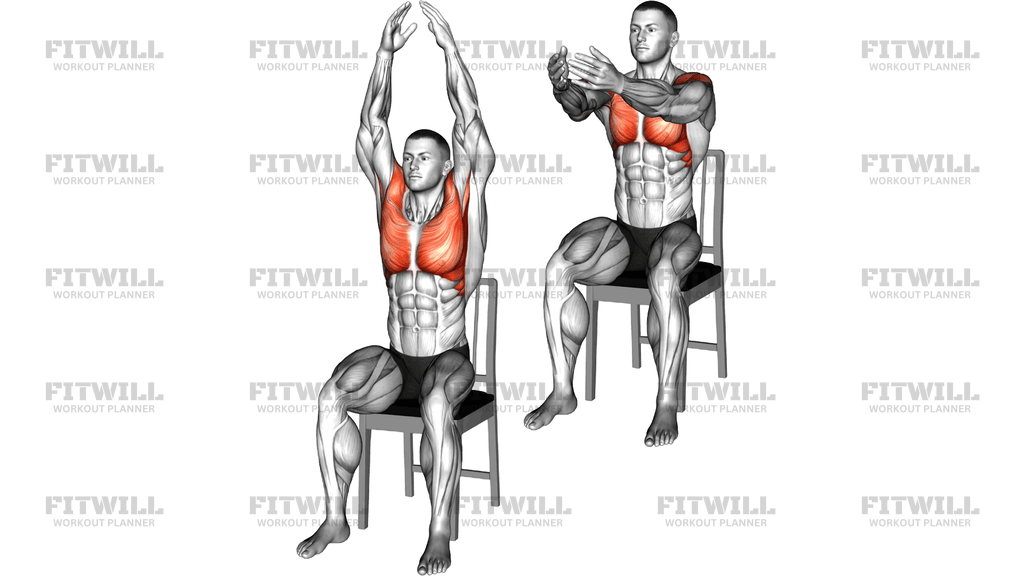
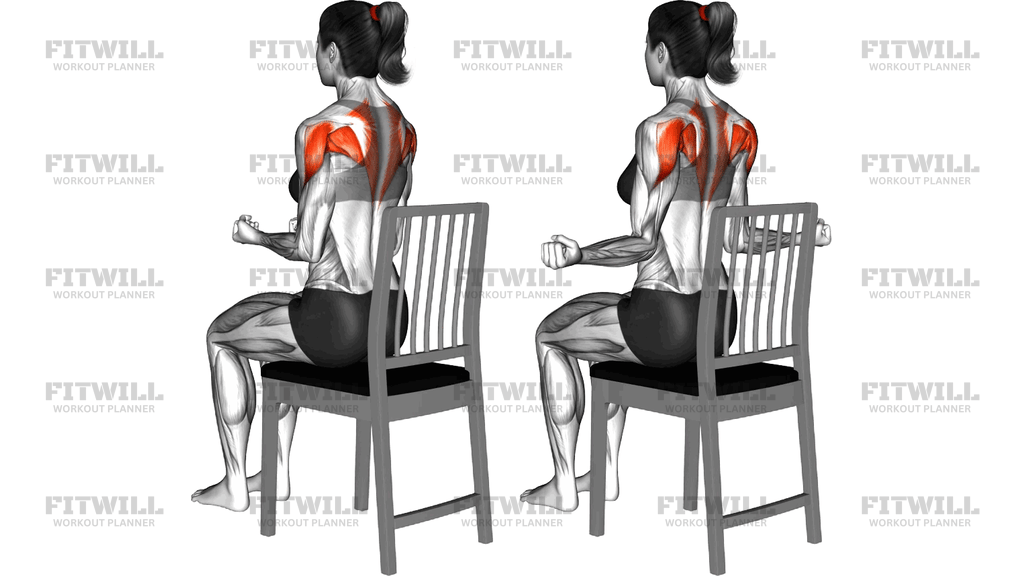
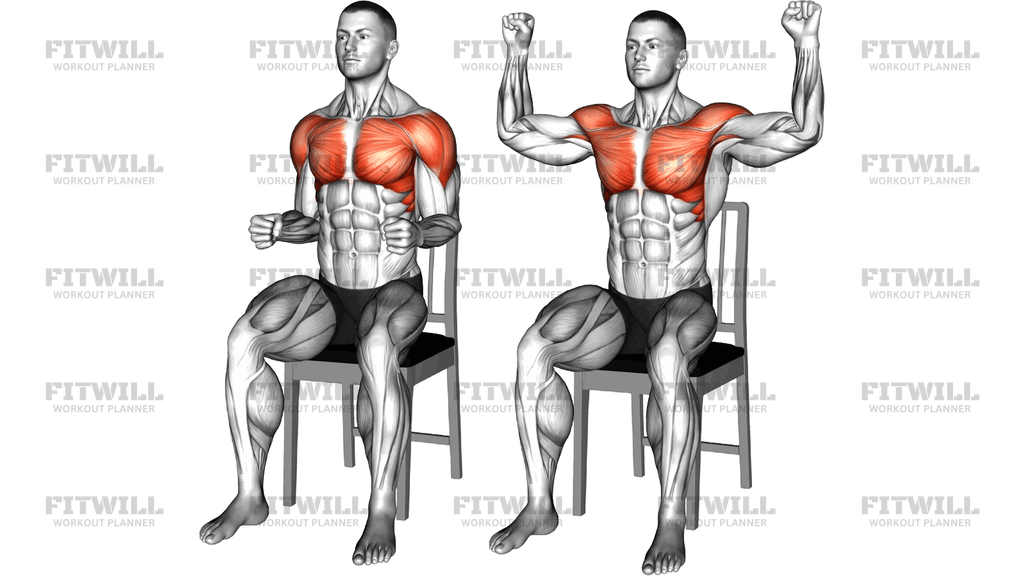
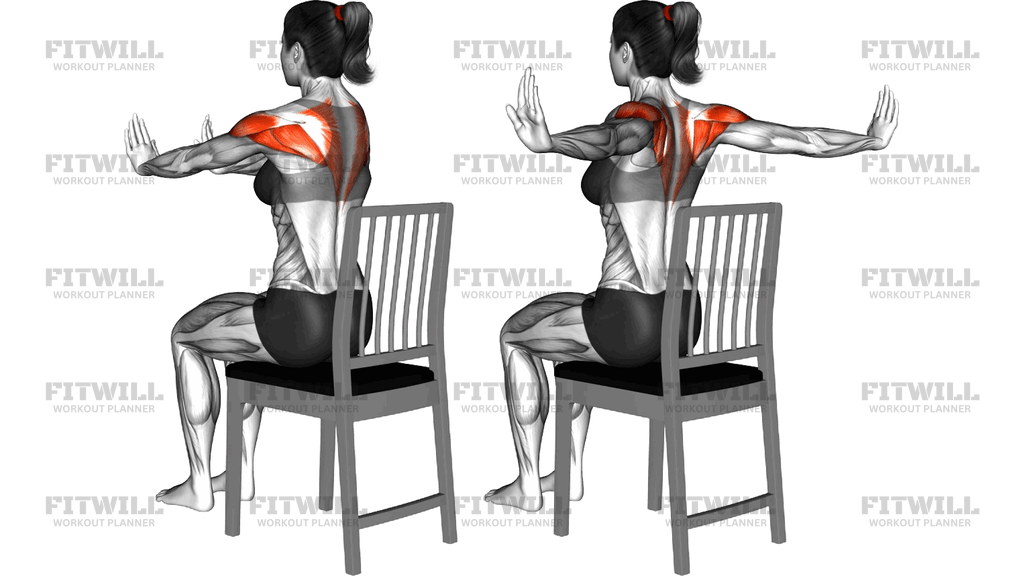
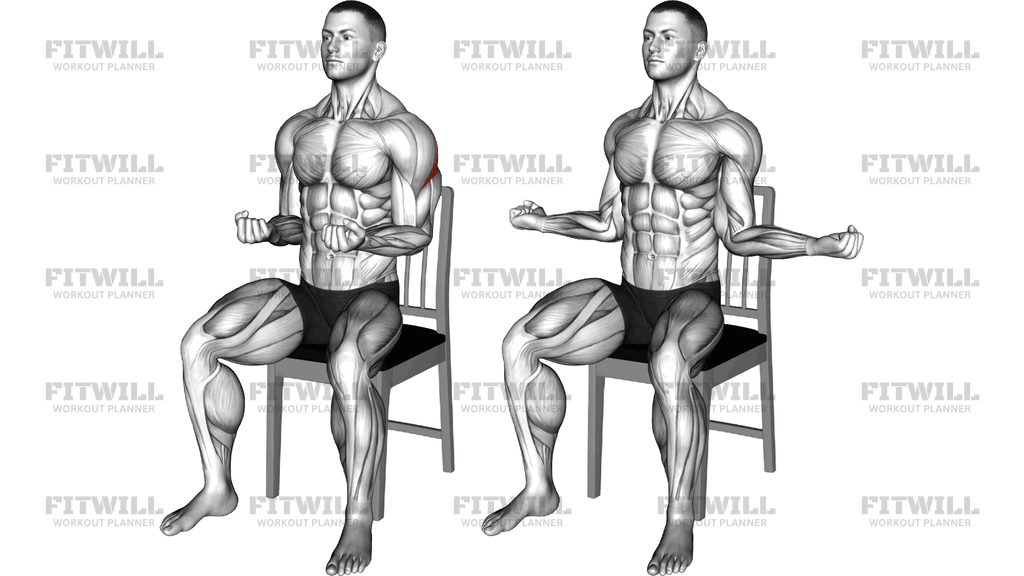
The Seated External Rotation On A Chair is a simple rotator cuff exercise performed with no equipment other than a sturdy chair. You sit upright with your elbows bent to roughly 90 degrees and pinned lightly against your sides, then rotate both forearms outward from in front of your torso until they point away from your body, and slowly rotate them back. Because there is no external load, the movement relies entirely on muscular control, which makes it ideal for learning what proper shoulder external rotation actually feels like before adding resistance bands or light dumbbells later.
This exercise primarily targets the external rotators of the shoulder, especially the infraspinatus and teres minor on the back of the shoulder blade, with support from the rear delts and the muscles that keep the shoulder blade stable against the ribcage. These small muscles are easy to neglect in typical pressing and pulling programs, yet they play a major role in keeping the head of the humerus centered in the socket whenever you press overhead, throw, or hang from a bar.
The seated setup is what makes this version so effective. Sitting on a chair removes the balance and momentum challenges of standing, your thighs give your elbows a fixed reference point, and the upright torso keeps you honest — if you try to cheat by shrugging or leaning back, you will feel it immediately. Keep your feet flat on the floor about hip-width apart so your base is quiet and stable throughout the set.
Execution quality comes down to three things: keeping the elbows welded to your sides, moving only at the shoulder joint, and rotating at a pace slow enough that you can feel the muscles working rather than swinging. The fists stay loosely closed, wrists neutral, and shoulders pulled gently down away from the ears. If your elbows drift forward or your upper arms lift away from your torso, the rotator cuff stops doing the work and larger muscles take over.
This is a common choice for people rehabilitating or prehabilitating their shoulders, for desk workers whose shoulders have crept forward and internally rotated from years of typing, and for lifters who press or bench heavily and need to balance all that internal rotation with dedicated external rotator work. It also serves as a low-friction daily warm-up, since it takes less than two minutes and requires nothing you cannot find in an office or living room.
Stay within a pain-free range and stop well short of any pinching at the front of the shoulder. The goal is smooth, repeatable rotations with steady tension, not maximum range or speed. If one side feels noticeably weaker or stiffer, work it independently so the stronger side cannot mask the difference.
[ Workout Log & Planner ]
Put your next workout in Fitwill
Keep your plan and training log ready when you are.


Instructions
- Sit on a sturdy chair with your feet flat on the floor about hip-width apart and your spine tall, resting lightly against the backrest or sitting just off it.
- Bend both elbows to 90 degrees and pin your upper arms lightly against your sides so your forearms point forward, parallel to each other, with fists loosely closed and palms facing in.
- Roll your shoulders down and back, brace your core gently, and keep your neck relaxed as you look straight ahead.
- Exhale slowly and rotate both forearms outward away from your body, hinging only at the shoulders while your elbows stay glued to your sides.
- Continue rotating until your forearms point out to the sides as far as you can go without your elbows lifting, your shoulders shrugging, or any pinching at the front of the shoulders.
- Pause for one or two seconds in the outward position, feeling the muscles across the backs of your shoulder blades working.
- Inhale as you rotate your forearms back to the starting position in front of your torso, taking at least as long on the way in as on the way out.
- Keep your torso completely still from rep to rep — no leaning back, twisting, or helping with the chest.
- Complete your planned repetitions, then rest briefly and repeat for another set, keeping the tempo slow on every rep.
Tips & Tricks
- If your elbows keep drifting forward as you rotate out, press them gently into your sides and reduce the range slightly until you can keep them fixed.
- Common mistake: shrugging toward the ears as the forearms rotate. Drop the shoulders first before you start, and check them again at the halfway point of each set.
- Slow the return down more than the outward turn. Most people rush the way back in, and that eccentric half is where the rotator cuff benefits most.
- Do not force extra range by letting your upper arms swing away from your torso — that turns the exercise into a different movement and offloads the external rotators.
- Keep your fists relaxed. A death grip on empty hands builds unnecessary forearm tension and makes the whole shoulder area stiffen up.
- If sitting fully upright is uncomfortable, scoot forward on the chair and sit tall on your sitting bones rather than slumping against the backrest.
- Once this feels easy and pain-free for higher reps, progress by adding a light resistance band or holding very light dumbbells in the same seated position.
- If one side is clearly weaker, train each arm separately so the stronger side cannot take over, matching the weaker side's reps.
- A mild working sensation in the back of the shoulder is expected; sharp pain, pinching, or tingling down the arm means you should stop and reduce the range or load.
Frequently Asked Questions
Which muscles does the Seated External Rotation On A Chair work?
It primarily works the external rotators of the rotator cuff, especially the infraspinatus and teres minor, with help from the rear delts and the muscles that stabilize the shoulder blade. Because there is no added load, the emphasis is on control and endurance rather than maximal strength.
Why should my elbows stay against my sides during this exercise?
Pinning the elbows to your sides fixes the shoulder at roughly 90 degrees of rotation, which forces the small rotator cuff muscles to do the work. If the elbows drift forward or outward, the larger chest and shoulder muscles take over and the rotator cuff gets very little out of the rep.
Can beginners do the Seated External Rotation On A Chair?
Yes, it is one of the most beginner-friendly shoulder exercises available because it uses no weight and a stable seated position. Beginners should focus on a slow tempo and a comfortable range rather than trying to rotate as far as possible.
How far should I rotate my forearms outward?
Rotate only as far as you can go while keeping your elbows pinned to your sides, shoulders relaxed, and no pinching at the front of the shoulder. For most people the forearms will end up pointing out to the sides, and forcing beyond that usually means the upper arms are swinging instead of rotating.
What is the most common mistake in this exercise?
The most common mistakes are shrugging the shoulders, leaning back, or letting the elbows lift away from the torso as the forearms rotate out. All three shift work away from the rotator cuff, so the fix is to move a little slower and reduce the range until everything else stays still.
How many reps and sets should I do?
Higher repetitions with a slow tempo work best, typically 10 to 20 controlled reps for 2 to 3 sets. Since the rotator cuff is built for endurance, the last few reps should feel challenging but never painful.
Can I do the Seated External Rotation On A Chair with a resistance band?
Yes, once the body-weight version feels easy you can hold a light band between your hands and rotate outward against the tension, or anchor a band to one side and train each arm separately. Add resistance only when you can keep your elbows pinned and your torso still for all your reps.
Is this a good warm-up before pressing exercises?
Yes, one or two light sets are a popular way to prepare the external rotators before bench pressing, overhead pressing, or pull-ups. The seated version is convenient because it needs nothing but a chair or bench and takes under two minutes.
Should I feel this exercise anywhere other than the shoulder?
You should feel it mainly across the back of the shoulder and between the shoulder blades. If you feel pinching at the front of the shoulder or tingling down the arm, reduce the range and check that your elbows are staying against your sides; if discomfort persists, stop and consult a qualified professional.