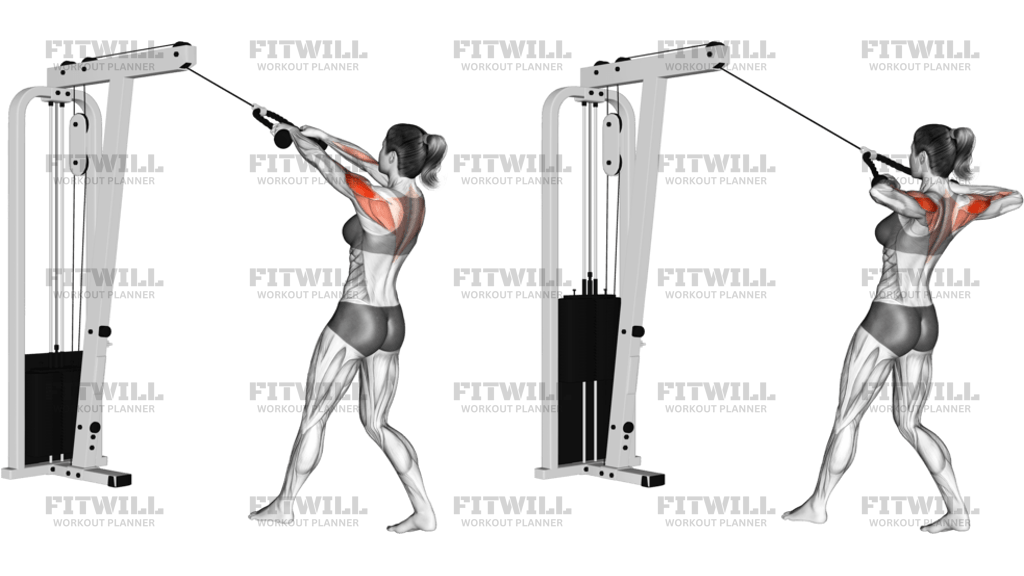
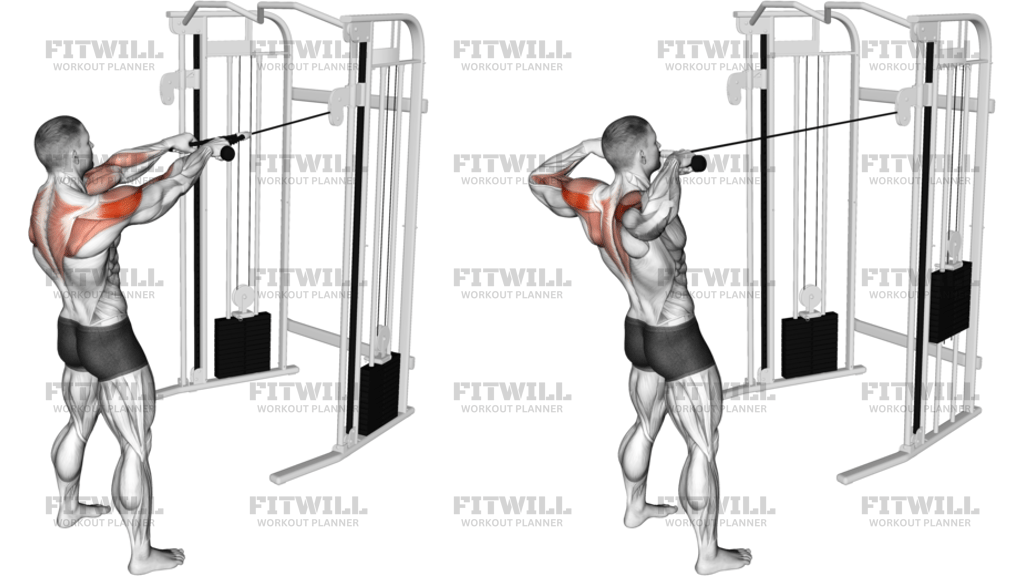
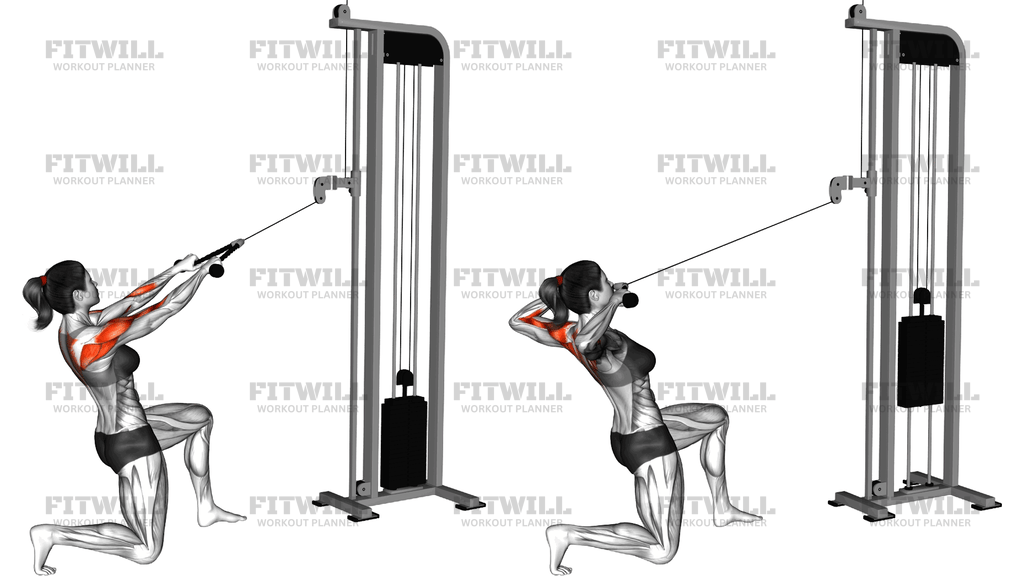
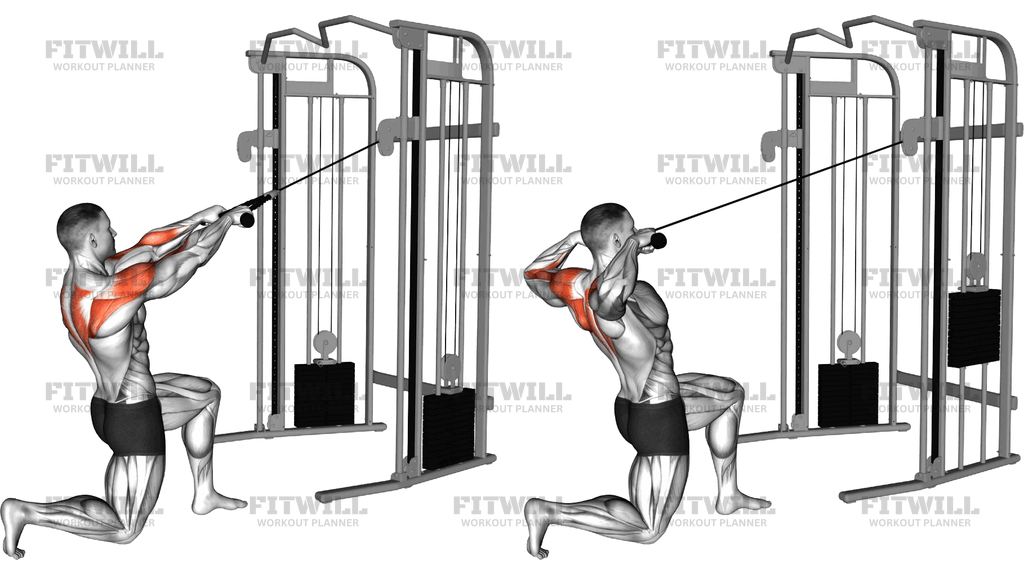
Cable Standing Supinated Face Pull (With Rope)
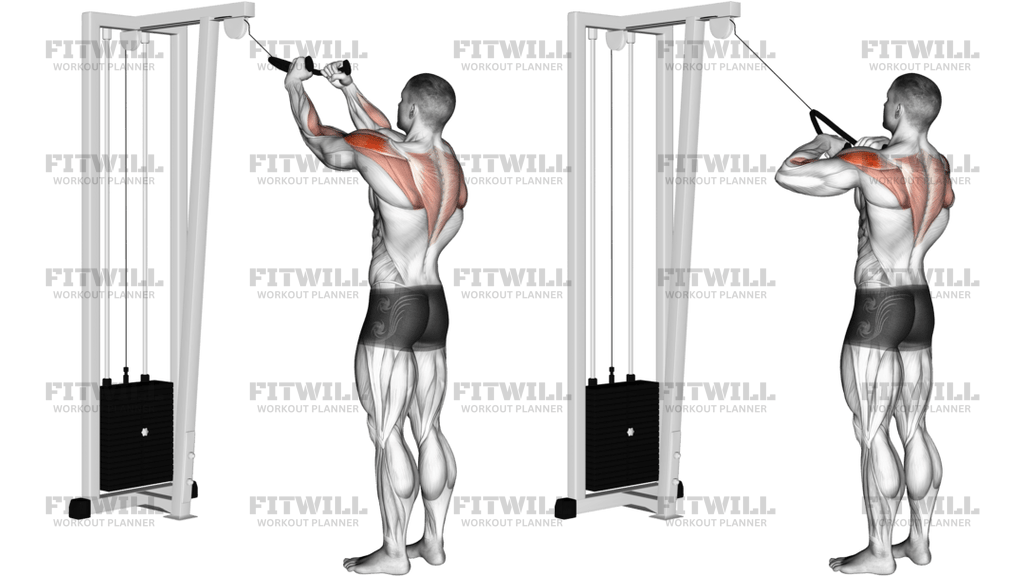
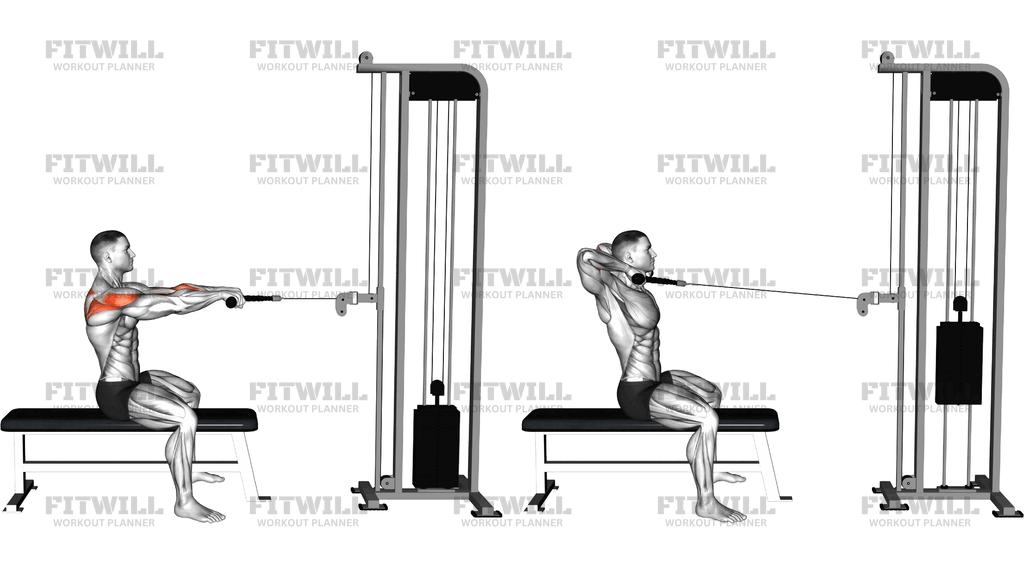
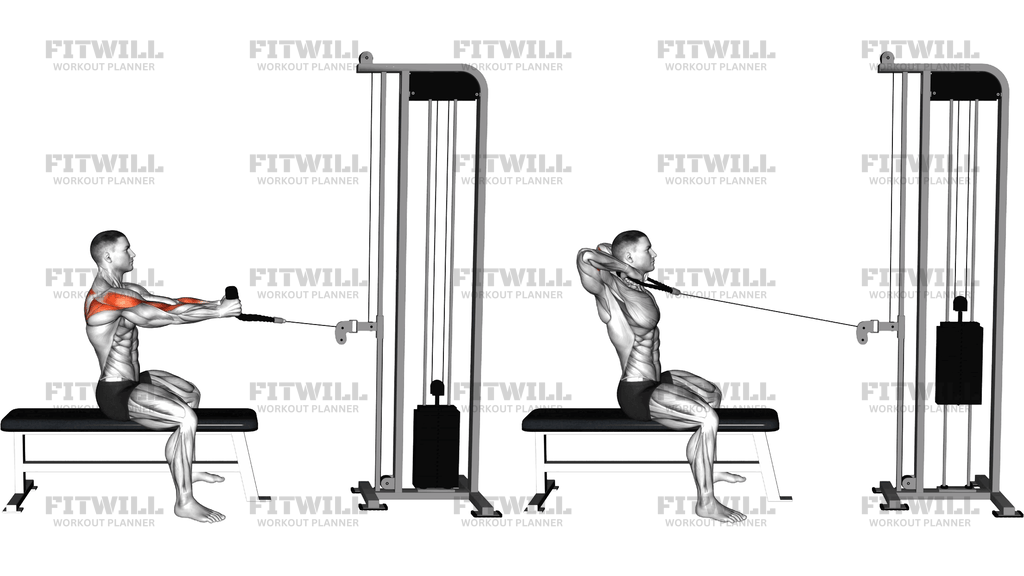
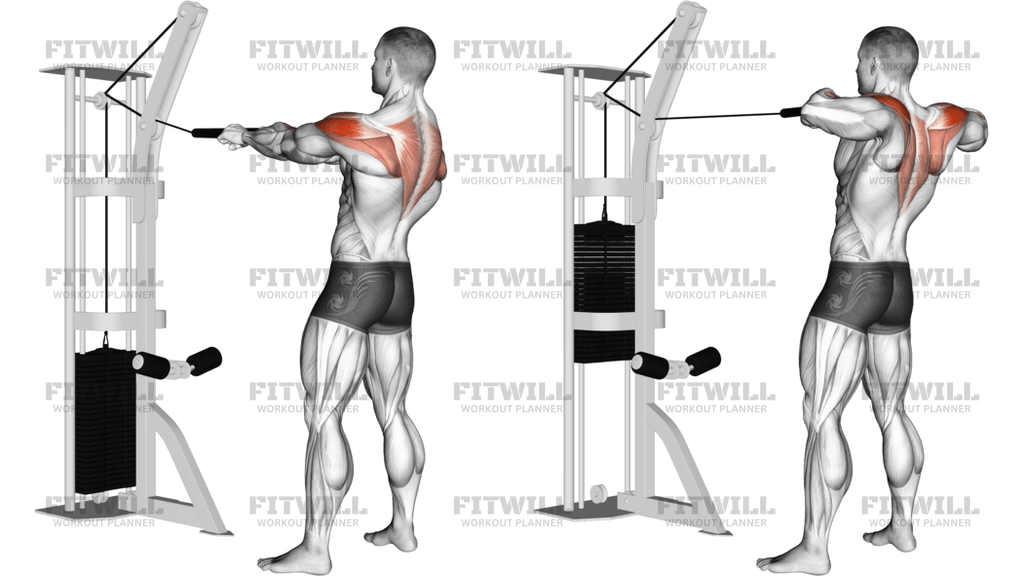
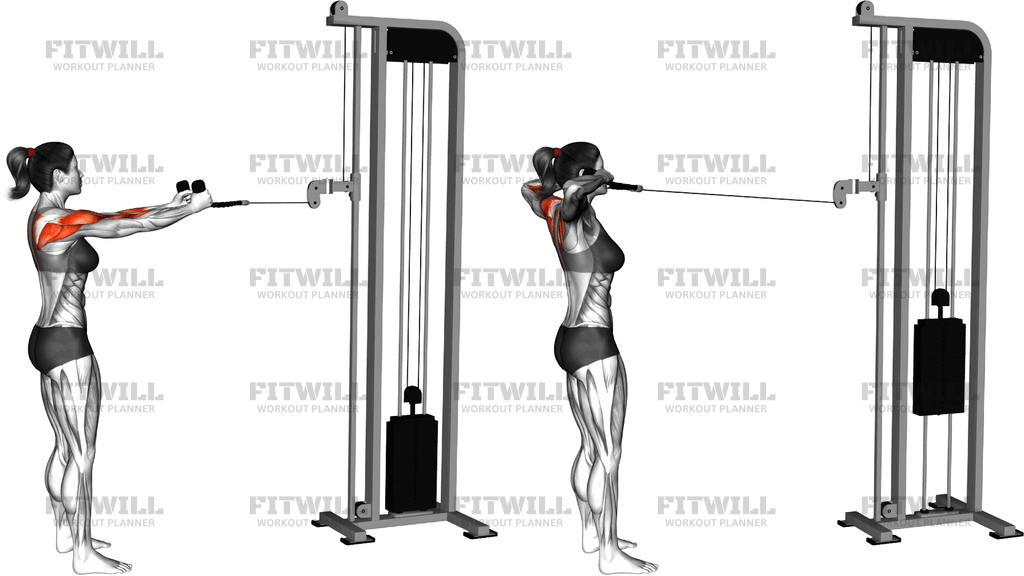
The Cable Standing Supinated Face Pull (With Rope) is a cable exercise performed standing, with a rope attachment set at roughly face height on a cable machine. Instead of the usual neutral or overhand grip, you hold the rope with your palms turned upward toward the ceiling, which subtly shifts the pull toward the biceps and forearms while still challenging the rear shoulders and upper back. The movement ends with the rope handles pulled back beside your head, elbows flared out at or above shoulder height.
This variation is especially useful for people who spend long hours sitting at a desk, since rounded shoulders and a forward head posture usually go hand in hand with weak posterior shoulder and mid-back musculature. Pulling toward the face with the elbows high trains horizontal abduction of the shoulders and retraction of the shoulder blades, two actions that directly counter that slouched position. The standing stance also demands a small amount of core control, because there is no bench or seat to brace against.
Compared with the standard neutral-grip face pull, the supinated grip lets the biceps contribute more strongly and can feel more comfortable for lifters whose wrists dislike the rotated rope hold. It is commonly used as an accessory movement after pressing work, as a warm-up activation drill before overhead lifting, or as a higher-rep finisher dedicated to shoulder health and upper-back detail.
Setup matters here because the pulley height determines the pull path. With the cable set at face height, the resistance pulls straight back toward the machine, so you must stand far enough away to keep tension on the rope even at full arm extension. Keep your torso upright and avoid leaning back as you pull; the trunk should stay quiet so the shoulders and arms do the work.
To execute it well, drive the elbows back and apart rather than simply yanking the handles toward you, and think about separating the rope slightly as it approaches your face. The end position has your upper arms roughly parallel to the floor, hands near ear height. Control the return so the plates do not slam down, and keep your neck relaxed instead of jutting the chin forward to meet the rope. Start light, learn the elbow path first, and only then add load.
[ Workout Log & Planner ]
Put your next workout in Fitwill
Keep your plan and training log ready when you are.


Instructions
- Attach a rope to the cable pulley and set the pulley at about face height, then select a light to moderate weight on the stack.
- Grip the rope ends with your palms facing upward in a supinated grip, and walk back until your arms are fully extended and the weight stack is lifted off the rest.
- Stand with your feet about hip-width apart, knees soft, and your body angled slightly away from the machine so the cable pulls directly toward your face.
- Brace your core lightly, keep your ribs down, and hold an upright posture with your shoulders level.
- Pull the rope toward your face by driving your elbows back and out, letting the rope ends separate so they finish on either side of your head near ear height.
- At the end position, your elbows should be at or slightly above shoulder height and your shoulder blades squeezed together.
- Pause briefly, then slowly extend your arms forward, resisting the cable's pull until you return to the fully stretched starting position.
- Exhale as you pull toward your face and inhale as the rope travels back out.
- Complete your repetitions, then step toward the machine and let the stack settle fully before releasing the rope.
Tips & Tricks
- If your shoulders shrug toward your ears as you pull, the weight is too heavy or you are leading with the upper traps; drop the load and focus on keeping the elbows level with your shoulders.
- Do not stand so close to the machine that the stack rests between reps; reposition until there is constant tension even with your arms straight.
- The supinated grip shifts some work to the biceps, so expect a biceps pump, but do not turn this into a curl by bending the elbows downward; keep the elbows flared wide throughout.
- Avoid leaning your torso back as the rope approaches your face; if you need to rock backward to finish the rep, reduce the weight.
- Let the rope ends separate as you pull rather than gripping them tightly together, which lets your elbows travel a better arc.
- Resist letting the chin jut forward to meet the rope; the rope comes to you, and your head stays neutral.
- Control the eccentric for two to three seconds; letting the arms snap back forward is one of the most common ways this exercise loses its value.
- If your wrists ache with palms up, check that you are holding the rope ends, not crushing them; a loose grip usually resolves the discomfort.
Frequently Asked Questions
What muscles does the Cable Standing Supinated Face Pull (With Rope) work?
The rear shoulders are the primary movers, supported by the mid and lower traps, rhomboids, and rotator cuff muscles that retract the shoulder blades. The supinated grip also brings the biceps and forearms into play more than a neutral-grip face pull would.
Why use a supinated grip instead of the standard rope face pull grip?
With palms turned up, the biceps contribute more to the elbow flexion, and many lifters find the wrist position more comfortable. The back-of-shoulder and upper-back emphasis remains, so it works well as a variation rather than a replacement.
How high should I set the pulley for this exercise?
Set it at approximately face height so the cable pulls straight back toward your head. A much higher pulley turns the movement into more of a high pull, while a lower one shifts it toward a wide row.
Is this a good exercise for beginners?
Yes, provided you start with a light weight and learn the elbow path first. It is actually one of the safer pulling exercises because there is no heavy load compressing the spine and the range is easy to control.
How many reps should I do?
Face pulls respond well to moderate and higher rep ranges, commonly 12 to 20 reps for two to four sets. The goal is quality of the pull and blade retraction, not maximal load.
Why do I feel this in my biceps?
The supinated (palms-up) grip puts the biceps in a strong position to assist elbow flexion, so some biceps involvement is expected. If biceps dominate completely, lighten the load and focus on driving the elbows back and apart instead of just bending them.
My shoulders shrug up during the pull. What should I change?
That usually means the weight is too heavy or the elbows are dropping. Lower the load, keep your shoulders pressed down away from your ears, and think about pulling with your elbows rather than your hands.
What can I substitute if my gym has no rope attachment?
Two single handles or a straight bar attached at face height can work, though you lose the rope-splitting action. A resistance band anchored at face height is a solid home alternative with a very similar pull path.
Is the Cable Standing Supinated Face Pull (With Rope) safe for people with shoulder problems?
It is generally a joint-friendly exercise because it uses light loads and trains the small muscles that stabilize the shoulder, but anyone with a current or recent shoulder injury should get clearance from a qualified professional before adding it.