Dive Bomber Push Up
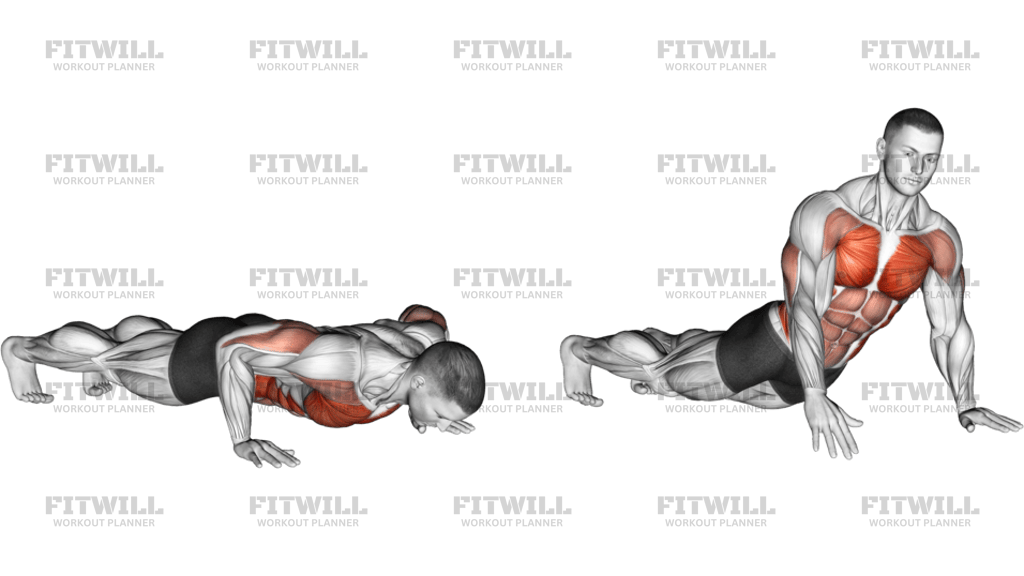
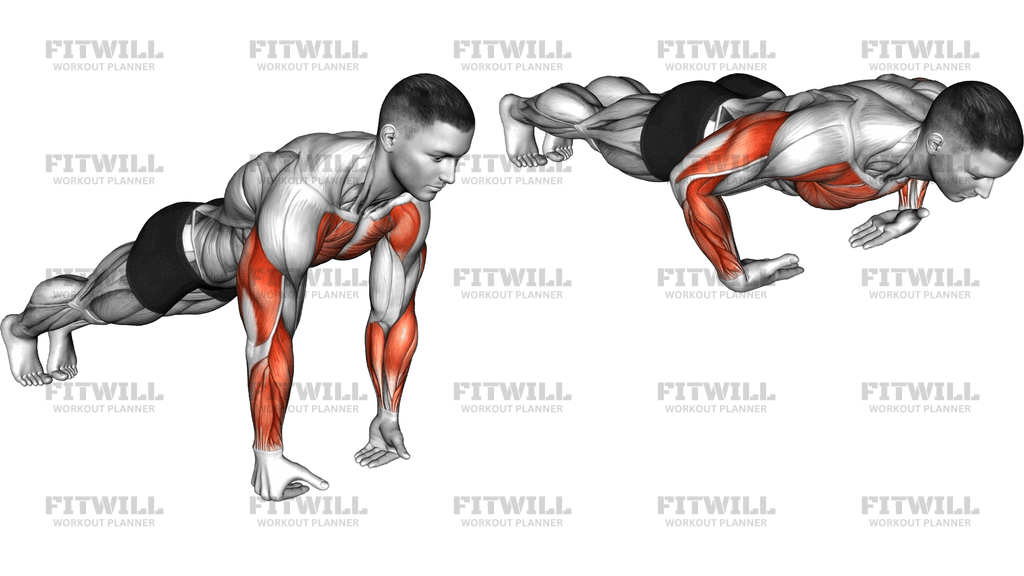
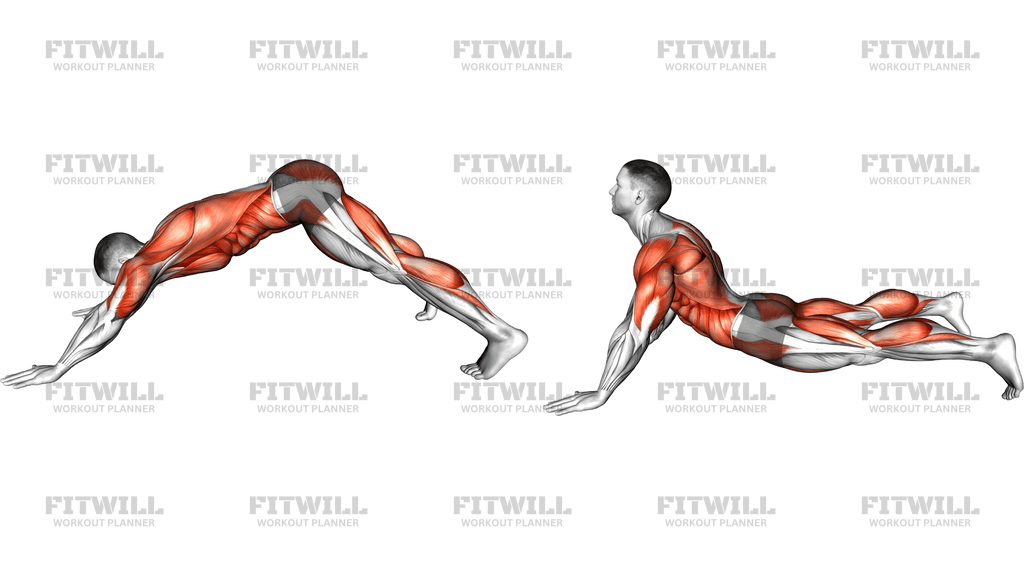
The Dive Bomber Push Up is a flowing, full-body bodyweight movement that takes you from an inverted pike position, sweeps your chest down close to the floor, and finishes with your torso upright and arms extended in an upward-dog style arch. Instead of pressing straight up and down like a standard push up, your body travels through a smooth, curved path — which is why the exercise is often described as imitating the swooping motion of a dive bomber. It demands strength, mobility, and coordination all at once.
Because the movement loads the shoulders through an extended range and stretches the chest, hip flexors, and spine at different points in the arc, it trains far more than pressing strength. The chest and front shoulders do much of the work during the descending sweep, the triceps finish the press as the torso rises, and the lats, core, and lower back control your body line the entire way. The hamstrings and calves also work in the starting pike to keep your hips high and heels settling toward the floor.
Setup matters more than most people expect. Your hands and feet set the size of the arc you have to travel — hands too close or feet too wide turn the movement into a choppy, strained press rather than a smooth dive. A shoulder-width hand position with enough room behind you to lower your hips lets your chest pass just above the floor without scraping, and keeps the shoulders in a safer angle as the torso rises.
To execute it well, think of the rep as one continuous wave rather than three separate poses. Dive the head and shoulders down and forward, let the chest lead the sweep, exhale as you press up into the arch, then reverse the exact same path to return to the pike. Rushing the transition or collapsing the hips midway is the most common breakdown, and it usually shows up as lower back discomfort rather than immediate failure — another reason to keep the pace controlled.
The Dive Bomber Push Up suits intermediate trainees who already own solid standard push ups and want a harder pressing variation that also builds thoracic and shoulder mobility. It appears frequently in calisthenics circuits, martial arts conditioning, and yoga-inspired strength work. If the full arc feels unstable at first, a scaled version — such as a hindu push up where you reset between reps — lets you practice the path before committing to the full return sweep.
[ Workout Log & Planner ]
Put your next workout in Fitwill
Keep your plan and training log ready when you are.


Instructions
- Start on hands and feet in a pike position: hands slightly wider than shoulder width, hips lifted high toward the ceiling, legs straight but not locked, and heels pressing down toward the floor.
- Set your feet about hip-width or slightly wider so you have room to sweep your torso between your arms without your hips hitting the floor, and spread your fingers to grip the floor.
- Brace your core and keep your arms straight to establish a tall, stable inverted-V shape before the rep begins.
- Initiate the dive by bending your elbows and lowering your head and shoulders first, as if trying to slide under a low barrier in front of you.
- Sweep your chest forward just above the floor, keeping it close to the ground as your torso glides between your hands and your hips follow through.
- Press through your palms to straighten your arms and lift your chest into the arched finish: legs extended behind you, hips low or lightly resting toward the floor, and eyes looking slightly forward.
- Reverse the path smoothly — push your hips back up, draw your chest back under your body, and return to the starting pike to complete one repetition.
- Inhale as you dive down and exhale as you press up into the arch, keeping your breathing steady throughout the sweep.
- Move slowly enough that no part of the arc feels like a drop; if your chest or hips crash toward the floor, reset and slow the tempo.
- Complete your set, then shake out the wrists and stretch the shoulders and lower back before standing up.
Tips & Tricks
- If your shoulders pinch at the top of the arch, stop short of a full vertical press and keep a small bend in the elbows — the arc, not the end range, is where the training value lives.
- Hips sagging during the sweep usually means the core has disengaged; cue yourself to keep the ribs down and glutes lightly active as the chest passes under your body.
- Slide your chest toward your hands rather than lowering straight down — a vertical press from the pike turns this into a hard pike push up and misses the dive path entirely.
- Keep the elbows angled back at roughly 45 degrees during the sweep; flaring them wide increases shoulder strain as the torso rises into the arch.
- Warm up the wrists and thoracic spine first — the Dive Bomber Push Up puts extension load on both, and stiff wrists are a common reason people rush the movement.
- If your hips drop and brush the floor mid-rep, your hand-to-foot distance is too short; walk your hands slightly forward or your feet slightly back and retest.
- A mat or soft surface helps if your hips tap the ground during the forward sweep, but do not let padding become an excuse to collapse through the transition.
- Practice the path in reverse: start in the arch position and sweep backward into the pike. Many lifters find the return wave easier to feel, which then cleans up the forward rep.
- Count one rep only when you complete the full out-and-back arc; stopping in the arch and resetting from there is a different, easier exercise.
Frequently Asked Questions
Which muscles does the Dive Bomber Push Up work the most?
The chest and front shoulders carry most of the load during the downward sweep and press, with the triceps finishing the arch. The lats, abs, and lower back stabilize your body line through the entire curved path.
Is the Dive Bomber Push Up suitable for beginners?
It is better treated as an intermediate variation. If you cannot yet perform 15-20 solid standard push ups, build that base first, then practice the arc with a hindu push up version where you reset in the pike between reps.
How wide should my hands and feet be for the Dive Bomber Push Up?
Hands slightly wider than shoulder width and feet around hip-width or a touch wider works for most people. The gap between hands and feet controls the size of the arc — too short and your hips drag, too long and the sweep becomes a strain.
Why do my lower back and hips feel the Dive Bomber Push Up so much?
The movement moves you from a flexed pike into a deep extension arch, so the erector spinae and hip flexors work through a large range. Keep the transition controlled and do not force the arch higher than your spine comfortably reaches.
What is the difference between a Dive Bomber Push Up and a hindu push up?
In a hindu push up you return to the pike by lifting the hips back over the shoulders, effectively resetting each rep. In the Dive Bomber Push Up you reverse the exact same arc you dove through, which makes it more continuous and more demanding.
Should my chest actually touch the floor during the dive?
No — the chest should sweep just above the floor, close enough that a small gap remains. Touching down usually means the hips have collapsed and the smooth path has broken down.
My wrists hurt during the Dive Bomber Push Up. What should I change?
Spread your fingers and grip the floor to share the load across the whole palm, and make sure you are warming the wrists up first. If discomfort persists, try push up handles or a slightly turned-out hand position.
Can I substitute the Dive Bomber Push Up with another exercise?
Standard push ups plus a pike push up cover the pressing strength, while an upward dog to downward dog flow covers the mobility component. Neither fully replicates the flowing arc, but together they train the same qualities.
How many reps and sets of the Dive Bomber Push Up should I do?
Because the arc is technically demanding, start with 2-3 sets of 5-8 controlled reps and only add volume once the path stays smooth. Quality of the sweep matters more than rep count here.