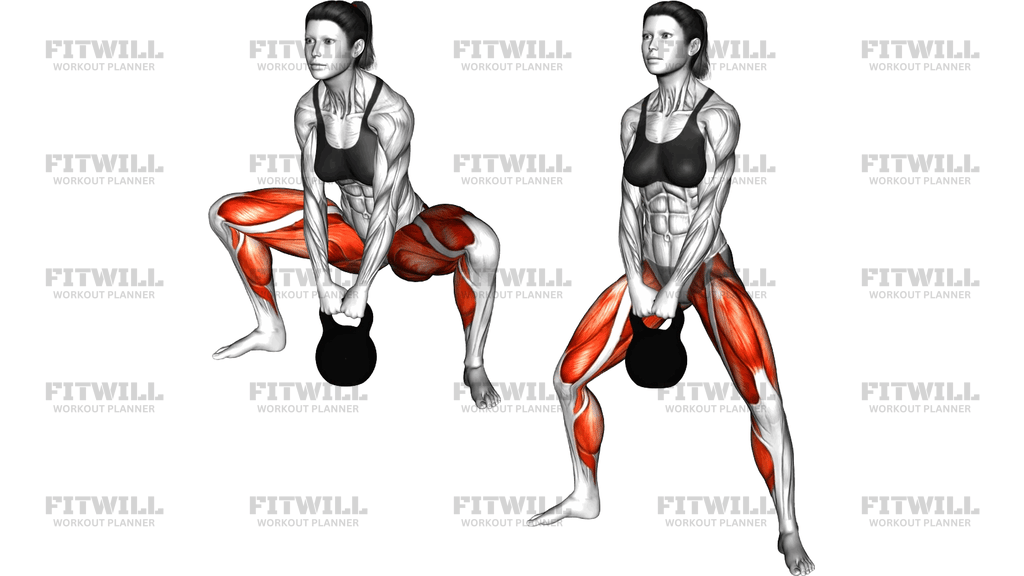
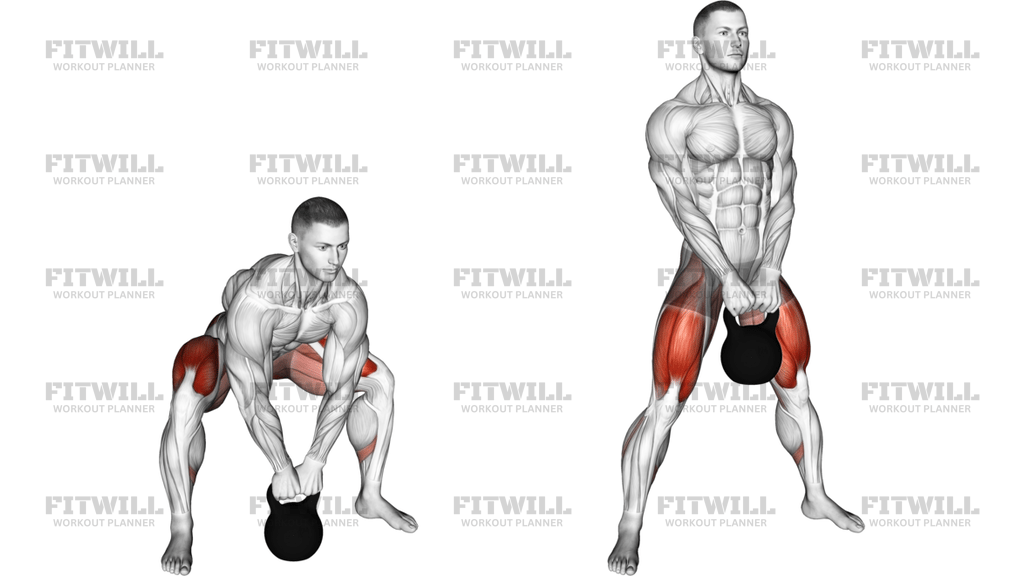
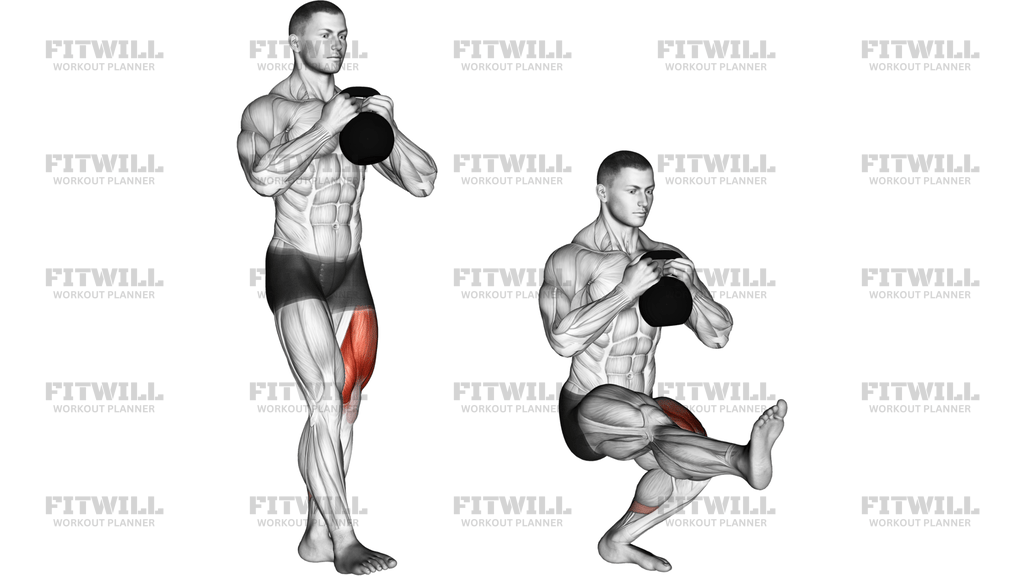
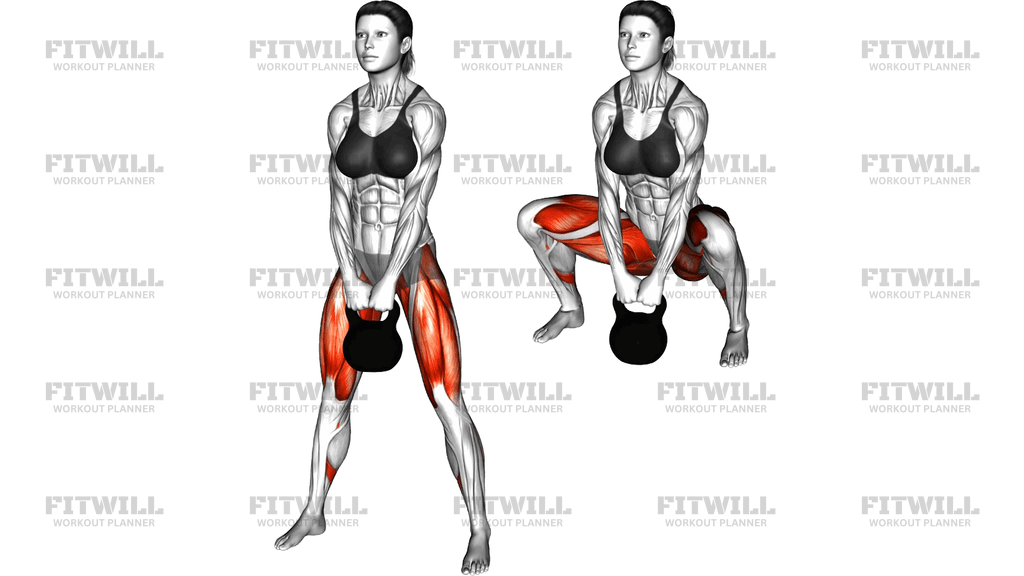
Kettlebell Forward Backward Lunge (Version 2)
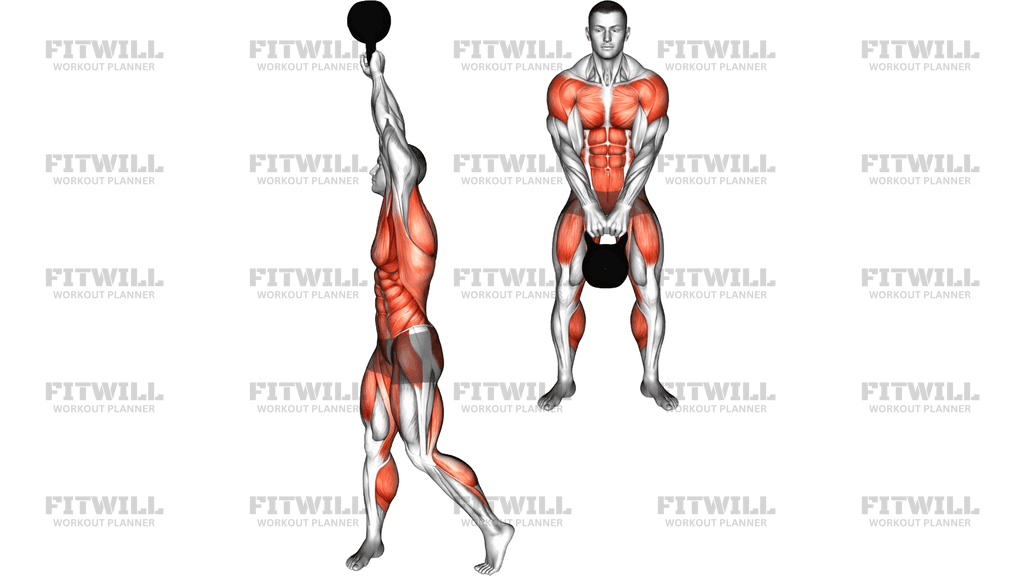
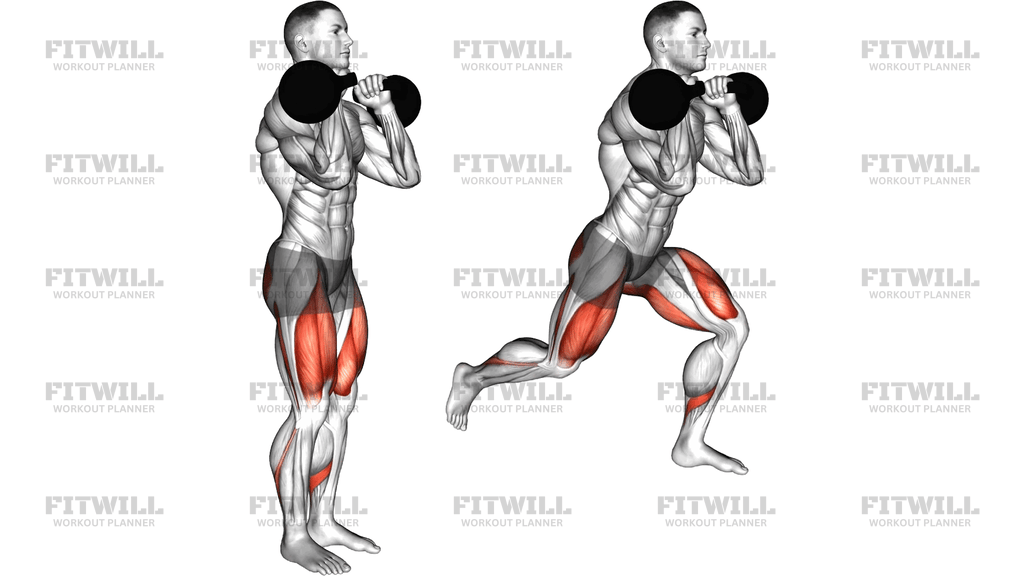
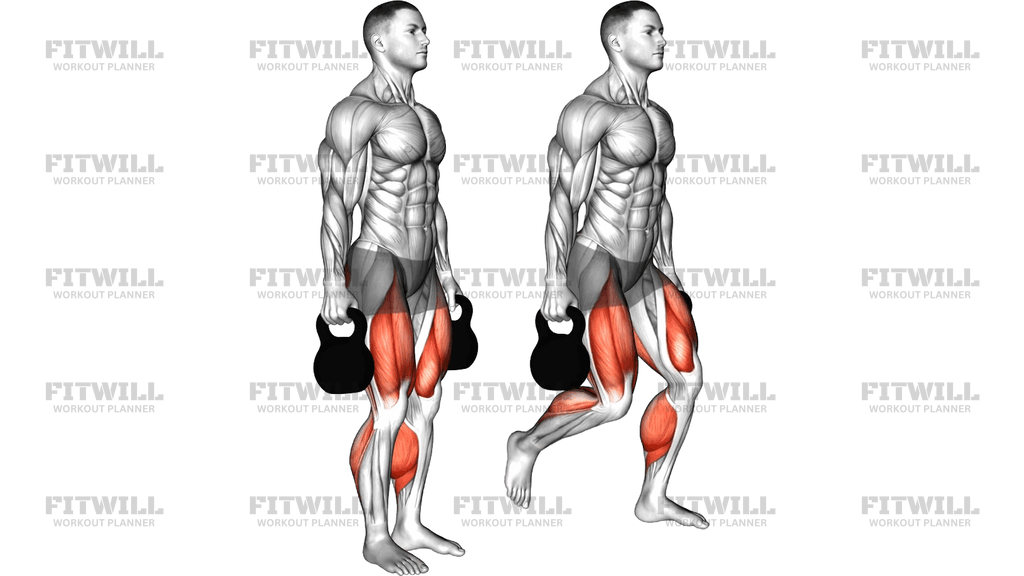
The Kettlebell Forward Backward Lunge (Version 2) is a single kettlebell-per-hand lunge variation where you step forward into a lunge, return to standing, then step backward into a reverse lunge with the same or alternating leg. Holding a kettlebell in each hand at your sides keeps the load low and stable, so the challenge lands squarely on your legs and hips rather than your upper back or grip. The forward-backward pairing trains the same lunge pattern from two directions, which highlights how differently your knees, hips, and balance respond depending on which leg initiates the step.
This movement suits lifters who have mastered bodyweight lunges and want added load without holding a barbell or a heavy weight at the chest. Because the kettlebells hang quietly at your sides, it is easier to keep an upright torso than in front-loaded lunge variations, making it a good choice for people whose chests collapse when they fatigue. It also works well as a volume exercise late in a leg session when heavy squats are no longer appropriate but you still want quality single-leg work.
The primary workload falls on the quadriceps of the front leg, especially as you drive back up out of each lunge. The glutes and hamstrings contribute strongly on the forward step and during the push back to standing, while the rear leg's hip flexors and the calf of the working leg handle stabilization. Holding one kettlebell in each hand also demands steady scapular and grip control, though neither should be the limiting factor if you choose your loads sensibly.
Setup matters more than most people expect. Your stance width, kettlebell position, and where your weight sits over the front foot all determine whether the knee travels cleanly over the mid-foot or drifts inward and forward. Start with lighter kettlebells than you think you need, because the alternating forward and backward steps challenge balance in a way a standard walking lunge does not. A weight that feels easy on the first two reps can expose wobble by rep six.
Execute each rep deliberately: step far enough that your front shin stays roughly vertical, lower until both knees approach right angles, and push the floor away to return to a full stand before changing direction. Breathe in on the way down and exhale as you drive up. Treat the return to standing as a real rep, not a rest stop, since that transition is where most balance breaks happen.
Safety-wise, keep the working knee tracking over the toes and never let it cave inward, and stop the set when your balance degrades rather than pushing through sloppy reps. If you have knee concerns, reduce depth and load first, and prioritize the reverse lunge portion, which is generally gentler on the knee joint than the forward step.
[ Workout Log & Planner ]
Put your next workout in Fitwill
Keep your plan and training log ready when you are.


Instructions
- Stand tall with your feet hip-width apart, holding a kettlebell in each hand by the handles with your arms fully extended at your sides.
- Set your shoulders down and back, look straight ahead, and place your weight evenly across both feet.
- Brace your abdominals lightly as if preparing for a light push, keeping your ribs stacked over your pelvis.
- Step one leg forward into a long stride and lower your hips straight down until both knees are bent close to 90 degrees, with the front shin near vertical and the back knee hovering just above the floor.
- Keep your torso upright and the kettlebells hanging still at your sides rather than swinging with the step.
- Drive through the front foot's mid-foot and heel to push back up to a full standing position with your feet together.
- From standing, step the same or opposite leg backward into a reverse lunge, dropping the back knee toward the floor while the front knee stays over the mid-foot.
- Push through the front leg to return to standing again, completing one forward-backward cycle.
- Exhale as you drive up out of each lunge and inhale as you lower; continue alternating legs or complete all reps on one side before switching.
- Between sets, set the kettlebells down on the floor with a flat back rather than dropping them, and reset your stance before the next set.
Tips & Tricks
- Take a longer forward step than feels natural; a short stride pushes the front knee past the toes and shifts stress away from the quads and glutes.
- If you wobble on the backward step, pause for a beat in the standing position between lunges instead of rushing the direction change.
- Grip the kettlebell handles firmly but keep your shoulders relaxed; hunched shoulders with heavy bells pull your torso forward as you tire.
- Check that the kettlebells stay level with each other; one bell drifting forward usually means your torso is rotating toward the opposite side.
- Push the floor away rather than lifting yourself up in the forward lunge; thinking about leg drive keeps the front knee from jolting forward.
- If your back knee touches down hard, control the last few inches of the descent instead of relying on the floor to stop the rep.
- Start with the reverse lunge pattern when learning the movement, then add the forward step once your balance is consistent.
- Choose kettlebell weights you can stabilize for the entire set; a weight that is too heavy shows up as shortened stride length before it shows up as strength failure.
- Keep your gaze fixed on a point at eye level across the room; looking down at your feet is a common cause of balance loss on the backward step.
Frequently Asked Questions
Which muscles does the Kettlebell Forward Backward Lunge (Version 2) work the most?
The quadriceps of the front working leg do the largest share, with strong support from the glutes and hamstrings on the drive back to standing. The calves, hip stabilizers, and core work continuously to keep you balanced through the direction changes.
Should I use one kettlebell or two for this exercise?
This version is performed with a kettlebell in each hand hanging at your sides, which keeps the load balanced left to right. Using a single bell is a viable progression-regression tool but will challenge your obliques to resist leaning toward the weighted side.
Is the forward lunge or the backward lunge harder on the knees?
The forward step is typically harder on the knees because decelerating your body over a new front foot requires more braking force from the quadriceps. If your knees are sensitive, emphasize the reverse lunge portion and keep the forward step shallow.
Can beginners do the Kettlebell Forward Backward Lunge (Version 2)?
Beginners should first become comfortable with bodyweight forward and reverse lunges, then start with very light kettlebells or no bells at all. The alternating direction change is the hardest part to control, so master that pattern before adding meaningful load.
Why do I lose my balance when stepping backward after the forward lunge?
The transition from forward to backward stepping shifts your base of support under a moving load, which exposes any weakness in ankle and hip stability. Slow down, pause briefly in the standing position between lunges, and fix your eyes on a stationary point ahead of you.
How far forward should I step?
Step far enough that your front shin stays close to vertical at the bottom and both knees can reach roughly 90 degrees. A stride that is too short drives the front knee past the toes and turns the rep into a knee-dominant grind.
What is the most common mistake in this exercise?
Rushing the return to standing and immediately stepping into the next lunge before you are balanced. Another frequent error is letting the kettlebells swing with each step, which pulls your torso out of position; keep your arms still and the bells quiet at your sides.
What can I substitute if I do not have kettlebells?
The same forward-backward lunge pattern works with a dumbbell in each hand at your sides, or with no weight at all while you build balance. A sandbag hugged at the chest is another option, though it shifts more demand to your upper back and core.
How deep should I lower in each lunge?
Lower until both knees are bent near 90 degrees and your back knee hovers just above the floor, as long as you can keep your torso upright and your front heel down. Depth you cannot control cleanly is depth that works against you.
How should I breathe during the Kettlebell Forward Backward Lunge (Version 2)?
Inhale as you lower into each lunge and exhale as you drive back up to standing. Keep your breathing steady and avoid holding your breath through the transition between directions.