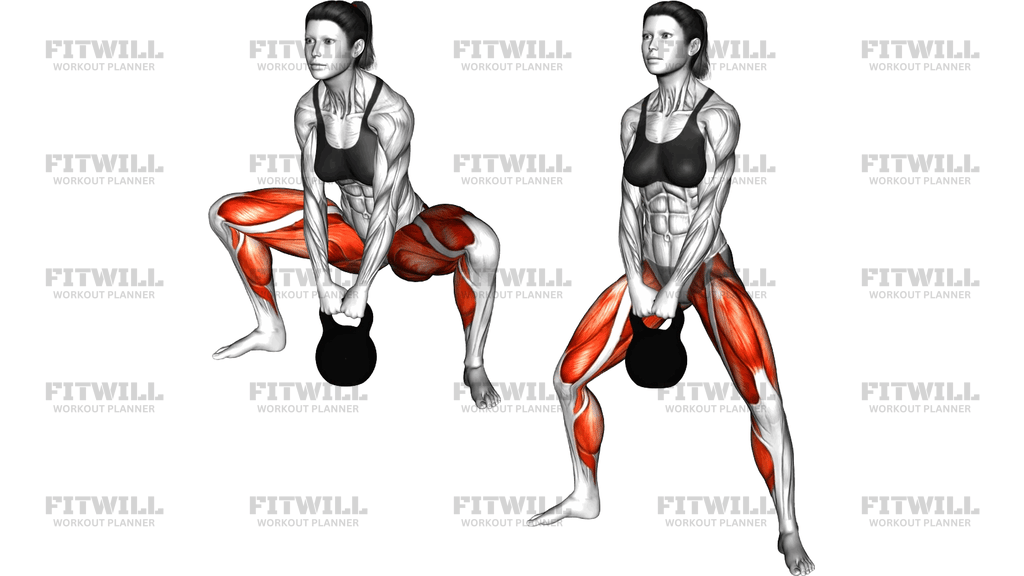
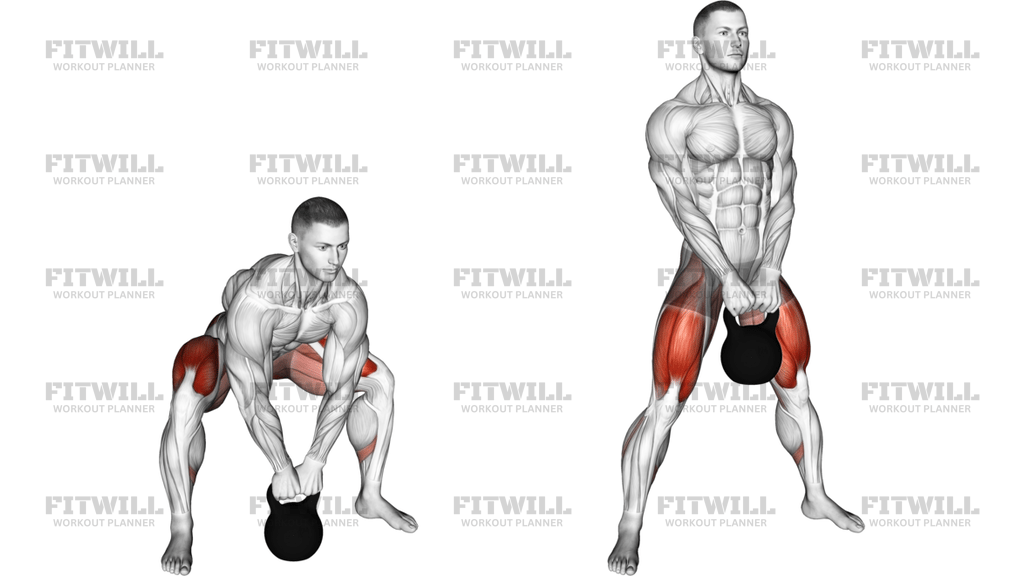
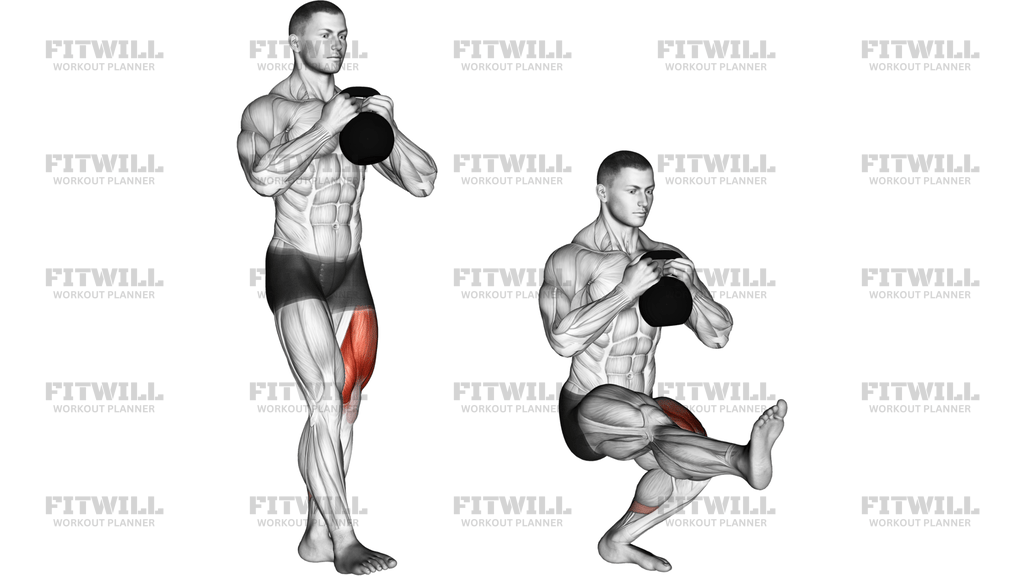
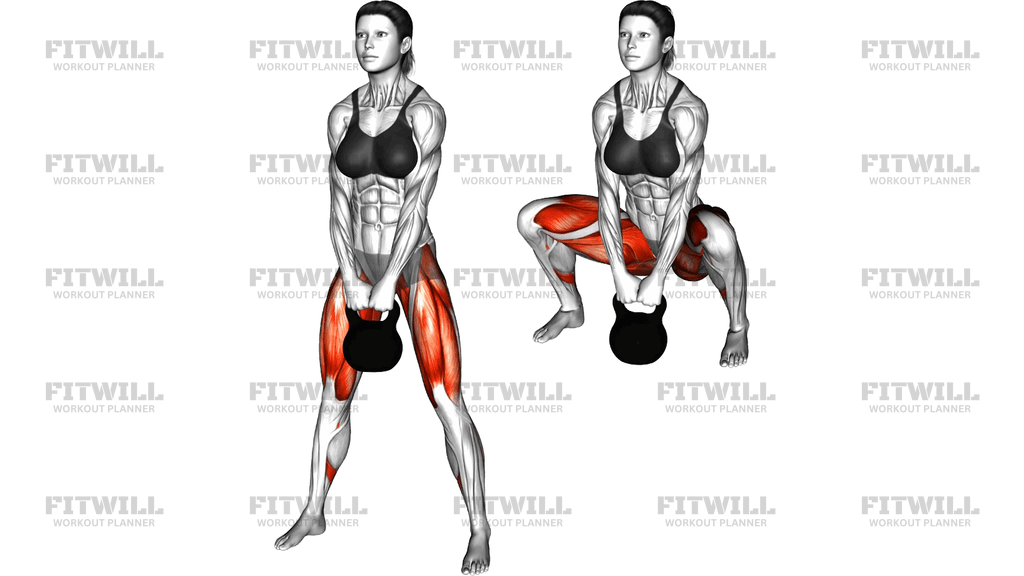
Kettlebell Goblet Forward Backward Lunge (Version)
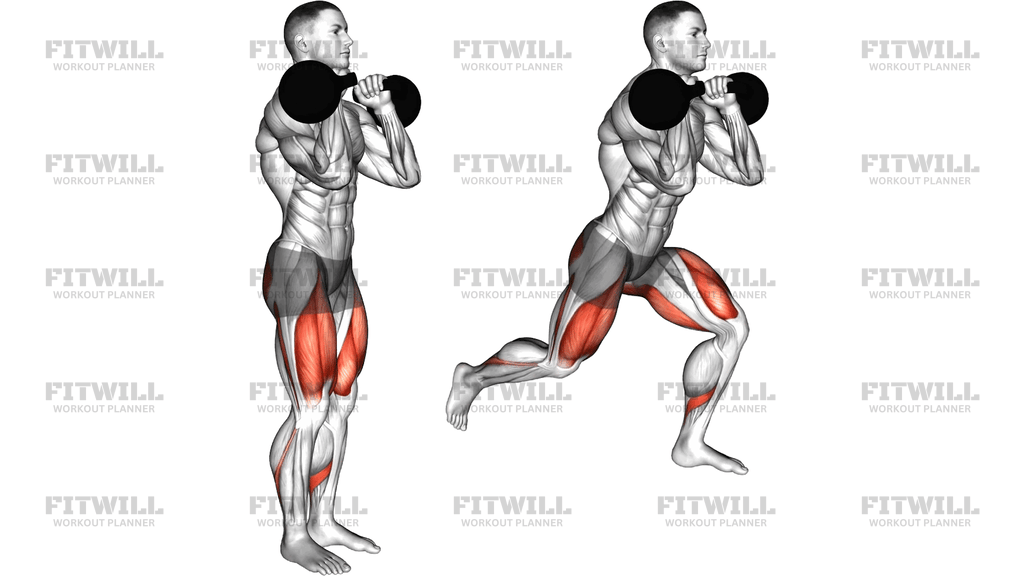
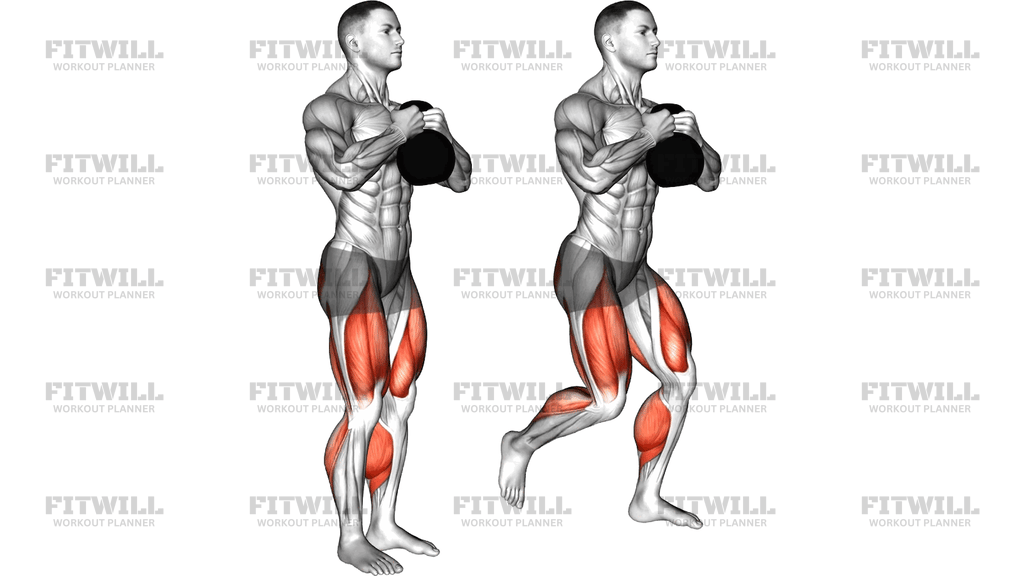
The Kettlebell Goblet Forward Backward Lunge is a single kettlebell leg exercise where you hold the bell by the horns at chest height and alternate lunge steps, driving one rep forward and the next one backward with the same or alternating legs. The goblet position keeps the weight front-loaded against your sternum, which naturally cues an upright torso and makes the movement far easier to control than a barbell or two separate dumbbells.
This combination format gives you two distinct training effects in one exercise. The forward lunge places more emphasis on the quads as the front knee travels over the foot, while the backward lunge shifts load toward the glutes and hamstrings and is generally kinder to the front of the knee. Alternating between them trains the legs through both deceleration and propulsion patterns without needing heavy load.
The goblet hold also does quiet work for the rest of the body. Your core has to brace to stop you from collapsing forward at the chest, your upper back stays engaged to keep the bell close, and your forearms and grip handle the bell for the whole set. Because the weight sits at chest height rather than hanging at your sides, the demand on posture is higher and the balance challenge is real, especially as you step back.
Setup matters here more than most people expect. Stand tall with feet hip-width apart, elbows tucked under the bell rather than flared out, and ribs stacked over the pelvis. If you start rounded or leaning back, every lunge that follows inherits that fault. Taking the time to brace before the first step keeps the forward and backward reps consistent.
This exercise suits intermediates building unilateral leg strength, lifters who want knee-friendly glute work mixed with quad work, and anyone training at home with a single kettlebell. It is also a useful teaching progression toward heavier split squat and lunge variations, since the front-loaded position gives instant feedback when your torso drifts.
Keep the working foot planted for the entire rep and let the moving leg do the traveling. Step far enough forward or backward that the front shin stays close to vertical at the bottom, and push the floor away to return to standing under control rather than bouncing out of the depth.
Fitwill
Log Workouts, Track Progress & Build Strength.
Achieve more with Fitwill: explore over 9600 exercises with images and videos, access built-in and custom workouts, perfect for both gym and home sessions, and see real results.
Start your journey. Download today!




Instructions
- Stand with feet hip-width apart and hold a kettlebell by the horns at chest height, resting it against your sternum with elbows pointing down and tucked in.
- Set your stance so your weight is balanced over the whole foot, then take a breath into your belly and brace your core before you step.
- Step one foot straight forward and lower your back knee toward the floor until both knees are roughly 90 degrees, keeping your front shin close to vertical.
- Pause briefly at the bottom with your torso upright and your chest facing forward, not rounded over the kettlebell.
- Drive through the front foot to push back up to a full standing position with feet together.
- For the backward rep, step the same or opposite foot straight behind you and drop into a rear lunge, lowering until the back knee is just above the floor.
- Push through the heel of the front foot to return to standing, keeping the bell glued to your chest the whole time.
- Exhale as you push out of each lunge and inhale at the top before the next step.
- Alternate forward and backward lunges for your target reps, then rack the kettlebell down and reset your stance before the next set.
Tips & Tricks
- If your torso pitches forward on the backward lunge, the step is usually too short — lengthen the step so the front knee stays behind or in line with the toes.
- Keep the kettlebell pressed lightly into your sternum rather than letting it drift away; if the bell pulls you forward, your elbows have flared and your core has relaxed.
- Land each step softly. A heavy slap of the front foot usually means you are stepping too far or dropping instead of lowering under control.
- Do not let the front knee cave inward as you stand up — think about spreading the floor with your foot and keeping the knee tracking over the middle of the foot.
- If balance is shaky on the backward step, pause for a beat at the top between reps until your feet are fully set before moving again.
- The forward and backward versions hit the legs differently, so keep the step length identical in both directions to avoid favoring one pattern.
- Wipe your hands or use chalk if the horns get slippery — a sliding grip forces you to squeeze the bell instead of focusing on your legs.
- Stop the set when your torso starts to lean or your knee position changes, not just when your legs burn; form drift on lunges usually shows up before fatigue feels obvious.
Frequently Asked Questions
What muscles does the Kettlebell Goblet Forward Backward Lunge work?
The quadriceps and glutes do most of the work, with the forward lunge biasing the quads and the backward lunge loading the glutes and hamstrings more. Your core, upper back, and forearms also stay active to hold the kettlebell at your chest.
Is the backward lunge easier on the knees than the forward lunge in this exercise?
Generally yes, because stepping backward keeps the front shin more vertical and reduces shear stress at the front of the knee. That is why the combination format works well — you get quad-dominant and hip-dominant reps in the same set.
Can beginners do the Kettlebell Goblet Forward Backward Lunge?
Yes, it is actually one of the more beginner-friendly loaded lunges because the front-loaded kettlebell encourages an upright torso. Start with a light bell, practice the forward and backward steps separately, and combine them once both feel stable.
How heavy should the kettlebell be for this exercise?
Choose a weight you can hold at your chest for the entire set without your elbows dropping or your torso rounding. Lunges punish sloppy setup quickly, so most people progress the load slower here than they would on squats.
Should I step forward and backward with the same leg or alternate legs?
Both work. Doing all reps on one leg before switching builds more focused strength and makes fatigue easier to measure, while alternating keeps the set balanced and slightly more demanding on coordination.
Why do I lose balance when stepping backward with the goblet hold?
The backward step removes your visual reference for where your foot is landing, and a chest-height weight raises your center of mass. Slow the step down, look at a fixed point ahead, and briefly reset your feet at the top until it steadies.
What can I substitute if I do not have a kettlebell?
A single dumbbell held vertically against your chest in the same goblet fashion is the closest substitute. You can also do the forward backward lunge pattern with body weight only or with a weight plate hugged to your chest.
How deep should I go on each lunge?
Lower until both knees are close to 90 degrees and the back knee hovers just above the floor. Going deeper is fine if your hips and knees stay comfortable and your front heel stays planted.
Is it safe to do this exercise every day?
It can be done frequently with light loads since it is not maximally fatiguing, but your legs still need recovery between harder sessions. Two to four focused sessions per week is plenty for most people.