Lever Seated Wide Lat Pulldown
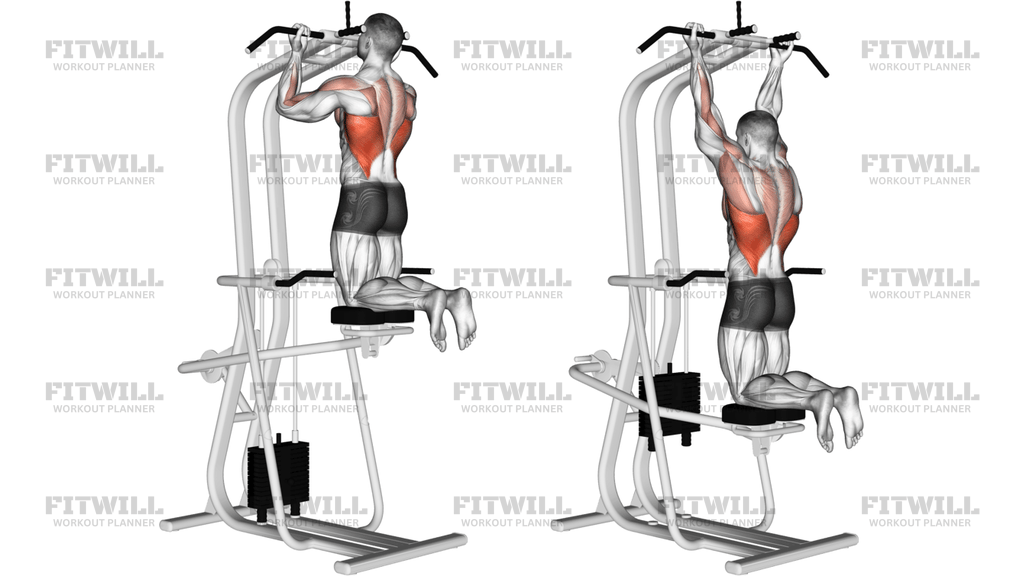
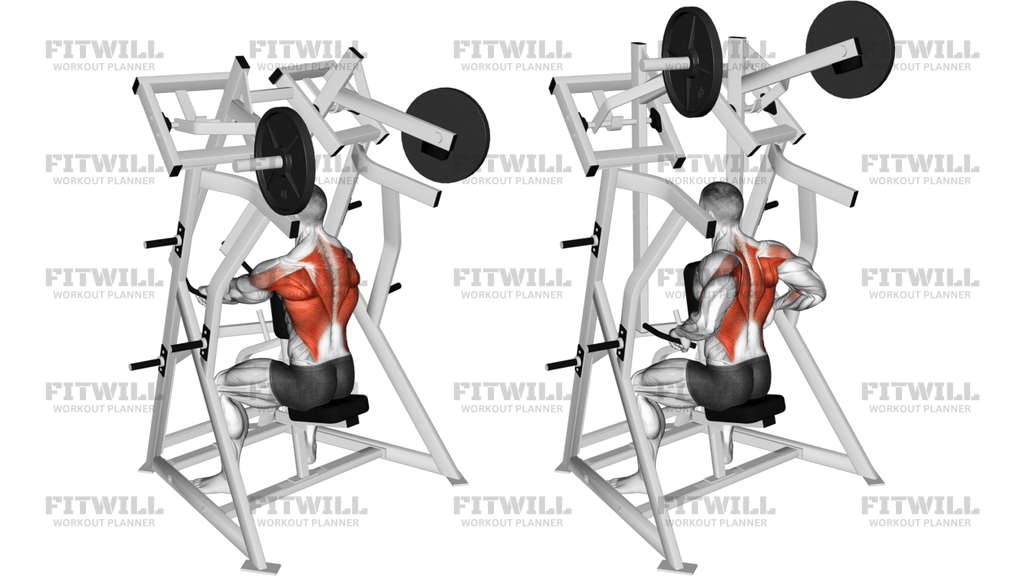
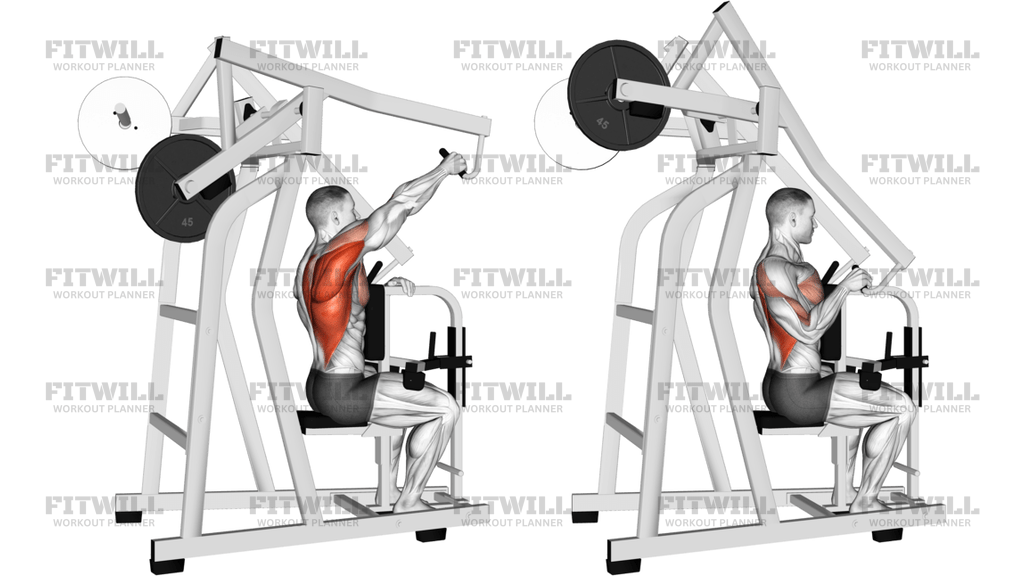
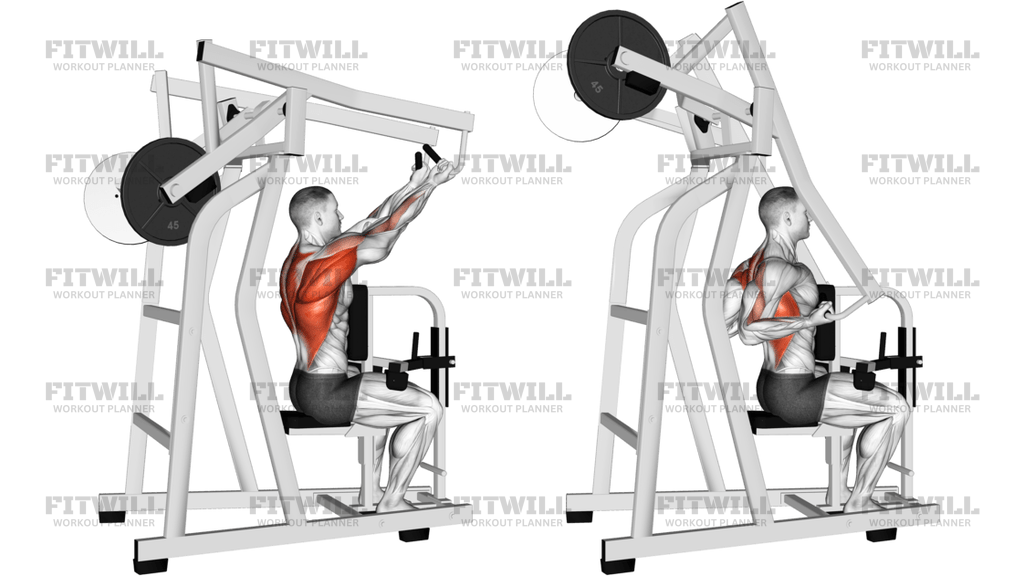
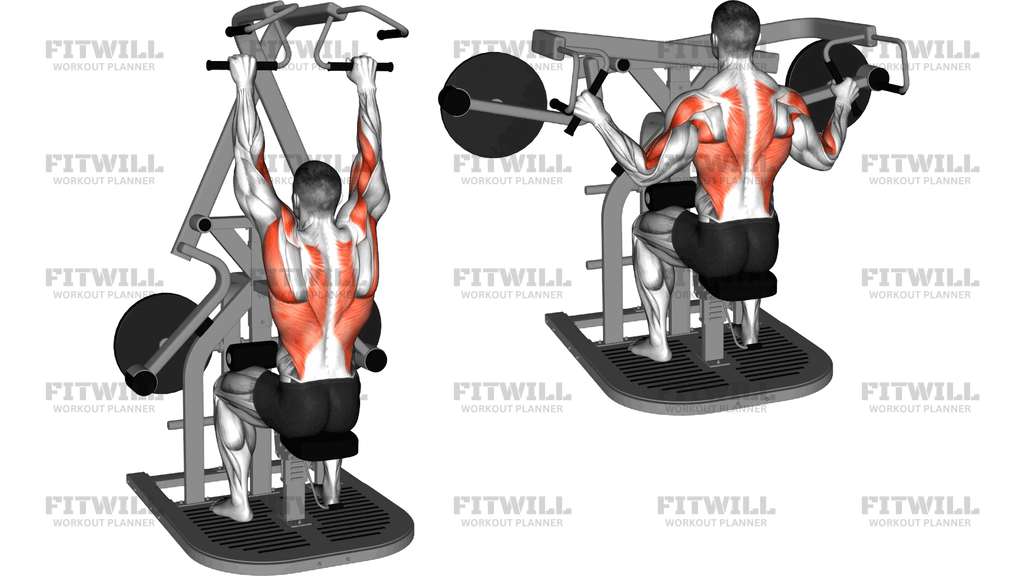
The Lever Seated Wide Lat Pulldown is a plate-loaded machine exercise that trains the lats through a wide, overhead pulling arc. You sit facing the machine with your thighs anchored under the pads, take a wide grip on the two angled handles, and pull them down to shoulder level while the lever arms travel along a fixed path. Because the machine controls the trajectory, your job is simply to drive the elbows down and back, which makes it easier to feel the back working than on a free-moving cable bar.
This movement is a solid fit for lifters who want lat volume without the stability demands of pull-ups, and for anyone whose grip gives out before their back does on long pulldown sets. The fixed lever path also removes the temptation to swing or lean back excessively, so it works well for beginners learning what a lat contraction feels like, and for more experienced lifters using it as a controlled finisher after heavier rows or weighted pull-ups.
The primary work comes from the latissimus dorsi pulling the upper arms down toward the torso, with strong assistance from the teres major, lower traps, and rhomboids as the shoulder blades retract at the bottom. The biceps and forearms handle the gripping and elbow flexion, which is why hand position matters: the wide grip shifts emphasis toward the upper outer lats and upper back rather than the lower lats.
Setup determines whether you actually train the lats or just move the handles. Adjust the seat so the thigh pads sit snugly on your legs and your feet rest flat on the platform, then make sure the handles align roughly with the top of your reach without you having to shrug or stretch to grab them. If the seat is too low or too high, your torso angle changes and the pull turns into an arm-dominant shrug.
Execution should feel like pulling your elbows toward your back pockets. Start each rep from a full overhead stretch, lead with the elbows, and bring the handles down to about collarbone or upper-chest height with your chest tall and torso nearly upright. Pause briefly where the handles are level with your shoulders, then let the arms travel back up under control so the lats lengthen fully at the top.
In practice, this machine slots neatly into back day as a primary vertical pull or as higher-rep accessory work. Keep the load honest: because the lever path is fixed, loading heavier than your lats can handle usually shows up as shrugging, partial reps, or driving through your legs against the pads rather than as productive back training.
[ Workout Log & Planner ]
Put your next workout in Fitwill
Keep your plan and training log ready when you are.


Instructions
- Sit on the machine facing the weight stack, slide your thighs under the roller pads, and plant both feet flat on the foot platform with your knees bent at roughly 90 degrees.
- Set the seat height so the pads press firmly into your thighs and your arms can reach the wide handles fully overhead with only a slight stretch, no shrugging.
- Take a wide, overhand grip on the two angled handles, wrapping your thumbs around them, and let your arms extend fully overhead to set the starting position.
- Sit tall with your chest up and ribs stacked over your hips, then brace your core lightly as if preparing for someone to nudge your torso.
- Pull the handles down and slightly out to the sides by driving your elbows down toward your hips, keeping your torso upright rather than leaning back.
- Continue until the handles reach about upper-chest or collarbone height and your elbows point down near your sides, then squeeze your shoulder blades together for a beat.
- Reverse the motion slowly, letting the handles rise until your arms are fully extended overhead and you feel a stretch across your lats and upper back.
- Exhale as you pull the handles down, and inhale as you let them return to the top position.
- Complete your reps with a brief pause at full extension each time, then release the handles one at a time once the weight is settled.
- Stand up carefully from under the thigh pads after the lever arms have returned to rest before changing or adding plates.
Tips & Tricks
- Resist leaning back as the handles descend. A small backward tilt of a few degrees is fine, but if you find yourself rowing your torso into the pull, the weight is likely too heavy for your lats to move alone.
- If your wrists bend backward at the bottom, you are pulling through your hands. Think of your hands as hooks and focus on driving the elbows instead.
- Do not cut the top range short. Half reps that stay near the top turn the exercise into a shortened-isometric style pump and rob you of the lat stretch that makes wide pulldowns valuable.
- Shrugging your shoulders toward your ears at the start is a common trap on this machine. Depress your shoulder blades first, then pull, so the lats initiate instead of the upper traps.
- Because the handles move independently on separate lever arms, you can spot left-right differences. If one side lags, slow down and match the weaker side rather than letting the strong arm set the pace.
- Keep the thigh pads snug. If your hips lift off the seat as you pull, lighten the load or tighten the pads, because driving through your legs turns the set into a full-body grind.
- Grip as wide as the handles allow but no wider; forcing an extreme width shortens the range and can irritate the shoulders at the top.
- If your forearms fatigue before your back, chalk up or use a firmer neutral hook of the fingers rather than squeezing the handles tightly for the entire set.
Frequently Asked Questions
Which muscles does the Lever Seated Wide Lat Pulldown work?
The lats are the prime mover, supported by the teres major, rhomboids, middle and lower traps, and rear shoulders. The biceps and forearms assist through gripping and elbow flexion, with the wide grip placing extra emphasis on the upper outer lats and upper back.
How is the wide grip on this machine different from a standard pulldown?
A wide grip on the angled handles keeps your upper arms more out to the sides as you pull, which shifts some emphasis from the lower lats toward the upper and outer lats and the muscles between the shoulder blades. It also shortens the range slightly compared with a narrow grip.
Is the Lever Seated Wide Lat Pulldown suitable for beginners?
Yes. The fixed lever path removes the need to control a swinging bar, the thigh pads lock your body in place, and the independent handles make it easy to see and correct side-to-side imbalances. Start with a light load to learn the elbow-driven pull before adding weight.
How should I set the seat height on the Lever Seated Wide Lat Pulldown?
Adjust the seat so the thigh pads sit firmly on your legs, your feet rest flat on the platform, and you can reach the handles fully overhead with a mild stretch. If you have to shrug or stretch to grab the handles, the seat is too low; if your arms cannot fully extend, it is too high.
Can this machine replace pull-ups in my program?
It can serve the same role as a vertical pull and lets you adjust the load precisely, which is helpful while building pulling strength. That said, pull-ups train stabilizing muscles differently, so many lifters use the machine alongside or as a stepping stone toward bodyweight work rather than a permanent substitute.
Why do my biceps burn more than my back during this exercise?
That usually means the arms are leading the pull. Before each rep, pull your shoulder blades down and back first, then drive the elbows toward your hips, and lighten the load if needed so the lats, not the elbows, control the movement.
How far down should I pull the handles on the Lever Seated Wide Lat Pulldown?
Bring the handles down to roughly upper-chest or collarbone height, or until your elbows reach your sides. Pulling below that point usually requires excessive torso lean and adds little extra lat work.
Should my torso stay completely upright during the pull?
Close to upright, yes. A slight backward lean of a few degrees is natural as the handles come down, but a large lean converts the movement into a row and reduces the overhead stretch your lats get at the top.
Is the Lever Seated Wide Lat Pulldown safe for people with shoulder issues?
The fixed path and supported seated position make it gentler on the joints than many free-weight pulls, but individual comfort varies. Work within a pain-free range, avoid an excessively wide grip, and check with a qualified professional if you have a current shoulder concern.
What can I use if my gym does not have a lever pulldown machine?
A cable lat pulldown with a wide bar or a well-controlled set of band-assisted or free pull-ups trains the same vertical pulling pattern. You may notice the cable version requires more torso control, since nothing guides the bar along a fixed arc.