Seated Underhand Arm Circle On A Chair
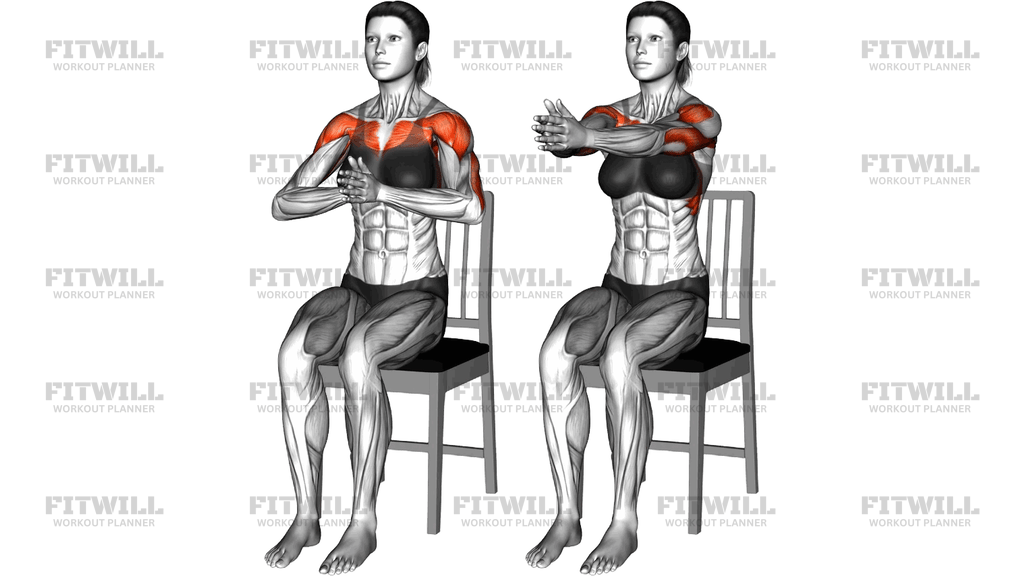
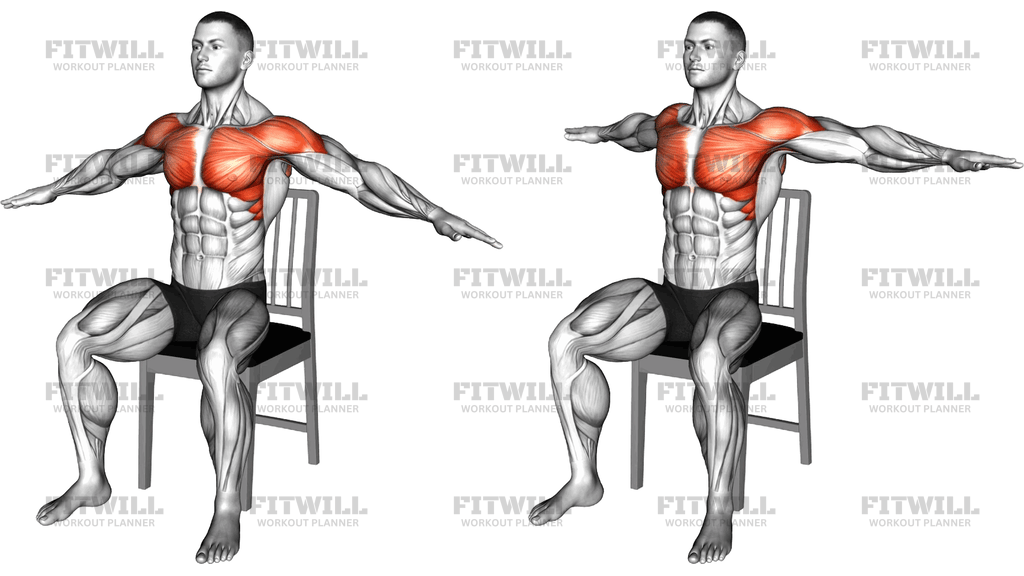
The Seated Underhand Arm Circle On A Chair is a simple bodyweight movement performed sitting upright on a chair with the arms extended straight out to the sides and the palms turned upward. From that position, the arms sweep through continuous forward circles, traveling from hip height up past shoulder level and back down again. Because the hands stay open and the palms face the ceiling, the chest and front shoulders stay engaged through the entire arc rather than only at the top or bottom of the movement.
The chair does more work than you might expect. Sitting removes momentum from the lower body and forces the torso to stay tall, which means the arms have to generate and control the circular path on their own. The seated position also makes this a strong choice for anyone who cannot stand comfortably for long periods, for beginners building shoulder stamina, or for office workers who want a discreet way to wake up the upper body between tasks.
The main muscles doing the work are the pectorals of the chest, which the underhand palm position places under constant tension, along with the anterior deltoids at the front of each shoulder. The biceps and forearms assist as the arms rotate and hold the circle, and the muscles between the shoulder blades stay active to keep the arms from collapsing forward. Small circles emphasize endurance and control, while larger circles increase the range the shoulders must move through.
Setup matters more than it looks. Sit on the front half of the chair with your feet flat on the floor, roughly hip-width apart, and your spine tall without leaning back into the chair. Extend both arms out to the sides at about shoulder height, palms facing up, before you start circling. If your arms drop or your shoulders shrug toward your ears, the circle loses its shape and the chest stops leading the movement.
To execute it well, keep the circles smooth and even, as if your fingertips are tracing two matching rings in the air. Breathe steadily rather than holding your breath, and start with a circle size you can maintain without your form breaking down. Ten to thirty seconds of continuous circling per set is a practical starting range, and you can progress by enlarging the circles or adding time rather than adding load.
This exercise is commonly used as an upper-body warm-up before pressing or pulling work, as a low-impact mobility drill for stiff shoulders, or as an endurance finisher for the chest and delts when no equipment is available. Keep the neck relaxed, avoid forcing the arms past a comfortable height, and stop if you feel any pinching in the shoulder joint.
[ Workout Log & Planner ]
Put your next workout in Fitwill
Keep your plan and training log ready when you are.


Instructions
- Sit sideways-free on a sturdy chair with your feet flat on the floor about hip-width apart and your sitting bones planted on the front half of the seat.
- Sit up tall with your ribs stacked over your hips and extend both arms straight out to your sides at roughly shoulder height, palms turned up toward the ceiling.
- Draw your shoulders down away from your ears and brace your core lightly so your torso stays still throughout the set.
- Begin sweeping both arms forward in a circle, bringing them up toward head height, out to the sides, and back down toward your hips.
- Keep the elbows straight but not locked, and keep both circles the same size so one arm does not drift larger than the other.
- At the top of each circle, let the arms reach fully overhead-ish toward the ceiling without shrugging; at the bottom, sweep them back to hip height without letting them drop.
- Reverse direction halfway through the set if you are circling for time, so both the forward and backward paths get trained.
- Exhale and inhale in a steady rhythm matched to the circles rather than holding your breath.
- Complete your target time or repetitions, then lower your arms to your lap, shake out the shoulders, and reset your posture before the next set.
Tips & Tricks
- Shrugging toward the ears is the most common fault here; if you feel tension in your neck, make the circles slightly smaller and consciously press your shoulder blades down.
- The underhand palm position is what keeps the chest involved — if your palms roll forward and face down, the shoulders take over and the pectorals lose tension.
- Bending the elbows turns this into a different drill; if you catch your arms softening, think of pushing your fingertips out to the walls on both sides.
- Start with circles about the size of a dinner plate and grow them only when you can keep the arms level for the full set.
- Leaning back against the chair backrest kills the postural demand — keep a hand's width of air between your lower back and the backrest.
- If one shoulder tires faster than the other, slow the circles down rather than shortening the weaker side's range.
- A warm sensation spreading across the chest and front shoulders after 20-30 seconds is normal; sharp pinching at the top of the circle is not, so reduce the height of the arc.
- Keep your gaze forward at eye level instead of watching your hands, which helps stop the head from drifting forward.
Frequently Asked Questions
What muscles does the Seated Underhand Arm Circle On A Chair work?
The chest is the primary muscle group, with the front shoulders doing most of the lifting overhead. The biceps, forearms, and muscles between the shoulder blades assist as the arms rotate and hold the circle.
Why are the palms turned up in this exercise instead of facing down?
The underhand palm position lengthens the chest and keeps the pectorals under tension through the full circle. With palms facing down, the shoulders dominate and the chest contribution drops off noticeably.
Is the Seated Underhand Arm Circle On A Chair good for beginners?
Yes, it is one of the most approachable upper-body drills because it needs no equipment beyond a chair and no load on the joints. Beginners should start with small circles and short sets before enlarging the arc.
How big should the arm circles be?
Begin with circles about the width of your shoulders so you can keep both arms moving evenly. Once you can circle smoothly for 30 seconds without shrugging or bending the elbows, gradually increase the circle size toward the full arm span.
How long should I perform each set?
Ten to thirty seconds of continuous circling is a practical starting point, building toward a minute per direction. Because this is an endurance movement, time under tension matters more than counting individual circles.
Why do my shoulders shrug up when I circle overhead?
The upper traps take over when the arms travel beyond a comfortable range or fatigue sets in. Reduce the top of the arc to chest-to-head height, press the shoulder blades down, and rebuild the range slowly.
Can I do this exercise standing instead of seated?
You can, but sitting is the point of this variation — the chair removes leg momentum and forces the arms and torso to do all the work. If you stand, your hips and legs can sway and cheat the circles.
What kind of chair works best for the Seated Underhand Arm Circle On A Chair?
Use a stable, armless chair that does not tip or slide, with your feet flat on the floor. Avoid chairs with arms, which block the downward sweep, and avoid swivel chairs that can rotate as you circle.
Is this exercise safe for stiff or sensitive shoulders?
It is generally gentle because it is unloaded, but work within a pain-free arc and keep the circles small at first. If a movement causes pinching at the front of the shoulder, lower the top of the circle or check with a qualified professional before continuing.
Should I circle forward, backward, or both directions?
Both directions are worth training, since forward and backward circles load the shoulder and chest slightly differently. A simple approach is to circle forward for half the set, then reverse for the other half.