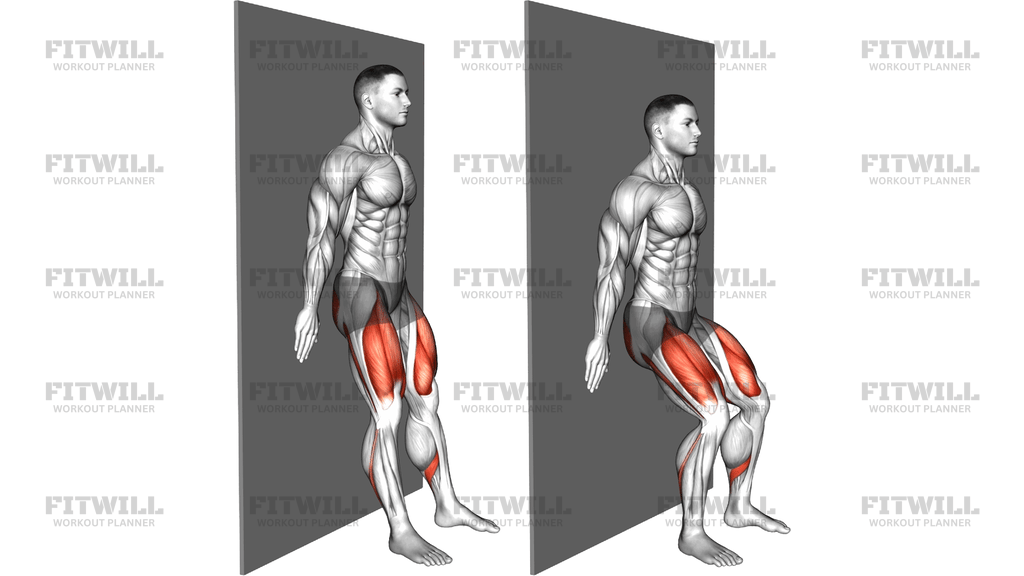
Standing Side Glute Raise Against Wall
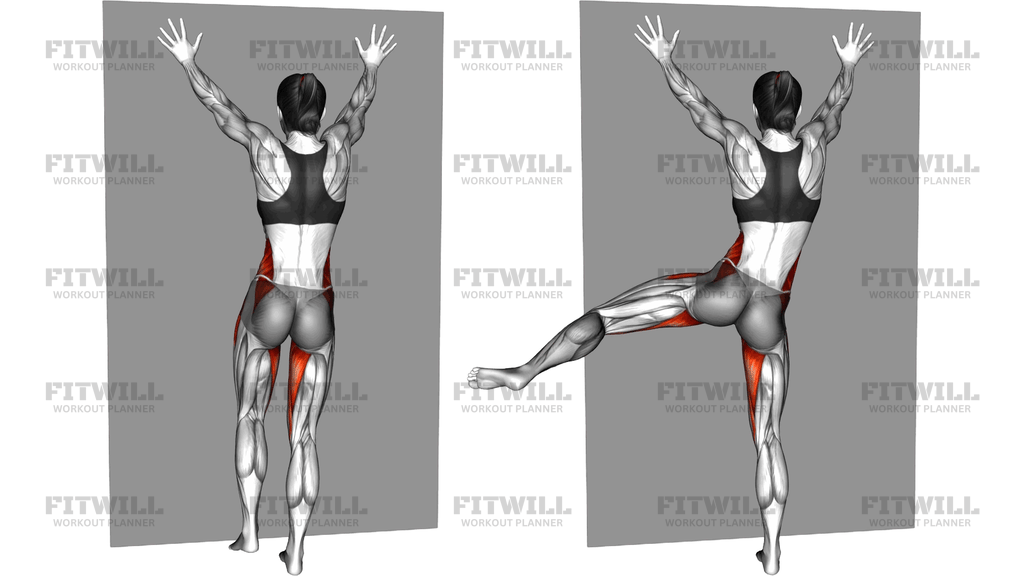
Standing Side Glute Raise Against Wall is a bodyweight hip abduction exercise performed while facing a wall with both hands planted against it for balance. From this tall standing position, you lift one leg straight out to the side, keeping the torso upright and the hips square to the wall, then lower the leg back down with control. Because your hands stay in contact with the wall, you get just enough support to stay steady without leaning or swinging, which keeps the work where it belongs: in the hip of the moving leg.
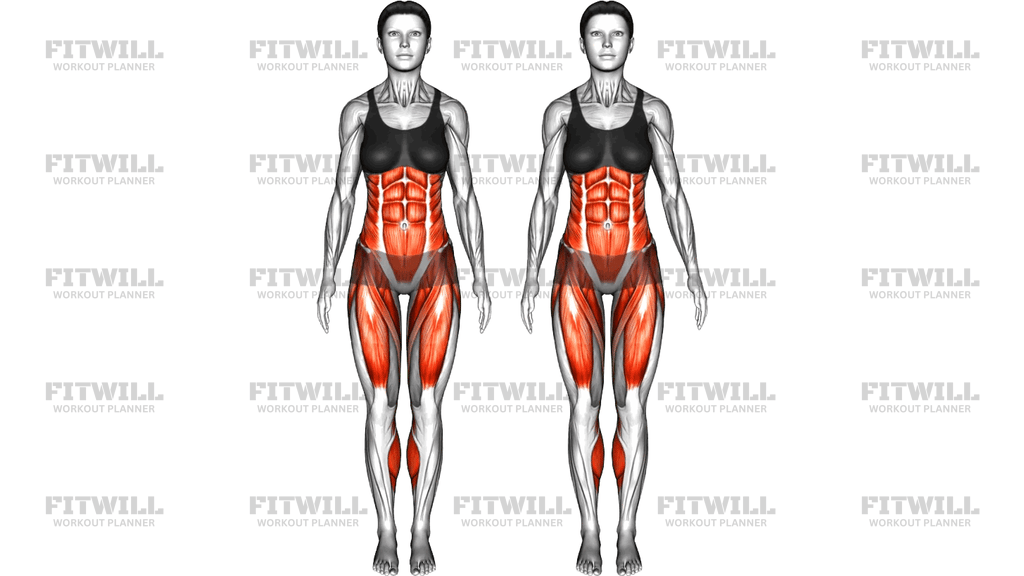
The main muscle at work is the gluteus medius, the fan-shaped muscle on the outer side of your hip that lifts the leg away from the body and stabilizes your pelvis every time you stand on one leg. The gluteus maximus assists as the leg rises behind the midline, and the muscles of your core, including the obliques and the muscles along the lower spine, work to keep your trunk from tilting as the leg travels. Your standing leg is quietly doing its own job too, gripping the floor and holding you tall.
This is a valuable movement for anyone whose outer hips are undertrained, which is more common than you might think. Squats, lunges, and hinge patterns train the glutes in the front-to-back plane, but the side-to-side action of the gluteus medius often gets missed. Runners, hikers, and anyone who spends long hours sitting can benefit from direct lateral hip work, as can beginners who want to build single-leg stability before progressing to lunges, single-leg deadlifts, or more demanding balance drills.
The wall setup matters more than it might seem. Facing the wall with the palms or fingers spread flat against it at roughly shoulder height or above anchors your upper body and gives you an honest reference point: if your torso stays tall and both hips stay level, you know the leg is doing the lifting. Without support, most people lean their trunk away from the lifting leg or rotate their hips open to get the leg higher, both of which shrink the work the gluteus medius actually does. The wall quietly prevents those cheats.
The lift itself should be modest and precise. A rise of roughly 30 to 45 degrees is plenty; going higher usually means the trunk is tipping sideways or the hip is hiking up toward the ribs, neither of which adds benefit. Think about leading with the heel and the outer edge of the foot, keeping the toes pointing forward, and pausing briefly at the top before lowering slowly. The movement is small, but done with attention, you will feel a clear burn along the outer hip within 10 to 15 repetitions.
Practically, this exercise fits well as a warm-up activation drill before lower-body training, as a standalone accessory set for hip strength, or as part of a home routine where no equipment is available. It is gentle on the knees and lower back, needs only a clear patch of wall, and scales easily: add a pause at the top, slow the lowering phase, or increase the reps when the current sets feel easy.
[ Workout Log & Planner ]
Put your next workout in Fitwill
Keep your plan and training log ready when you are.


Instructions
- Stand facing a clear wall, about one arm's length away, and place both palms flat against the wall at shoulder height or slightly above with the fingers spread wide.
- Step your feet together directly under your hips so your body forms a tall vertical line from head to heels, then shift your weight onto one foot.
- Brace your core lightly and pull your ribs down so your torso stays vertical and both hips stay square to the wall.
- Keeping the leg nearly straight with a soft knee, lift the free leg out to the side, leading with the heel and keeping the toes pointing forward, not up.
- Stop the lift at roughly 30 to 45 degrees, or the highest point you can reach without your trunk tilting away or your hip hiking up.
- Pause for one to two seconds at the top and squeeze the outer hip of the moving leg.
- Lower the leg back down slowly over two to three seconds until the toes lightly touch or hover just above the floor.
- Exhale as you lift the leg and inhale as you lower it, keeping your breath steady instead of holding it.
- Complete all repetitions on one side, then switch legs by shifting your weight to the other foot and repeat.
- Between sets, step back from the wall, shake out the hips, and reset your stance before the next set.
Tips & Tricks
- If your upper body drifts toward or away from the wall during the lift, it usually means the range is too large; shorten the arc until your palms stay in a fixed spot against the wall for every rep.
- Keep the toes of the lifting leg facing the wall rather than rotating the foot upward. When the foot turns out, the hip opens and the gluteus medius loses tension.
- Watch for the classic cheat of hiking the hip toward the ribs on the lifting side. Place a hand on your waist or glance at your reflection to confirm both hip bones stay level.
- Do not let the standing knee lock hard or collapse inward. Keep a soft knee and press the floor away with the whole foot to stay stable.
- A slower lowering phase does more for outer hip strength than a higher leg. Count two to three seconds down instead of letting the leg drop.
- If the movement feels like it is gripping the front of the hip, reduce the height of the lift. Lifting the leg too far forward or too high can pinch the front of the hip joint.
- Light wall contact is enough. Pressing hard into the wall shifts effort into the shoulders and chest, so rest your palms there for balance only.
- Barefoot or in flat shoes works best here, since you want to feel the standing foot gripping the floor and the lifting heel leading the motion.
- Expect to be stronger on one side. Start every session with your weaker leg and match that side's repetitions on the stronger side.
Frequently Asked Questions
What muscles does Standing Side Glute Raise Against Wall work?
The gluteus medius on the outer hip does most of the lifting, with the gluteus maximus assisting as the leg rises. Your obliques and lower back muscles stabilize the trunk, and the standing leg works to keep you balanced.
How high should I lift my leg in this exercise?
Roughly 30 to 45 degrees is enough for most people. If the leg goes much higher, the trunk usually starts tilting sideways or the hip hikes up, which takes work away from the gluteus medius.
Why do I lean away from the lifting leg during Standing Side Glute Raise Against Wall?
Leaning is the body's way of shortening the lift when the outer hip is weak or fatigued. Reduce the range, slow the tempo, and focus on keeping your palms glued to the same spot on the wall so the torso cannot tip.
Is this exercise suitable for beginners?
Yes. The wall provides balance support, there is no external load, and the range of motion is small, which makes it one of the safest ways to learn how to isolate the outer hips.
Can I do Standing Side Glute Raise Against Wall without a wall?
You can perform the same lift standing freely or holding the back of a sturdy chair, but the wall version makes cheating much harder. Facing the wall keeps your hips square and your torso tall throughout the set.
How many reps and sets should I do?
Start with 2 to 3 sets of 12 to 15 slow reps per leg. The outer hip should feel a clear working sensation near the end of each set without any joint discomfort.
Should my toes point forward or outward during the lift?
Keep the toes facing the wall. Rotating the foot and leg outward turns the movement into more of a rear lift and reduces the side-to-side work the gluteus medius is meant to do.
What can I use instead if I want more resistance?
An ankle weight on the lifting leg, or a loop band placed just above the knees or ankles, adds load to the same movement. Master the bodyweight version first so the added resistance does not pull you into poor form.
Is it normal to feel this in the standing leg rather than the lifting leg?
Some fatigue in the standing hip and foot is normal because that leg is stabilizing you, but the lifting leg should feel the primary work. If not, shorten the range and add a pause at the top to build awareness of the outer hip.
Are there any safety points to keep in mind?
Use a clear, non-slip floor area and a solid wall, and keep the standing knee soft rather than locked. If you feel pinching at the front of the moving hip, lower the leg less high and check that the foot is not rotating outward.