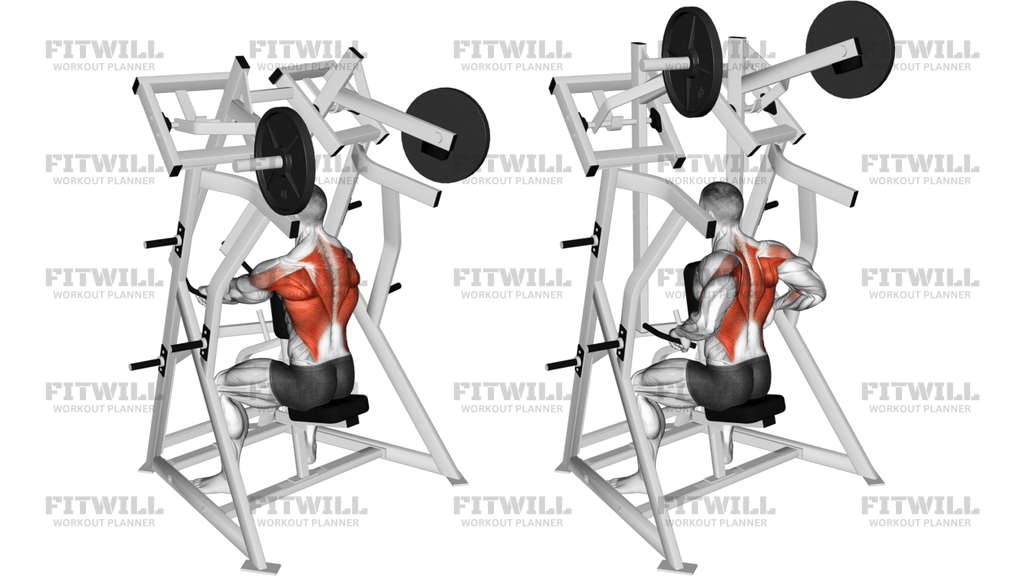
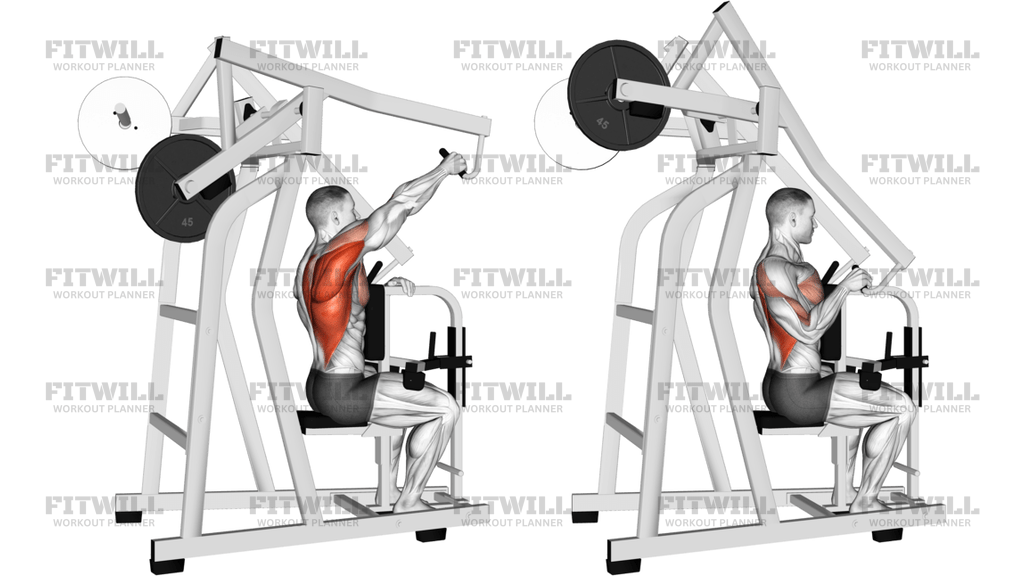
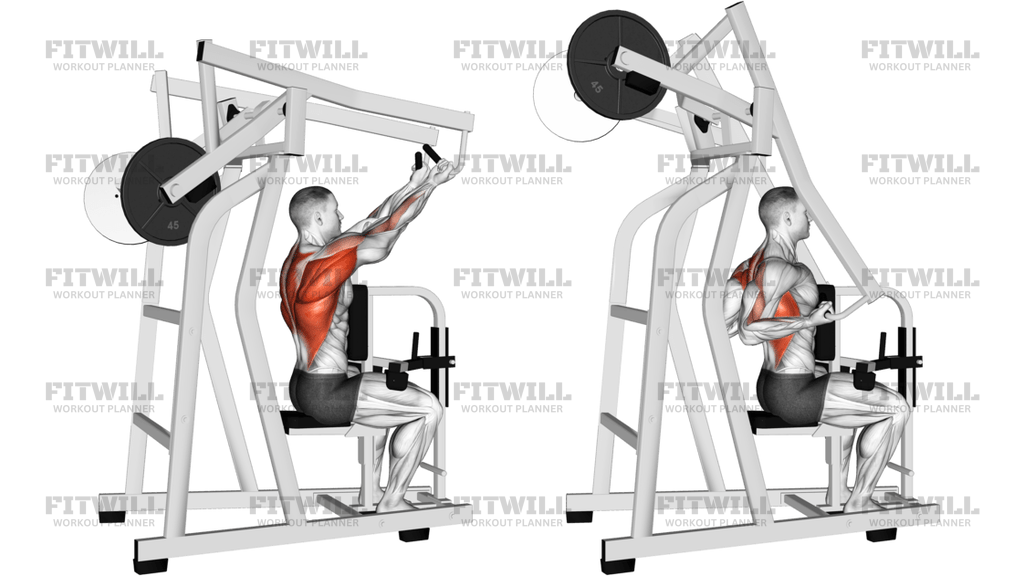
Lever Seated Single Arm Wide Lat Pulldown
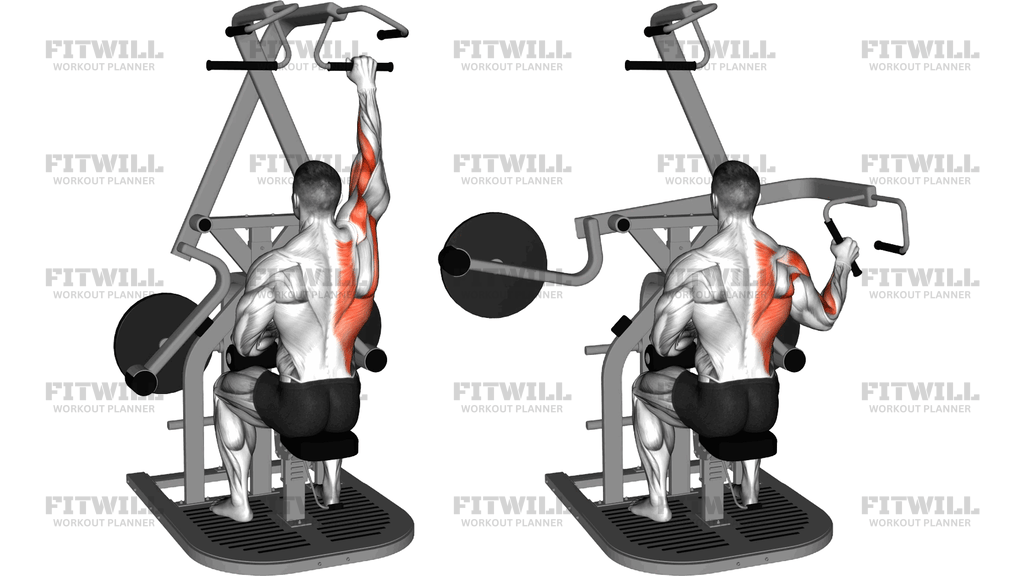
The Lever Seated Single Arm Wide Lat Pulldown is a plate-loaded machine exercise that trains the lats one side at a time through a wide, downward pulling arc. You sit braced against the machine's seat and thigh pads, reach up with one hand to the wide handle, and pull it down toward your upper chest while the opposite arm stabilizes on the machine's fixed frame. Because the movement runs on a fixed lever arm with weight plates, the resistance path is consistent from rep to rep, which makes it easy to focus entirely on how your back is working.
Working one arm at a time is the main selling point here. Most people have a noticeable strength difference between their left and right sides, and two-arm pulldowns often hide that gap because the stronger side quietly takes over. The single-arm version forces each lat to do its own share of the work, and it also gives you room to pull the handle slightly out to the side, which many lifters find lets them feel the lat contracting more directly than a straight-down two-hand pull.
The wide grip and the outward angle of the pull emphasize the lats, particularly the fibers that run across the upper and outer back, while the teres major, traps, rhomboids, rear delts, and biceps assist. The thigh pads matter more than they look: they pin your hips down so the force of the pull goes into your back instead of lifting you off the seat. If your hips rise as you pull, the weight is too heavy or the pads are set too loose.
This machine suits a wide range of lifters. Beginners appreciate the fixed path and the seated, supported position, while more experienced lifters use it as a heavy unilateral back builder or as a finisher after pull-ups and rows when grip and stabilizers are already fatigued. It is also a practical option for people working around grip limitations, since the lever arm supports the handle and reduces the demand compared with hanging from a bar.
To execute it well, keep your torso tall with a slight forward lean, start each rep from a full overhead stretch, and lead the pull with your elbow rather than your hand. Pull until your upper arm is roughly parallel to the floor or the handle is near ear height, pause briefly, and lower the handle under control until the lat is fully stretched again. Avoid jerking the weight down, twisting your spine toward the working arm, or cutting the range short at the top, since the stretch position is where a large part of the benefit lives.
Fitwill
Log Workouts, Track Progress & Build Strength.
Achieve more with Fitwill: explore over 9600 exercises with images and videos, access built-in and custom workouts, perfect for both gym and home sessions, and see real results.
Start your journey. Download today!




Instructions
- Sit on the machine facing the lever arm and place your knees under the thigh pads so your hips are locked firmly against the seat.
- Grip the wide handle with one hand using an overhand grip, and place your free hand on the machine's frame or handle bar for support.
- Sit tall with a small forward lean from the hips, brace your core, and let the working arm reach fully overhead so the lat is stretched at the start.
- Exhale and pull the handle down and slightly out to the side, driving your elbow down toward your ribs rather than pulling with your hand.
- Continue until the handle is near ear or shoulder height and your upper arm is close to parallel with the floor, squeezing the lat at the bottom.
- Hold the contraction for a moment without shrugging your shoulder up toward your ear.
- Inhale and let the handle rise slowly back to the starting position until you feel a full stretch through the lat and armpit area.
- Keep your torso square to the machine throughout; do not rotate your spine toward the working side as you pull.
- Complete all reps on one side, then switch hands and match the repetitions on the other arm.
- After your final rep, guide the lever arm back to rest gently rather than letting the plates slam down.
Tips & Tricks
- Think of the pull as elbow-to-hip, not hand-to-chest. If your biceps burn out before your back, your elbow is probably drifting forward instead of driving straight down.
- Do not let the working shoulder shrug upward as the handle comes down. Keep the shoulder blade pulled down and back so the lat, not the upper trap, leads the movement.
- Set the thigh pads tight enough that your hips cannot lift. If your seat height changes mid-set, the pads are loose or the load is too heavy for strict form.
- Lower the handle all the way back to the stretch on every rep. Half-range pulldowns on this machine shorten the lat's working range and reduce the training effect.
- Start with your weaker arm first and match its rep count with the stronger side to balance the two halves of your back over time.
- A slight forward lean is fine, but leaning far back and pulling toward your chest turns the movement into a row and shifts work away from the lats.
- Use a full grip with your thumb wrapped around the handle. A loose fingertip grip fatigues your forearms early and makes the set feel harder than it should.
- Keep your free hand on the frame to steady your torso. Letting it swing around usually means you are twisting to cheat the weight down.
- If one rep requires a torso twist or hip lift to finish, reduce the load rather than grinding through with poor mechanics.
Frequently Asked Questions
Which muscles does the Lever Seated Single Arm Wide Lat Pulldown work?
The lats are the primary movers, supported by the teres major, traps, rhomboids, rear delts, and biceps. Your grip and forearm muscles also work to hold the handle throughout the set.
Why train lats one arm at a time instead of using both handles?
Single-arm work prevents your stronger side from compensating and lets each lat move through its own full range. It also allows a slightly outward pull path that many lifters find targets the lats more directly.
Is the Lever Seated Single Arm Wide Lat Pulldown suitable for beginners?
Yes. The machine's fixed path, seated position, and thigh pads remove much of the stability demand, so beginners can concentrate on feeling their back work. Start light and master the elbow-driven pull before adding weight.
How far should I pull the handle down?
Pull until the handle is around ear to shoulder height and your upper arm is roughly parallel to the floor. Pulling all the way to the chest usually requires leaning back excessively, which turns the exercise into more of a row.
Why do my hips lift off the seat during the set?
That means the thigh pads are set too loose or the load is heavier than your lats can handle strictly. Tighten the pads and reduce the weight so your hips stay pinned and your back does the pulling.
What is the most common mistake on this machine?
Twisting the torso toward the working arm and shrugging the shoulder up as the handle comes down. Both habits shift work away from the lat, so keep your chest square to the machine and your shoulder blade pulled down.
Can I use this exercise if my grip gives out on regular pulldowns?
Often yes, because the lever arm supports the handle and the single-arm load is lighter than a two-hand pull. If grip still limits you, use lifting straps rather than cutting the range short.
What can I substitute if my gym has no leverage pulldown machine?
A single-arm cable pulldown with a handle, a standard wide-grip lat pulldown, or pull-ups are the closest alternatives. Each trains the lats through a similar downward pulling pattern.
Where should my free hand be during the exercise?
Place it on the machine's fixed frame or opposite handle to stabilize your torso. This keeps you square to the machine and prevents rotation as the working arm pulls.
Should I keep a neutral spine while doing the Lever Seated Single Arm Wide Lat Pulldown?
Yes. Sit tall with a small, fixed forward lean from the hips and keep your lower back in its natural curve. Excessive rounding or arching under load places unnecessary stress on the spine without improving lat involvement.