Lying Rollover Pilates
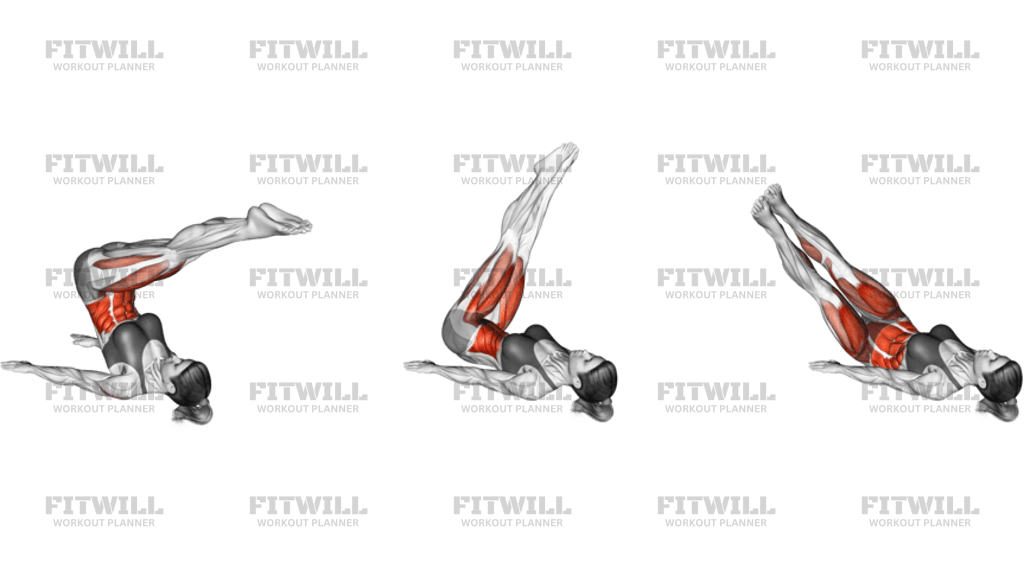
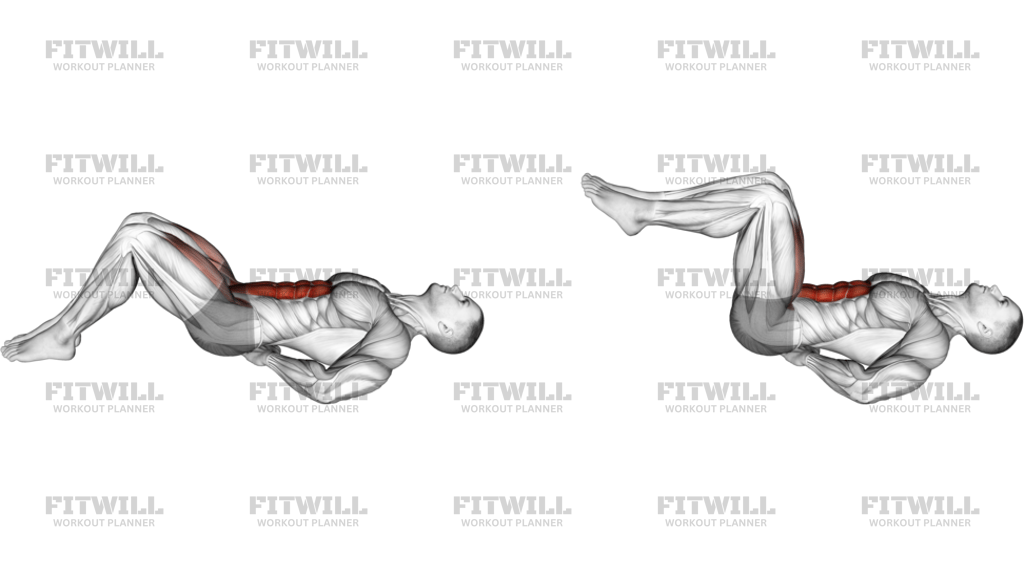
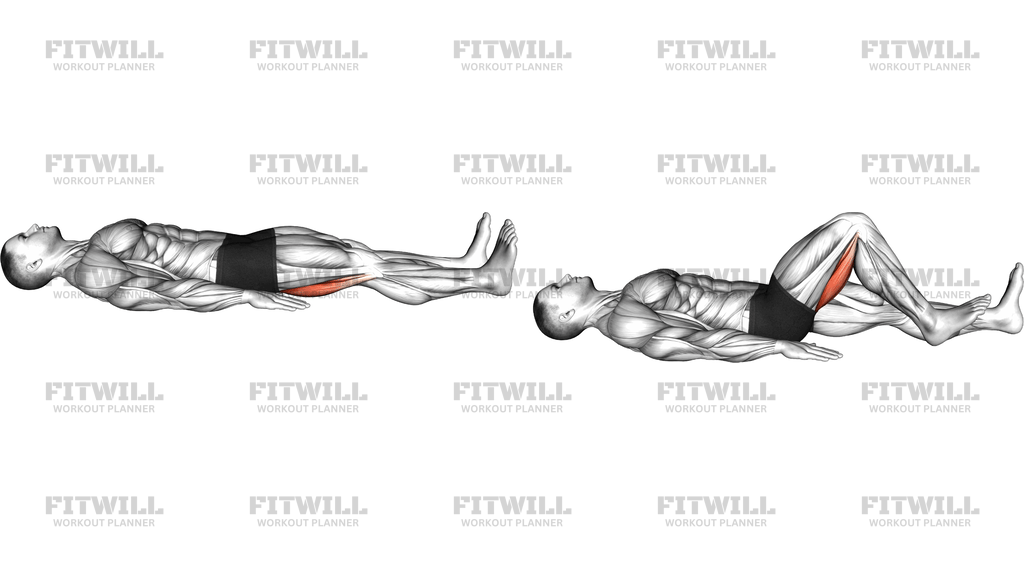
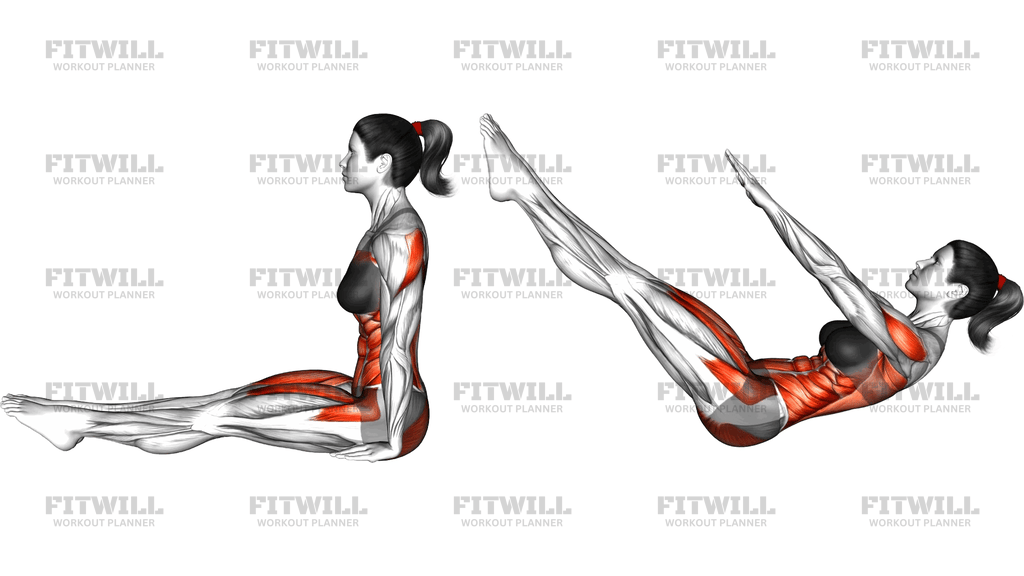
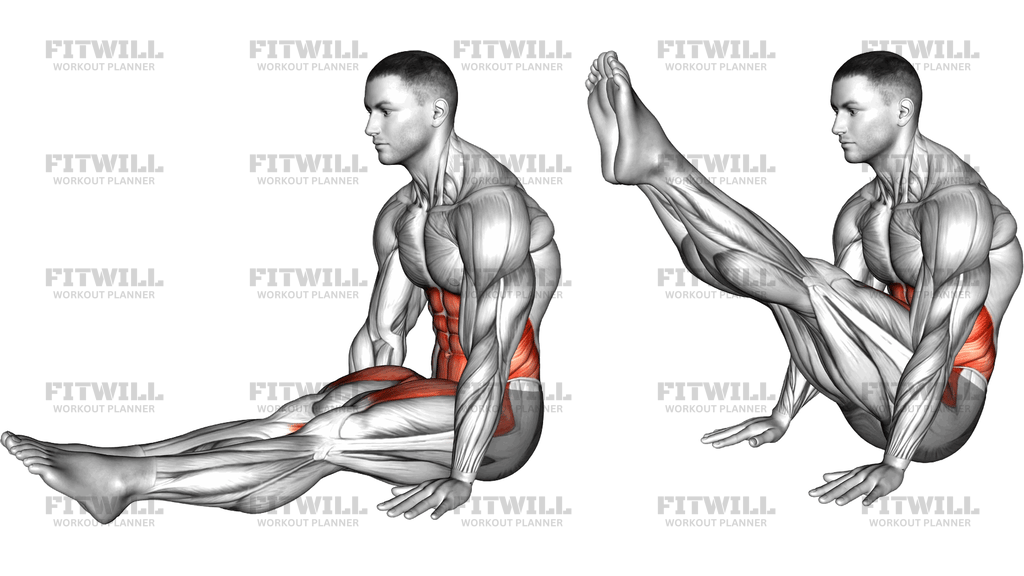
The Lying Rollover Pilates is a classical mat exercise that takes you from lying on your back with the legs pointed toward the ceiling, through a controlled peel of the spine off the mat, until the legs travel overhead and hover parallel to the floor. It is one of the original Pilates mat sequence movements, and it remains one of the most demanding tests of trunk control you can do with nothing but a mat and your own body weight.
The main work comes from the lower abdominals and deep core, which must lift and lower the pelvis vertebra by vertebra while the legs act as a long, heavy lever. The hip flexors assist in drawing the legs over, the hamstrings and glutes get a strong stretch at the top position, and the shoulders and arms stay quietly active as they press into the mat to anchor you. Because the legs stay straight and together, even small wobbles in control show up immediately.
Setup matters more in this movement than in almost any other core exercise. Your arms stay flat on the mat beside you, palms down, and they are your brakes for the entire exercise. Your head and shoulders stay settled on the mat, and the neck stays neutral rather than craning. Rolling with momentum, or letting the weight crash onto the upper back and neck, defeats the purpose and adds risk.
To perform it well, think of the movement as happening through the spine, not by throwing the legs. Extend the legs to the ceiling, curl the tailbone up first, then let each segment of the lower and middle back lift in sequence until only the shoulders and head remain grounded. At the top, the legs are roughly parallel to the floor behind you, toes reaching away, hips stacked over the shoulders. Then reverse the order exactly: control the spine back down one vertebra at a time until the pelvis and legs return to the tall vertical start.
This exercise suits intermediate to advanced practitioners with healthy spines and reasonable hamstring flexibility, and it appears in Pilates mat classes, gymnastics warm-ups, and bodyweight core programs. Beginners with tight hamstrings or limited core control should build up through versions like the half rollover or controlled leg lowers first. If you have any history of disc problems, osteoporosis, or neck issues, choose a different flexion exercise rather than pushing through this one.
[ Workout Log & Planner ]
Put your next workout in Fitwill
Keep your plan and training log ready when you are.


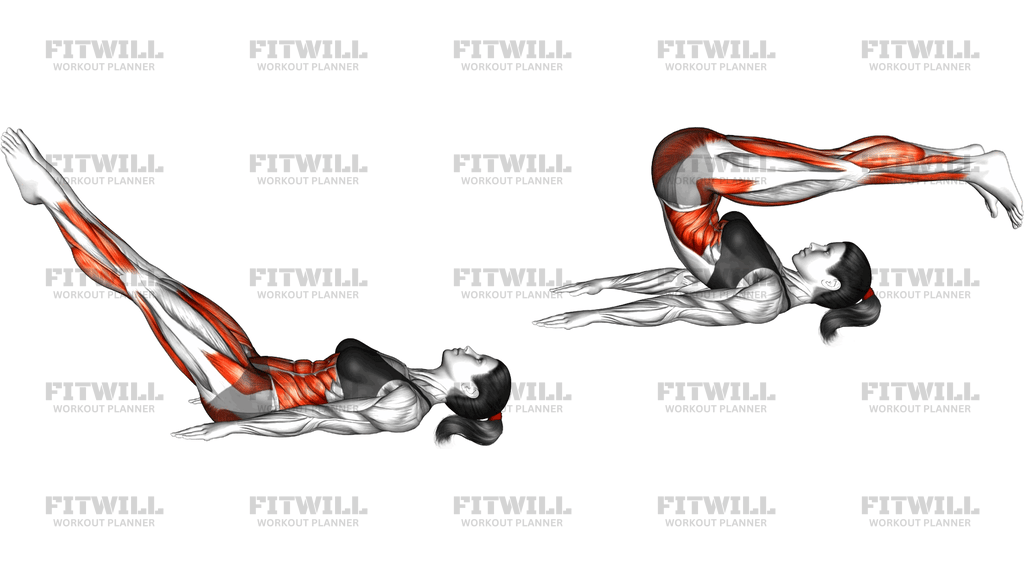
Instructions
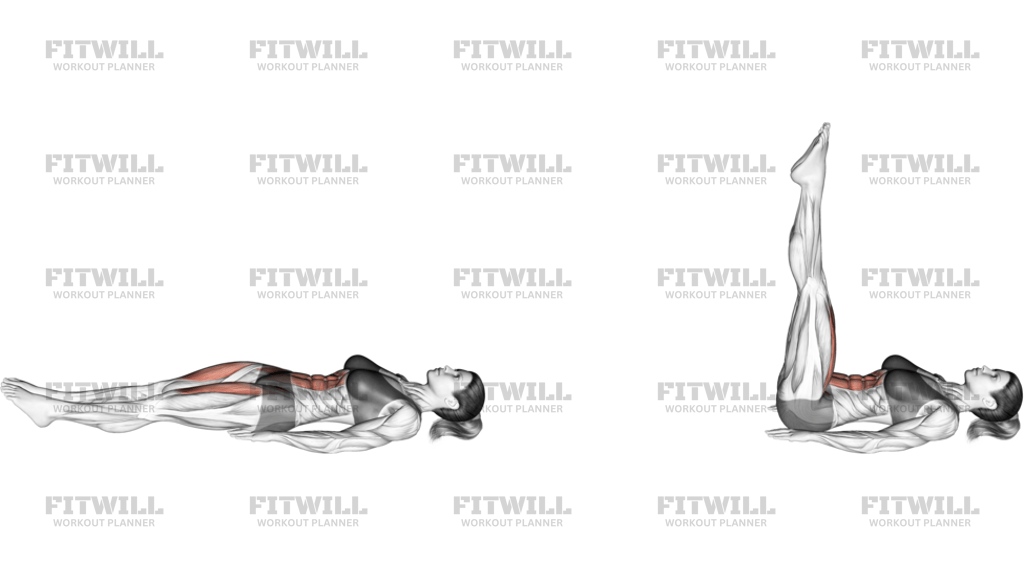
- Lie flat on your back on an exercise mat with your legs straight and together, arms resting on the mat alongside your body with palms facing down.
- Extend both legs straight up toward the ceiling so they are perpendicular to the floor, feet pointed, and press your arms gently into the mat.
- Inhale to prepare, and brace your abdominals as if drawing your navel toward your spine before anything moves.
- Exhale and begin the rollover by curling your tailbone off the mat, letting your pelvis lift first rather than kicking the legs.
- Continue peeling your spine off the mat one segment at a time, keeping the legs straight and together as they travel overhead.
- Stop in the end position with your hips stacked over your shoulders and the legs hovering parallel to the floor behind you, toes reaching away, weight supported across your shoulders and upper arms.
- Pause briefly at the top, then inhale and start the return by lengthening the legs away before lowering the spine back down with control.
- Roll down slowly through each vertebra until your pelvis settles back onto the mat and the legs return to the vertical starting position.
- Keep a steady rhythm throughout: exhale on the way over, inhale at the top, exhale on the way down.
- Reset your abdominal brace and repeat for the desired number of repetitions, staying within a range where your neck and shoulders stay comfortable.
Tips & Tricks
- If your feet drift apart or your legs bend at the knees, the lever is getting away from you; shorten the range by not rolling all the way over until the legs stay glued together.
- Pressing the palms into the mat is not decorative — it actively controls how fast the pelvis tips over. If you feel like you are falling forward, push the arms down harder.
- The most common mistake is swinging the legs to build momentum. Slow the tempo down until the lift is driven purely by the pelvis curling, even if that means fewer repetitions.
- Tight hamstrings will pull the top position out of alignment. Only lower the legs as far overhead as you can hold without the lower back collapsing or the toes diving toward the floor.
- Keep your head still and your face relaxed. Turning or lifting the head mid-rollover usually signals that the core has handed the work off to the neck.
- Avoid rolling onto the neck itself; the weight should rest across the shoulders and upper back. If you feel pressure in your cervical spine, stop and reduce the range.
- Imagine drawing your hip bones toward your ribs on the way up. This cue keeps the lift coming from the lower abdominals instead of the hip flexors alone.
- Place a thin cushion under the head and shoulders if the floor height makes the top position uncomfortable, but never on a soft surface that lets the upper back sink.
- Do this exercise early in a session while your core is fresh. Fatigue is when momentum sneaks in and the rollover quality drops fastest.
Frequently Asked Questions
What muscles does the Lying Rollover Pilates work?
The lower abdominals and deep core do most of the lifting and lowering, with support from the hip flexors and obliques. The hamstrings and glutes also receive a strong stretch in the overhead position.
Is the Lying Rollover Pilates safe for beginners?
It is generally better suited to intermediate or advanced levels because it requires spinal control and hamstring flexibility. Beginners should start with leg lowers, the half rollover, or supported versions before attempting the full movement.
Should my arms stay flat on the mat during the Lying Rollover Pilates?
Yes, the arms stay alongside your body with the palms pressing into the mat for the entire exercise. They act as a brake that controls how quickly the pelvis tips overhead.
Why do my legs fall toward my head when I roll over?
That usually means momentum is doing the work and your arms are not controlling the descent. Slow the movement down, press the palms into the mat, and only take the legs as far overhead as you can suspend with control.
Can I do the Lying Rollover Pilates with bent knees?
Bending the knees shortens the lever and makes the exercise easier, so it can work as a regression. However, keep the eventual goal of straight, together legs, since that is what makes the classical version effective.
What should I do if my hamstrings are too tight to reach the top position?
Work within the range you can hold without straining, stopping the legs wherever they hover comfortably overhead. Consistent stretching of the hamstrings outside this exercise will open up the full position over time.
How many repetitions of the Lying Rollover Pilates should I do?
Three to six slow, high-quality repetitions are plenty for most people. Because each rep takes several seconds of continuous control, quality matters far more than volume.
Who should avoid the Lying Rollover Pilates?
Anyone with neck problems, osteoporosis, disc-related back issues, or uncontrolled spinal flexion pain should skip it. Pregnant practitioners should also avoid it, especially after the first trimester.
What can I substitute for the Lying Rollover Pilates?
Controlled reverse crunches, leg lowers, or the jackknife on a mat train similar lower abdominal strength with less spinal loading. The hip lift on a bench is another option that keeps the roll smaller and easier to manage.