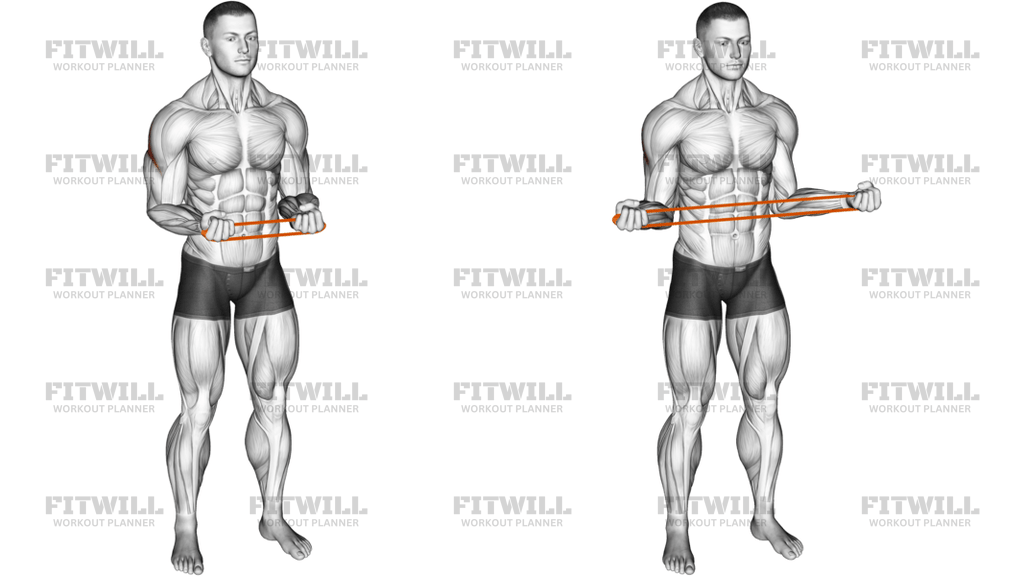
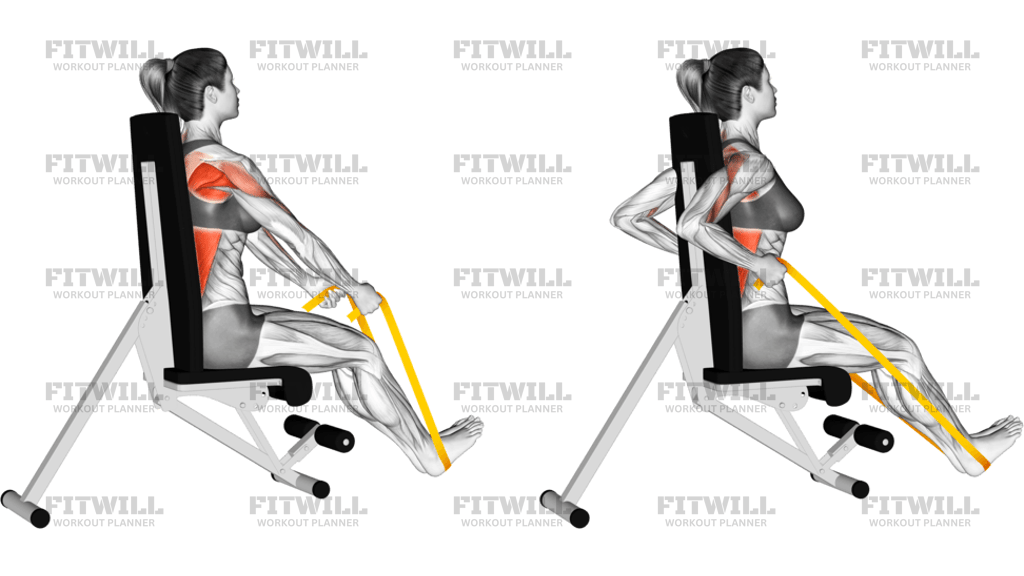
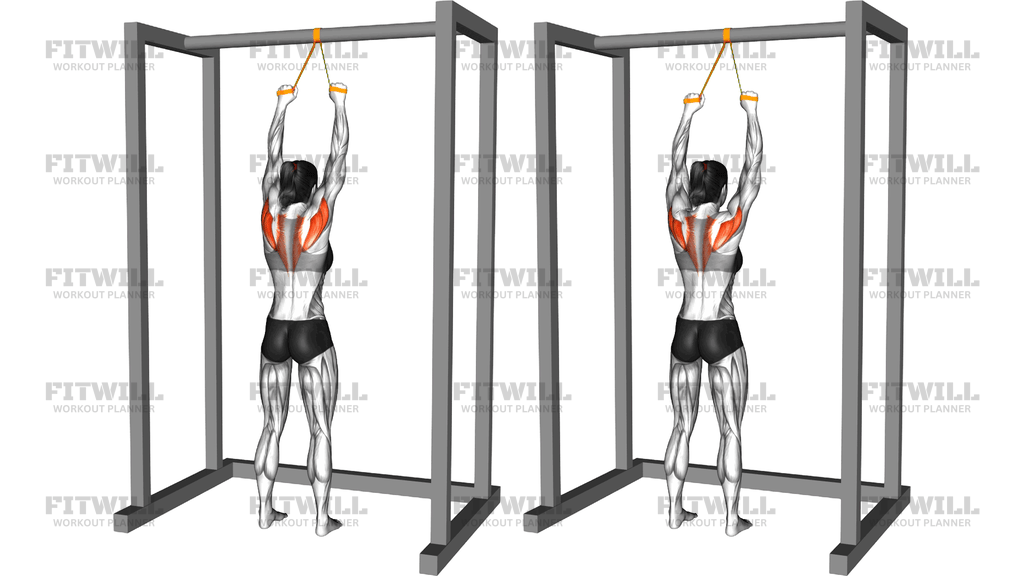
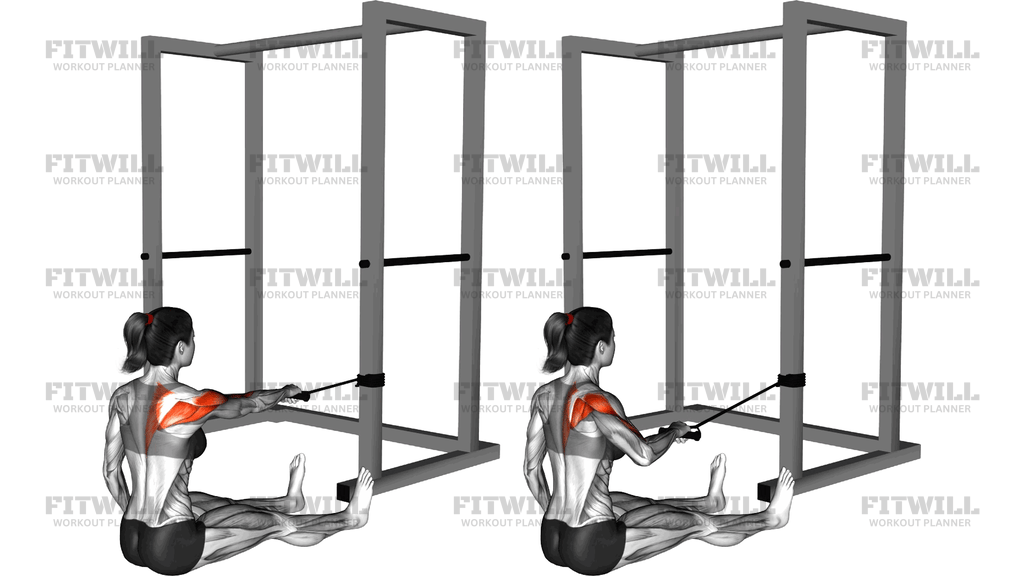
Band Bent Over Rear Deltoid Kickback
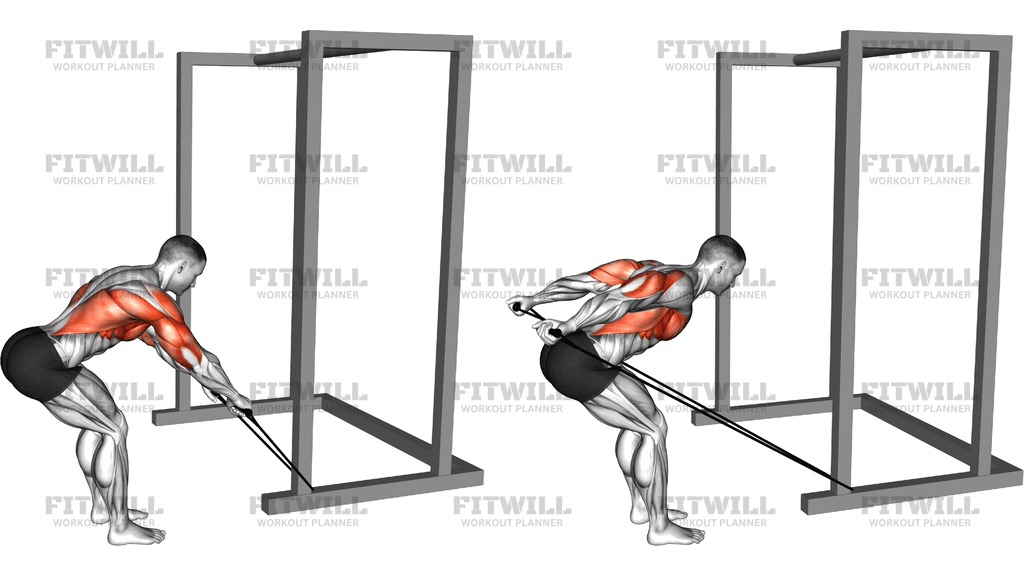
The Band Bent Over Rear Deltoid Kickback is a hinged, bent-over movement where you anchor a resistance band low in front of you, hold the handles with your arms hanging down, and sweep your straight arms back and up behind your hips. Because the band is fixed at ankle height and the arms stay extended, the resistance builds steadily as your arms travel rearward, loading the rear deltoids through the exact range where they are usually hardest to challenge. The bent-over torso position also puts gentle constant tension on the muscles that hold your spine and shoulder blades steady.
This exercise is a strong choice for anyone whose rear shoulders lag behind the front and side delts, which is common in people who bench press, do lots of pressing, or sit at a desk with rounded shoulders. It is equally useful as a warm-up activation before upper-body pulling days, as a high-rep finisher after rows or pull-ups, and as a joint-friendly option for lifters who find dumbbell rear delt flyes awkward or irritating at the shoulder. Since a band provides smooth, accommodating resistance with no momentum from a weight, it scales easily from beginners to advanced trainees simply by changing band thickness or stepping further from the anchor.
The main muscles working are the rear deltoids, which extend and horizontally pull the upper arm back, with strong assistance from the lats and teres major as the arms sweep down and behind the body. The middle traps and rhomboids stabilize the shoulder blades, the triceps hold the elbows locked straight, and the erector spinae plus glutes and hamstrings keep you locked in the hip hinge. That makes this a surprisingly full posterior-chain effort for such a light-looking piece of equipment.
Setup matters more here than in most band exercises. Hinge at the hips until your torso is roughly 45 degrees or lower, keep a soft bend in the knees, and make sure the band anchor point is low and directly in front of you so the pull direction runs backward along your body. If you stand too upright, the movement drifts toward a lat pulldown; if you round your lower back, you lose the stable base the rear delts need to do the work.
To execute it well, start with your arms hanging straight down under your shoulders, then drive them back and slightly up behind your hips without bending the elbows, finishing with your hands at or just behind hip height. Pause briefly at the back, feeling the squeeze across the back of your shoulders, then let the arms return forward under control so the band never yanks you out of position. Breathe out as the arms sweep back, breathe in on the way forward, and keep your neck relaxed by looking at the floor a short distance ahead of your feet.
[ Workout Log & Planner ]
Put your next workout in Fitwill
Keep your plan and training log ready when you are.


Instructions
- Anchor a resistance band with handles at low height, around ankle level, to a rack or stable object, and grip one handle in each hand.
- Stand facing the anchor point, then hinge forward at the hips until your torso is about 45 degrees or lower, with a soft bend in your knees and your back flat.
- Walk back slightly to remove slack from the band so there is light tension with your arms hanging straight down beneath your shoulders.
- Brace your core, squeeze your glutes, and set your shoulder blades down and back before you start each rep.
- Keeping your elbows locked straight, sweep both arms back and slightly up behind your hips until your hands reach or pass hip height.
- Pause for a moment at the top of the movement and feel the contraction across the back of your shoulders.
- Slowly return your arms forward along the same path, resisting the band's pull rather than letting it snap your arms down.
- Exhale as the arms sweep back, inhale as they return forward, and keep the breathing rhythm steady through the set.
- Complete your reps, then stand up carefully and step toward the anchor before releasing the handles so the band cannot recoil at you.
Tips & Tricks
- The most common error is turning this into a row by bending the elbows — if your elbows flex, the biceps and lats take over, so cue yourself to keep the arms long like levers from start to finish.
- If your lower back fatigues before your shoulders, you are hinging too deep or not bracing; raise your torso slightly, squeeze your glutes harder, or reduce the band tension rather than rounding to finish the set.
- Use a lighter band than you expect. Because the arms act as long levers and the band tension rises fast at the back position, heavy tension usually costs you the hip hinge position.
- Avoid shrugging at the end of each rep. If your shoulders creep toward your ears, the upper traps are compensating — consciously press your shoulder blades down as the arms sweep back.
- Keep the movement path close to your body. Sweeping the arms wide turns it into a flye and reduces the stretch on the rear delts at the finish.
- Check your band anchor before every set. A low, secure attachment point is essential — a band slipping off a J-hook or loose rack post can snap back toward your face.
- Stand at a distance where the band is already slightly taut at the start. Dead slack at the bottom wastes the first third of the rep and makes the resistance feel jerky.
- For a stronger mind-muscle connection, try short pauses of one to two seconds behind your hips instead of adding more band tension.
- If one side lags, work each arm separately with a single handle so the stronger side cannot mask the weaker one.
Frequently Asked Questions
Which muscles does the Band Bent Over Rear Deltoid Kickback work?
The rear deltoids are the prime movers, with the lats and teres major assisting as the arms sweep back. The middle traps, rhomboids, triceps, and lower back muscles all work isometrically to hold your hinge position.
Why are my arms supposed to stay straight during this exercise?
Straight arms turn the shoulder into the only moving joint, which keeps the rear deltoids driving the movement. Once the elbows bend, it becomes a pulling exercise and the lats and biceps take over.
Is the Band Bent Over Rear Deltoid Kickback suitable for beginners?
Yes, it is very beginner-friendly because a band provides smooth resistance with no inertia to control. Start with a light band, focus on keeping the torso hinged and still, and master the arm path before adding tension.
How far should I bend over for this movement?
Aim for a torso angle of roughly 45 degrees or a bit lower, as long as your back stays flat and your hamstrings allow it. The lower you hinge, the more the arms move against the band's backward pull and the more the rear delts are targeted.
My lower back gets tired before my shoulders feel anything. What should I change?
That usually means the hinge is too aggressive or the core and glutes are not braced. Raise your torso slightly, squeeze the glutes to lock the pelvis, or use a lighter band so the shoulder work finishes before your lower back gives out.
Can I do the Band Bent Over Rear Deltoid Kickback instead of rear delt flyes with dumbbells?
Yes, it is a solid substitution. The straight-arm path and low band anchor shift some work to the lats compared with a flye, but the rear delts still get loaded through a similar range with less joint stress.
Where should the band be anchored for this exercise?
Anchor it low, around ankle height, directly in front of you, so the resistance pulls your arms back toward your hips as you raise them. A band anchored too high changes the direction of pull and turns the exercise into something closer to a pulldown.
How many reps and sets should I use?
Because the rear delts respond well to volume and the band keeps tension smooth, 2 to 4 sets of 12 to 20 controlled reps works well. Treat it as an accessory or activation movement rather than a heavy main lift.
Is it safe to do this exercise with a band?
It is generally safe as long as the band is anchored securely and inspected for wear before use. Always step toward the anchor to release tension before letting go of the handles, and keep the band away from your face if it has any signs of damage.