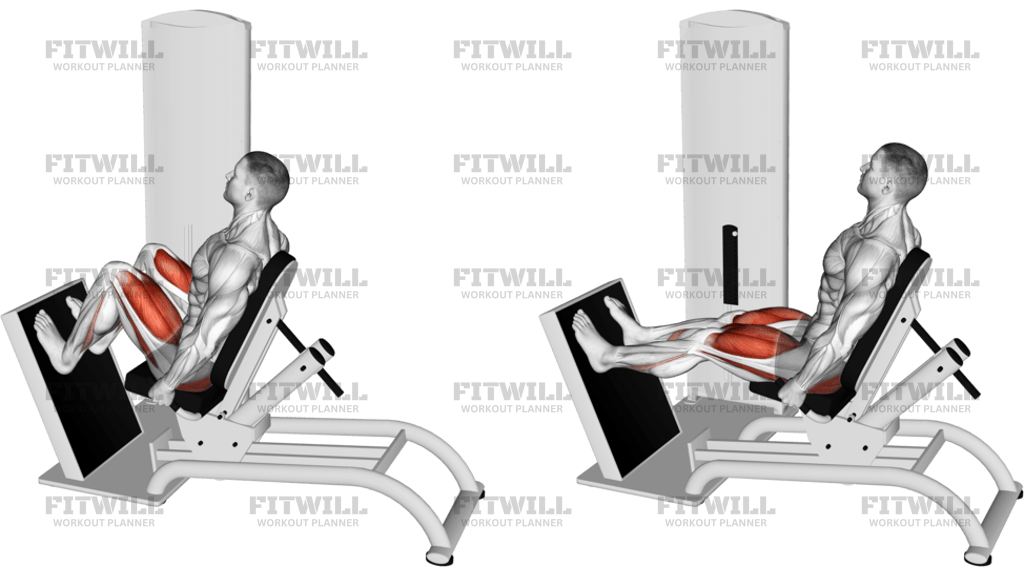
Lever Leg Extension (Plate Loaded)
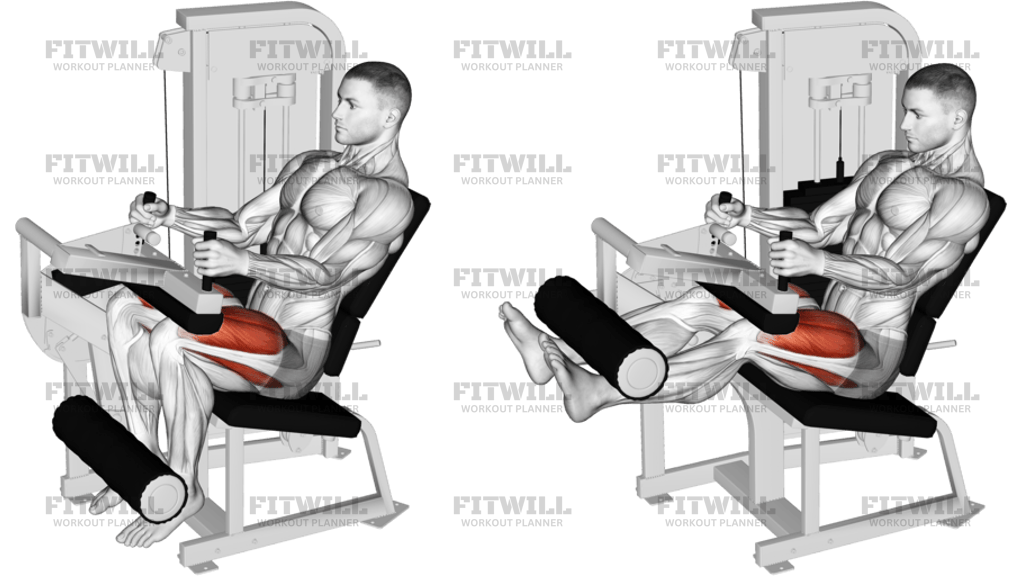
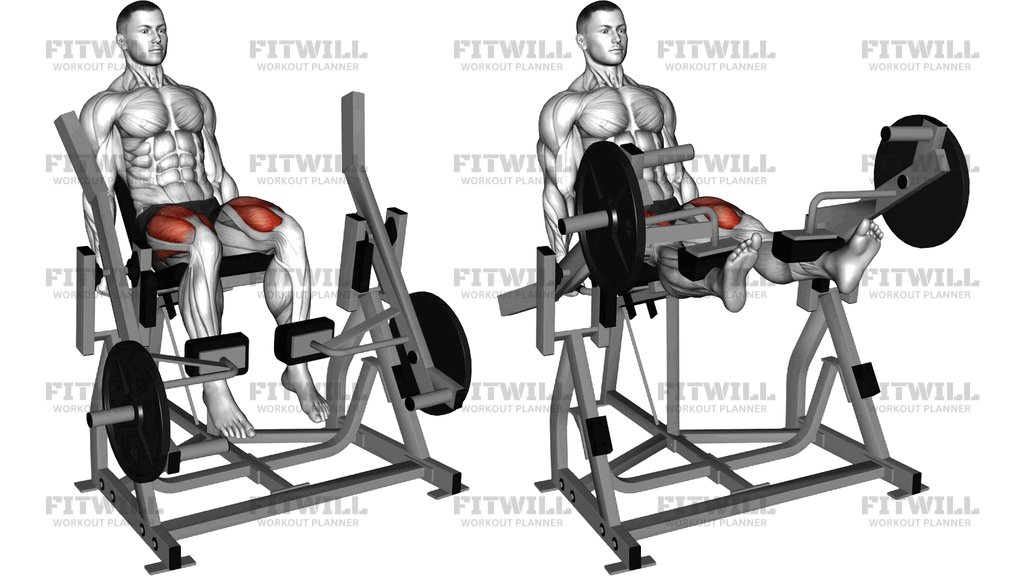
The Lever Leg Extension (Plate Loaded) is a seated machine exercise that trains the quadriceps through knee extension. You sit back against the machine's backrest, hook your ankles behind the padded roller, and straighten your legs against resistance provided by plates loaded onto the machine's lever arms. Because the machine fixes your hips and upper body in place, nearly all of the work is handled by the four muscles at the front of the thigh, with the rectus femoris working through a shortened position that few other exercises reach as directly.
This movement is one of the few open-chain quad exercises available in most gyms, meaning your feet move freely rather than being planted. That makes it especially useful for isolating each side of the thigh, warming up the knees before squats or leg presses, and adding focused volume to the quads without loading the spine. Bodybuilders use it to bring out definition in the front of the thigh, while general lifters use it to round out leg days where hinging and pressing patterns dominate.
Setup quality on this machine matters more than most people realize. The seat height determines where the roller sits on your ankle and how far back your hips are, which changes both the resistance curve and the stress on the knee joint. Adjust so the backs of your knees sit flush against the seat edge, the pad rests on the lower shin just above the ankle, and your knees line up roughly with the machine's pivot point.
To execute the rep, grip the side handles, pull your torso back into the pad, and extend your legs upward and forward until your knees are nearly straight. Pause briefly at the top to feel the quads fully contract, then lower the lever back down under control rather than letting the plates drop. The lowering half of the rep is where a lot of the training effect lives, so resist the weight instead of chasing the next rep.
Common use cases include hypertrophy work in the 8-15 rep range, rehabilitation-style strengthening after knee issues once cleared for loading, and pre-exhaustion before compound leg movements. If the machine uses two independent lever arms with separate plate pegs, it also allows unilateral training, letting your stronger leg carry only its own share of the load. Keep the weight honest: if you have to swing your torso or snap your knees open to move the plates, the setup or load needs adjusting before you continue.
[ Workout Log & Planner ]
Put your next workout in Fitwill
Keep your plan and training log ready when you are.


Instructions
- Load plates evenly onto the machine's pegs and secure them with collars before sitting down.
- Adjust the seat so the backs of your knees rest against the seat edge and the ankle pad sits on your lower shins just above the ankles.
- Sit fully back on the seat with your hips and lower back against the backrest.
- Place your shins behind the roller pads and let your feet hang relaxed with ankles at roughly 90 degrees.
- Grip the side handles firmly and brace your torso against the backrest to stop your hips from lifting.
- Exhale and extend your legs by straightening your knees, pushing the lever up until your legs are almost fully straight.
- Squeeze your quads for a beat at the top without locking the knees hard.
- Inhale and lower the lever slowly back down, stopping just before the plates settle so tension stays on the quads.
- Complete your set, then let the weight stack or lever settle gently before unhooking your legs and standing up.
Tips & Tricks
- If your hips rise off the seat as you push, the weight is too heavy or the seat is positioned too far back, both of which shift work away from the quads.
- Point your toes slightly upward at the top of the rep; this tends to improve the quad contraction compared with letting the feet flop inward or outward.
- Do not slam into full lockout rep after rep; a soft finish with an active squeeze protects the joint while still training the full range.
- Control the eccentric for two to three seconds. Letting the plates crash down between reps is the most common fault on plate-loaded leg extension machines.
- Check that the roller pad contacts your shins in the same spot on both legs; if one leg starts ahead of the other, re-check your seat position before adding plates.
- On dual-arm machines, train the weaker leg first and match its reps with the stronger side to keep development even.
- Avoid fully resting between reps at the bottom. Hovering the weight just off the stack keeps the quads under continuous tension.
- Warm up the knees with one or two light sets before working weight, since the knee extension position under load can feel abrupt when cold.
Frequently Asked Questions
What muscles does the Lever Leg Extension (Plate Loaded) work?
It primarily targets the quadriceps at the front of the thigh, including the rectus femoris, which works through a shortened position that is hard to isolate otherwise. There is minimal involvement from other major muscle groups because the machine stabilizes your hips and torso.
Where should the ankle pad sit during the Lever Leg Extension (Plate Loaded)?
The pad should rest on your lower shins, just above the ankles. Placing it too high toward the calf reduces leverage and can pull the pad down as you push, while the correct position keeps the resistance acting directly on knee extension.
Is the Lever Leg Extension (Plate Loaded) safe for beginners?
Yes, it is one of the easier machines to learn because the path is fixed and your torso is supported. Beginners should start light, focus on controlled reps, and confirm the seat and pad settings before adding load.
Should I lock out my knees at the top of each rep?
Extend to nearly full straightening and actively squeeze the quads, but avoid snapping into a hard lockout, especially with heavier plates. A controlled pause at the top gives you the contraction without repetitively stressing the joint at end range.
Why does my lower back arch during this exercise?
The rectus femoris crosses the hip, so when it fatigues or the load is high, your hips may curl off the seat and your back may arch. Grip the handles, press your torso into the backrest, and reduce the weight if lifting your hips persists.
How does the Lever Leg Extension (Plate Loaded) differ from a pin-selectorized leg extension machine?
A plate-loaded machine uses plates on lever arms rather than a selectorized stack, so you can load in smaller or uneven increments and adjust resistance per side. The resistance feel is similar, though plate-loaded arms can have a slightly different strength curve depending on the machine's design.
What can I substitute if my gym has no leg extension machine?
Slow-tempo bodyweight extensions on a bench with a pause at the top, wall sits, or rear-foot-elevated split squats can train the quads. Cable leg extensions with an ankle strap are the closest open-chain alternative.
Can I use the Lever Leg Extension (Plate Loaded) to fix imbalances between my legs?
If the machine has two independent lever arms, train each leg separately and let the weaker side dictate the weight and reps. This prevents the stronger leg from compensating, which cannot happen when both legs push together.
How should I breathe during the Lever Leg Extension (Plate Loaded)?
Exhale as you extend your legs up and inhale as you lower the lever back down. Keep the pattern consistent rather than holding your breath through a full set.
Should I do leg extensions before or after squats?
Doing them after squats or leg presses lets the compound lifts run on fresh legs, while a light set beforehand can serve as a knee warm-up. Heavy extension work before squats tends to fatigue the quads right when you need them for stabilization.