Seated Fist Pulse
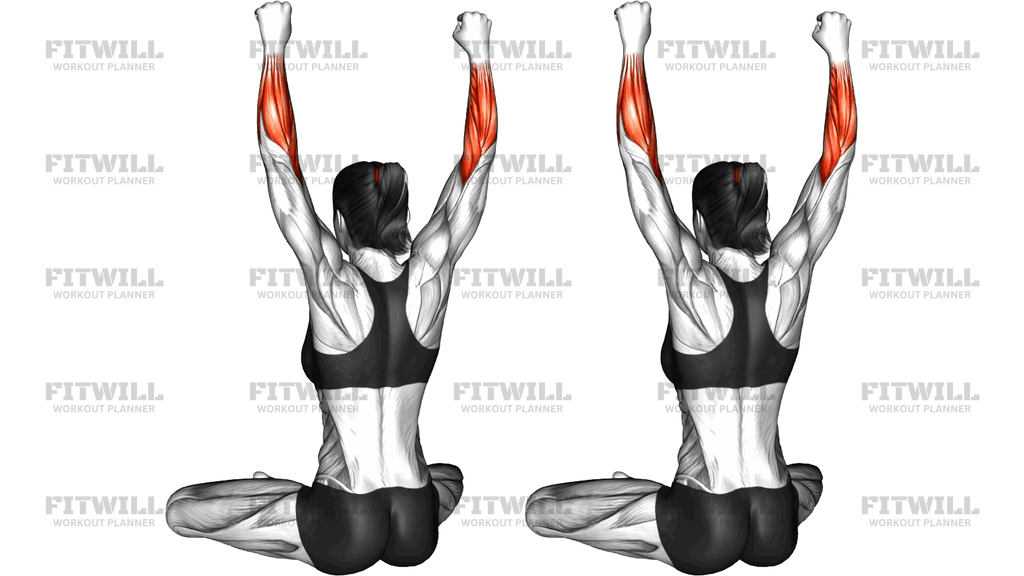
The Seated Fist Pulse is a simple body weight movement performed seated on the floor with both arms extended straight overhead and the hands clenched into tight fists. From that overhead position, you make small, quick upward pulses with the fists, driving the hands a few centimeters toward the ceiling and letting them drop back down in a rhythmic rhythm. The highlight of the work sits squarely in the forearms, which must repeatedly squeeze and release to power each pulse while the arms stay locked out above the head.
Because it requires no equipment and very little space, this movement fits easily into warm-ups, desk-break routines, and cool-downs. Climbers, golfers, tennis players, and weightlifters who grip bars or racquets all benefit from conditioning the forearm flexors and extensors through this kind of repeated contraction. It is also a low-threshold option for beginners or anyone returning from time off who wants to rebuild forearm endurance before adding load.
The seated posture matters more than it might seem. Sitting on the floor with the legs folded removes the option of cheating with body English or leg drive, so every pulse has to come from the forearm and hand itself. Raising the arms overhead also places a gentle endurance demand on the shoulders and upper back, which must hold the arms tall and vertical while the fists pulse. That combination of a stable trunk, locked elbows, and moving hands is what makes the exercise distinct from a simple wrist curl or squeeze.
To perform it well, keep the elbows fully extended, the ribs stacked over the pelvis, and the fists genuinely clenched throughout the set. The pulses should be small and crisp rather than big, swinging arcs. Expect a burning sensation in the forearms within twenty to thirty seconds; that local burn is the intended training effect, not a signal to stop immediately. If the shoulders begin to shrug or the lower back arches, the set is effectively over, so rest and reset rather than fighting through compromised positions.
A typical starting dose is two to three rounds of twenty to forty seconds of continuous pulsing, with short rests in between. As forearm endurance improves, lengthen the work intervals rather than increasing the pulse amplitude, since the goal is sustained contraction quality, not range. Stop if you feel sharp pain in the wrists, elbows, or shoulders, and keep the movement comfortable for anyone managing sensitive elbow joints by shortening the sets.
[ Workout Log & Planner ]
Put your next workout in Fitwill
Keep your plan and training log ready when you are.


Instructions
- Sit on the floor with your legs crossed or folded comfortably to one side, and sit tall so your spine is stacked over your pelvis.
- Raise both arms straight overhead until your elbows are fully locked out, with your upper arms close to your ears.
- Clench both hands into tight fists and turn your palms to face forward or slightly inward, keeping the wrists neutral and strong.
- Brace your core lightly and pull your shoulders down away from your ears so the overhead position does not collapse into a shrug.
- Pulse both fists sharply upward toward the ceiling, moving them only a few centimeters while keeping the elbows straight.
- Let the fists lower back down with control to the starting overhead position and immediately begin the next pulse.
- Keep the clench active on every rep; the fists should never relax between pulses.
- Breathe steadily throughout, exhaling on the upward pulse and inhaling as the hands drop, instead of holding your breath.
- Continue for a set time, such as twenty to forty seconds, then lower the arms slowly, shake out the hands and forearms, and reset your posture before the next round.
Tips & Tricks
- If your shoulders creep up toward your ears as the set goes on, it usually means the overhead hold is fatiguing before the forearms do; shorten the interval and keep the shoulders actively pulled down.
- A weak fist clench turns the Seated Fist Pulse into an arm swing. Squeeze the fists hard enough that you can feel the forearm muscles tighten from the start of every set.
- Keep the elbows locked throughout. Any softening of the elbows turns the pulses into a shoulder press rhythm and takes work away from the forearms.
- Sit against a wall with your head, shoulders, and hips touching it if you find yourself leaning back or arching your lower back as the arms fatigue.
- The pulse should be small and fast, not a full press. If your hands are traveling more than a few centimeters, slow down and reduce the range.
- Shake out your hands and gently stretch the forearms between rounds; the repeated clenching makes the muscles tight quickly, and loose hands make the next set cleaner.
- If one forearm burns out before the other, note the side and finish future sets when the weaker side reaches its limit so the imbalance evens out over time.
- For a wrist-friendly warm-up version, use a lighter clench and slower pulse tempo before any heavy gripping work like deadlifts, rows, or pull-ups.
Frequently Asked Questions
Which muscles does the Seated Fist Pulse actually work?
The primary work is done by the forearm flexors and extensors, which power the repeated fist clench and pulse. The shoulders and upper back work isometrically to keep the arms held overhead, and the core stabilizes your seated posture.
Why are the arms held overhead instead of at the sides?
The overhead position locks the elbows into a fixed line so the pulses can only come from the fists and forearms. It also adds an endurance element for the shoulders, which must support the arms for the entire set.
Is the Seated Fist Pulse suitable for beginners?
Yes. It uses no load and the resistance comes entirely from your own clench and pulse, so beginners can start with shorter intervals of fifteen to twenty seconds and build from there.
Should I sit cross-legged, and does the leg position matter?
Any comfortable seated position on the floor works, whether cross-legged or with the legs folded to one side. The purpose of sitting is to remove momentum from the lower body so the pulses come only from the forearms.
How big should each pulse be?
Small. The fists should travel only a few centimeters toward the ceiling with the elbows staying locked. Large, swinging movements shift the work to the shoulders and defeat the purpose of the exercise.
My forearms burn very quickly. Is that normal?
Yes, a localized burning sensation within twenty to thirty seconds is the expected response to repeated clenching. Finish the interval or stop at a comfortable point, rest, and let the burn subside before the next round.
What can I use instead if my shoulders get tired before my forearms?
Try the same fist pulsing with the arms extended forward at shoulder height, or seated with elbows bent and fists at chest level. These versions remove most of the overhead endurance demand while keeping the forearm work.
How does this compare to gripping a hand gripper or squeezing a ball?
A gripper or ball loads the squeeze itself, while the Seated Fist Pulse combines clenching with a rhythmic pulsing action and an overhead hold. It trains forearm endurance and shoulder stamina together and requires no equipment at all.
Is it safe to do the Seated Fist Pulse every day?
For most people, yes, since it is a light, self-resisted movement and the forearms recover quickly from unweighted work. If you feel lingering aching in the wrists or elbows, take a rest day and keep the sets shorter when you return.
How long should each set last?
Start with twenty to forty seconds of continuous pulsing for two to three rounds. As your forearm endurance improves, extend the work intervals rather than making the pulses bigger.