Ring Pullover
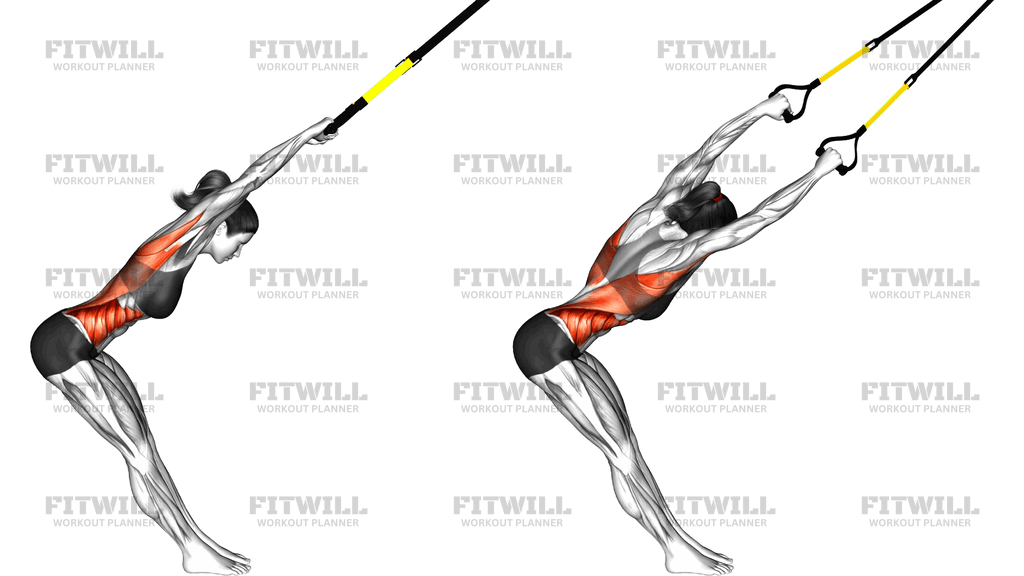
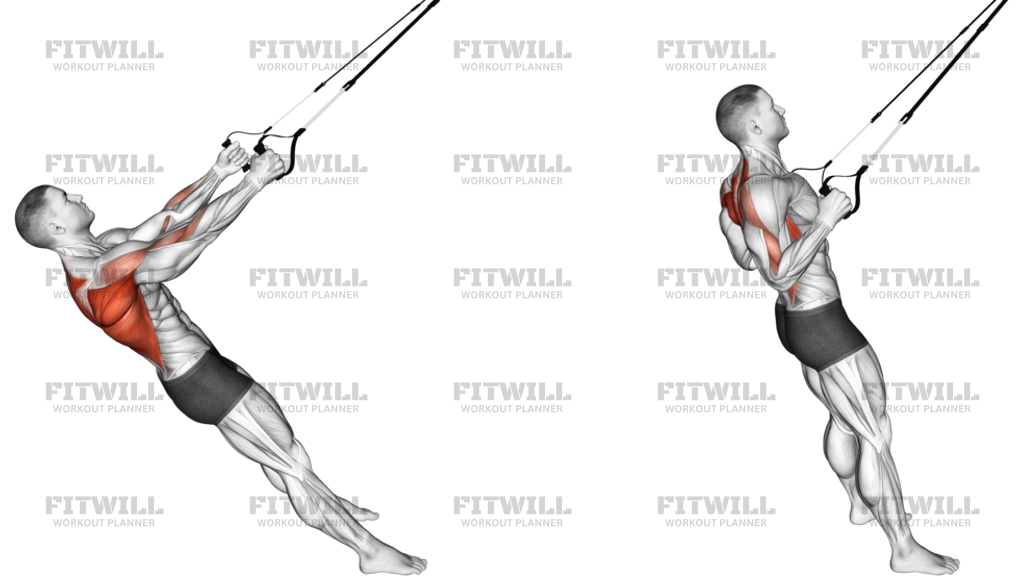
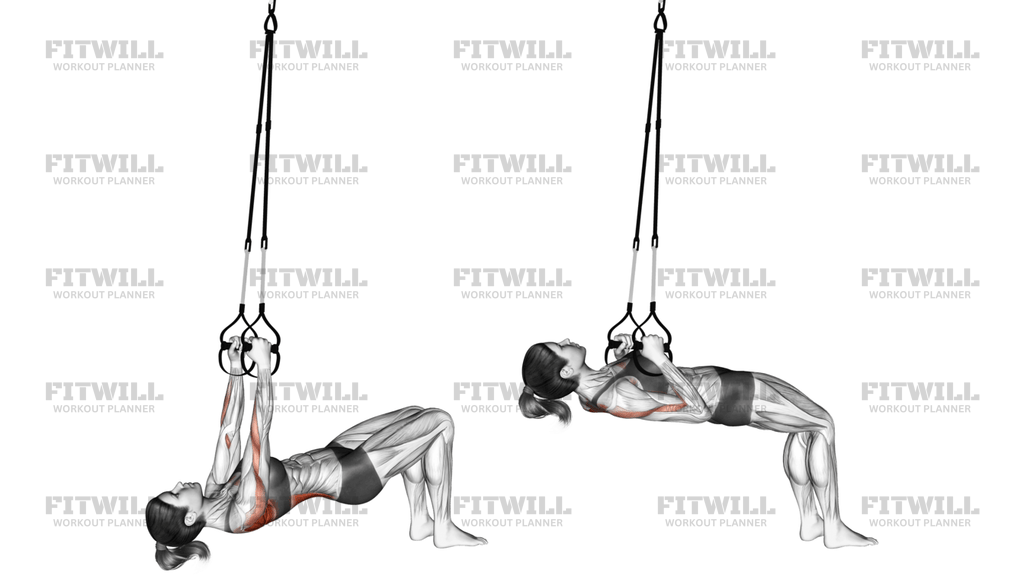
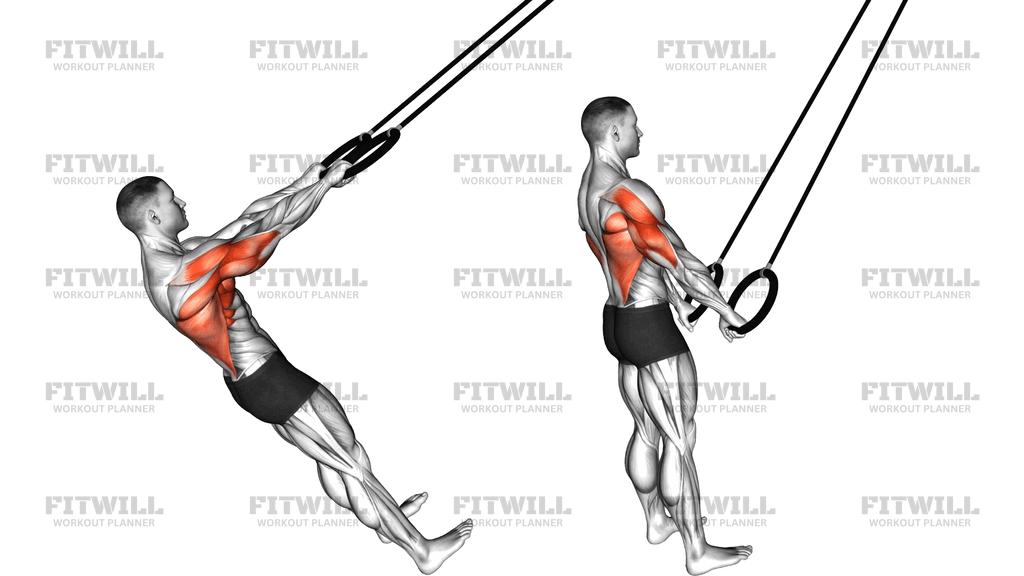
The Ring Pullover is a straight-arm pulling exercise performed on gymnastic rings or a suspension trainer. You start leaning back under the anchors with the rings held overhead, then sweep your straight arms down and around until the rings finish beside your hips, drawing your torso upright as you pull. Because the rings are free-hanging, they force your shoulders and core to stabilize through every degree of the arc, which is something a fixed bar or cable simply cannot ask of you.
This movement trains the lats as the primary driver, with strong contributions from the chest, teres major, rear shoulders, and the long head of the triceps, all of which work to keep the elbows locked as the arms travel. The core works hard the whole time to keep your body in a straight line from shoulders to ankles while you lean back, and the ring instability adds constant small corrections through the shoulder stabilizers.
The Ring Pullover suits intermediate trainees who already own a few solid pull-ups or rows and want to build lat strength and shoulder control with a different stimulus. It is especially valuable for calisthenics and ring work because the straight-arm pulling pattern carries over directly to moves like the front lever, muscle-up transitions, and ring dips.
Setup matters more here than in most pulling drills. The lower you set the rings and the closer you walk your feet toward the anchor point, the more your bodyweight loads the pull; a steeper lean or rings set higher makes it easier. Keep your body rigid rather than letting the hips sag or shoot forward, because once the line breaks the lats stop doing the work and the lower back takes over.
Execution should feel like a wide, sweeping arc rather than a pull-up. Imagine pushing the rings down in a big circle toward your thighs, keeping the elbows straight and the shoulders pulled away from your ears. Squeeze at the bottom with the rings near your hips, then lower back along the same path under control, resisting the rings as they pull your arms back overhead.
Use the Ring Pullover as a main straight-arm pull on upper body days, or as an accessory after vertical pulling to fatigue the lats without loading the elbows. Start with sets of five to eight controlled reps at an easy angle, and only increase difficulty by walking deeper under the anchors once you can finish every rep without bending the elbows or losing your body line.
[ Workout Log & Planner ]
Put your next workout in Fitwill
Keep your plan and training log ready when you are.


Instructions
- Set the rings or suspension straps to roughly hip-to-waist height from an overhead anchor, and adjust both sides so they hang evenly.
- Grip a ring in each hand with a neutral grip, walk your feet back until your arms are fully extended overhead and your body forms a straight, angled line from shoulders to ankles.
- Brace your core and squeeze your glutes so your hips do not sag; your weight should be on your heels with your feet planted about hip-width apart.
- Keeping your elbows completely straight, pull the rings down and out in a wide arc, as if drawing a big circle with your hands.
- Continue the sweep until the rings reach the sides of your hips and your torso has come upright over your shoulders.
- Pause briefly at the bottom and squeeze your lats, chest, and triceps without shrugging your shoulders up toward your ears.
- Reverse the path slowly, letting your arms travel back overhead while fighting the pull of the rings the whole way.
- Exhale as you pull the rings down, and inhale as you return overhead under control.
- Complete the set, then step toward the anchor to unload the rings before letting go and resetting your stance.
Tips & Tricks
- Bent elbows are the most common fault; the moment they flex, the movement becomes a row and the lats lose their straight-arm tension. Cue yourself to push the rings down rather than pull.
- If your hips drop and your lower back arches at the top of the movement, walk your feet forward to reduce the load rather than shortening the range.
- Keep your shoulders actively pulled down away from your ears throughout the sweep; letting them ride up overhead turns the top position into a passive hang on the joint capsules.
- The rings will drift inward or outward if one arm dominates. Move both hands along the same arc at the same speed to keep the straps from crossing.
- Lean angle is your intensity dial. Small changes in foot position toward the anchor make a large difference, so adjust in small increments between sets.
- Grip fatigue often ends sets before the lats do. Chalk your hands and grip the rings firmly through the palm rather than hanging from your fingers.
- Avoid bouncing out of the bottom stretch. The return overhead is where the lats work eccentrically, and rushing it cuts the training effect in half.
- If you feel the work shifting into your biceps or forearms, slow the tempo and refocus on driving the elbows down and back with straight arms.
Frequently Asked Questions
What muscles does the Ring Pullover work?
The lats are the prime mover, with the chest, teres major, rear shoulders, and the long head of the triceps assisting through the arc. Your core and shoulder stabilizers work continuously to hold your body line on the unstable rings.
How is the Ring Pullover different from a cable pullover or straight-arm pulldown?
The rings are free-moving, so your shoulders, grip, and core must stabilize through the entire arc instead of following a fixed cable path. You also load the movement with your own body angle rather than a weight stack.
Can beginners do the Ring Pullover?
Yes, if the rings are set low and the lean is shallow, the load is modest. Complete beginners should first build basic hanging and rowing strength, then start with a nearly upright torso and short sets.
How do I make the Ring Pullover harder?
Walk your feet closer to the anchor point so your body leans back further, or lower the rings slightly to increase the load on your arms at the top. Both changes add bodyweight to the pull, so progress gradually.
Why do my elbows bend during the Ring Pullover?
Bent elbows usually mean the load is too heavy for your straight-arm strength or the lats are not being cued properly. Reduce the lean and think about pushing the rings down in a circle rather than pulling them toward you.
What can I substitute if I do not have rings?
A straight-arm cable pulldown or a resistance band pullover trains a similar lat-dominant pattern. You will lose some of the instability benefit, so add slower tempos to compensate.
Should my body stay straight during the Ring Pullover?
Yes, aim for a rigid line from shoulders to ankles with braced abs and squeezed glutes. If your hips sag or pike, the lats disengage and stress shifts into the lower back.
Is it safe for the shoulders?
When performed with controlled range and shoulders kept down away from the ears, it is generally well tolerated. If you have a history of shoulder instability, start with a shallow angle, keep the arc pain-free, and stop short of any pinching sensation overhead.
How many reps and sets should I do?
Start with three to four sets of five to eight reps at an easy angle, focusing on a full arc and slow returns. As control improves, build toward sets of ten to twelve before increasing the lean.