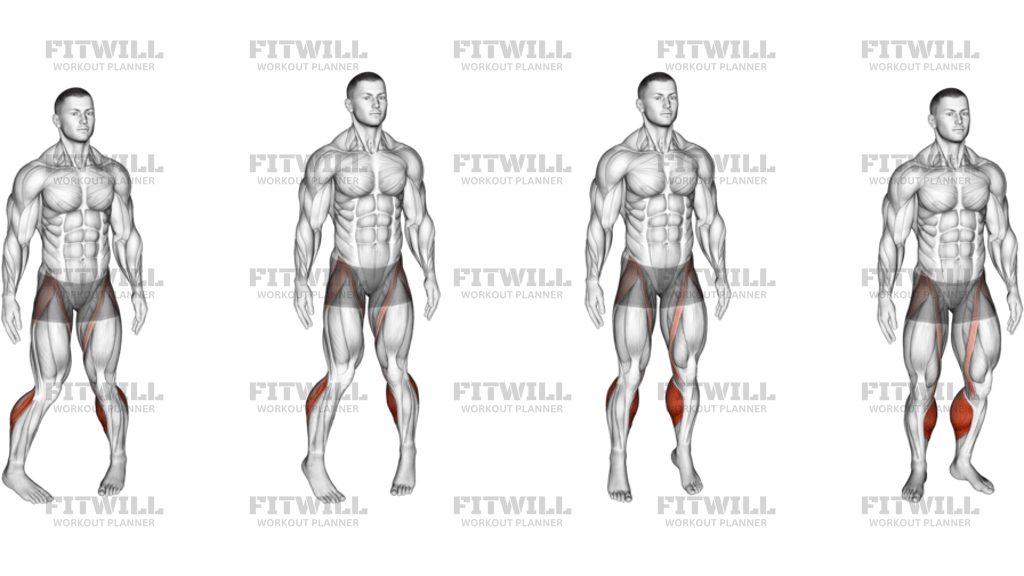
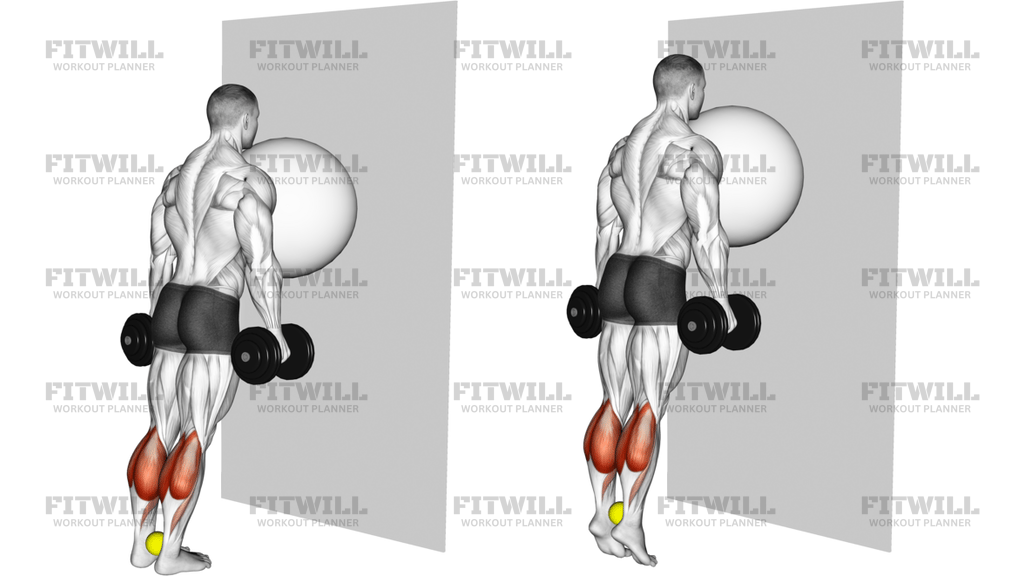
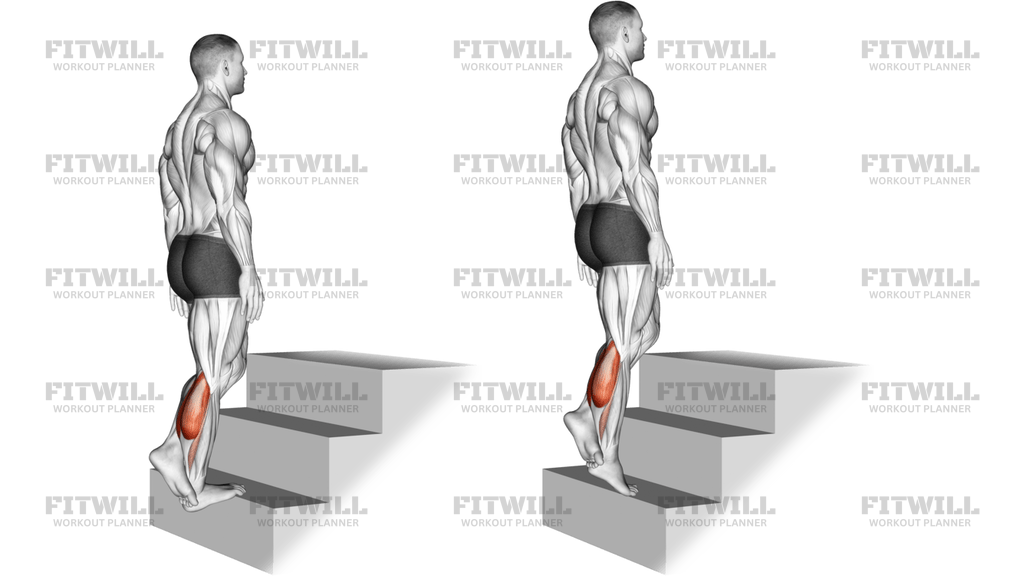
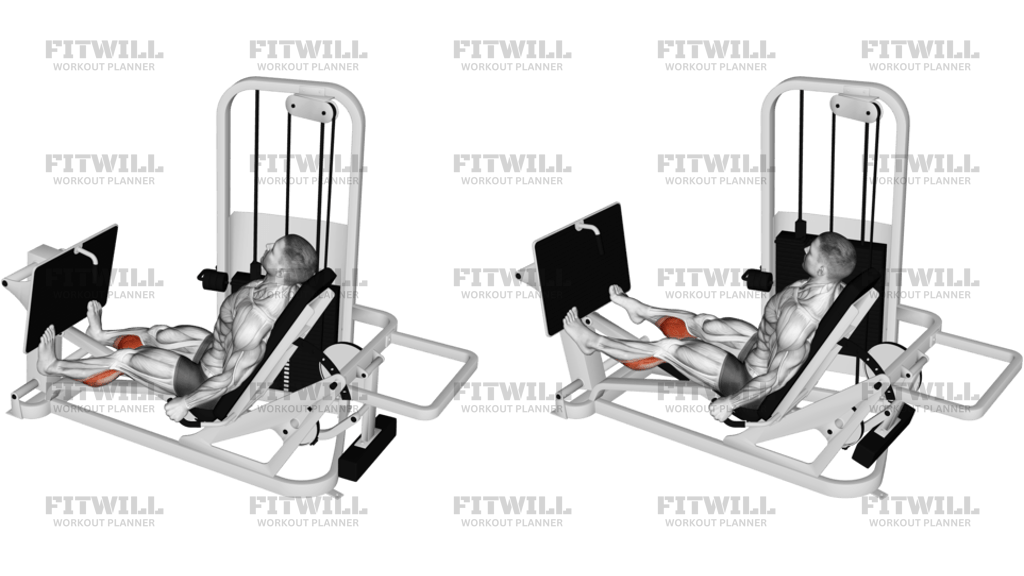
Double Heel Lift Sit Agains Wall
Double Heel Lift Sit Against Wall combines two classic bodyweight positions into one deceptively demanding exercise: the isometric wall sit and the double heel raise. You hold a seated position with your back flat against a wall, thighs roughly parallel to the floor, then repeatedly press both heels off the ground and lower them back down with control. Because your knees stay bent at about ninety degrees throughout, most of the calf work shifts to the soleus, the deep muscle running along the lower half of your lower leg.
This movement is especially useful for people who want to build calf endurance and ankle strength without loading the spine or standing exercises that require balance. Runners, hikers, and court-sport athletes benefit from strong soleus muscles, since that muscle absorbs a large share of the load every time you push off or absorb a landing with a bent knee. It is also a practical option for home training, because the only requirement is a clear stretch of wall and enough floor space to place your feet.
The wall sit portion is what makes this exercise unique. Holding the squat position keeps constant tension on the quadriceps and glutes while you perform the heel lifts, so you are training lower-leg endurance and isometric thigh strength at the same time. The wall also removes the balance demand you would face in a standing calf raise, letting you concentrate fully on pressing through the ball of the foot and controlling the lowering phase.
Setup matters more than most people expect. Your feet need to be far enough from the wall that your knees stack roughly over your ankles when your thighs are level, and your entire back, from the back of your head down to your sacrum, should stay in contact with the wall. If you sit too high, the exercise loses intensity; if you slide too low or let your knees drift past your toes, your knees and calves both take on awkward stress.
To execute it well, think of each heel lift as a deliberate press rather than a quick bounce. Drive the balls of your feet into the floor, raise both heels as high as your ankle range allows, pause briefly at the top, and then lower your heels until they just touch or hover just above the floor before starting the next rep. Breathe steadily the whole time instead of holding your air while your thighs start to burn.
A practical warning: the burn in your thighs and calves arrives quickly with this one, and fatigue often causes people to slide down the wall, round their lower back against it, or push through the outside edge of the foot. Stop the set when you can no longer keep your back flush against the wall or your heels lift straight up, and rebuild the set count gradually over successive sessions.
[ Workout Log & Planner ]
Put your next workout in Fitwill
Keep your plan and training log ready when you are.


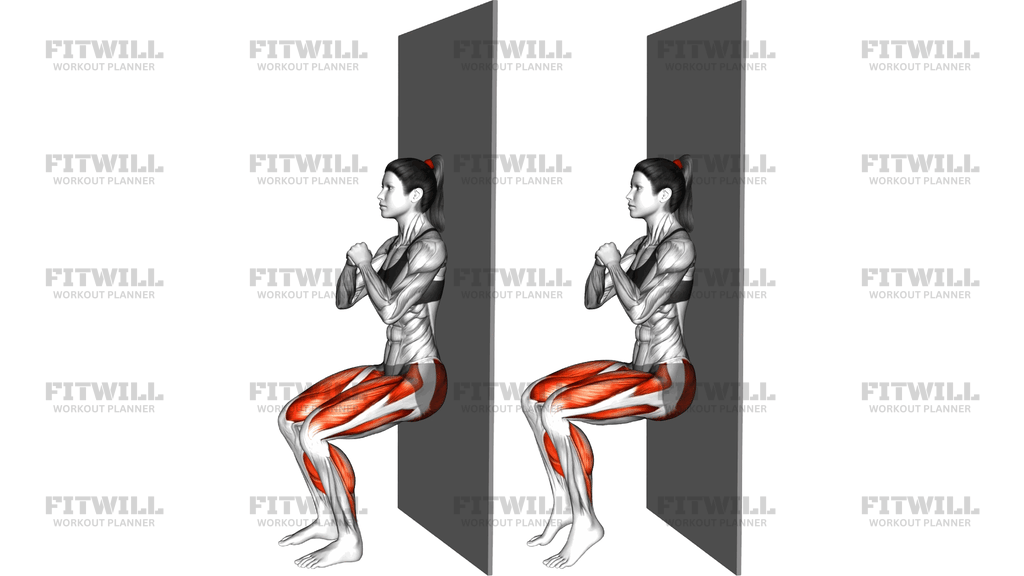
Instructions
- Stand with your back to a clear, smooth wall and walk your feet out about two feet from the base.
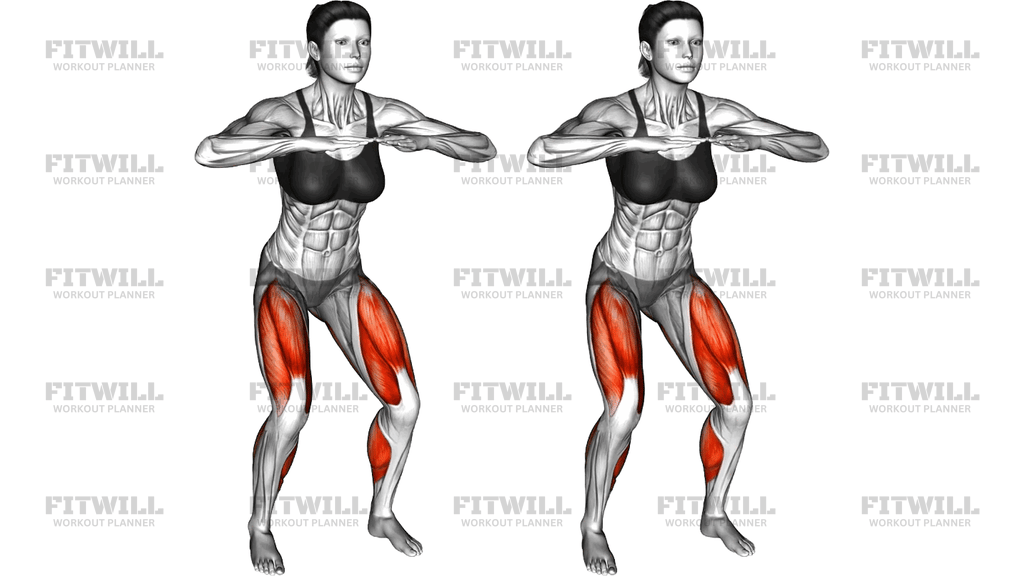
- Slide down the wall until your thighs are close to parallel with the floor and your knees sit roughly above your ankles, shins vertical.
- Press your head, upper back, and lower back flat against the wall and clasp your hands together in front of your chest.
- Brace your trunk lightly and keep your weight spread across the balls of both feet, toes pointing straight ahead.
- Exhale and press both heels upward at the same time, rising onto the balls of your feet as high as your ankles allow.
- Pause for one to two seconds at the top, keeping your back, hips, and shoulder position unchanged against the wall.
- Inhale and lower both heels slowly until they just touch or hover just above the floor, resisting the drop rather than letting gravity take them.
- Continue lifting and lowering for the target number of repetitions without letting your hips slide down or your back peel off the wall.
- When the set is over, push through your whole foot, slide up the wall to standing, and take a moment to shake out your calves and thighs before the next set.
Tips & Tricks
- If your calves cramp early, you are probably pointing through the toes instead of pressing the balls of the feet down; think of driving the forefoot into the floor rather than reaching up with the heel.
- A common mistake is sliding lower into the sit as fatigue builds, which turns a soleus exercise into a deep quad burner; mark your thigh height mentally or set a small object beside your hip to check depth each rep.
- Keep the heels lifting straight up rather than rolling outward, because letting the ankles collapse toward the outside edge reduces soleus work and strains the ankle joint.
- Squeeze the wall with your upper back instead of your neck; pushing the back of your head into the wall is a frequent cause of neck tension in this position.
- Slow the lowering phase to a two- or three-second count if the movement feels too easy, since the eccentric portion does much of the endurance-building work.
- Your hands should stay clasped at chest height and relaxed; pressing your arms against your thighs for leverage steals work from the legs.
- If your knees ache in this position, slide your feet slightly farther from the wall so the shins sit more vertical and less shear lands on the knee joint.
- Short, frequent sets work better here than one long grind; three or four sets of ten to fifteen controlled lifts beat a single max-effort set for most people.
- Wear shoes or use a thin mat under your feet if a hard floor irritates the balls of your feet during longer sets.
Frequently Asked Questions
What muscles does the Double Heel Lift Sit Against Wall work?
The primary target is the soleus in the calf, with the gastrocnemius assisting at the ankle. Because you hold a wall sit throughout, the quadriceps and glutes also work isometrically to maintain the seated position.
Why do this instead of a standing calf raise?
With the knees bent at ninety degrees, the gastrocnemius is put at a mechanical disadvantage, so the soleus does most of the lifting. The wall also removes the balance requirement, letting you focus purely on the heel press and controlled lowering.
How far should my feet be from the wall?
Start with your feet about two feet out, then adjust so your shins are vertical and your knees stack roughly over your ankles when your thighs are parallel to the floor. Too close stresses the knees; too far makes the wall sit harder to hold cleanly.
Should my heels touch the floor between reps?
Yes, letting the heels just kiss or hover just above the floor each rep gives you a full range of motion. If your heels stay elevated the whole set, you shorten the movement and lose the stretching portion at the bottom.
Is the Double Heel Lift Sit Against Wall suitable for beginners?
Yes, it is bodyweight only and very adjustable. Beginners can sit slightly higher on the wall to reduce the quad demand and perform fewer repetitions, then deepen the sit as strength improves.
My thighs burn before my calves do. Is that normal?
Yes, the wall sit creates a strong isometric demand on the quadriceps, especially early on. As your thigh endurance improves, the calf work will become the limiting factor, which is the intended outcome.
What is the most common mistake in this exercise?
Sliding down the wall as the set gets hard, which deepens the squat and rounds the lower back against the surface. If your back or hip position changes, end the set rather than pushing through a broken position.
Can I use this if standing calf raises hurt my balance or back?
That is one of its best use cases. The wall supports your entire back, and there is no spinal load, so it suits people who struggle with the balance or upright posture a standing raise requires.
How many reps and sets should I do?
Aim for three to four sets of ten to fifteen slow, controlled heel lifts, resting about a minute between sets. Increase reps or slow the lowering phase before adding difficulty in any other way.
Is it safe to do this exercise every day?
Because the load is light and the work is endurance-focused, frequent practice is generally fine. Still, treat it like any strength work: if your calves remain sore from the previous session, take a rest day before training them again.