Standing Single Leg Calf Raise On A Staircase
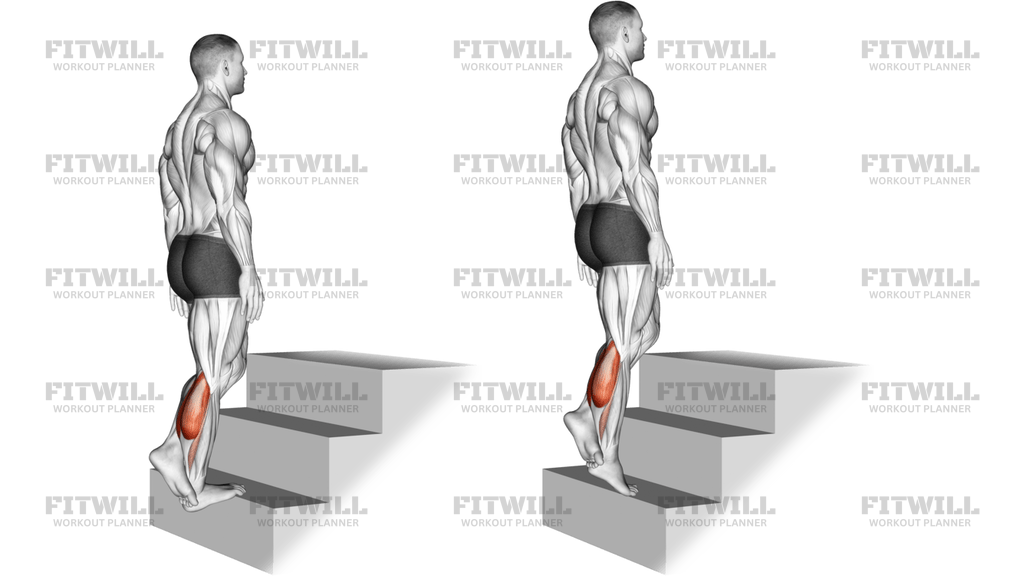
Standing Single Leg Calf Raise on a Staircase is a body-weight lower-leg exercise that trains ankle plantarflexion through a long range of motion. By letting the heel drop below the stair edge before rising onto the ball of the foot, you get a clearer stretch at the bottom and a stronger peak contraction at the top than you usually get on flat ground. It is a simple setup, but the quality of the rep depends on how well you control the descent, balance on one leg, and keep pressure through the forefoot instead of rocking your whole body.
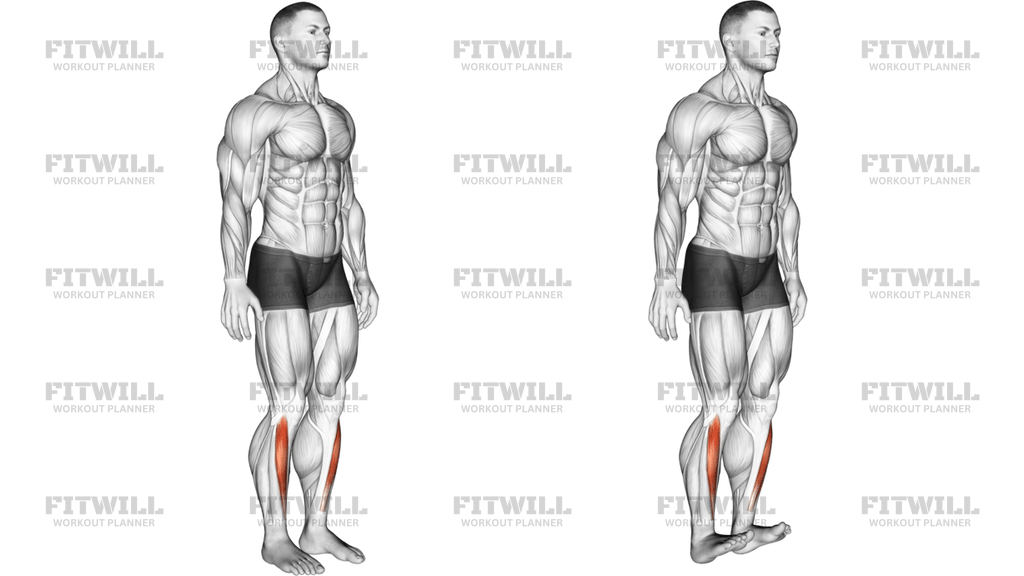
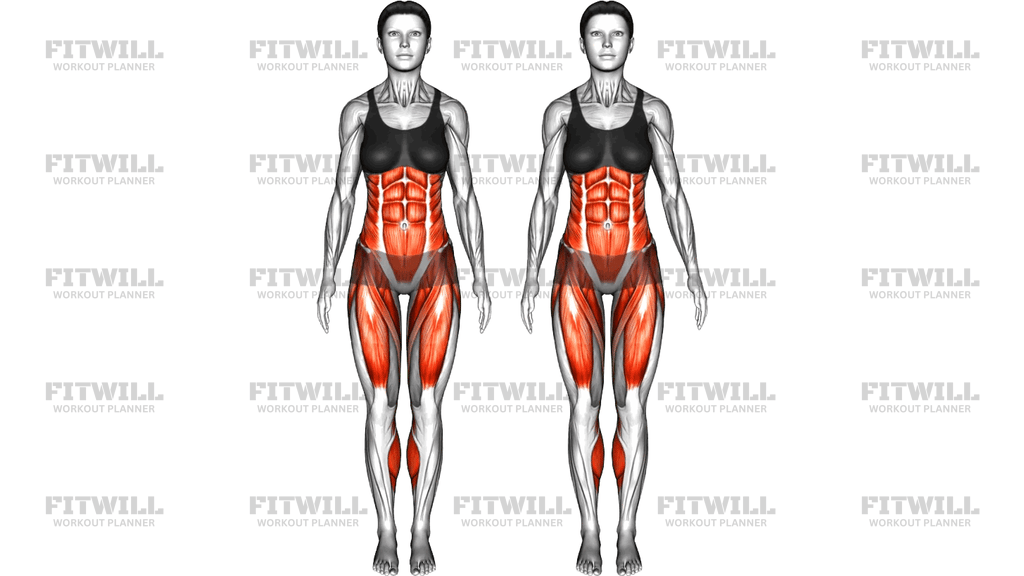
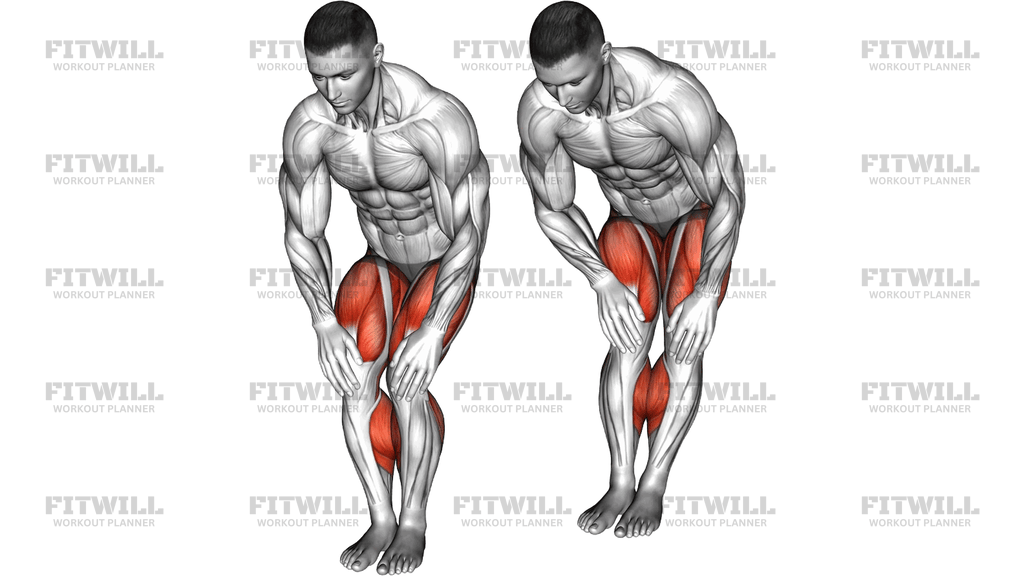
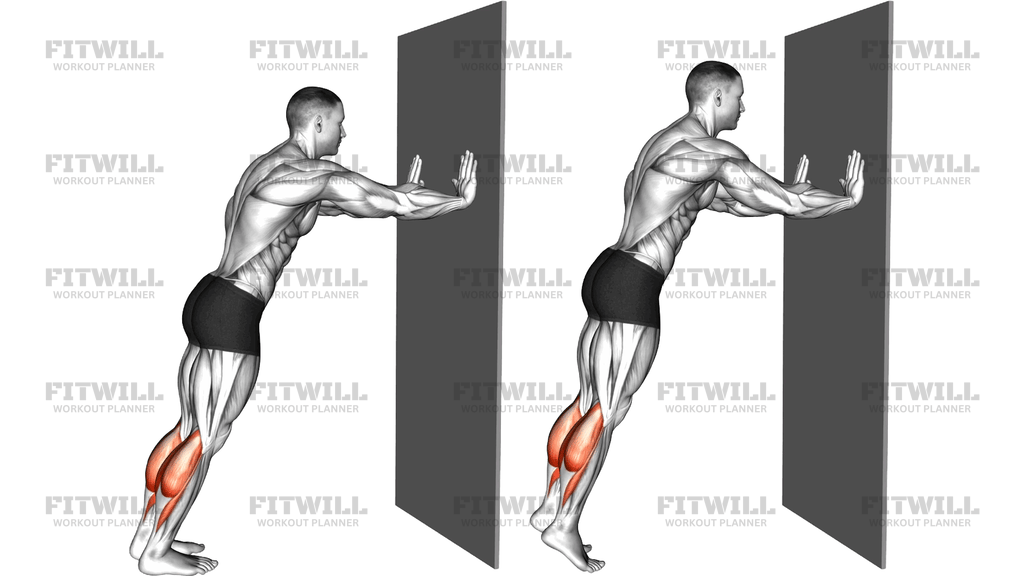
This variation primarily challenges the calf complex, especially the gastrocnemius, while the soleus, foot muscles, ankle stabilizers, and core help keep the working side steady. Because only one leg is doing the work, the movement also exposes side-to-side differences in strength, ankle control, and balance. That makes it useful for runners, jump athletes, field-sport athletes, and anyone who wants better lower-leg endurance and more resilient ankles.
The staircase matters because it gives you a built-in range target. Place the ball of one foot on the step, keep the heel free to travel below the edge, and use a light hand on the rail or wall only if you need balance. Lower slowly until you feel a controlled stretch through the calf and Achilles area, then drive straight up through the big toe and second toe until the calf is fully contracted. The torso should stay tall and quiet; the motion should come from the ankle, not from bouncing or shifting the hips.
Use a deliberate tempo and stop short of any sharp pain in the Achilles tendon, arch, or outside of the ankle. A small knee bend is fine if you want a slightly easier balance demand, but the working leg should stay organized and stacked over the step. If body weight becomes easy, progress the exercise by adding a dumbbell, weighted vest, or backpack before you start chasing faster reps. The goal is not just a bigger range, but a cleaner heel drop, a stronger finish, and the ability to repeat the same rep on every set.
[ Workout Log & Planner ]
Put your next workout in Fitwill
Keep your plan and training log ready when you are.


Instructions
- Stand on a stair with the ball of one foot on the edge and the heel hanging free; keep the other foot lifted or lightly tucked behind you.
- Square your hips and ribs, then hold a wall or rail lightly if you need balance.
- Let the working heel sink below the stair until you feel a controlled calf stretch.
- Keep pressure through the big toe, second toe, and inner forefoot as you pause at the bottom.
- Drive the ankle upward and rise onto the ball of the foot without bouncing.
- Finish with the calf fully contracted and the heel as high as you can control.
- Lower back down slowly to the same stretched position under control.
- Breathe out as you rise and inhale as you lower.
- Complete all reps on one side, then switch legs.
Tips & Tricks
- Use only a fingertip on the rail if balance is the issue; do not let the support arm do the work.
- Keep the working foot pointed mostly forward so the ankle, not the hip, drives the rep.
- Let the heel travel below the stair edge, but stop before the stretch turns into a sharp pull at the Achilles.
- Pause for a beat at the bottom so the calf starts each rep from a dead stop instead of a bounce.
- Push through the big toe and second toe to keep the arch from collapsing as you rise.
- Use a slower lowering phase than lifting phase if you want more calf loading from body weight alone.
- Keep the standing knee soft but not collapsing inward; the ankle should move without the leg wobbling.
- Add load with a dumbbell or backpack only after you can keep the same heel height and same bottom depth on every rep.
Frequently Asked Questions
What does Standing Single Leg Calf Raise on a Staircase train most?
It primarily trains the calf complex, especially the gastrocnemius, with the soleus and ankle stabilizers helping to control the movement.
Can beginners perform this exercise?
Yes. Beginners usually do best with body weight, a light touch on the rail, and a smaller range of motion at first if balance is limited.
Why use a staircase instead of a flat floor?
The stair lets the heel drop below foot level, which increases the bottom stretch and makes each repetition more useful for calf strength and control.
How should my foot sit on the stair edge?
Place the ball of the foot on the step with the heel free to move, and keep most of your pressure through the big toe and second toe.
Should my knee stay straight or bent?
A mostly straight knee emphasizes the gastrocnemius, while a slight bend can make balancing easier. Do not turn it into a deep squat pattern.
What is the most common mistake on this exercise?
Bouncing off the bottom. If the heel rebounds off the stair, the calves lose tension and the set becomes less effective.
How can I make the movement harder without changing the exercise?
Add a dumbbell, weighted vest, or backpack, or slow the lowering phase while keeping the same step height and balance.
Is this safe if my Achilles feels tight?
Keep the range smaller and avoid sharp pain. A mild stretch is normal, but pain at the tendon is a sign to reduce depth or stop.