Clamshell Sit Agains Wall
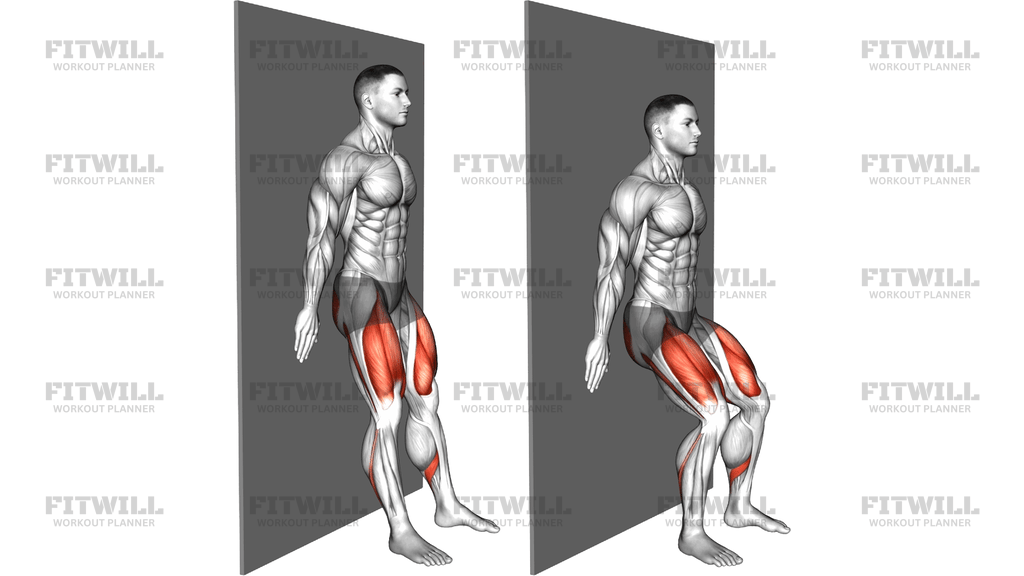
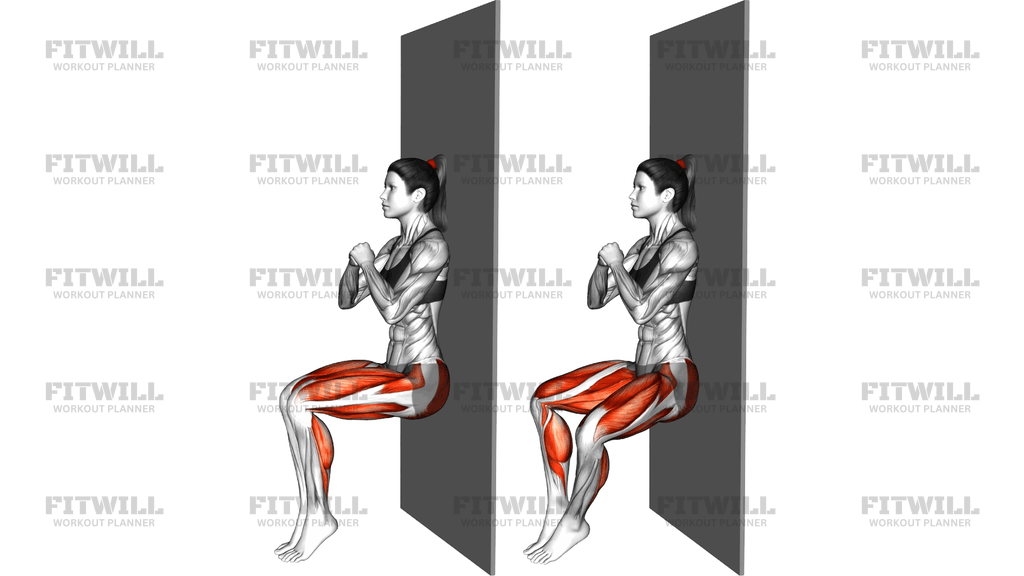
Clamshell Sit Against Wall combines two familiar elements into one deceptively demanding exercise: the isometric wall sit and the clamshell leg opening. You hold a seated position with your back flat against a wall, thighs parallel to the floor, then open your knees apart and bring them back together while your feet stay planted side by side. The wall removes any chance of leaning back or cheating the position, so your legs and hips have to do all the work.
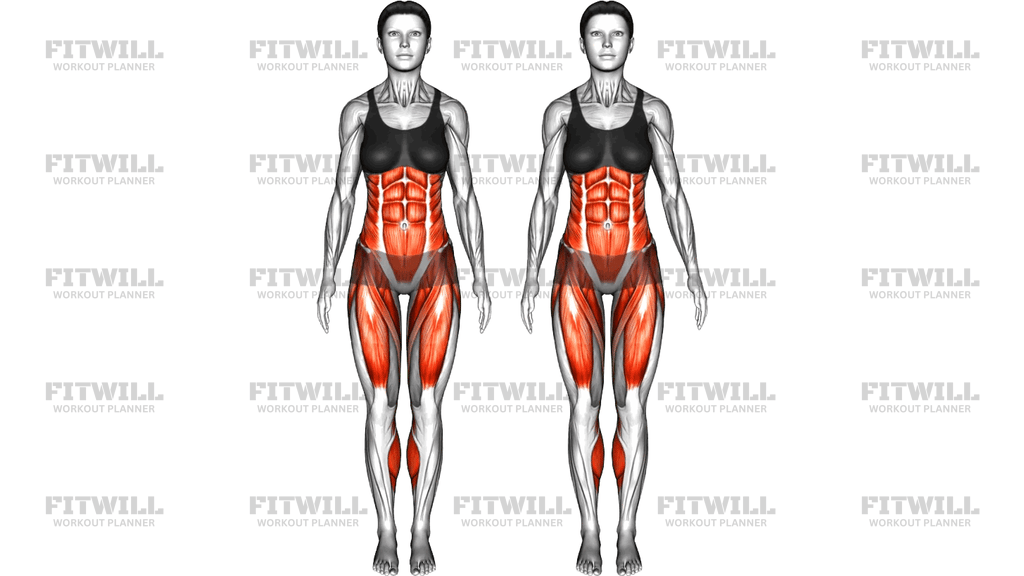
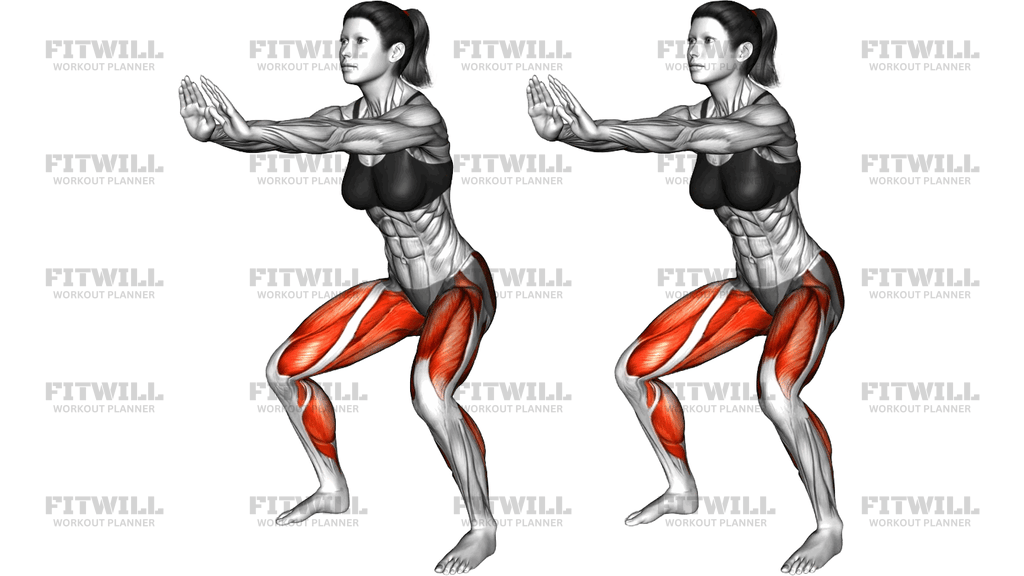
This movement trains two things at once. The wall sit itself keeps the quadriceps and glute maximus under constant tension, while the knee openings load the glute medius and other outer-hip muscles that control leg abduction. Those hip muscles are often underdeveloped from long hours of sitting, and strengthening them supports better knee tracking during squats, lunges, running, and everyday walking.
The setup matters more than it looks. Because your feet stay together and only your knees travel, every repetition forces the outer hips to work through a real range of motion while the thighs stay loaded in a static hold. Slide too far up the wall and the hold becomes easy; sink too low too early and your form breaks before the hips get meaningful work. Aim for a depth you can hold with a tall chest and level hips for the full set.
To perform it well, keep your entire back, from shoulders to tailbone, in contact with the wall, and resist the urge to rock your pelvis as the knees open. The movement should come only from the hip joints. Slow tempo is the point: pause briefly at the widest point of each opening, then bring the knees back together under control rather than letting them snap back.
This exercise suits a wide range of people. Beginners can use it to build squat-ready leg strength without any equipment, while more experienced lifters and runners often use it as a warm-up or as accessory work for hip stability and glute activation. It is also a popular choice in rehab-style training programs for the outer hips because the wall provides feedback and support throughout.
A few practical points will keep it safe and effective. Keep your weight spread across both feet, knees roughly in line with the toes at the top of each opening, and stop the set when your hips start to lift or your lower back peels off the wall. If a full wall sit is too demanding, slide your feet slightly farther from the wall so your knees bend less deeply, and progress from there.
[ Workout Log & Planner ]
Put your next workout in Fitwill
Keep your plan and training log ready when you are.


Instructions
- Stand with your back to a clear wall and walk your feet out about a foot and a half from the base, hip-width apart.
- Lean your shoulders and lower back against the wall, then slide down until your knees are bent roughly 90 degrees and your thighs are close to parallel with the floor.
- Press your entire back flat into the wall, stack your shoulders over your hips, and place your feet flat on the floor directly under your knees with the insides of the feet nearly touching.
- Draw your belly button in slightly and brace your core as if preparing for a light push, keeping your head neutral and gaze forward.
- Keeping your feet planted and together, slowly let both knees open outward as far as you can control, like a clamshell opening, without lifting either foot or rounding your back off the wall.
- Pause for one to two seconds at the widest point, feeling the work on the outside of your hips.
- Squeeze your inner thighs and bring your knees back together slowly until they touch or nearly touch, keeping your back sealed against the wall the whole time.
- Breathe steadily throughout: inhale as the knees open, exhale as you draw them back together.
- Complete your reps while holding the seated depth, then walk your feet up the wall and stand up carefully when the set is finished, shaking out your legs between sets.
Tips & Tricks
- If your knees drift past your toes at the start, your feet are too close to the wall; shift them out a few inches so your shins stay close to vertical.
- A common mistake is lifting the heels or toes as the knees open. Press your whole foot into the floor on every rep to keep the tension in the hips instead of the ankles.
- If your lower back arches away from the wall as you fatigue, you have sunk too low. Slide up an inch or two so your tailbone and shoulders stay in contact.
- Do not let the opening come from rolling the pelvis or twisting your torso. Imagine a cup of water balanced on your head that must stay level while the knees travel.
- Count the hold separately from the reps. If your thighs start shaking before rep five, the wall sit depth is currently your limiting factor, so reduce the depth until the knee openings become the challenge.
- Control the closing phase just as much as the opening. Letting the knees collapse back together robs the inner thighs and outer hips of half the work.
- Wearing smooth socks on a slick floor can make your feet slide apart as the knees open. Bare feet or grippy shoes keep the feet anchored.
- For a harder version, hold the knees open for a full five-second count on the final rep of each set, or place a light resistance band looped above the knees.
- Warm up the hips with a few standing leg swings or bodyweight clamshells on the floor first so the outer hips fire before you combine them with the hold.
Frequently Asked Questions
What muscles does the Clamshell Sit Against Wall work?
The quadriceps and glutes work isometrically to hold the wall sit, while the glute medius and other outer-hip muscles drive the knee openings. The inner thighs assist as they draw the knees back together.
How is the Clamshell Sit Against Wall different from a regular wall sit?
A regular wall sit is a pure static hold, whereas this version adds repeated knee openings with the feet fixed together. That turning it into a moving clamshell means the outer hips train through a range of motion while the legs stay under constant tension.
Is this exercise good for beginners?
Yes, as long as the depth matches your current strength. A shallower hold with a slight knee bend lets beginners learn the knee-opening pattern before progressing toward the full thighs-parallel position.
Why do my feet want to slide apart during the knee openings?
Smooth flooring or tired hip muscles are usually the cause. Wear shoes with grip, actively press the inner edges of your feet into the floor, and limit the opening width until you can keep both feet planted.
How deep should the wall sit be?
Aim for thighs roughly parallel to the floor only if you can keep your whole back against the wall for every rep. If your lower back or shoulders lift, move up an inch or two and rebuild from there.
Can I do the Clamshell Sit Against Wall with a resistance band?
Yes. Looping a light band above your knees adds outward resistance and makes the outer hips work harder on every opening. Start with a light band because the hold itself already adds considerable load.
How many reps and sets should I do?
Start with two to three sets of eight to twelve slow openings, holding the sit throughout the set. As the hip openings get easy, add reps or a band before increasing the depth of the hold.
My knees click or feel pinched when they open. Is that a problem?
Occasional painless clicking is common, but pinching or discomfort is a signal to reduce the opening width or depth. If the sensation persists, check with a qualified professional before continuing.
What can I substitute if there is no wall available?
Floor clamshells lying on your side train the same outer-hip pattern, and a bodyweight squat hold with alternating knee taps covers the isometric leg element. The wall version simply combines both with built-in posture feedback.
Should I feel this more in my thighs or my hips?
You will feel a steady burn in the thighs from the hold and a distinct contraction on the outside of the hips during each opening. If you only feel the thighs, try slowing the knee openings and pausing longer at the widest point.