Bodyweight Deadlift Shin Tap
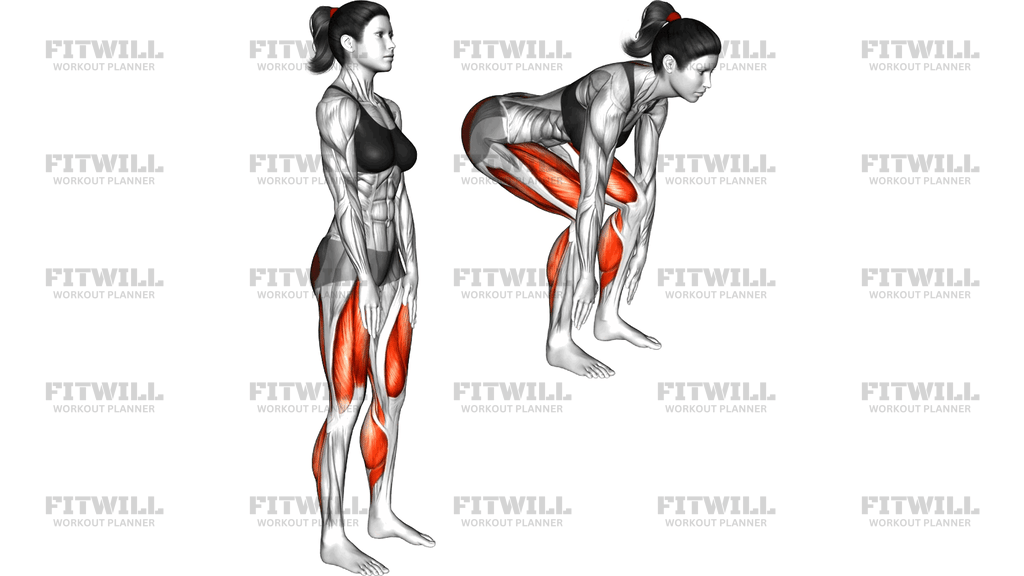
The Bodyweight Deadlift Shin Tap is a hip hinge drill that teaches the fundamental deadlift pattern without any load. From a standing position, you push your hips back, bend your knees slightly, and slide or reach your hands down until they tap your shins, then drive through your heels to stand tall again. The shin tap acts as a built-in depth gauge: it gives you a concrete target that tells you when you have hinged far enough, which is exactly why this movement is so effective for learning where your hips should be during a real deadlift.
This exercise is useful for two very different groups of people. Beginners use it to groove a safe hinge pattern before ever picking up a barbell or kettlebell, because it removes the weight and lets them focus purely on hip position, spine angle, and balance. Experienced lifters use it as a warm-up or refinement tool to shake off sloppy hinge mechanics, re-establish tension in the glutes and hamstrings, and check that they are loading the back of the body instead of squatting the weight up with the quads.
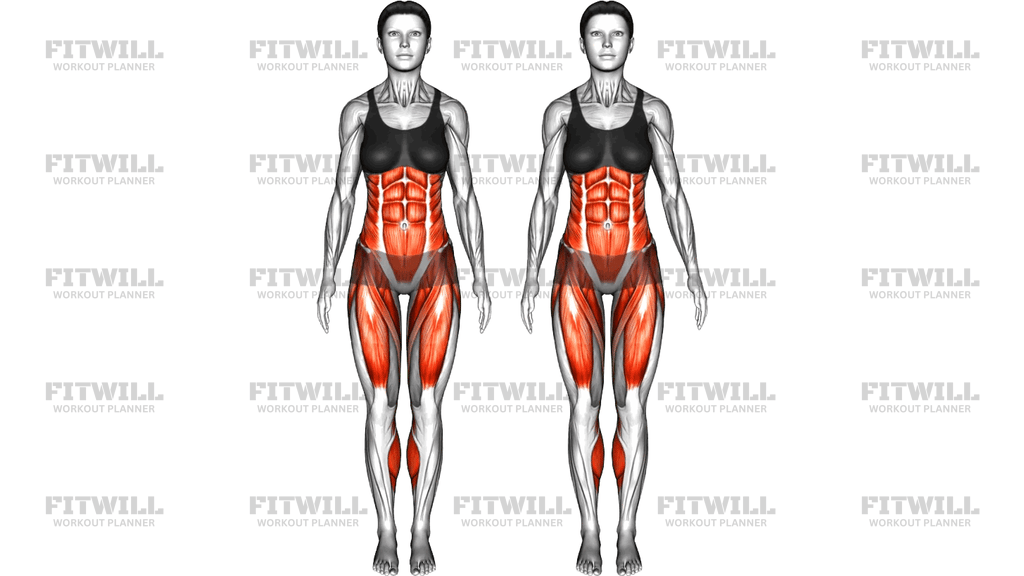
The main work happens in the glutes and hamstrings, which lengthen under control as you reach down and contract to pull you back upright. The muscles along the lower back work isometrically to hold your spine in a neutral position, and the quads and calves stabilize the knees and ankles throughout. Because there is no external load, the emphasis is on position and control rather than raw strength, so the movement should feel like a deliberate pattern rehearsal, not a grind.
Setup matters more than it looks. Your stance should mirror your deadlift stance, roughly hip-width apart with feet flat, because the whole point is to rehearse the exact foot position you will use under the bar. The reach toward the shins also encourages you to keep your arms long and relaxed, which mimics how the arms hang during a deadlift and prevents the shoulders from shrugging or rounding forward.
To execute it well, think of the movement as pushing your hips backward rather than bending forward. Your chest travels down toward the floor, but your weight stays in your midfoot and heels, and your back stays long and flat. Tap the shins lightly with your fingertips, pause for a beat to feel the stretch across the back of your thighs, then squeeze the glutes and stand up by driving the hips forward, not by lifting the chest first.
A few practical points keep this safe and effective. Move slowly enough that you can feel each position, and stop the descent at the point where your back would start to round, even if that means your hands only reach mid-shin or just below the knees. If your hamstrings are tight, a slightly bigger knee bend is a fair trade for a flat back. Done for a couple of sets of eight to twelve slow reps, the Bodyweight Deadlift Shin Tap fits neatly into a warm-up, a technique session, or a low-impact home lower-body routine.
[ Workout Log & Planner ]
Put your next workout in Fitwill
Keep your plan and training log ready when you are.


Instructions
- Stand with your feet hip-width apart, toes pointing forward or slightly out, and your weight spread evenly across your whole foot.
- Let your arms hang relaxed at your sides with your shoulders pulled gently back and down, matching a deadlift-style arm position.
- Brace your core lightly by tightening your midsection as if bracing for a light push, and keep your ribs stacked over your pelvis.
- Push your hips straight back behind you and allow your knees to bend slightly, keeping your chest proud and your back flat as you descend.
- Reach your hands down the front of your legs until your fingertips tap your shins, keeping your arms long and relaxed the whole way.
- Pause at the tap for one to two seconds and feel the tension in your glutes and hamstrings without letting your lower back round.
- Drive through your heels and midfoot, squeeze your glutes, and push your hips forward to return to a tall standing position.
- Exhale as you hinge down under control, inhale at the bottom, and exhale again as you stand up.
- Reset your stance and brace between reps if you feel your balance shift, then repeat for your target number of slow, deliberate reps.
Tips & Tricks
- If your fingertips tap your shins but your back has rounded to get there, you have gone too far, shorten the range so the tap happens with a flat spine.
- A common mistake is turning this into a squat by bending the knees too much and dropping the hips straight down; push the hips back first and only let the knees bend as needed.
- Keep your shins nearly vertical throughout the descent, since letting the knees drift far forward shifts the work away from the glutes and hamstrings.
- If you feel the movement only in your quads, consciously drag your hips backward until you feel a stretch along the back of your thighs before standing.
- Do not rush the return to standing; the hip drive at the top is where the glutes do their most useful work, so finish each rep fully tall with glutes squeezed.
- Practice barefoot or in flat shoes so you can feel your weight shift toward your heels and midfoot as you hinge.
- Stand sideways to a mirror occasionally to check that your back stays flat and your hips travel backward rather than dropping downward.
- If your hamstrings feel overly tight, bend the knees a little more rather than rounding your lower back to reach lower.
- Use this drill as the first exercise in a lower-body warm-up, before deadlifts or kettlebell swings, to lock in the hinge pattern while you are fresh.
Frequently Asked Questions
What muscles does the Bodyweight Deadlift Shin Tap work?
The glutes and hamstrings do most of the work as you hinge down and drive back up. Your lower back muscles hold the spine steady, and the quads and calves help stabilize the knees and ankles.
Why do the hands tap the shins instead of reaching for the floor?
The shin tap sets a consistent, repeatable depth that matches the bottom position of a typical deadlift setup. Reaching for the floor usually forces rounding in the lower back once your hamstrings run out of room.
Is the Bodyweight Deadlift Shin Tap good for beginners?
Yes, it is one of the best first steps before loaded hinging because there is no weight to manage. You can focus entirely on hip position, a flat back, and balanced feet.
How is this different from a bodyweight good morning or a squat?
Unlike a squat, the hips travel backward and the knees stay only slightly bent, loading the back of the legs. Unlike a good morning, the arms reach actively toward the shins, which helps you keep a long, neutral spine.
My fingers cannot reach my shins without my back rounding. What should I do?
Stop the descent higher, around mid-shin or just below the knees, or allow a slightly larger knee bend. The flat back matters far more than the exact contact point.
How many reps should I do?
Two or three sets of eight to twelve slow reps works well, either as a warm-up before deadlifts or as a standalone home exercise. Move slowly enough to feel each position rather than counting speed.
Can the Bodyweight Deadlift Shin Tap replace real deadlifts?
It builds the movement pattern and activates the same muscles, but without load it will not build the same strength. Treat it as a teaching and warm-up tool, and progress to a kettlebell, dumbbell, or barbell once your hinge feels solid.
Should my knees stay straight during the hinge?
No, a soft knee bend is part of the pattern, but the knees should not shoot far forward. Keep the shins close to vertical and let the hips do the traveling.
Is it safe for people with lower back discomfort?
Because it is unloaded and self-paced, many people tolerate it well, but keep the range short and the back flat, and stop if anything reproduces pain. Anyone with ongoing back issues should clear new exercises with a qualified professional first.
Where should my weight be on my feet during the shin tap?
Keep your weight centered over your midfoot and heels as you hinge back. If your heels lift or your weight rolls to your toes, push your hips further back and slow the descent.