Barbell Explosive Bench Press
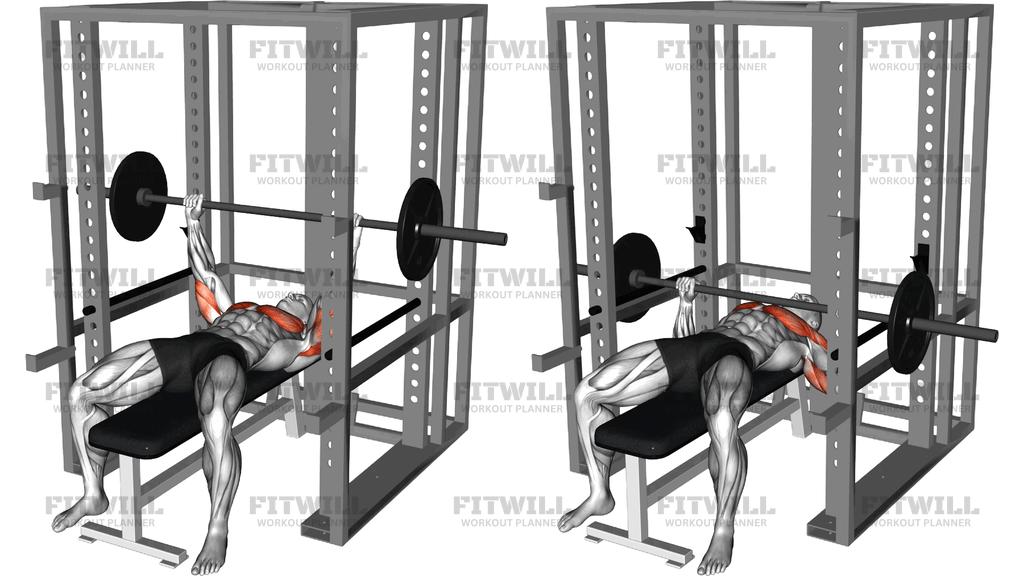
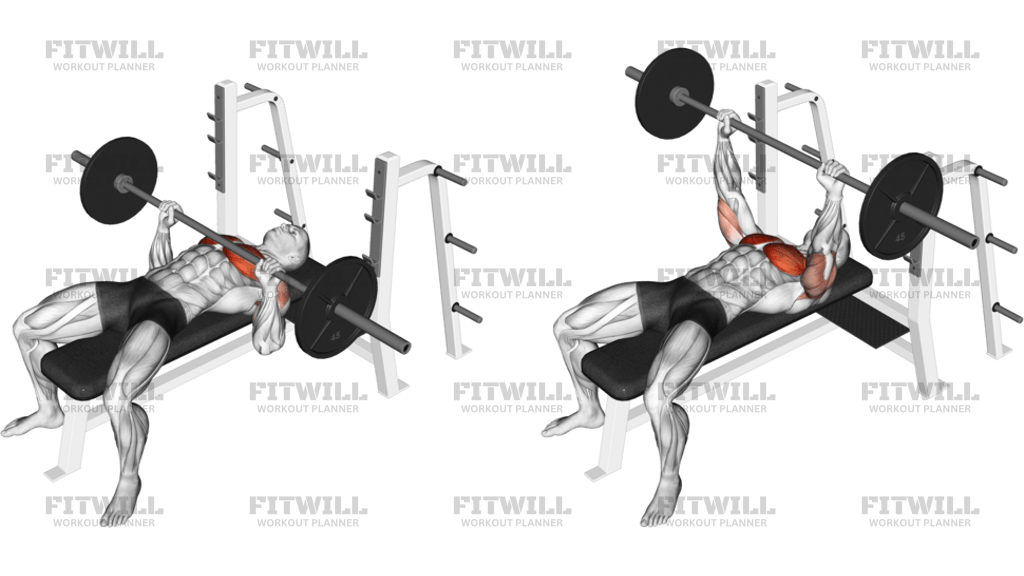
The Barbell Explosive Bench Press is a bench press variation where the emphasis shifts from slow, grinding reps to pressing the bar with maximal speed and intent. You lie on a flat bench, unrack the bar with a grip slightly wider than shoulder width, lower it under control to your lower chest, then drive it back up as forcefully as you can. The goal is not just to complete the rep but to accelerate the bar through the entire pressing range.
This movement trains the chest as the prime mover, with the front shoulders and triceps contributing heavily to the drive. Because the press is performed explosively, it also develops rate of force production, which is your ability to turn on muscle tension quickly. That quality carries over well to sports that involve pushing, throwing, or blocking, and it can help lifters break through sticking points on their regular bench press.
Setup matters even more here than in a standard bench press. Fast reps amplify any wobble in your base, so your shoulder blades need to be pulled back and down, your feet planted firmly, and your body tight on the bench before the bar ever moves. A loose setup combined with an explosive press is where technique breaks down.
Execution comes down to contrast: the lowering phase is controlled, taking two to three seconds, while the pressing phase is violent and fast. Think about pushing the bar away from your chest rather than just lifting it. The bar may not actually move quickly with heavier loads, but the intent to accelerate is what recruits the high-threshold muscle fibers you are training for.
This exercise fits best in strength and power programs, typically early in a session when you are fresh. Power athletes, martial artists, and football or rugby players use it to build pressing speed, while recreational lifters use it to add variety and reinforce aggressive bar speed on their main presses.
Use loads you can control, keep a spotter or safety arms in place, and stop the set as soon as bar speed visibly drops. Explosive work is quality work; grinding out fatigued, slow reps defeats the purpose and increases risk.
[ Workout Log & Planner ]
Put your next workout in Fitwill
Keep your plan and training log ready when you are.


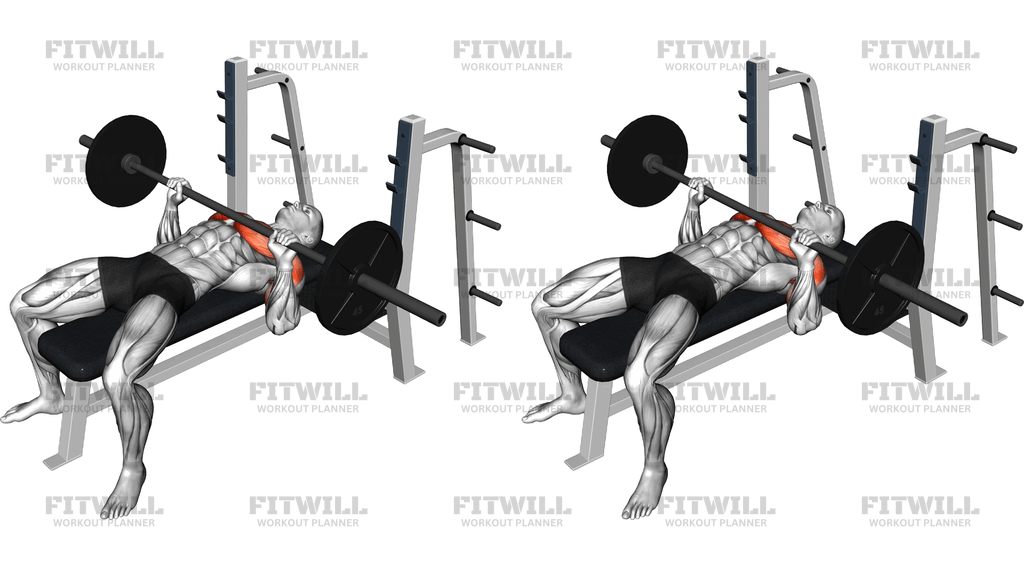
Instructions
- Set a flat bench in a rack or bench press station and adjust the bar height so you can unrack it with straight arms while your shoulder blades stay on the bench.
- Lie back with your eyes roughly under the bar, plant both feet flat on the floor, and grip the bar slightly wider than shoulder width with your wrists stacked over your elbows.
- Pull your shoulder blades back and down, keep a natural arch in your lower back, and unrack the bar to position it directly over your lower chest.
- Take a deep breath into your belly and brace your core tightly before starting each rep.
- Lower the bar under control to your lower chest, touching lightly with your elbows at roughly 45 to 70 degrees from your torso.
- Without pausing at the bottom, drive the bar up as fast and hard as you can, pushing the bar away from your chest until your elbows are nearly straight.
- Exhale forcefully as you press, then inhale again as you lower the next rep.
- Keep the bar path steady over your lower chest and avoid letting it drift toward your face or your hips.
- Finish the set, guide the bar back to the racked position with straight arms, and confirm the hooks are fully engaged before relaxing your grip.
- Rest fully between sets so every rep can be pressed with genuine speed.
Tips & Tricks
- Bar speed is your feedback tool. If the bar slows noticeably partway through a set, end the set there rather than grinding extra reps.
- A common mistake is bouncing the bar off the chest to generate momentum. Touch lightly and let the stretch reflex do its job without crashing the bar down.
- If your hips rise off the bench as you press explosively, the weight is likely too heavy or your foot drive is pushing your body out of position. Reduce the load and drive your feet down into the floor instead of up toward the bench.
- Keep your elbows from flaring straight out to the sides. Angling them about 45 degrees from your torso protects the shoulders and keeps the pressing path efficient.
- Grip the bar tightly and squeeze it hard. A loose grip at high speeds invites the bar to roll or shift in your hands.
- Start with around 50 to 65 percent of your normal bench press working weight. Explosive intent recruits more fibers, so the bar feels heavier than the number suggests.
- Do not pause artificially at the top between reps. Reset your brace, take your breath, and lower the next rep with purpose.
- Use safety pins or a competent spotter every time. A fast press that stalls mid-rep gives you less time to react than a slow grinding rep.
- If your wrists bend backward during the press, narrow your grip slightly and cue stacking the knuckles directly over the forearms.
Frequently Asked Questions
What muscles does the Barbell Explosive Bench Press work?
The chest is the primary muscle, with the front shoulders and triceps driving the lockout. The back, core, and legs work isometrically to hold your position on the bench while you press.
How is the Barbell Explosive Bench Press different from a regular bench press?
The lowering phase is still controlled, but the pressing phase is performed with maximal speed and acceleration intent. This shifts the training emphasis toward power development rather than pure maximal strength or hypertrophy.
Can beginners do the Barbell Explosive Bench Press?
Beginners should first build solid technique on the standard bench press for several weeks. Once the bar path, brace, and setup are consistent, explosive pressing with light loads can be introduced safely.
How much weight should I use for explosive bench pressing?
Start with 50 to 65 percent of your regular bench press working weight. The load should be light enough that the bar actually moves fast on most reps.
Should I pause the bar on my chest during the Barbell Explosive Bench Press?
No, a full dead-stop pause defeats the purpose, since the stretch reflex helps drive the explosive press. Touch the chest lightly and reverse the bar immediately.
Why does my bar speed drop after a few reps?
Explosive efforts rely on the nervous system, which fatigues faster than the muscles themselves. Bar speed dropping is the signal that power output is declining, so end the set and rest longer than you would for a normal set.
What can I substitute if I do not have a barbell and rack?
Dumbbell bench presses with fast concentric reps, or push-ups performed with an explosive push off the floor, train a similar quality. Both allow you to press with speed while managing risk more easily.
Is a spotter required for the Barbell Explosive Bench Press?
A spotter or safety pins set just below chest height are strongly recommended. Explosive reps can stall abruptly, and the bar leaves you less time to escape than a slow rep would.
Where should the bar touch my chest on this exercise?
Lower it to the lower chest around nipple level, keeping the bar path consistent rep to rep. Letting the bar drift toward the neck or the stomach increases shoulder strain and makes the press less efficient.
How many reps and sets work best for the Barbell Explosive Bench Press?
Lower rep ranges work best, typically 3 to 6 reps per set for 4 to 6 sets with full rest. The goal is maximal speed on every rep, not accumulated fatigue.