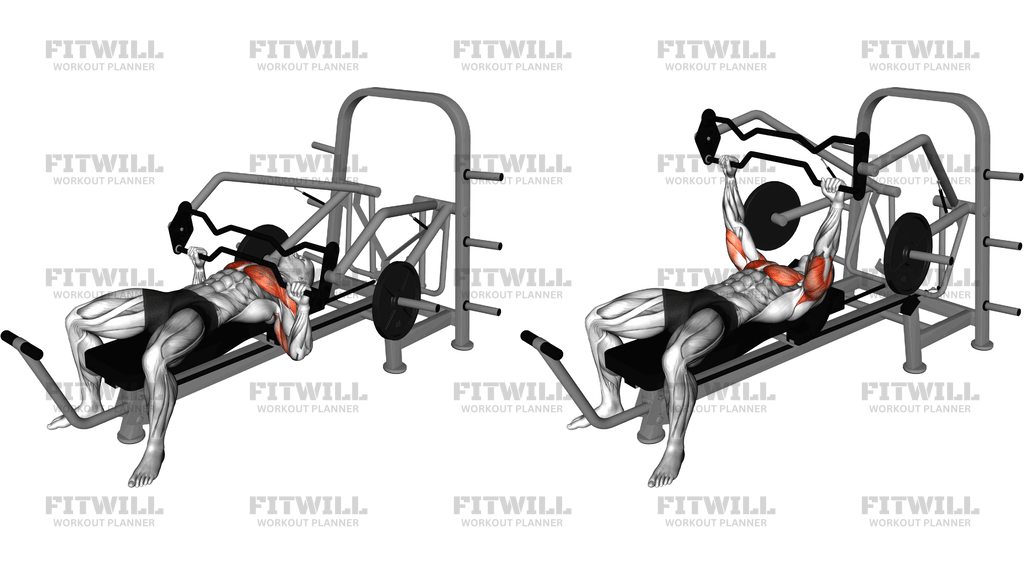
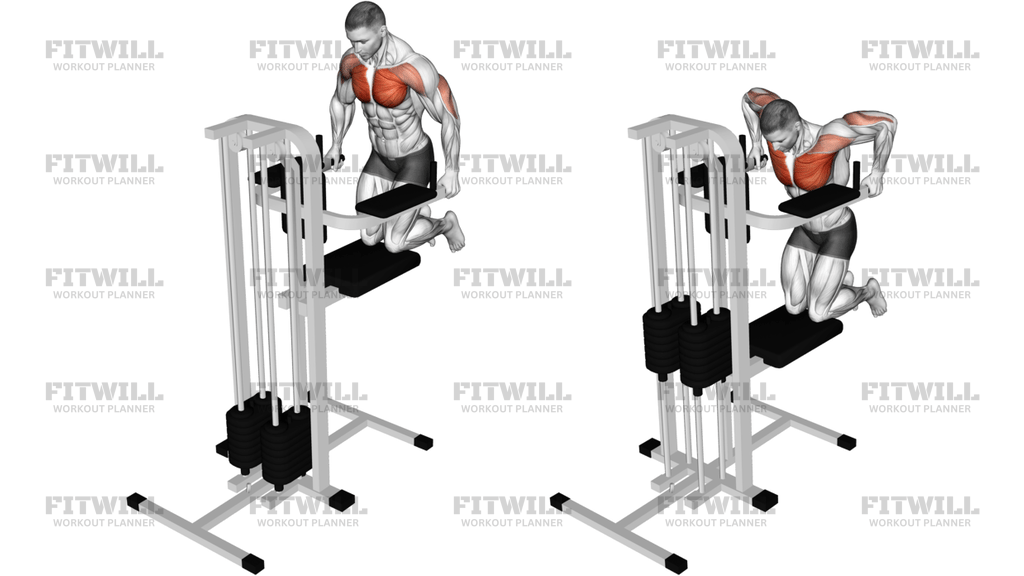
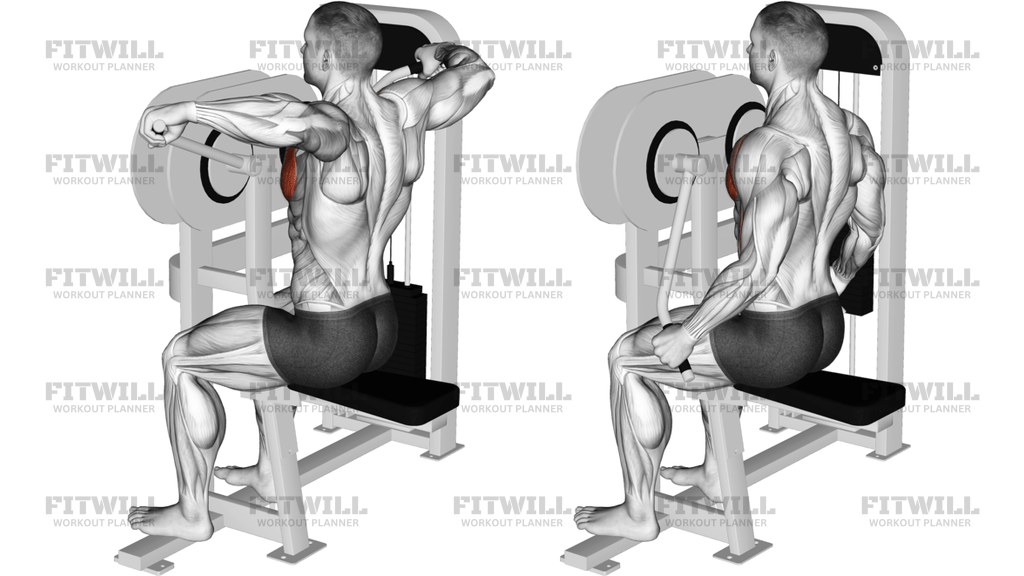
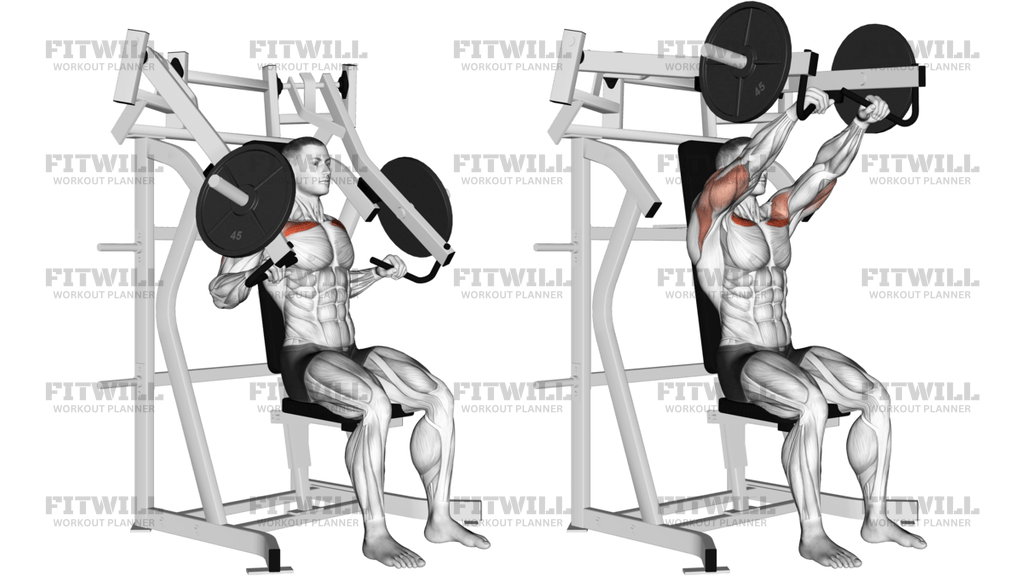
Lever Lying Single Arm Full Chest Press (Plate Loa)
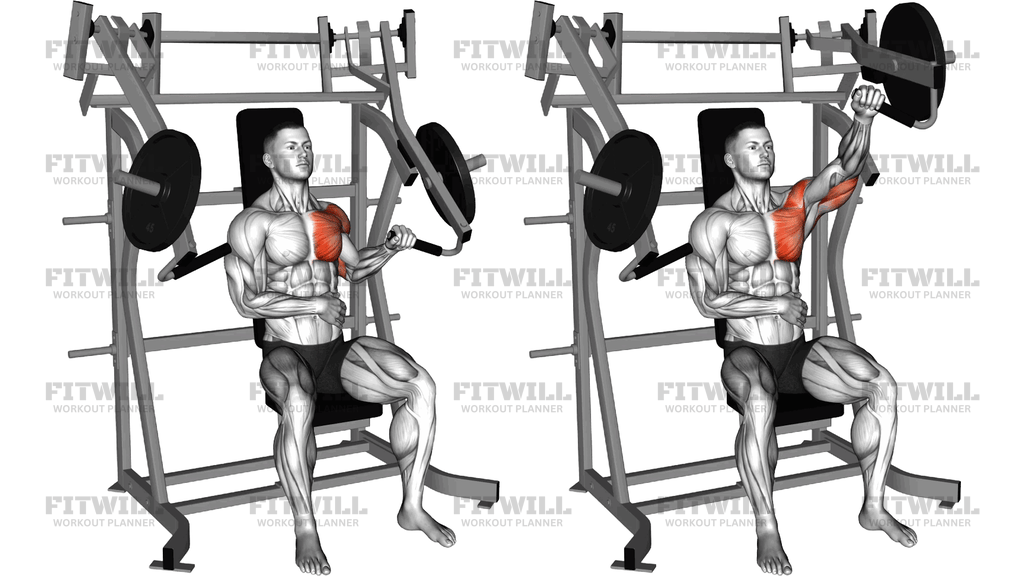
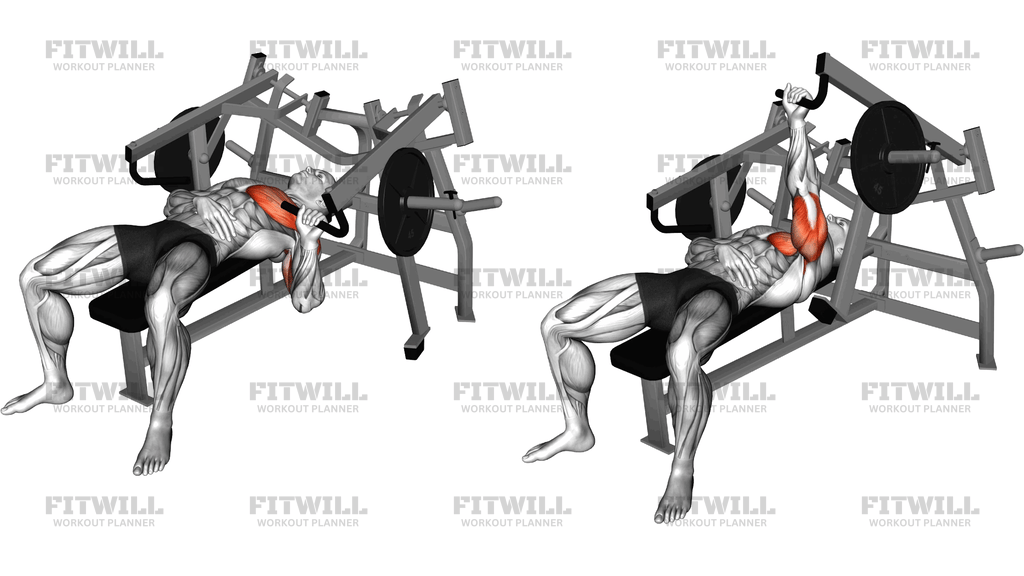
The Lever Lying Single Arm Full Chest Press is a plate-loaded machine exercise performed lying face up on a bench, pressing a single lever handle from just outside your chest up to full arm extension. Because the arm works alone, each side of your chest has to carry the load on its own, which quickly exposes and helps correct any strength difference between your left and right sides. The fixed path of the leverage arm also means you can push hard without needing to balance a free weight over your face.
The main target is the pectoralis major of the working side, with the triceps extending the elbow and the front deltoid assisting as the handle travels upward. Compared with a two-arm machine press, the single-arm version adds a mild anti-rotation demand: your trunk naturally wants to twist toward the working side, so your core stays quietly busy keeping your shoulders square on the bench.
Setup matters more than it looks. Because the machine's lever moves along a fixed arc, your bench position and shoulder height determine whether the handle lines up with your nipple line or drifts toward your neck. Lie far enough down the bench that the handle starts roughly level with the middle of your chest, and keep your feet planted so your torso doesn't shift as the weight moves.
Execution is straightforward but deserves attention. Grip the vertical handle with your working hand, elbow bent and tucked to roughly 45 degrees from your torso, then press along the machine's arc until the arm is nearly straight without locking the elbow hard. Lower under control until the handle returns to the start position near your chest, keeping tension rather than letting the weight stack or lever settle. Non-working hand can rest across your abdomen for balance.
This movement fits well as a main chest builder for lifters training alone, since the machine safely catches the load if you fail mid-rep. It is also a common choice in rehabilitation or return-to-lifting settings, where the guided path and one-sided loading let someone ease a previously injured side back into pressing. Bodybuilders often use it late in a chest session to isolate each pec when stabilizers are already fatigued.
Practically, keep the reps slow on the lowering phase, match sets between arms, and always start with your weaker side so it sets the workload. Stop the set if you feel the shoulder rolling forward or the elbow flaring wide at the bottom, and reduce the weight until the arc feels smooth from start to finish.
[ Workout Log & Planner ]
Put your next workout in Fitwill
Keep your plan and training log ready when you are.


Instructions
- Load the appropriate weight plates onto the lever arm's plate peg and set the bench so that when you lie face up, the handle sits roughly level with the middle of your chest on your working side.
- Lie back with your head, upper back, and hips in contact with the bench, feet flat on the floor, and take the vertical handle with your working hand using a firm overhand or neutral grip.
- Position your upper arm so the elbow is bent near 90 degrees and sits at about 45 degrees from your torso, just outside chest level; rest your free hand across your abdomen.
- Brace your core lightly and press your shoulders down into the bench so your torso stays square and does not twist toward the working side.
- Exhale and press the handle up along the machine's fixed arc, driving the elbow toward full extension while keeping the chest muscle engaged.
- Finish with the arm nearly straight overhead of your chest, but stop just short of slamming the elbow into a hard lockout.
- Inhale and lower the handle slowly along the same arc until it returns to the starting position just outside your chest, keeping the elbow under the handle rather than flaring wide.
- Pause briefly at the bottom without letting the lever weight settle, then begin the next repetition.
- Complete all reps on one arm, then reposition and match the same number of reps on the other side with the same weight.
- When finished, let the lever return to rest against its stop before releasing the handle and standing up from the bench.
Tips & Tricks
- Set your bench position before loading heavy: if the handle starts near your collarbone instead of mid-chest, slide down or up the bench until it lines up with your nipple line.
- A common mistake is letting the hips lift or the torso rotate toward the working arm as the weight gets heavy; drive the opposite shoulder blade into the bench to keep the chest square.
- Keep the elbow around 45 degrees from your ribs rather than flared to a full 90 degrees, which puts the shoulder in a friendlier angle at the bottom of the press.
- Control the eccentric for two to three seconds; because the lever is plate-loaded, dropping it fast makes the machine bounce and steals tension from the pec.
- Start each set with your weaker arm and match reps with the stronger side so the imbalance corrects over time instead of widening.
- Avoid fully locking the elbow rep after rep; a soft lockout keeps continuous tension on the triceps and chest and is easier on the joint.
- If your wrist bends backward under load, grip the handle deeper in the palm and line the knuckles up with the forearm rather than letting the joint collapse.
- Use it late in a chest workout when stabilizers are tired; the fixed lever path is more forgiving than a dumbbell press in that state.
- Do not release the handle while the lever is elevated; let the arm come to a full rest against the machine's stop before letting go.
Frequently Asked Questions
Which muscles does the Lever Lying Single Arm Full Chest Press work?
The pectoralis major of the working side is the primary mover, with the triceps extending the elbow and the front deltoid assisting through the press. The core also works lightly to keep your torso from rotating toward the loaded arm.
Why press one arm at a time instead of using both handles?
Single-arm pressing forces each side of the chest to work independently, which reveals and helps fix side-to-side strength differences. It also adds a small stability demand that two-arm pressing removes.
Is the Lever Lying Single Arm Full Chest Press suitable for beginners?
Yes, it is one of the safer ways to learn pressing because the lever travels on a fixed arc and the weight cannot fall on you if you fail a rep. Start with a light load to learn where the handle lines up with your chest.
How do I know my bench position is correct?
When you lie back and grip the handle, it should start roughly level with the middle of your chest, not up near your neck or down near your ribs. Adjust your position on the bench before adding serious weight.
Should my elbow stay tucked or flare out during the press?
Aim for roughly 45 degrees from your torso, between fully tucked and fully flared. A complete 90-degree flare at the bottom places more stress on the shoulder capsule without adding meaningful chest involvement.
What is the most common mistake on this machine?
Twisting the torso toward the working arm and bouncing the lever off the bottom position. Both errors shift work away from the pec; keep the shoulders square and lower the handle under control for two to three seconds.
What can I substitute if my gym has no leverage chest press?
A single-arm dumbbell bench press on a flat bench is the closest free-weight alternative, training the same one-sided chest pattern. A cable chest press with a single handle set at bench height also works well.
How should I breathe during the Lever Lying Single Arm Full Chest Press?
Exhale as you press the handle up and inhale as you lower it back toward your chest. Avoid holding your breath through the whole set, especially on heavier loads.
Is it safe to train to failure on this exercise?
It is safer than a barbell press because the lever arm comes to rest on its stop if your strength gives out. Even so, stop a rep short of failure when training alone, and never release the handle while the lever is elevated.