Criss Cross Arms Prayer Push
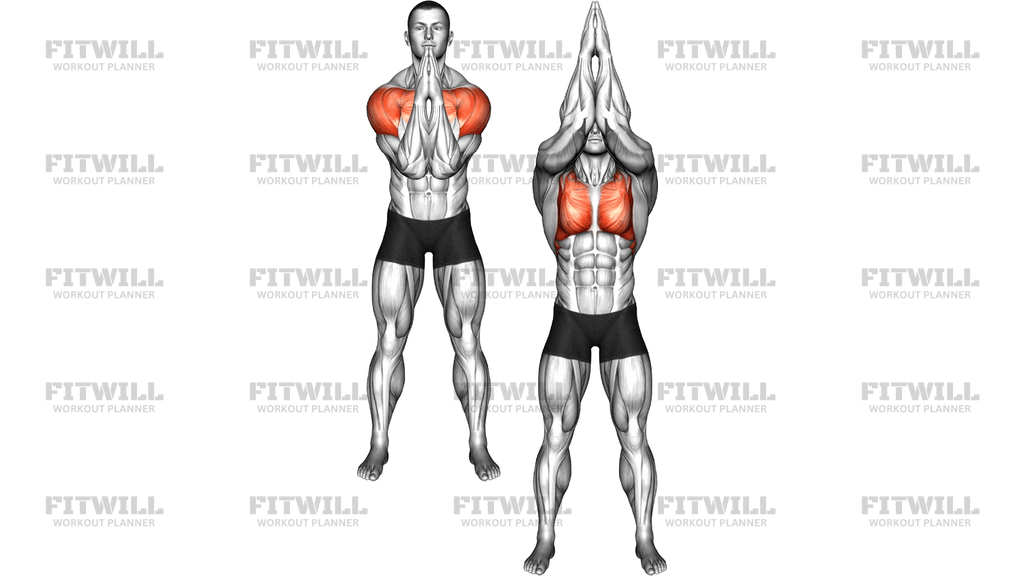
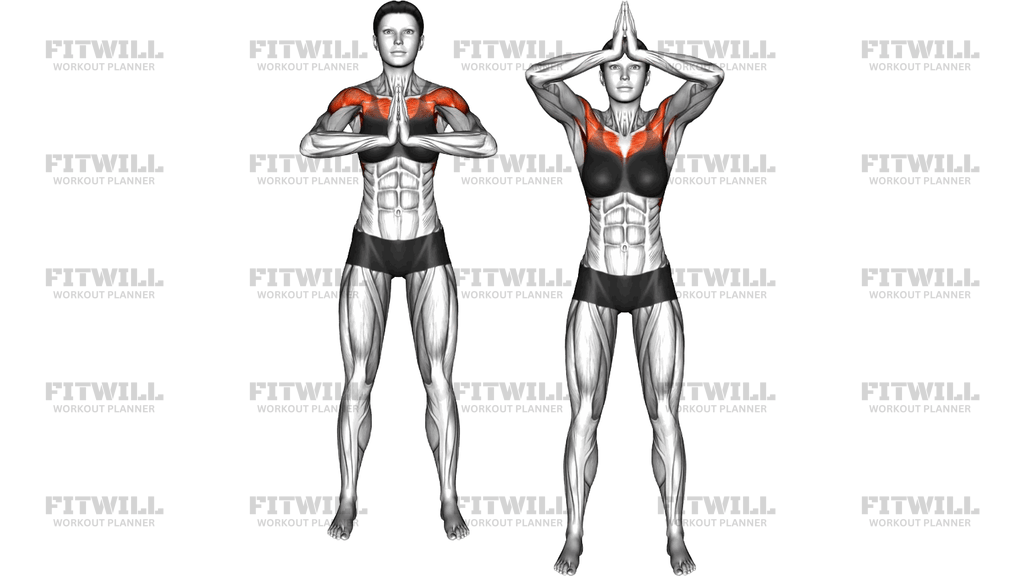
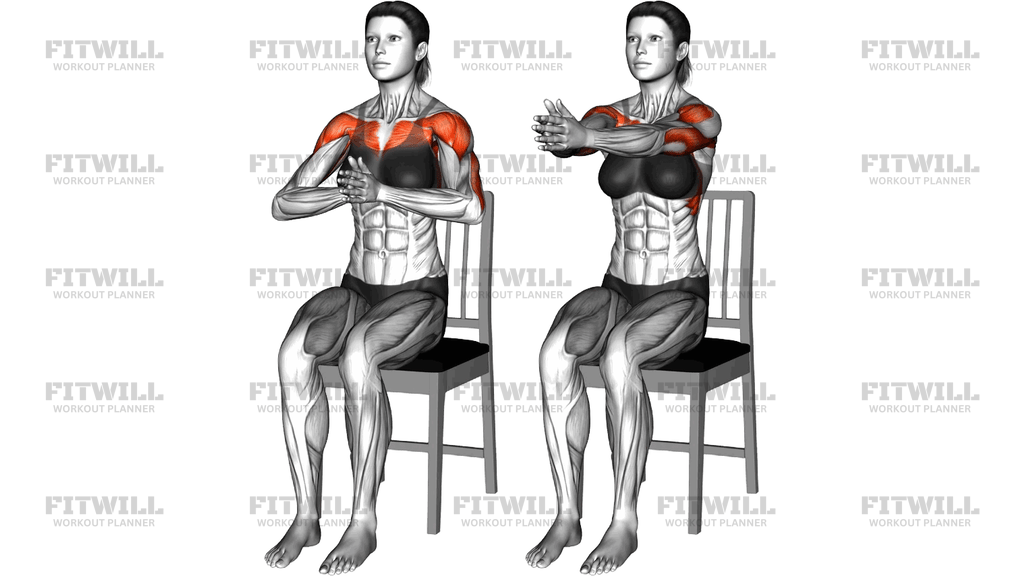
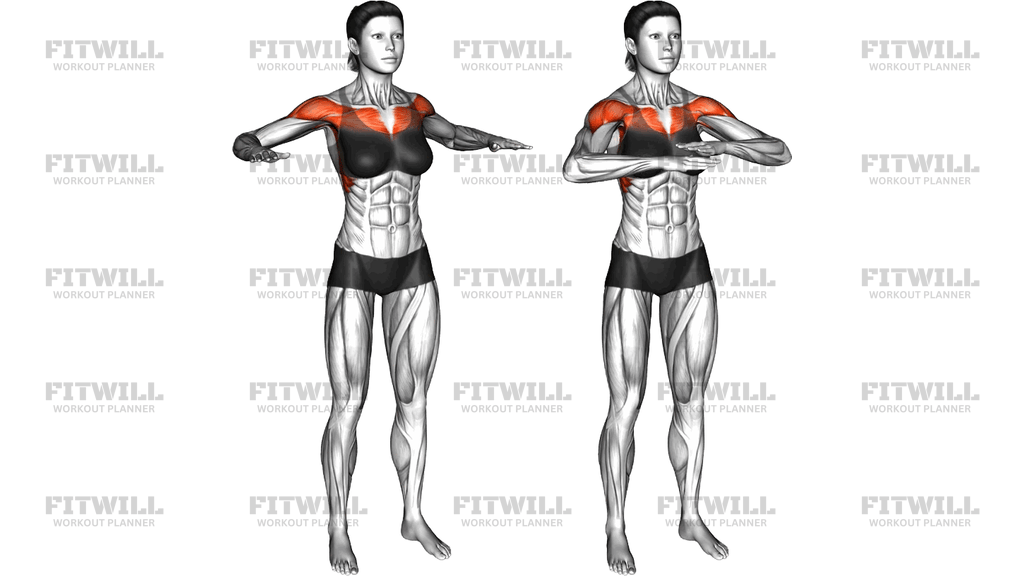
The Criss Cross Arms Prayer Push is a standing bodyweight movement that targets the chest through horizontal adduction, which is exactly the motion your pectoral muscles are built for: drawing the arms across the front of your body toward the midline. You begin with your arms open wide at shoulder height, then sweep them forward so they cross in front of your chest, finishing by pressing your palms firmly together in a prayer position at the center. The image shows the two key positions side by side, from the wide open arm start to the crossed, palm-pressed finish.
Because no equipment or external load is involved, the resistance comes entirely from intentionally squeezing your own palms against each other and controlling the sweep of your arms. That makes this a low-impact option for warming up the chest and front shoulders before pressing work, for activating the pecs in home workouts, or for training around shoulder discomfort that makes dumbbell flies uncomfortable. It is also a useful teaching tool for learning what a chest contraction actually feels like, which carries over to better pressing mechanics later.
Setup matters more than it looks. Stand tall with feet about hip-width apart, ribs stacked over your pelvis, and shoulders relaxed away from your ears. Keep your arms at shoulder height throughout, with a soft bend in the elbows, so the shoulders do the guiding and the chest does the squeezing. If your arms drift up toward your ears or down toward your waist, the tension shifts away from the pecs and into the neck and upper traps.
To execute well, sweep the arms forward and slightly inward so each hand crosses past the opposite side of your chest, then press the palms together hard for a beat before reopening. Think of the crossing and the squeeze as one connected action rather than two separate steps. The return should be just as deliberate as the crossing, resisting the urge to let the arms spring back open, because the eccentric portion is where much of the muscle work happens.
Common use cases include warm-up circuits, Pilates-style upper body sequences, postpartum or beginner upper body routines, and burnout finishers after bench or push-up work. Since the movement is self-paced and self-loaded, you control the intensity almost entirely through how hard you press and how slowly you move. A couple of sets of ten to fifteen controlled repetitions is usually enough to feel the chest working without fatigue that interferes with heavier training.
From a safety standpoint, this is a gentle movement, but the repetition volume can add up. Stop short of pinching or grinding sensations at the front of the shoulder, and reduce the crossing range if the shoulders feel cramped. Keep your torso square and avoid twisting through the spine to make the arms reach further; the crossing should come from the shoulders, not from rotation in the trunk.
[ Workout Log & Planner ]
Put your next workout in Fitwill
Keep your plan and training log ready when you are.


Instructions
- Stand upright with your feet hip-width apart, weight evenly distributed, and your torso tall with the ribs stacked over the hips.
- Raise both arms straight out to your sides until they are level with your shoulders, palms facing forward, elbows soft rather than locked.
- Draw your shoulder blades down and gently brace your core so your torso stays still and your lower back does not arch.
- Exhale as you sweep both arms forward and inward, crossing each hand past the opposite side of your chest at shoulder height.
- Press your palms firmly together at the center of your chest in a prayer position and hold the squeeze for one to two seconds.
- Keep your elbows slightly bent and your arms at shoulder height throughout the crossing; do not let them rise or drop.
- Inhale as you slowly reopen the arms back out to the wide starting position, resisting the movement instead of letting the arms fall open.
- Reset your posture between repetitions: shoulders down, core braced, chest tall, before starting the next cross.
- Complete ten to fifteen controlled repetitions, moving smoothly through the cross-and-release rhythm without rushing.
Tips & Tricks
- If you feel the work in your neck or upper traps, your arms have likely drifted above shoulder height; check them in a mirror and lower them until they sit level with your collarbone.
- The squeeze is the exercise. Pressing your palms together with real intent turns this from an arm swing into a genuine chest contraction, so treat the prayer press as the hardest part of every rep.
- Avoid hunching forward as your hands cross. Rounded shoulders let the pecs off the hook and shift tension to the front of the shoulder joint.
- If your shoulders feel pinched at the widest point of the opening phase, do not open the arms as far; stop a few inches short of full extension and keep constant tension.
- Keep a soft, consistent bend in the elbows. Straightening the arms on the way out turns the movement into a shoulder endurance exercise rather than a chest one.
- Do not twist your torso to make the hands cross further. The arms should cross in front of a square, still torso; rotation steals work from the chest and loads the lower back.
- Slowing the return is the easiest way to progress without adding equipment. Count two seconds on the way out and one second on the cross.
- If your palms slide against each other during the press, lightly interlace just your fingertips or press the heels of the hands together instead of the whole palm.
Frequently Asked Questions
What muscles does the Criss Cross Arms Prayer Push work?
The primary muscles are the pectorals of the chest, since crossing the arms in front of the body is their main action. The front shoulders assist the sweep, and the core works lightly to keep the torso upright and still.
Why do I press my palms together at the end of the movement?
Pressing the palms together creates self-generated resistance, forcing the chest to contract hard at the point of full adduction. Without the squeeze, the crossing is mostly just arm movement with little muscle challenge.
Is the Criss Cross Arms Prayer Push good for beginners?
Yes. It is standing, joint-friendly, and self-paced, which makes it a safe first chest exercise. Beginners should focus on keeping the arms at shoulder height and squeezing meaningfully rather than moving fast.
Can I use this as a warm-up before bench press or push-ups?
It works well as one, because it lightly loads the chest and front shoulders through a full adduction range without fatigue. One or two sets of ten to twelve reps before pressing work is plenty.
Why do I feel this more in my shoulders than my chest?
Usually the arms are held too high or the elbows are locked straight, which shifts effort to the front delts. Lower the arms to shoulder level, soften the elbows, and put more force into the palm press.
Should my arms fully cross past each other?
Aim for each hand to cross a few inches past the midline in front of the opposite side of the chest, but not so far that the shoulders feel cramped. Stop at the point where the pec squeeze feels strong and the shoulders stay comfortable.
How can I make the Criss Cross Arms Prayer Push harder without equipment?
Slow the tempo, especially on the reopening phase, pause two to three seconds at the palm press, or increase repetitions. Pressing harder against your own palms is the simplest way to raise the intensity.
What can I substitute if my shoulders bother me during this exercise?
Reduce how far the arms open and cross, or try a shallower cross with the hands stopping at the midline. Wall push-ups or a light resistance band chest fly with limited range are also gentler alternatives.
Should my torso move when my arms cross?
No. Keep the torso square and still so the crossing comes from the shoulders rather than rotation through the spine. Twisting reduces chest involvement and can strain the lower back over repeated reps.
How many sets and repetitions should I do?
Two to three sets of ten to fifteen slow repetitions is a solid working dose. If you are using it purely as a warm-up, one or two lighter sets before your main chest exercises is enough.