Cable Jack Hammer Pushdown
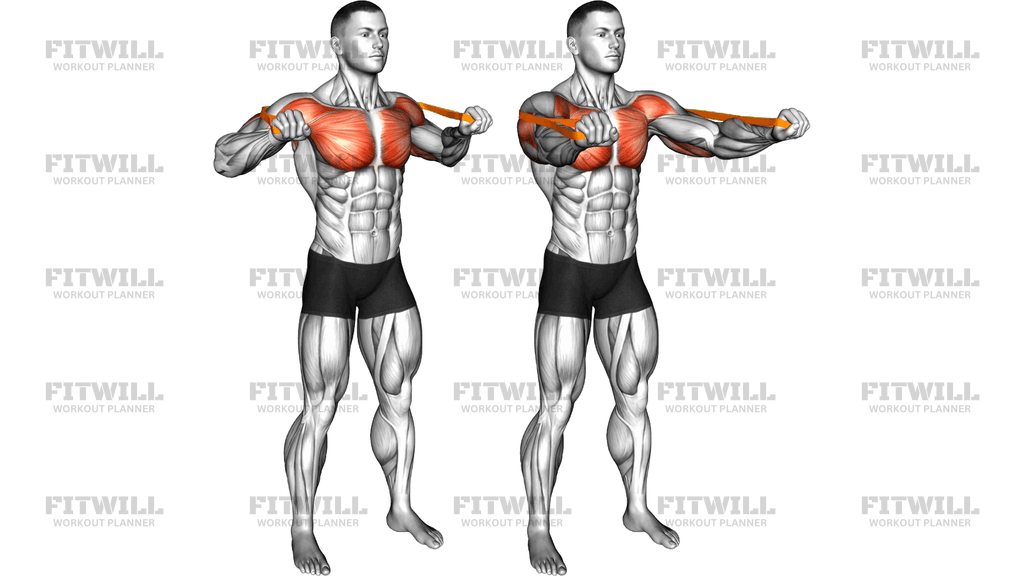
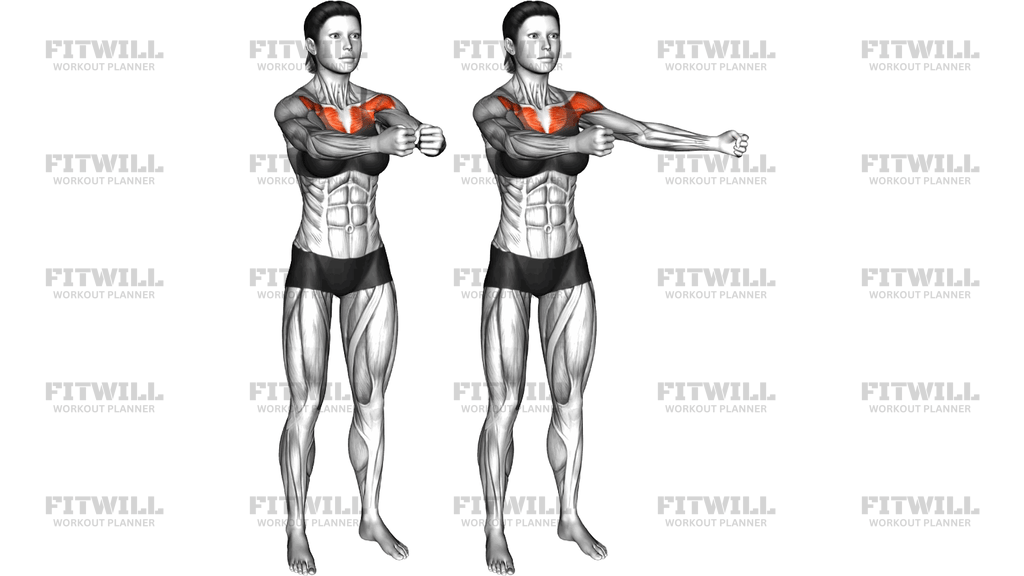
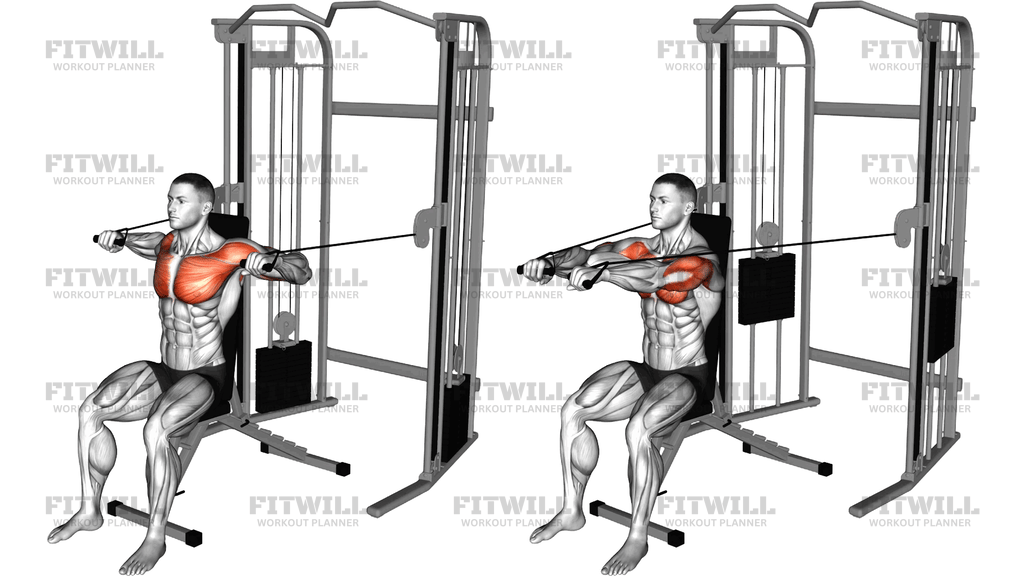
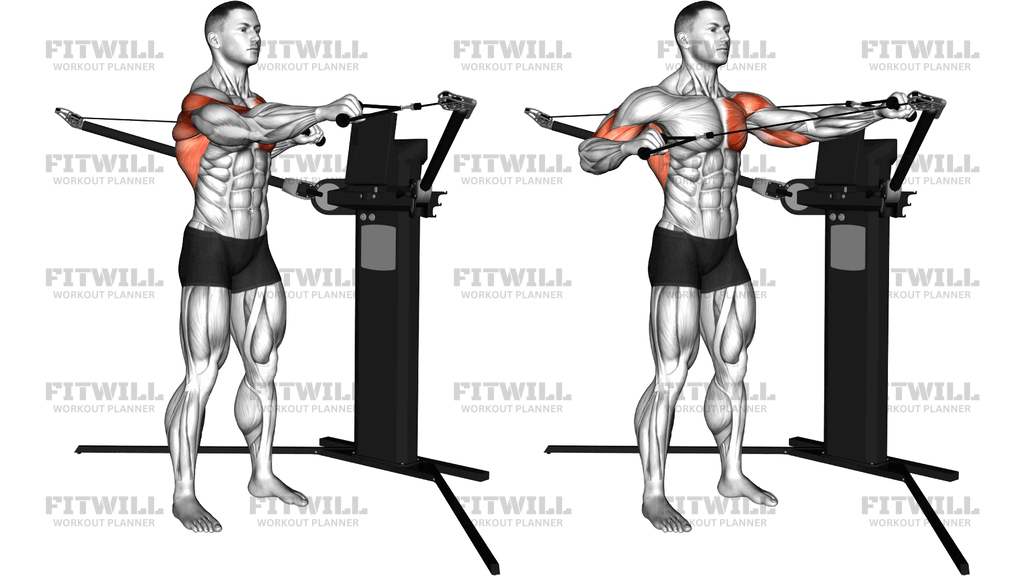
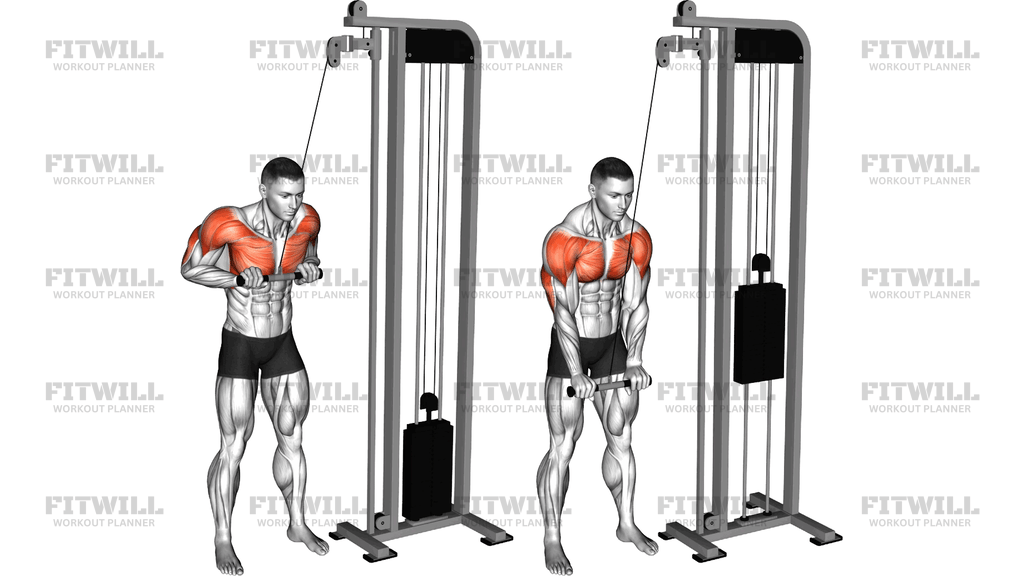
The Cable Jack Hammer Pushdown is a standing cable movement where you drive a high-pulley bar from chest height down to your thighs with straight, punching-style arms. Unlike a standard triceps pushdown, the elbows start bent at the torso and the whole arm travels through a wide downward arc, which shifts the work into the chest and front shoulders while the triceps finish the lockout. The constant cable tension from the high pulley makes this a smooth, joint-friendly way to load a pressing pattern without a bench.
This exercise suits lifters who want extra chest volume without heavy barbell or dumbbell pressing, and it is especially useful when benches are taken or when you want a strict, isolated feeling through the pecs. Because you are standing, your core and legs stabilize the whole time, so it also doubles as light trunk work. It fits well as a finisher after your main presses or as the focused movement on a cable-only training day.
The setup matters because the angle of the cable dictates where the resistance pulls. Facing a high pulley with the bar around chest height at the start, you have to lean slightly forward and brace so the cable pulls you upright. That slight forward lean, plus keeping the shoulders pulled down away from the ears, lets the chest do the driving instead of the traps or the low back arching under the load.
Execution is a hard downward punch: from the bent-elbow position, press the bar down and slightly forward in a smooth arc until the arms are fully extended near your thighs, squeezing the chest at the bottom. The elbows stay tight to the ribs through the press rather than flaring out. Return the bar under control until it is back at chest height with the elbows re-bent, resisting the cable the whole way up rather than letting it yank you back.
Common use cases include high-rep chest pump work, rehab-friendly pressing when shoulder range under a barbell is limited, and teaching beginners what it feels like to press with the chest instead of shrugging. Keep the load moderate; because the cable path pulls downward and slightly back, a weight that is too heavy tends to turn the set into a body-english lean and a triceps-dominant shove, which robs the chest of the work.
[ Workout Log & Planner ]
Put your next workout in Fitwill
Keep your plan and training log ready when you are.


Instructions
- Set the pulley of a cable machine to the highest position and attach a straight bar.
- Stand facing the machine, feet about hip-width apart, and take an overhand grip on the bar just outside shoulder width.
- Step back a short distance so the cable pulls slightly forward, then bring the bar up to lower-chest height with elbows bent and tucked against your ribs.
- Hinge forward a few degrees from the hips, brace your abs, and pull your shoulders down and back away from your ears.
- Press the bar down and slightly forward in a smooth arc, keeping the elbows close to your sides as the arms straighten.
- Finish with the arms fully extended near your thighs, palms facing down, and squeeze the chest hard for a beat at the bottom.
- Breathe out forcefully as you press down; do not hold your breath through the rep.
- Reverse the path slowly, bending the elbows again as the bar travels back to lower-chest height while you inhale.
- Complete all reps with the same lean and elbow position, then release the bar one hand at a time and let the stack settle before stepping away.
Tips & Tricks
- If your shoulders shrug up as you press, the weight is probably too heavy or your grip is too narrow — drop the load and reset the shoulder blades down before each rep.
- Do not let the elbows drift backward behind the torso; the jack hammer arc works because the elbows travel down alongside the ribs, not behind them.
- Keep the forward lean constant. Straightening upright mid-set turns the movement into a standing triceps press and unloads the chest.
- Think of throwing a controlled hammer strike downward rather than pushing a sled — a slightly faster, punchy concentric with a slow two-to-three second return fits this movement well.
- If your lower back arches at the bottom, squeeze the glutes and tuck the ribs; the cable pulls you into extension when the load is too high.
- Wrist position matters: keep the knuckles lined up with the forearm instead of letting the wrists fold back, or the forearms will fatigue before the chest.
- A shoulder-width grip hits the mid-chest cleanly; going much wider shifts stress toward the front shoulders and reduces the downward arc.
- Pause a full second at full extension each rep — most lifters rush the lockout and miss the strongest chest contraction of the range.
- Because there is no bench behind you, position yourself so a lost grip or slipping foot cannot pull you into the machine; keep a stable stagger-free stance.
Frequently Asked Questions
Which muscles does the Cable Jack Hammer Pushdown work?
The chest, particularly the sternal portion of the pectoralis major, is the primary mover, with the front shoulders assisting throughout the press. The triceps work hard at the lockout, and the core stabilizes your standing position against the cable pull.
How is the Cable Jack Hammer Pushdown different from a regular cable triceps pushdown?
A triceps pushdown keeps the upper arms pinned and only the elbows extend, while the jack hammer version drives the entire arm down in a wide arc from a bent-elbow start. That longer path and bigger arc shift the emphasis to the chest and front shoulders.
Is the Cable Jack Hammer Pushdown good for beginners?
Yes, as long as the weight stays light at first. The movement pattern is simple and the cable path guides the arms, but beginners should learn the forward lean and elbow position before adding load.
Why do I feel this more in my triceps than my chest?
That usually means the elbows are staying behind the torso or the lean has disappeared, turning it into a pushdown. Keep the elbows beside the ribs and let the arms sweep down and slightly forward so the chest controls the arc.
What can I substitute if my gym has no high pulley free?
A standing cable chest press with handles, or a single-arm version using a cable handle at shoulder height, covers a similar pressing pattern. Dumbbell standing floor presses or machine chest presses are reasonable non-cable alternatives.
Should I lean forward during the Cable Jack Hammer Pushdown?
A slight, consistent forward hinge from the hips is part of the correct setup because it lines your body up against the downward cable pull. Lean too far and the lower back takes over; stand too upright and the chest loses tension.
How many sets and reps work best for this exercise?
It responds well to moderate loads in the 10 to 15 rep range for two to four sets, usually as a finisher after heavier pressing. The constant cable tension makes high-rep pump work especially effective here.
Is it safe for my shoulders?
For most people it is a shoulder-friendly option because the arms stay close to the body and no bench restricts the path. If you have an existing shoulder issue, keep the range pain-free and stop before the top position where the cable stretches the front of the shoulder.
Can I use a rope attachment instead of a straight bar?
You can, but the rope allows the hands to drift and turn the movement inward, which changes the feel. The straight bar shown in the standard setup gives a fixed, stable hand path and makes the downward strike easier to keep symmetrical.