Kettlebell Clean And Push Press
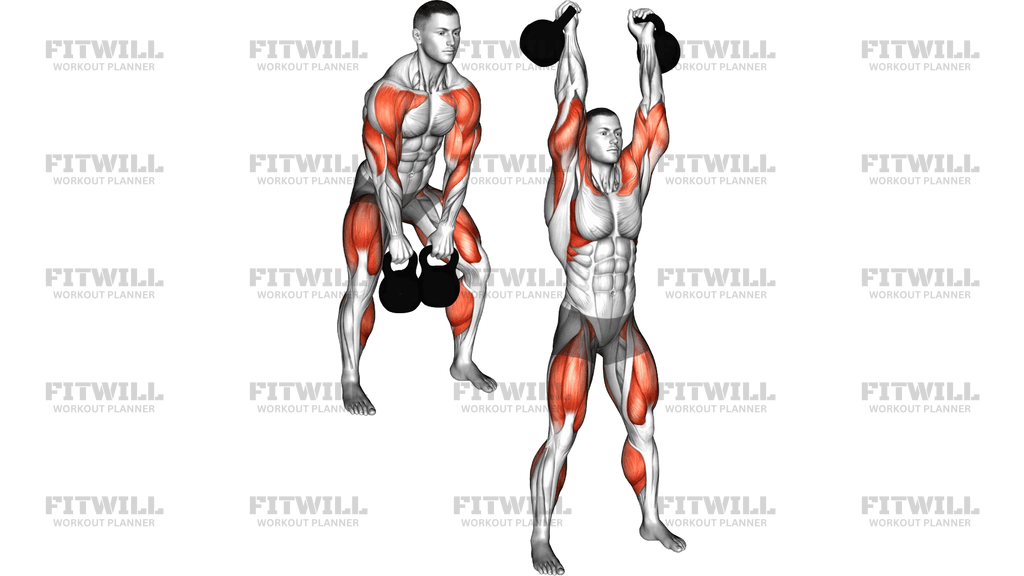
The Kettlebell Clean And Push Press is a full-body compound lift that chains two powerful movements together: a clean that brings the kettlebells from between your legs up to your shoulders, followed by a push press that drives them overhead using leg drive plus an arm press. Done with a kettlebell in each hand, as shown here, it demands coordinated hip power, a strong brace, and stable overhead lockout, making it one of the most complete double-kettlebell lifts you can train.
Because the push press borrows force from your hips and legs rather than pressing purely with your shoulders, you can handle heavier loads overhead than with a strict press. That makes the lift valuable for lifters who want to build overhead strength and power without excessive shoulder joint stress, and for anyone training athletic qualities like triple extension through the ankles, knees, and hips.
The movement trains a long list of muscles in one rep. The glutes, hamstrings, and quads generate the force for both the clean and the leg drive; the traps and shoulders control the kettlebells as they land on your chest and press overhead; the triceps finish the lockout; and the core works continuously to transfer force between your lower and upper body while keeping your ribs stacked over your pelvis.
Setup and positioning matter more in this lift than in most, because two kettlebells hanging between your legs create a lot of moving mass. A stance slightly wider than shoulder width, kettlebells tracked in line with your mid-foot, and a neutral spine in the hinge all protect your lower back and give the bells a clean path to your shoulders. Rushing the clean or catching the bells with loose wrists is the most common way this lift falls apart.
To execute it well, think of each rep as three crisp phases: hike the bells back and clean them to the rack position at your chest, dip a few inches and drive the floor away to pop the bells upward, then press and punch your hands through to a locked-out overhead position with the kettlebells resting on your forearms. Bring the bells back to your shoulders under control, then re-clean them to the start for the next rep.
This lift fits well into strength circuits, conditioning intervals, and general power development. Beginners should start with one kettlebell to learn the clean and the dip-and-drive timing before adding the second bell, and most lifters get the best results from moderate weights performed for sets of 5 to 10 controlled reps rather than maximal grinding attempts.
[ Workout Log & Planner ]
Put your next workout in Fitwill
Keep your plan and training log ready when you are.


Instructions
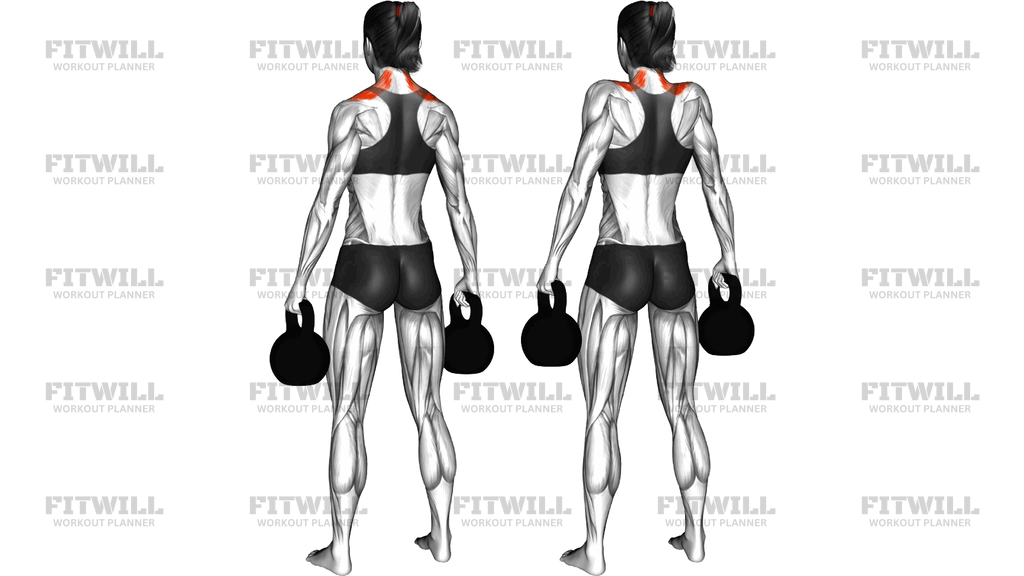
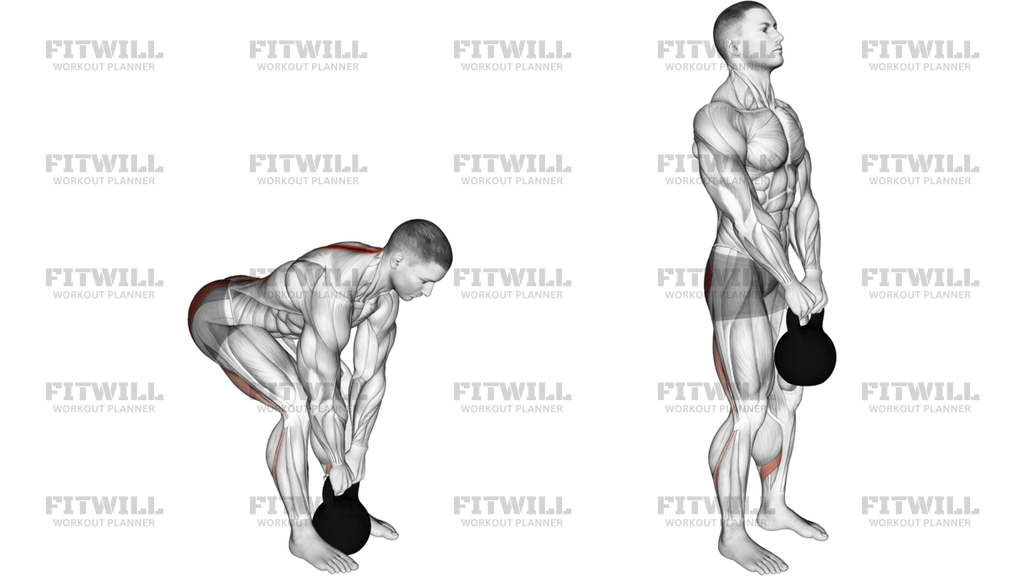
- Set two kettlebells on the floor between your feet, which are shoulder-width apart, with the handles angled so you can grip them comfortably.
- Hinge at your hips, bend your knees, grasp both handles firmly, and pull your shoulders back so your spine stays neutral rather than rounded.
- Hike both kettlebells back between your legs like a football snap, keeping your weight on your heels and the bells close to your groin.
- Drive your hips forward explosively and guide the kettlebells up the front of your body, letting them rotate around your wrists so they land softly on the outside of your forearms at shoulder height.
- Set the rack position: elbows tucked down by your ribs, wrists straight, forearms vertical, and your core braced with ribs pulled down.
- Take a breath into your belly, dip a few inches at the knees, then violently extend your hips and legs to launch the kettlebells upward.
- As the bells rise, press with your arms and punch your palms toward the ceiling until your elbows are locked out and the kettlebells rest stacked on your forearms overhead, biceps beside your ears.
- Lower the kettlebells back to the rack position by bending your elbows and absorbing the weight with a small knee dip.
- Exhale at the top of the press and inhale at the rack; if you need a reset, take a fresh breath before the next dip.
- For the final rep, re-clean the kettlebells from the rack back down between your legs, hinge over, and set them quietly on the floor.
Tips & Tricks
- Do not let the kettlebells flip over and slam your forearms during the clean; keep them close to your body and rotate your hands around the handles so the bells settle on the outside of your forearms.
- A common fault is pressing with the arms before the legs finish extending. Wait for the hip drive to lift the bells, then add the press — the timing is what makes it a push press instead of a slow strict press.
- If your lower back rounds in the hike position, shorten the range: bend the knees slightly more and hinge back further instead of reaching the bells forward.
- Keep your ribcage down and glutes squeezed at the overhead lockout. If you arch your lower back to finish the press, the weight is likely too heavy or your shoulder mobility is limiting you.
- Avoid catching the clean with floppy wrists. Tight wrists and a firm grip let the kettlebells rest on your forearms instead of pulling your shoulders forward.
- Keep the bells from drifting out in front of you during the press; they should travel up in a tight vertical path so your elbows track under the handles.
- Use the dip to absorb the bells on the way down as well as to launch them on the way up. Catching two kettlebells with stiff knees transfers a lot of shock to your spine and elbows.
- Start with lighter bells than you think you need. Double kettlebell work doubles the grip and stability demand, and technique breakdown shows up fast with heavy pairs.
- If one bell tends to lag behind the other, slow down and clean both deliberately for a few sets, making sure each hand meets the handle at the same time.
Frequently Asked Questions
Which muscles does the Kettlebell Clean And Push Press work the most?
The shoulders and traps handle the overhead work, while the glutes, quads, and hamstrings generate the power for the clean and the leg drive. The triceps, forearms, and core work hard throughout to press, grip, and stabilize.
Can beginners do the Kettlebell Clean And Push Press?
Yes, but start with a single kettlebell and learn the clean and the push press as separate movements first. Once both feel comfortable, combine them and only then progress to holding a bell in each hand.
Why use a push press instead of a strict press with kettlebells?
The dip and hip drive let your legs contribute force, so you can move heavier kettlebells overhead than a strict press allows. It also trains explosive triple extension, which carries over well to jumping and sprinting.
How do I stop the kettlebells from banging on my forearms during the clean?
Keep the bells close to your body and think of punching your hands through the handles as they rise, letting the kettlebells rotate around your wrists rather than flipping over them. Loose, floppy wrists are the usual cause of hard landings.
What is the correct stance for the double Kettlebell Clean And Push Press?
Stand with your feet about shoulder-width apart or slightly wider so both kettlebells fit between your legs without hitting your knees. Keep your weight over your mid-foot and heels during the hinge and the dip.
Is it a mistake to let my lower back arch at the top of the press?
Yes, arching to finish the lockout shifts stress away from your shoulders and onto your spine. Squeeze your glutes, pull your ribs down, and if you still cannot get a vertical lockout, reduce the weight or work on overhead mobility.
What can I substitute if I only have one kettlebell?
Perform the Kettlebell Clean And Push Press with a single bell, completing all reps on one side before switching hands. You can also substitute a barbell or dumbbell push press, though the clean mechanics differ.
How many reps and sets should I use?
For strength and power, work in sets of 5 to 8 reps with a weight you can control for every rep. For conditioning, lighter bells for 10 to 15 reps or timed intervals work well, as long as your technique holds up.
Is the Kettlebell Clean And Push Press safe for my shoulders?
When performed with controlled reps, a tight rack position, and weights you can manage, it is generally shoulder-friendly because the legs do much of the work. If pressing overhead causes pinching or pain, stop and address the limitation before continuing.
Should I breathe during the lift?
Inhale and brace before the dip, exhale forcefully as you press overhead, and take a fresh breath at the rack before the next rep. Holding your breath for multiple reps in a row will fatigue your core and spike your blood pressure.