Butterfly Yoga Flaps
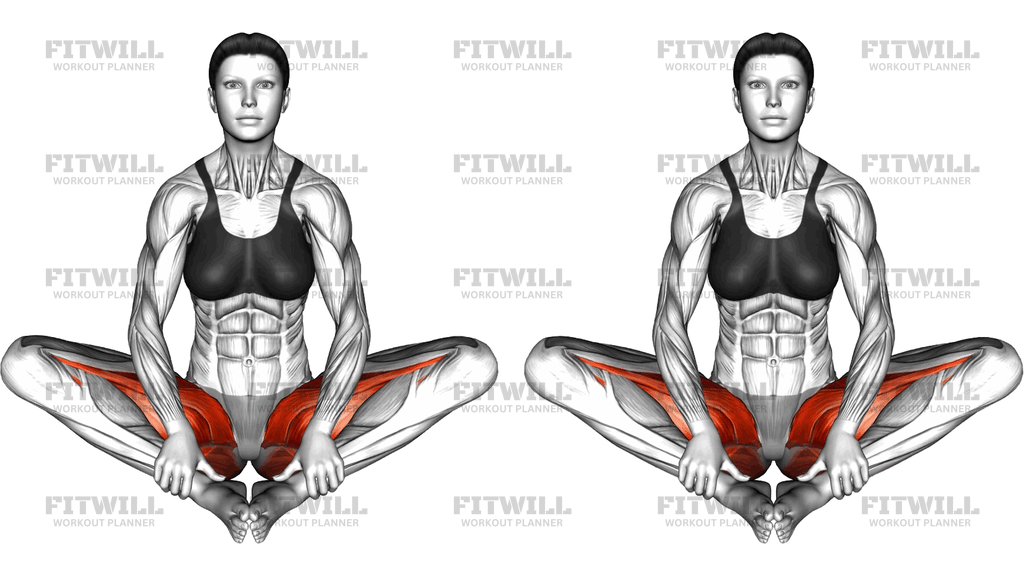
Butterfly Yoga Flaps are a seated, dynamic hip-opening movement drawn from the classic bound angle position in yoga. You sit tall with the soles of your feet pressed together and your knees dropped out to the sides, then gently flap the knees up and down like wings. It is one of the simplest ways to bring blood flow and movement into the inner thighs and hips, and it requires nothing but a bit of floor space.
This movement is useful for almost anyone who sits for long hours, runs, cycles, or lifts, because those activities all tend to leave the adductors and hip rotators feeling tight and heavy. It is a staple in yoga classes, general warm-ups, and post-workout mobility routines. Because it is done seated and unloaded, it is also approachable for beginners and for people who find standing hip stretches unstable.
The main targets are the inner thigh muscles on the inside of each thigh, along with the deep hip rotators and the muscles around the outer hips that control the knees as they lower and lift. Your lower back and core work quietly in the background to keep you sitting upright instead of slumping as the legs move.
Setup matters more than most people expect. The height of your hips relative to your knees decides whether this feels like a comfortable release or a grind. If your hips are tight, sitting directly on a hard floor rounds your lower back and pulls the stretch into places it does not belong. Elevating your hips on a folded blanket, cushion, or yoga block lets your pelvis stay neutral and the knees drop naturally.
To execute it well, hold your feet or ankles rather than pushing on your knees, keep your spine long, and let the knees move in a slow, rhythmic arc. The flap is a pulsing release, not a forcing action. Pressing the knees down hard with your hands is the most common mistake and usually just makes the hips guard and tense up.
Use Butterfly Yoga Flaps as a warm-up before squats, lunges, or any lower body session, as a gentle mobility break during the workday, or as part of a cooldown. Keep the movement smooth and pain-free, and treat mild inner-thigh sensation as the intended feeling while any sharp pulling in the groin is your signal to back off.
[ Workout Log & Planner ]
Put your next workout in Fitwill
Keep your plan and training log ready when you are.


Instructions
- Sit on the floor or on an exercise mat with your legs extended in front of you, then let your knees fall open and draw the soles of your feet together so they touch.
- Slide your heels in toward your pelvis to a distance that feels comfortable, forming a diamond shape with your legs, and clasp your feet or ankles with both hands.
- Sit up on your sitting bones and lengthen your spine, resting your shoulders down away from your ears; sit on the edge of a cushion or yoga block if your back rounds.
- Take a breath in, and as you exhale, gently guide both knees a little closer toward the floor using your hips, not your hands.
- Begin the flap: slowly release the knees to float upward an inch or two, then let them lower again in a smooth, controlled rhythm, like butterfly wings.
- Keep the movement driven by the hips, with your hands only cradling the feet, and maintain contact between the soles of your feet throughout.
- Continue flapping for 20 to 40 seconds, breathing steadily and letting each exhale soften the inner thighs a little more.
- On your final rep, let the knees rest at their comfortable lowest point, hold for a breath or two, then slowly bring your knees together and extend your legs to reset.
- Shake out or gently rotate your legs between sets if you plan to repeat the movement.
Tips & Tricks
- Do not press down on your knees or thighs with your hands. Pressing forces the hips and can strain the groin; guiding the movement from the hips gives a better release.
- If your knees sit high off the floor, do not chase them down. Distance from the floor is not the goal; many people with healthy hips never touch the floor in this position.
- Roundness in the lower back is the clearest sign your hips need more height. Sit on a folded blanket or block so the pelvis tips slightly forward instead.
- Keep your heels a comfortable distance from your body. Pulling the feet too close in tightens the adductors sharply and turns the flap into a strain.
- Move slower than feels necessary. Fast bouncing triggers a protective reflex in the inner thighs, while slow flaps let the hips actually let go.
- Keep your feet acting like a hinge: the soles stay pressed together and the knees do the moving, rather than the feet rocking or separating.
- If you feel a pinch deep in the front of the hip, slightly reduce how far the knees lower rather than pushing through it.
- Warm hips flap better than cold ones. A short walk or a few leg swings before this movement makes the range noticeably easier.
- Keep your gaze forward and shoulders relaxed; hunching over your feet shortens the spine and reduces the hip range you can access.
Frequently Asked Questions
What muscles do Butterfly Yoga Flaps work?
The movement primarily targets the inner thighs (the adductors) and the deep rotators of the hips, with the glutes and outer hip muscles helping control the knees as they lift and lower. Your core and lower back stay lightly active to keep you sitting tall.
Are Butterfly Yoga Flaps a stretch or a strength exercise?
They are best described as dynamic mobility work. The rhythmic flapping repeatedly takes the inner thighs into a stretch and back out, which makes them a better fit for warm-ups and movement breaks than for building strength.
My knees are far from the floor. Am I doing Butterfly Yoga Flaps wrong?
No. How close your knees get to the floor depends on your hip structure and current flexibility, not on effort. Work within your own range and let the knees move wherever they naturally sit.
Should I hold my feet or my ankles during Butterfly Yoga Flaps?
Either works. Holding the tops of your feet gives you more leverage to sit tall, while holding your ankles can feel less intense. Avoid pressing down on your knees with your hands either way.
Is it normal to feel Butterfly Yoga Flaps in my groin?
A gentle sensation along the inner thigh is expected. Sharp pain in the groin or a pinching feeling at the front of the hip is not; reduce the range, move more slowly, or sit higher on a cushion and see if it settles.
Can beginners do Butterfly Yoga Flaps?
Yes, it is one of the most beginner-friendly hip movements because it is seated, unloaded, and self-paced. Sitting on a block or folded blanket from the start makes it even more accessible.
When is the best time to use Butterfly Yoga Flaps in a workout?
They work well as a warm-up before squats, lunges, running, or any lower body session, and also as a gentle mobility break during long periods of sitting. For a deeper release, slow the flaps down and add a longer hold at the end.
What can I do if sitting on the floor is uncomfortable for Butterfly Yoga Flaps?
Elevate your hips on a yoga block, cushion, or folded blanket so your knees sit at or below hip height. If kneeling or deep hip bending is uncomfortable, a reclined version with the soles of the feet together and knees gently swaying is a reasonable substitute.
Should I bounce my knees quickly or move slowly?
Move slowly and smoothly. Quick, forceful bouncing tends to make the inner thighs tense up protectively, while controlled flaps allow the hips to release gradually over the set.