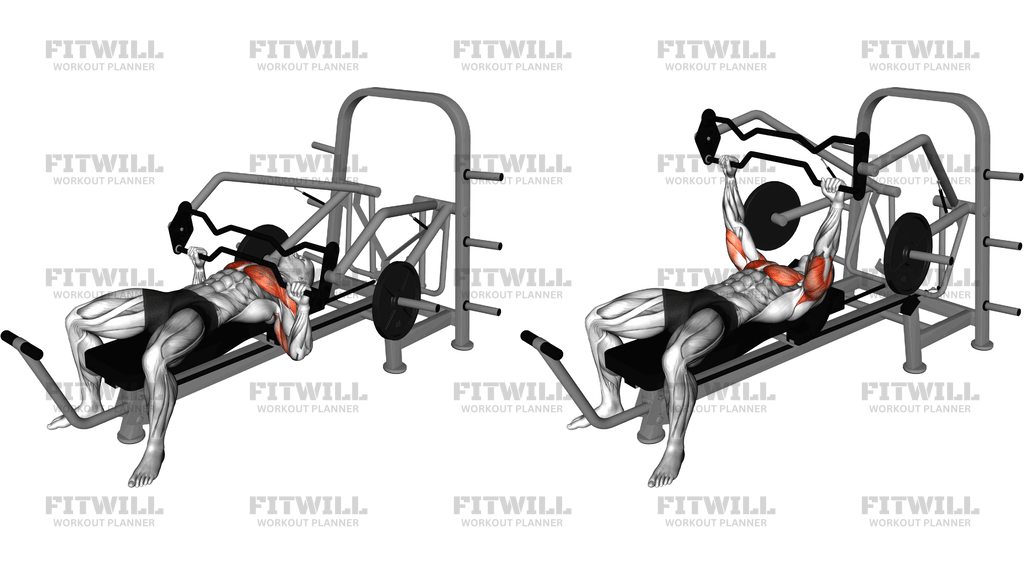
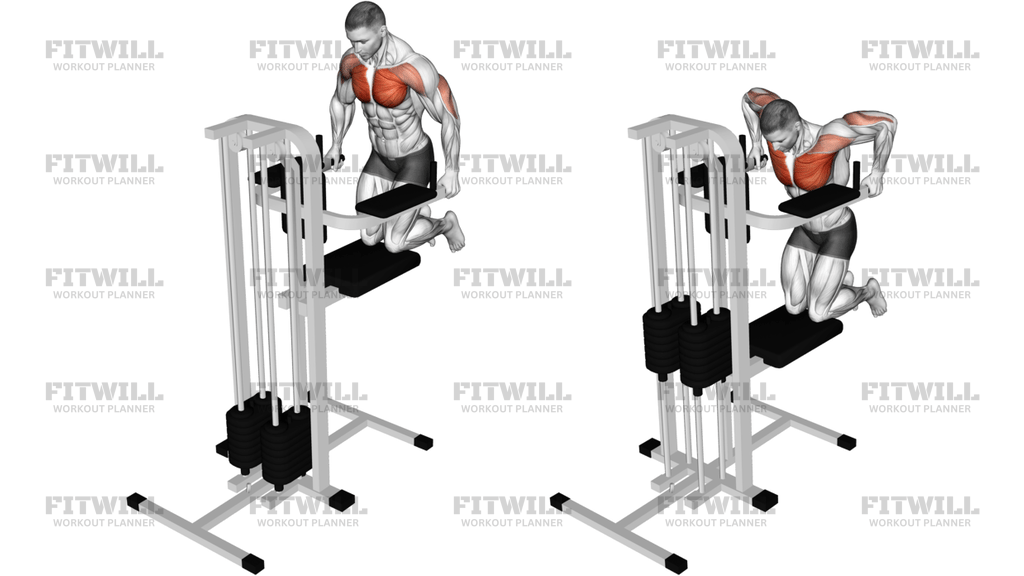
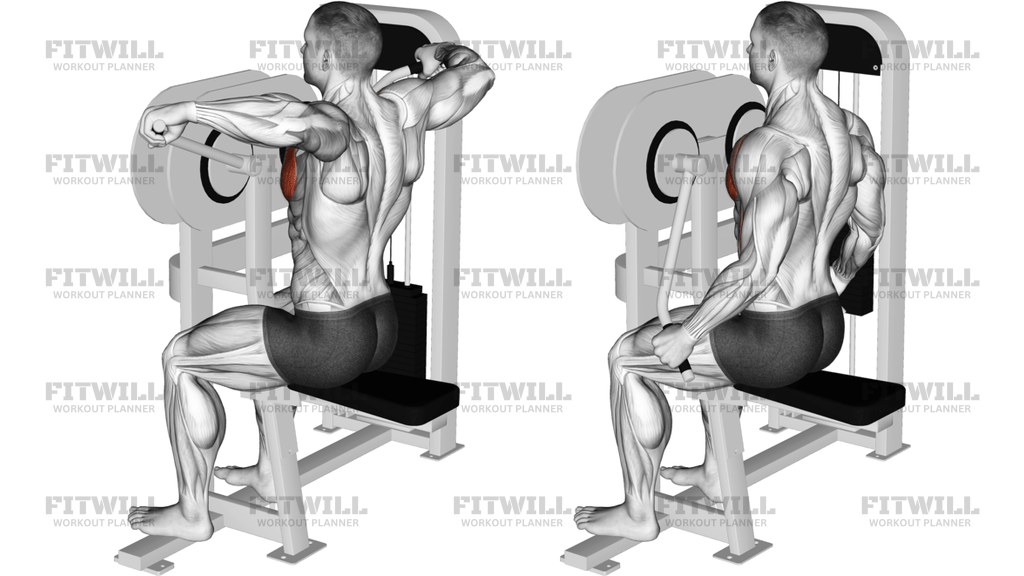
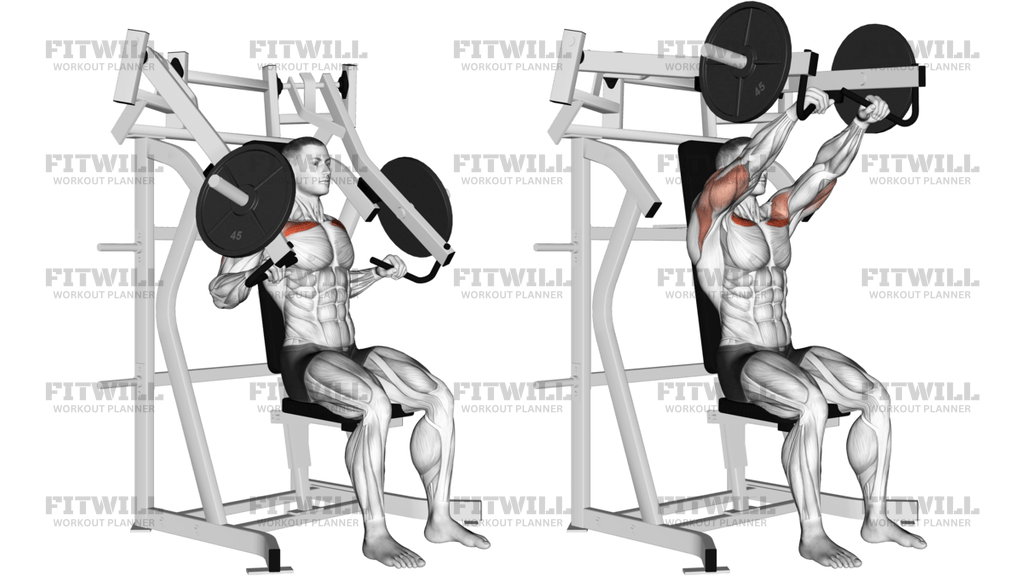
Lever Seated Fly (Version 2)
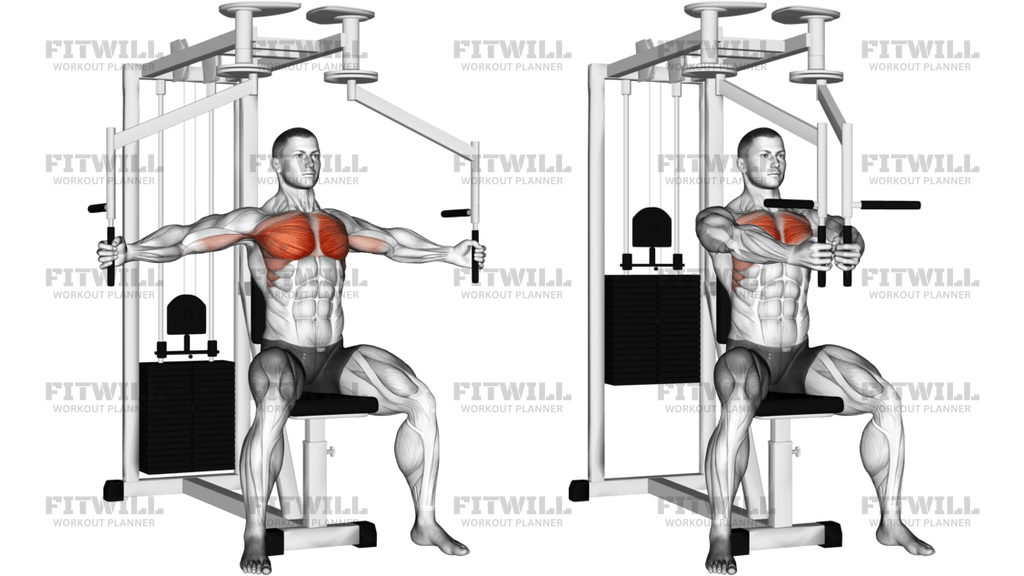
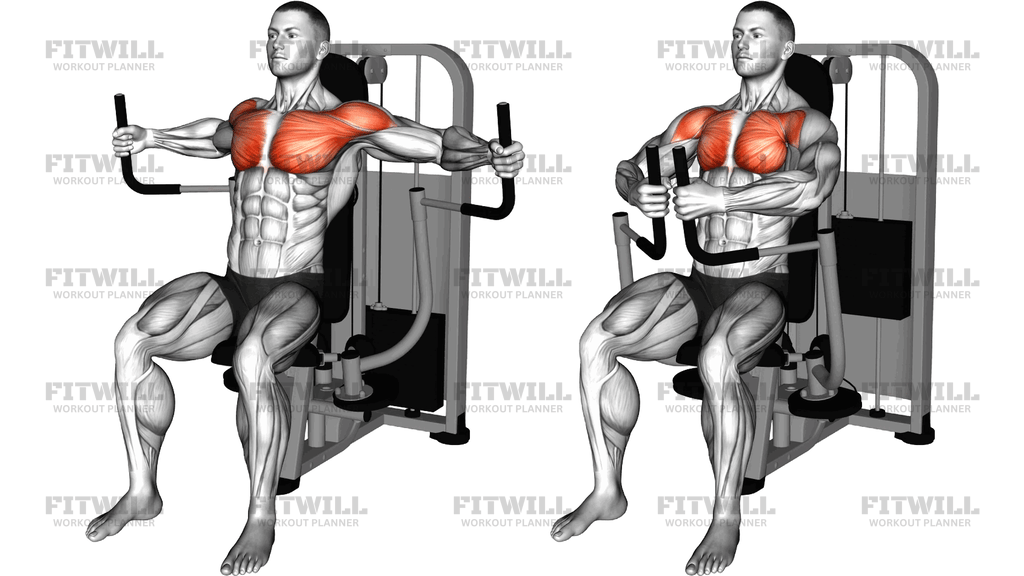
Lever Seated Fly (Version 2) is a machine-based chest isolation exercise performed on a seated leverage fly station with vertical handles mounted on swinging arms. You sit with your back against the upright pad, start with your arms out wide at chest height, and squeeze the handles together in front of your torso until they nearly meet, then let the arms track back out to the wide position under control. Because the levers pivot around a fixed axis, the resistance stays on the chest through the whole arc instead of dropping off the way it can with dumbbells.
The exercise targets the pectoralis major across both the sternal and upper fibers, which is why the highlighted chest work runs the full width of the torso in the finishing position. The front delts assist as the arms come forward, and the muscles that stabilize the shoulder blade, particularly the serratus anterior and the muscles around the scapula, work to keep the shoulder joint in a safe position as the arms sweep. It trains horizontal adduction of the shoulder, which is the defining action of the chest muscles.
This movement suits a wide range of lifters. Beginners get a guided path of motion and a comfortable seated position, so they can learn what a chest contraction feels like without having to coordinate free weights. More experienced lifters use it as a finishing movement after presses, when the chest is fatigued but the triceps are already spent and pressing would break down first. It is also a common choice in rehab-friendly or solo training settings because there is no bar to fail with and the weight stack can be set precisely.
Setup quality determines how well the machine treats your shoulders. Adjust the seat so the handles line up roughly with mid-chest and your feet rest flat on the floor with knees bent around 90 degrees. Press your upper back and hips firmly against the backrest before you grip the handles; if your torso drifts forward or your shoulders roll toward the handles, the chest loses tension and the front of the shoulder takes over.
To execute it well, take a neutral grip on the vertical handles with a soft elbow bend, exhale, and bring the handles together in a smooth, arcing path in front of your chest. Pause briefly when the hands meet or nearly meet, then inhale as you let the arms travel back to the wide start without letting the weight stack slam down. The range should feel like a wide, wrapping hug rather than a press.
Keep the effort honest and moderate at first. The stretch at the outer end of the movement is valuable for the chest, but forcing extra range by letting the shoulders be pulled forward or the elbows flare behind the torso is where strain shows up. Two to four sets of 10 to 15 controlled reps near the end of a chest session is a practical way to use this exercise.
[ Workout Log & Planner ]
Put your next workout in Fitwill
Keep your plan and training log ready when you are.


Instructions
- Adjust the seat height of the leverage machine so the vertical handles sit at mid-chest level when you are seated.
- Sit down with your back flat against the backrest, hips pressed into the seat, and place both feet flat on the floor about hip-width apart.
- Grip each vertical handle with a neutral grip, palms facing inward, and set a soft, fixed bend in both elbows.
- Brace your core lightly and retract your shoulder blades slightly so your upper back stays in contact with the pad throughout the set.
- Exhale and sweep the handles forward and inward in a smooth arc until your hands meet or nearly meet in front of your chest.
- Squeeze the chest hard for a brief pause at the point where the handles come together.
- Inhale and slowly let the arms travel back out along the same path until you feel a comfortable stretch across the chest, keeping the weight stack from slamming.
- Keep the elbows at roughly chest height the entire time; do not let them drop toward your ribs or rise above shoulder level.
- Complete your reps with the same tempo, then release the handles carefully, letting the levers settle before you stand up.
Tips & Tricks
- If your shoulders roll forward at the outer end of the fly, reduce the weight slightly; the machine should not pull your shoulder blades off the backrest.
- Think about driving the handles together with your elbows, not your hands, which keeps the chest doing the work instead of the forearms and biceps.
- Avoid locking or straightening the arms during the sweep; the fixed elbow bend keeps tension on the pecs and away from the elbow joints.
- If you feel pinching at the front of the shoulder, raise the seat slightly or shorten the range so the handles stop a bit earlier on the way back.
- Do not hunch or round the upper back to finish the squeeze; if you have to lean forward to close the handles, the load is too heavy.
- A one-second pause when the hands meet is worth more than momentum, because the fully shortened chest position is where this machine differs most from pressing.
- Keep the handles at nipple-to-collarbone height; if the arms drift low, the front delts and lats start contributing instead of the chest.
- Use this machine after presses rather than before, when the triceps are already fatigued and the chest can be isolated without them interfering.
Frequently Asked Questions
Which muscles does the Lever Seated Fly (Version 2) work?
The chest is the primary muscle, with the front delts assisting during the squeeze. The muscles that stabilize the shoulder blade and the upper arms also work to hold position throughout the arc.
How is the Lever Seated Fly (Version 2) different from a dumbbell fly on a bench?
The machine's levers keep resistance on the chest through the entire range, including the squeezed position where a dumbbell fly loses tension. The seated, supported backrest also removes the stability demands of lying on a bench.
Is the Lever Seated Fly (Version 2) good for beginners?
Yes, it is one of the friendliest ways to learn chest isolation because the machine fixes the path of motion and there is no free weight to control. Start light and focus on feeling the chest contract rather than moving maximum load.
What seat height should I use on the Lever Seated Fly (Version 2)?
Set the seat so the handles line up with mid-chest when your feet are flat on the floor. If the handles sit near your shoulders or your waist, the shoulder joint is loaded at an awkward angle.
Why do I feel this exercise in my front shoulders instead of my chest?
The front delts take over when the elbows sit too high or the weight is heavy enough that you push instead of sweep. Lower the load slightly and cue yourself to bring the elbows toward each other rather than pushing the handles.
Can the Lever Seated Fly (Version 2) replace chest presses?
No, it should not fully replace pressing, because flies isolate horizontal adduction while presses also load the triceps and allow heavier overall loading. Use the fly as a complement or finisher to build a complete chest session.
How far back should I let the handles go during the Lever Seated Fly (Version 2)?
Return until you feel a clear stretch across the chest while your upper back stays against the pad. If your shoulders are being dragged forward or you feel pinching at the front of the shoulder, stop the return earlier.
What rep range works best for the Lever Seated Fly (Version 2)?
Because it is an isolation movement with a fixed path, moderate loads for roughly 10 to 15 reps per set work well. Slow the return phase rather than adding weight if the set feels too easy.
Is it safe to use the Lever Seated Fly (Version 2) with a shoulder issue?
The guided path and adjustable seat make it easier on the shoulders than many free-weight options, but comfort varies by individual. Keep the range pain-free, use light weight, and check with a qualified professional if you have a current or recent shoulder problem.