Standing Balance Single Leg Lifts
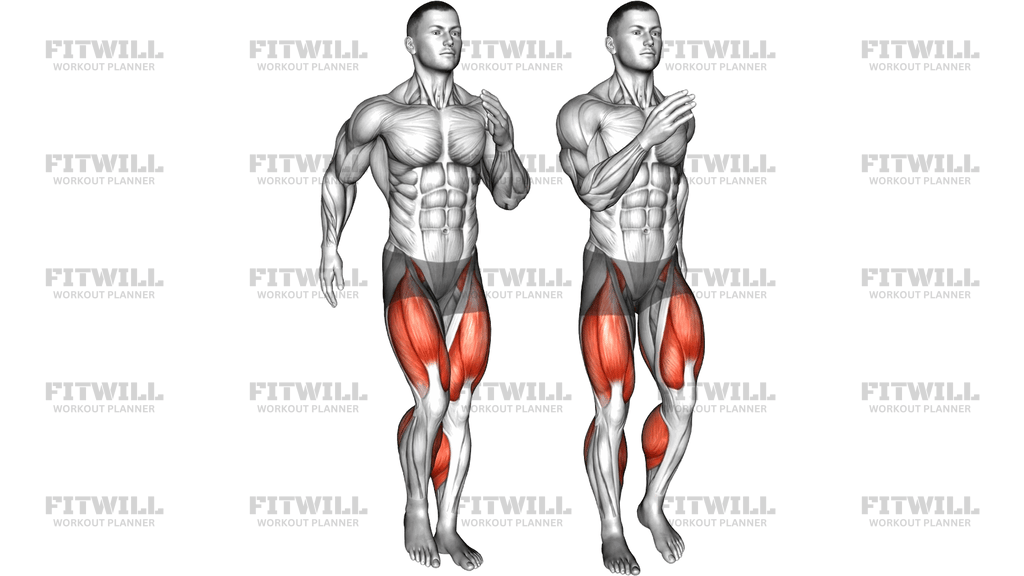
Standing Balance Single Leg Lifts are a body-weight balance exercise performed from a single-leg stance. You stand on one leg with a slight forward lean, then lift the free leg up behind your body before lowering it back down under control. The highlight of the movement is the standing leg: your glutes, hip, and ankle muscles work the entire time to keep you steady while the free leg moves, which makes this a balance drill and a hip-strengthening exercise at the same time.
This movement is especially useful for runners and anyone recovering their single-leg stability after time away from training. Walking, running, climbing stairs, and changing direction all happen one leg at a time, so the ability to hold your pelvis level over one supporting leg carries over directly to daily movement. It also exposes left-right differences quickly: if one side wobbles or collapses inward, you have found something worth training.
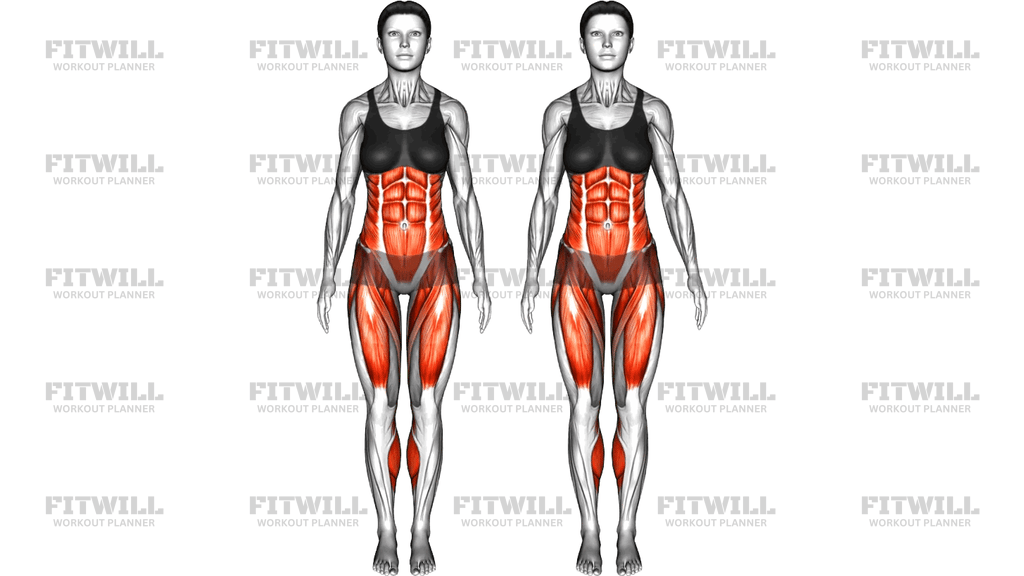
The main muscles working are the glutes of the standing leg. The gluteus maximus controls your forward lean and drives the extension position, while the gluteus medius and smaller hip stabilizers keep the pelvis from dropping toward the lifted side. The hamstrings assist as the free leg travels behind you, the deep core braces to keep your ribs stacked over your hips, and the small muscles around the ankle and arch of the standing foot constantly adjust to keep you centered.
Setup matters more than height here. Position your weight over the middle of the standing foot, keep a soft bend in the standing knee, and lean the torso forward just enough that your chest stays ahead of your hips without rounding your lower back. Because there is no external load, the quality of the position is the entire workout. A lift done with a level pelvis and a quiet, steady foot beats a higher lift done with a twisted hip every time.
To execute the lift, hinge slightly forward from the hips, squeeze the glute of the free leg, and raise that leg back behind you until you feel tension through the glute and hamstring. Pause briefly at the top, then lower the leg slowly instead of letting it drop. Keep your fists relaxed near your chest or reach your arms slightly forward if you need more counterbalance.
Use Standing Balance Single Leg Lifts as a warm-up activation drill before lower-body training, as a standalone balance exercise, or as a low-impact strength movement on recovery days. Start with two to three sets of eight to twelve lifts per side, holding onto a wall or chair only if you genuinely need it, and progress by removing support and slowing the tempo rather than chasing height.
[ Workout Log & Planner ]
Put your next workout in Fitwill
Keep your plan and training log ready when you are.


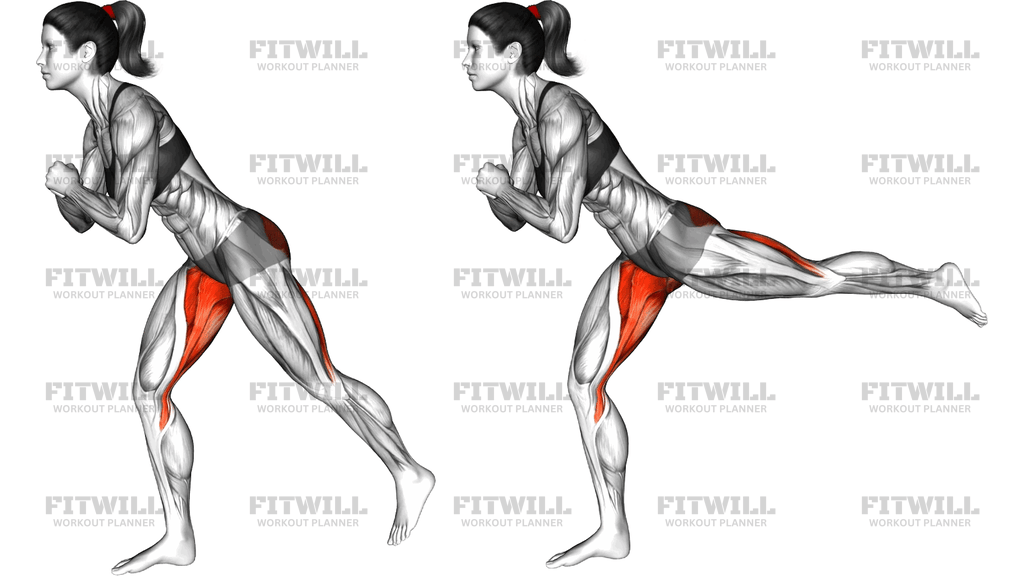
Instructions
- Stand barefoot or in flat shoes with your feet hip-width apart, then shift all of your weight onto your right foot and place it squarely under your hip.
- Bend your right knee slightly, press the ball and heel of the foot into the floor, and lift your left foot a few centimeters off the ground.
- Hinge forward about 15 to 30 degrees from the hips, keeping your back flat and your neck in line with your spine, and bring your fists loosely up near your chest like a runner.
- Brace your core and squeeze your glutes so your pelvis is level and your ribs are stacked over your hips before the leg starts moving.
- Lift your left leg straight back behind you, extending through the hip and reaching the toes away, until you feel the glute of the standing leg working hard to hold your position.
- Pause for one to two seconds at the top with the leg behind you and your hips square to the floor.
- Lower the left leg slowly back to the starting position, resisting the urge to let it swing or drop.
- Exhale as you lift the leg back and inhale as you lower it, keeping your breath steady throughout the set.
- Complete all reps on one side, then reset your stance, re-brace, and perform the same number of lifts standing on your left leg.
- If you lose your balance, step the free leg down, reset over your standing foot, and continue rather than wobbling through the rep.
Tips & Tricks
- The most common mistake is swinging the lifted leg for momentum, which lets the standing leg off the hook; move the free leg deliberately and let the glute do the work.
- Watch for the standing knee collapsing inward as the leg goes back. Drive the knee slightly out so it tracks over the second and third toes.
- Do not let the pelvis rotate open as the leg lifts. Point both hip bones at the floor and imagine the lifted leg moving straight behind your spine, not out to the side.
- If your lower back arches and you feel it there instead of in the glute, reduce the torso lean and take a smaller range of motion until the bracing improves.
- Keep the toes of the standing foot relaxed and spread rather than clawing the floor; a death-grip with the toes usually means the ankle is working overtime because the hips are not stabilizing.
- Fix your eyes on a stationary spot at eye level ahead of you. Looking down at your foot or turning your head makes balance noticeably harder.
- Start near a wall with one hand hovering over it, but use it for true emergencies only. Light fingertip contact is a learning tool, a full lean on it removes the training effect.
- Slow the lowering phase to two or three seconds before adding reps. The eccentric control is where most of the balance benefit lives.
- If one side is clearly shakier, always start your set with that side and give it one extra set rather than matching volume to your strong side.
Frequently Asked Questions
What muscles do Standing Balance Single Leg Lifts work?
The glutes of the standing leg do most of the stabilizing, with the gluteus maximus driving the extended position and the gluteus medius keeping the pelvis level. The hamstrings assist the leg lift, while the core and ankle stabilizers work continuously to keep you balanced.
Why does the exercise call for a forward lean in the torso?
The slight forward hinge shifts your center of mass over the standing foot and puts the gluteus maximus in a stronger position to both stabilize and extend the hip. It also lengthens the hamstrings of the lifted leg, so you feel the movement in the back of the hip rather than just the front.
How high should I lift the leg behind me?
Lift only as high as you can while keeping your pelvis level and your lower back from arching. For most people this is roughly parallel to the floor or slightly below; the pause and control matter far more than the height.
Can beginners do Standing Balance Single Leg Lifts?
Yes, and it is actually a good early balance exercise because there is no load involved. Beginners can stand next to a wall or hold the back of a sturdy chair and reduce the forward lean until single-leg balance feels manageable.
Is it normal to shake or wobble on the standing leg?
Some shaking is normal when you first train single-leg stability, especially in the ankle and foot. It should decrease within a few sessions; if the wobble is severe or the knee starts collapsing inward, shorten the range and slow the tempo.
What is the most common mistake in this exercise?
Rotating the pelvis open and letting the standing knee dive inward as the leg swings back. Both mistakes shift the work away from the glute stabilizers, so focus on keeping both hips pointing forward and the knee tracking over the toes.
What can I use instead if I cannot balance at all?
Start with a hip hinge version holding a wall, or perform the same rear lift lying face down on a bench to learn the glute squeeze without the balance demand. You can also do standing rear leg lifts with fingertips resting lightly on a counter and gradually take the support away.
How many sets and reps should I do?
Two to three sets of eight to twelve controlled lifts per side is a solid starting point. Once that feels comfortable, slow the lowering phase to three seconds or add a longer pause at the top instead of piling on reps.
Are Standing Balance Single Leg Lifts safe for people with knee problems?
The standing knee is only lightly loaded and stays bent, so the drill is generally gentle on the joint. Keep the bend small, avoid deep knee positions, and if you experience pain rather than muscle effort, stop and consult a qualified professional before continuing.
Should I do this exercise before or after my main workout?
It works best near the start of a lower-body session as an activation drill, waking up the glutes and single-leg stability before squats, lunges, or running. Using it as a finisher is also fine, but doing it cold at the end of a hard session usually means sloppy balance.