Arm Double Crossover
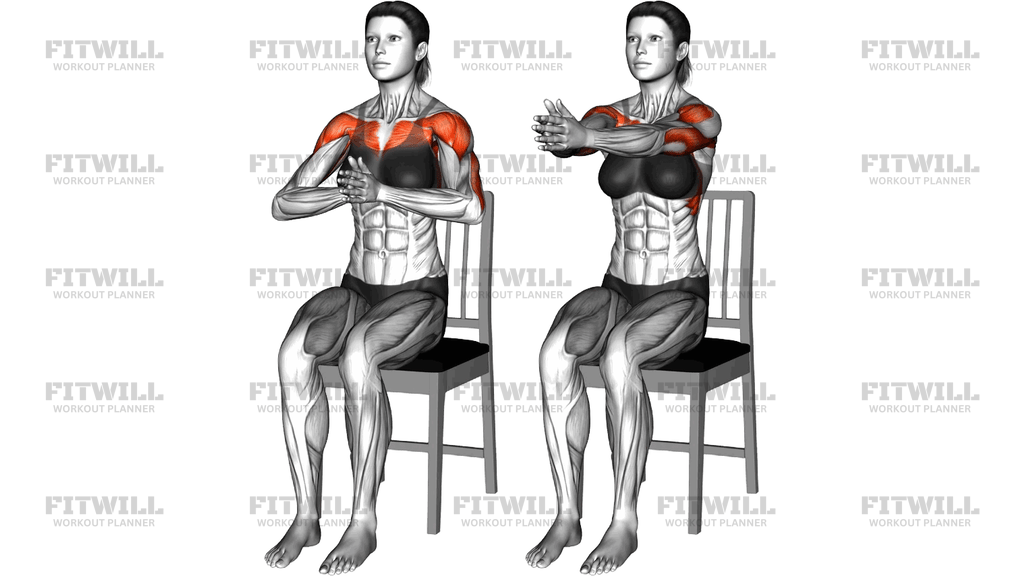
The Arm Double Crossover is a bodyweight movement performed standing, where you raise both arms out to shoulder height with bent elbows, then sweep them across each other in front of your chest before opening them back out. The name describes the action precisely: both arms cross over one another at the same time, alternating which arm passes on top with each rep. Because no equipment is involved, it can be done anywhere and fits easily into warm-ups, recovery sessions, or short mobility breaks during the day.
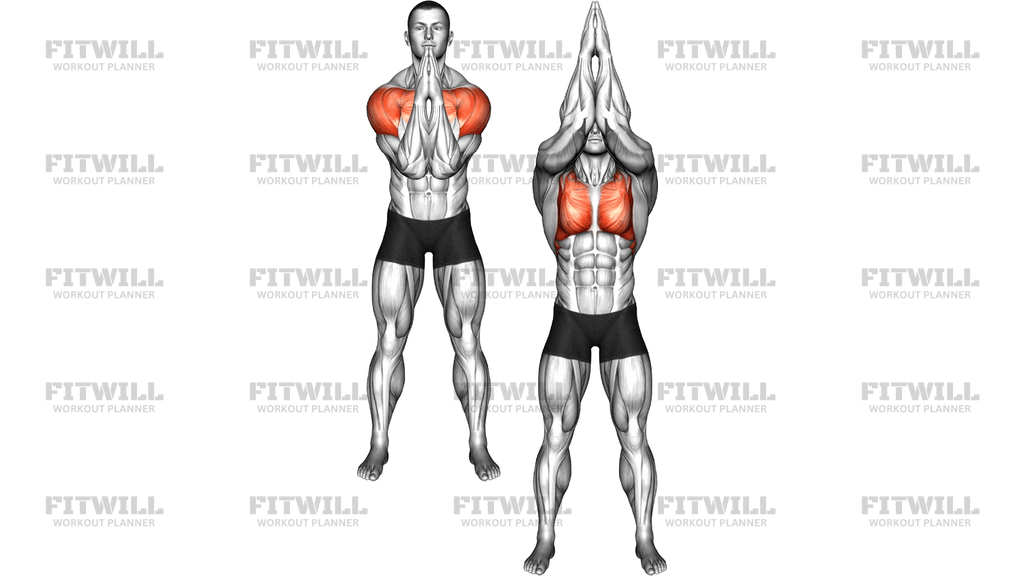
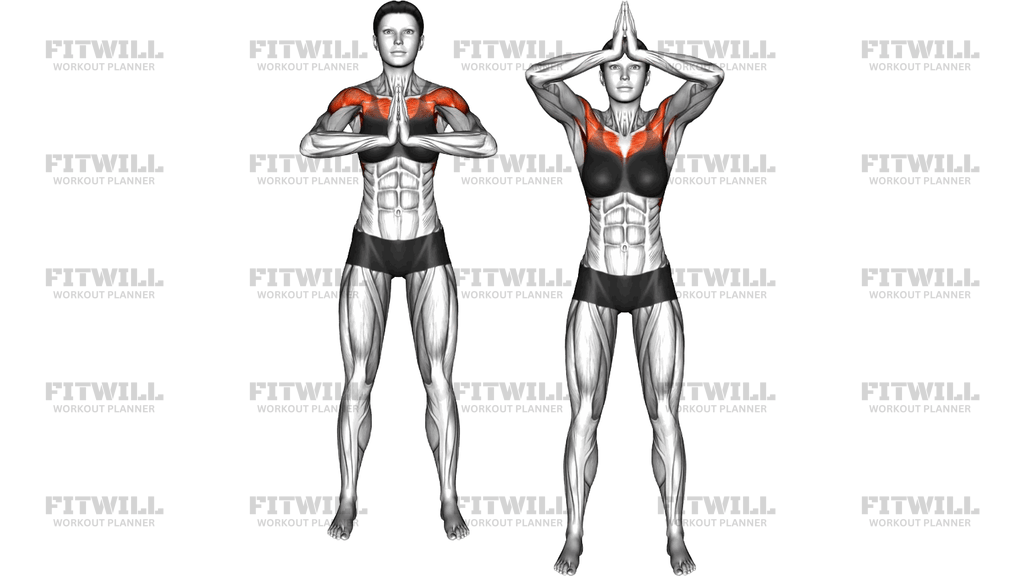
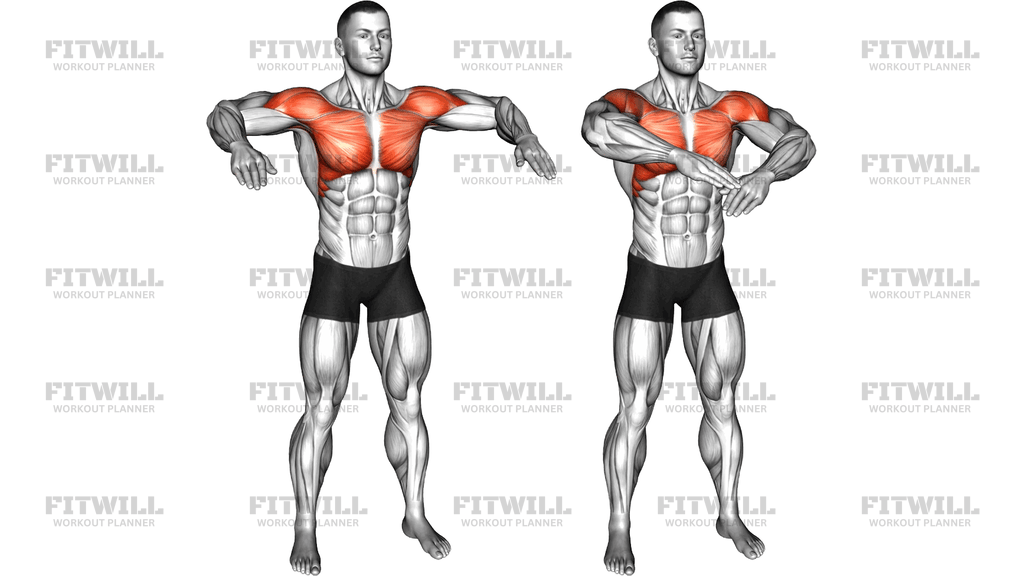
This movement primarily works the pectorals through horizontal adduction, which is the same action the chest performs during presses and flyes. The front delts assist as the arms drive inward, while the biceps and forearm muscles stay engaged to hold the bent-elbow position. Your core and upper back stabilize the torso so the crossing motion comes from the shoulders rather than from twisting or leaning. The highlighted chest and shoulder areas reflect where the effort is concentrated throughout the arc.
Setup matters more than it might seem for such a simple-looking exercise. Standing tall with feet about hip-width apart, soft knees, and elbows fixed at roughly 90 degrees keeps the tension on the chest and shoulders. If the elbows drift or the arms swing loosely, the movement loses its intent and turns into an uncontrolled arm swing. Keep the hands relaxed and open, and let the shoulders stay down away from the ears rather than shrugging as the arms come forward.
To execute it well, sweep both arms across the front of your body until your hands overlap or gently tap past each other, pause briefly, then open the arms back to the wide starting position with control. Alternate the top arm on each crossover so both sides of the chest work through the same range. The tempo should be steady and deliberate, roughly one to two seconds in each direction, keeping the motion in the horizontal plane at chest height rather than letting the arms rise or drop as they cross.
The Arm Double Crossover is commonly used as a warm-up before bench pressing, push-ups, or upper-body training days, since it raises blood flow to the chest and shoulder region and rehearses the adduction pattern. It also works as a light activation drill on rest days or as part of a bodyweight circuit. Anyone looking for a low-load way to keep the chest and shoulders moving comfortably will find it easy to program.
As with any repetitive arm movement, the main safety point is control. Avoid whipping the arms or forcing an overly deep cross if your shoulders feel pinched at the end range. A comfortable crossing depth with smooth, even breathing will do far more for you than speed or exaggeration.
[ Workout Log & Planner ]
Put your next workout in Fitwill
Keep your plan and training log ready when you are.


Instructions
- Stand upright with your feet about hip-width apart, knees soft, and your posture tall.
- Raise both arms out to your sides to shoulder height and bend your elbows to roughly 90 degrees, keeping your hands open and relaxed.
- Draw your shoulders down and back slightly so they stay away from your ears, and brace your core to keep your torso still.
- Sweep both arms in front of your chest at the same time, crossing one forearm over the other until your hands overlap in front of your sternum.
- Pause for a moment at the crossed position and feel the chest squeeze as the arms press inward.
- Open both arms back out to the wide starting position with a controlled motion, stopping at shoulder height.
- On the next rep, switch which arm crosses on top so both sides work evenly.
- Exhale as the arms cross in front and inhale as they open back out.
- Keep the elbows at the same height and bend throughout, avoiding any swing or rise in the arms.
- Complete your set, then lower your arms to your sides and gently shake out the shoulders before moving on.
Tips & Tricks
- A common mistake is letting the elbows straighten as the arms cross, which turns the drill into a loose arm swing; keep the 90-degree elbow bend locked in from start to finish.
- If you feel your shoulders shrugging upward, consciously press your shoulder blades down before starting and re-check between reps.
- Do not let your torso rotate toward the crossing arm; the chest should do the work while your hips and ribcage stay facing forward.
- Slow the tempo down if you find yourself rushing; a one-to-two second sweep each way keeps the pecs under tension.
- Alternating the top arm each rep prevents one side from dominating and keeps the range symmetrical.
- If your shoulders pinch or click at the deepest crossover point, shorten the range slightly and cross only until you feel a comfortable squeeze.
- Use this as a pre-press warm-up: two sets of 15-20 controlled crossovers before bench or push-up work helps the chest feel ready.
- Keep your hands open rather than clenched fists, since gripping adds neck and shoulder tension you don't need here.
- Breathe steadily instead of holding your breath; many people unconsciously brace and hold as the arms cross.
Frequently Asked Questions
What muscles does the Arm Double Crossover work?
The pectorals are the primary muscles working, since horizontal adduction of the arms is the chest's main action. The front delts assist, and the biceps and forearms hold the bent-elbow position while the core stabilizes your torso.
Is the Arm Double Crossover good for beginners?
Yes, it is very beginner-friendly because it requires no equipment and puts minimal load on the joints. Beginners should focus on slow, controlled sweeps and a consistent 90-degree elbow bend before worrying about volume.
Should I alternate which arm crosses on top?
Yes, switch the top arm with each repetition. This keeps the range of motion balanced between your left and right sides and prevents one shoulder from always taking the deeper path.
How high should my arms be during the crossover?
Hold your arms at chest height with elbows bent to about 90 degrees throughout. If the arms rise toward your face or drop toward your waist as they cross, the emphasis shifts away from the chest.
Can the Arm Double Crossover replace chest flyes or presses?
No, as a bodyweight movement without added resistance it works best as a warm-up, activation drill, or mobility exercise rather than a primary strength builder. Use it alongside pressing and flye variations, not instead of them.
Why do my shoulders shrug when I cross my arms?
Shrugging usually means the upper traps are compensating because the arms are moving too quickly or the elbows have drifted. Slow down, lower your shoulder blades deliberately, and reduce the crossing depth until the movement feels smooth.
What can I use instead of the Arm Double Crossover?
Standing single-arm chest crossovers, arm swings, or light cable flyes with a short range cover similar ground. If you want more resistance, a cable crossover or resistance band pull-apart with a crossover finish works the same adduction pattern.
Is it safe to do this movement every day?
For most people, yes, since it is a low-load, joint-friendly drill. If you have a current shoulder injury or feel pinching at the end range, shorten the crossover and check with a qualified professional before making it a daily habit.
How many reps of the Arm Double Crossover should I do?
For a warm-up, 15-20 controlled repetitions for one or two sets works well. As part of a circuit or mobility session, 20-30 reps at a steady tempo is a reasonable target.