Body Open Cross Feet
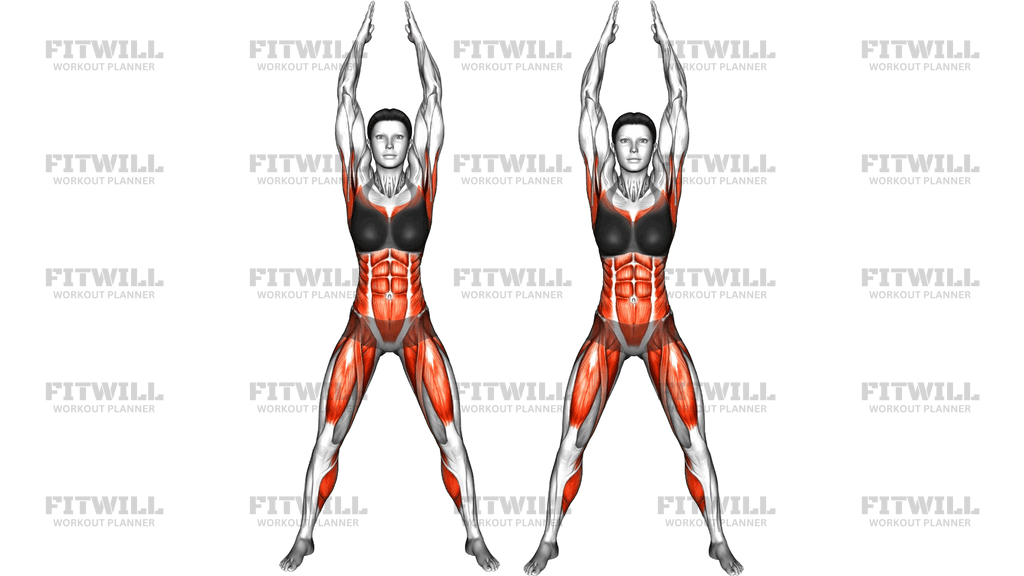
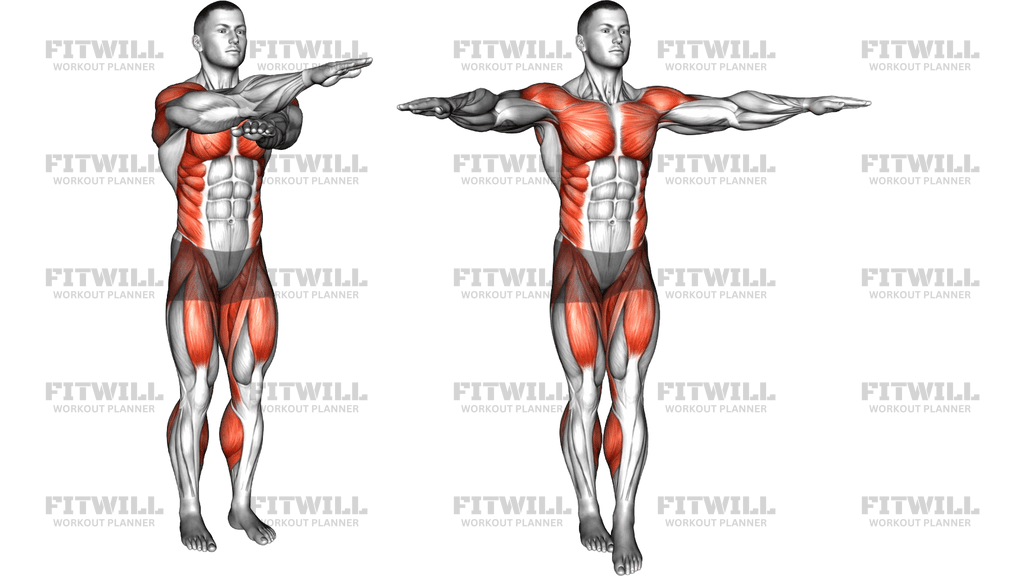
Body Open Cross Feet is a bodyweight jumping jack variation that swaps the standard open-close foot pattern for a cross-over rhythm. From a standing position you jump the feet wide while sweeping the arms out to the sides, then jump back in so one foot crosses in front of the other while the arms swing across the body at chest height. Each repetition alternates which leg leads the cross, so the movement stays balanced from side to side.
Because the feet repeatedly cross the midline, this version places more demand on the inner thighs and hip adductors than a regular jumping jack. The wide-foot position loads the quads, glutes, and calves through repeated rebounding, while the crossing arm swing works the chest and shoulders through horizontal adduction. Your core stays busy the entire time, bracing to keep the torso upright as the legs scissor underneath you.
The setup matters more than people expect. A crossed-feet pattern brings the legs close together at speed, so you need a clear landing area, a flat surface, and enough ceiling clearance for the raised arms. Keep the knees soft on every landing and stay on the balls of the feet; heavy, flat-footed landings are the fastest way to turn a good conditioning drill into sore ankles and shins.
Execution should feel rhythmic rather than rushed. Start with a moderate pace to learn the cross pattern, letting the arms swing naturally rather than forcing them. As coordination improves, the tempo can rise until the movement becomes a genuine cardio challenge. Height on the jumps is optional; a low, quick rebound trains footwork, while a higher bounce adds intensity for the calves and quads.
This exercise fits well as a warm-up to raise the heart rate, as a conditioner in circuit training, or as a low-equipment option when you want full-body work in a small space. It is especially useful for athletes and group classes because the cross-over step builds coordination and lateral awareness along with endurance. Anyone with ankle, knee, or hip concerns should scale the impact down or step the pattern instead of jumping before committing to continuous reps.
[ Workout Log & Planner ]
Put your next workout in Fitwill
Keep your plan and training log ready when you are.


Instructions
- Stand tall with feet together, arms relaxed at your sides, on a flat non-slip surface with clear space around you.
- Brace the abdominal muscles lightly and pull the shoulder blades back so the torso stays upright throughout the set.
- Rise onto the balls of your feet and make your first jump: spread the feet wider than shoulder width while sweeping both arms out to the sides up to about shoulder height.
- Jump back in so one foot crosses in front of the other, landing softly with the legs close together while the arms swing across the chest in the opposite direction.
- On the next jump, reverse the roles: open the feet wide again as the arms sweep back out, then cross with the other leg leading in front.
- Keep every landing on the balls of the feet with the knees slightly bent to absorb impact; never lock the knees on the crossed position.
- Maintain an even rhythm, breathing steadily in through the nose and out through the mouth rather than holding your breath.
- Keep the arm swings at or near shoulder height and controlled so the shoulders do not shrug toward the ears.
- Continue alternating the leading leg for the planned time or repetitions, then slow the tempo for a few reps before stepping out of the pattern to rest.
Tips & Tricks
- If the feet tangle when crossing, slow down and exaggerate the lift of the leading leg; most trips come from dragging the foot across the floor instead of stepping over it.
- Alternate which leg crosses in front on every rep. Doing several reps with the same lead leg creates uneven coordination and load between sides.
- Keep the arms moving in the opposite horizontal plane to the legs: arms cross when the legs cross is actually arms forward and legs crossed together. Match the timing so the swing feels natural, not forced.
- Land quietly. A loud, slapping landing means the heels are hitting first; cue yourself to kiss the floor with the balls of the feet.
- Expect the inner thighs to fatigue before the lungs on this variation. Shorten the set when the adductors start pulling rather than pushing through the tightness.
- On a hard floor or thin shoes, reduce jump height rather than speed; low quick rebounds protect the shins and ankles better than tall slow ones.
- If balance wobbles on the crossed landing, fix your gaze on one spot ahead and tighten the core before each jump instead of looking down at your feet.
- Warm up the hips and calves with a few standard jumping jacks first so the cross-over pattern starts from warm, responsive legs.
Frequently Asked Questions
What muscles does the Body Open Cross Feet work?
The main drivers are the quads, inner thighs, glutes, and calves from the repeated jumping, while the crossing arm swing recruits the chest and shoulders. The core works continuously to keep the trunk stable as the legs change direction.
How is the Body Open Cross Feet different from a regular jumping jack?
Instead of simply closing the feet between jumps, one foot crosses in front of the other each rep, and the arms swing across the body rather than just up overhead. This adds a coordination element and places greater emphasis on the hip adductors.
Is the Body Open Cross Feet suitable for beginners?
Yes, but beginners should learn the cross pattern at a slow tempo or even step it without jumping before speeding up. Once the footwork feels automatic, the pace and jump height can increase gradually.
Why do my inner thighs feel tight during this exercise?
Crossing the feet and spreading them wide repeatedly stretches and contracts the adductor muscles at a quick tempo, which is normal. If the tightness becomes sharp or painful, reduce the width of the open stance and slow the tempo.
How long should I perform the Body Open Cross Feet?
Start with 20 to 30 second bouts or 15 to 20 reps and rest as needed. As conditioning improves, longer intervals of 45 to 60 seconds work well in circuits or interval formats.
Can I do this exercise if I have ankle or knee issues?
The crossed-feet landing at speed can stress the ankles and knees, so check with a qualified professional first. A low-impact substitute is to step the pattern: open one foot wide, then step it across in front without leaving the floor.
What surface is best for the Body Open Cross Feet?
A flat, non-slip surface such as a gym floor, rubber matting, or firm grass works best. Avoid very hard concrete in minimal footwear and any uneven ground, since the cross-over footwork leaves little margin for a bad landing.
How high should I jump on each repetition?
Only high enough to clear the foot swap cleanly, usually a small rebound. Extra height increases impact on the calves and ankles without adding much training benefit unless you specifically want a harder plyometric stimulus.
Where should my arms be during the crossed-feet position?
When the feet cross, the arms swing across the front of the chest at roughly shoulder height, mirroring the cross of the legs. Then they sweep wide again as the feet open, keeping the shoulders active through the full swing.