Cable Standing Y Raise (Version 2)
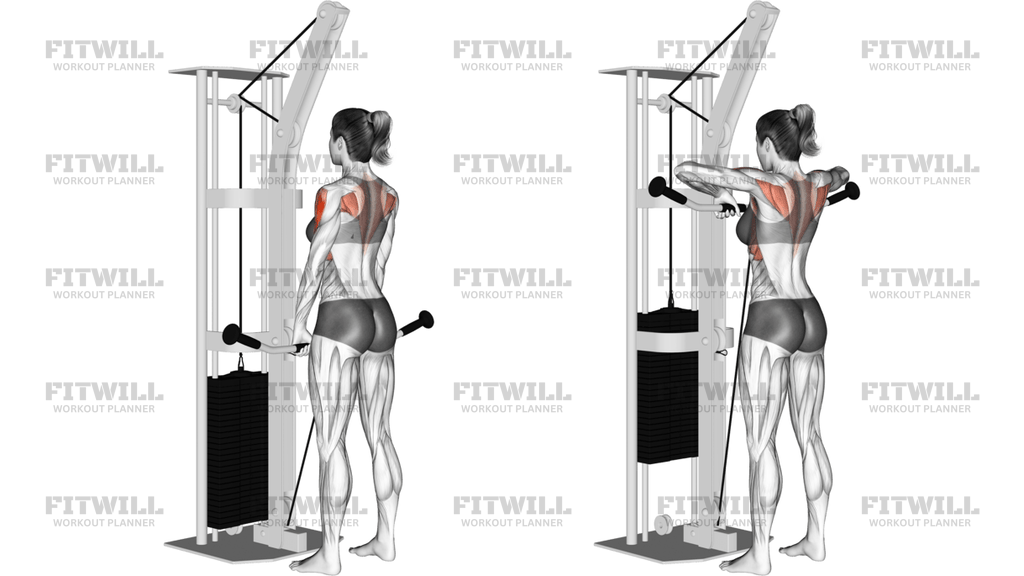
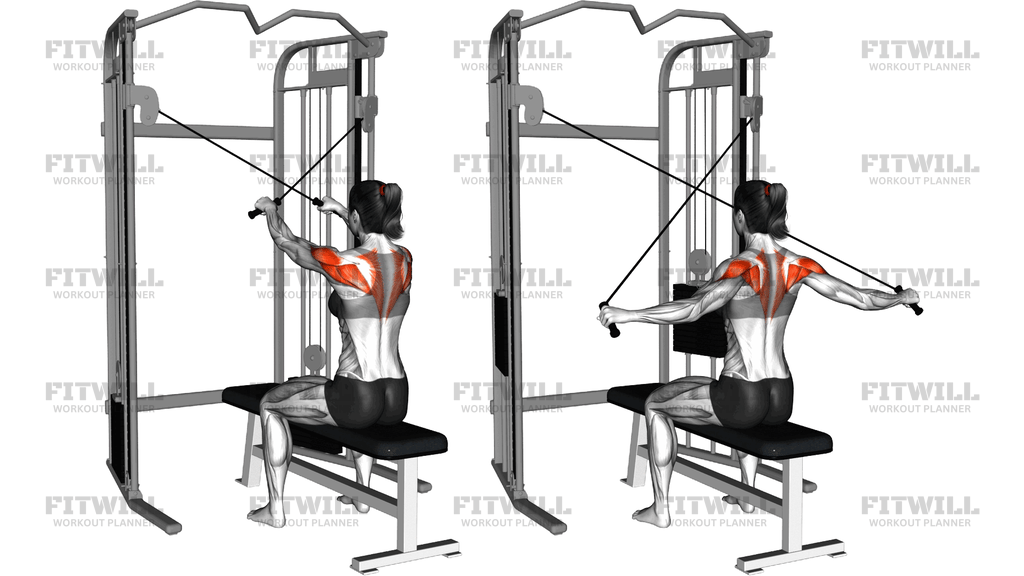
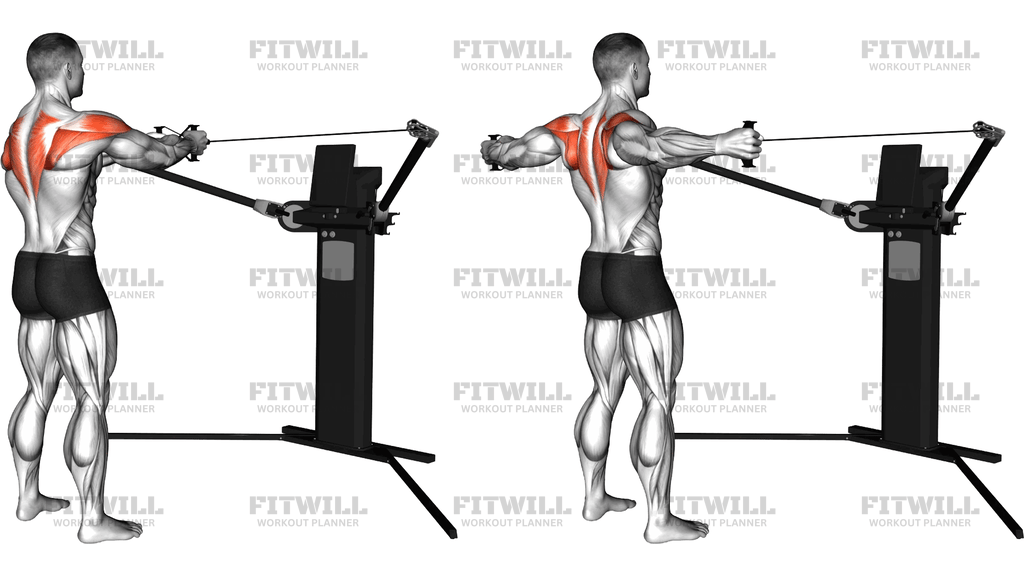
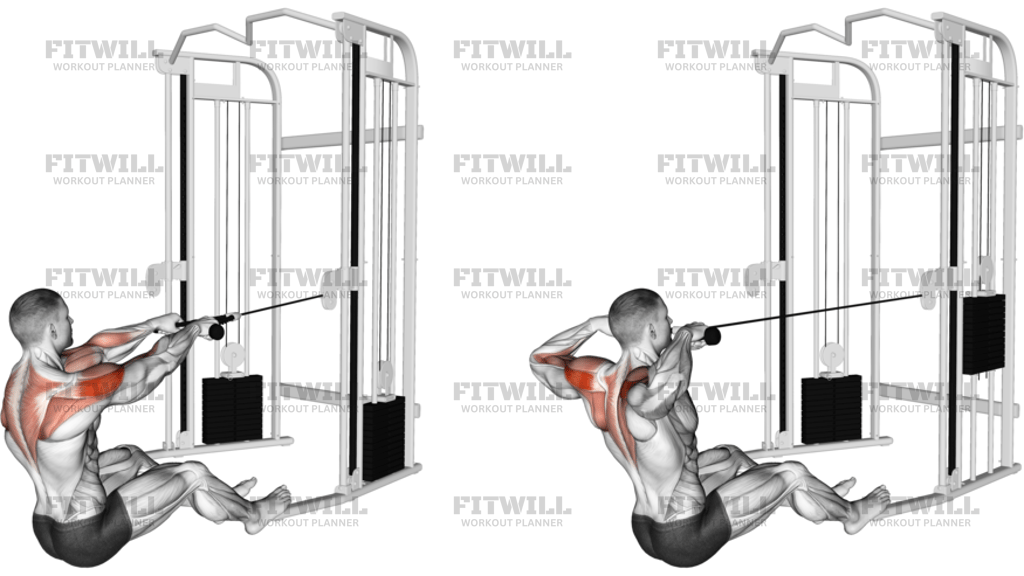
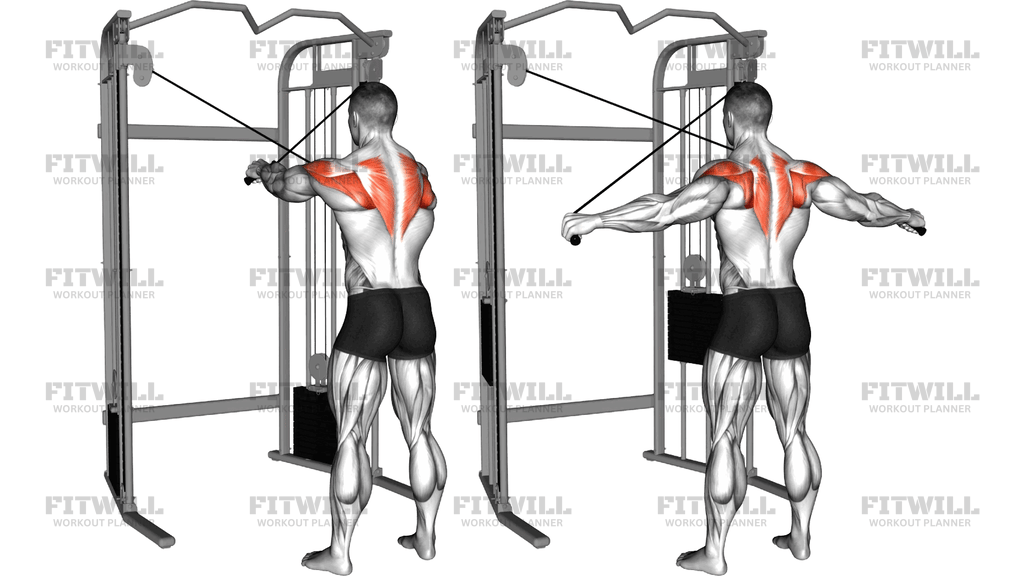
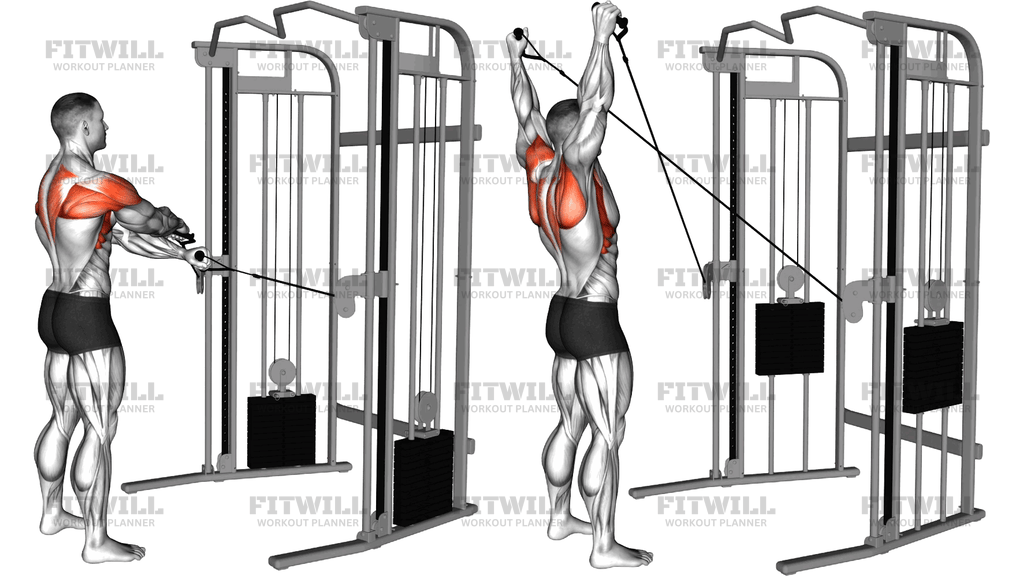
The Cable Standing Y Raise is a cable crossover exercise that takes your arms from down in front of your thighs up to a wide Y position overhead, with the cables crossed behind your back. Because the resistance comes from low pulleys on both sides, the tension follows a diagonal line through the entire range of motion, which is something a dumbbell Y raise cannot replicate. The highlighted work in this movement comes from the upper and lower trapezius along with the deltoids, especially the side and rear portions as the arms travel out and up.
This exercise is a strong choice for anyone building shoulder and upper back detail, particularly lifters whose overhead work feels limited by weak scapular upward rotation. It also suits people rehabilitating or prehabbing the shoulder girdle, since the cable provides smooth, joint-friendly resistance and the weight can be set very light. Because the arms move in a Y pattern rather than straight out to the sides, the demand shifts toward the traps and rotator cuff-supported positions instead of purely the middle delt.
Setup matters more here than in most shoulder raises. The cables must cross behind your body, which means each hand grips the handle from the opposite side, and your distance from the pulleys determines both the line of pull and how much the cables drag against your frame. Stand too close and the cables scrape your arms; stand too far and the start position feels slack or the pulleys pull you backward.
To execute it well, keep your elbows nearly straight with just a soft bend, raise along a diagonal so the hands finish wider than shoulder-width overhead, and resist the temptation to shrug the weights up. The end position should feel like a stretch through the lats and a strong contraction across the upper back and traps. Lower the handles slowly the same way you raised them, because the cable keeps pulling on the way down and the eccentric is where a lot of the trap work happens.
Use the Cable Standing Y Raise as a finisher after presses or pulls, as a dedicated trap and delt isolation block, or in higher-rep shoulder health circuits. Keep the load modest in almost every case. This is a small-muscle movement with long levers, and the moment the weight forces your torso to lean or your traps to fire before your arms move, the Y shape collapses into something closer to a shrug.
The main practical cue is patience with the path. Move the hands up and out in one smooth diagonal, keep the ribs stacked over the pelvis, and think about reaching long rather than lifting heavy. Done this way, the exercise builds a noticeably wider, more complete look across the upper back and shoulders while also giving the shoulder blades the upward rotation practice they rarely get from standard pressing.
[ Workout Log & Planner ]
Put your next workout in Fitwill
Keep your plan and training log ready when you are.


Instructions
- Set both pulleys of the cable crossover machine to their lowest positions and attach a single handle to each cable.
- Stand centered between the two stacks facing away from the pulleys, feet about hip-width apart with a soft bend in the knees.
- Reach back and grip the handle from the opposite side so the cables cross behind your torso, then take a small step forward until you feel light tension with your arms hanging in front of your thighs.
- Brace your core, lift your chest, and keep your head neutral with your gaze forward, ribs stacked over your hips.
- Start with both arms down in front of your thighs, elbows nearly straight, palms facing backward and cables running behind you.
- Exhale and raise both arms up and out along a wide diagonal, keeping the elbows soft, until your hands end overhead in a Y shape wider than your shoulders.
- Pause for a beat at the top with your arms long, feeling the contraction across your upper back and traps.
- Inhale and lower the handles slowly back down the same diagonal path to the start position in front of your thighs.
- Keep tension on the cables between reps, reset your posture, and repeat for the desired number of repetitions.
Tips & Tricks
- Choose a much lighter load than you would for a lateral raise. The long lever arm and crossed cable angle make this movement disproportionately hard at the top, and heavy weight almost always turns it into a shrug with a lean.
- If the cables rub against your arms or shoulders, take one more small step forward from the pulleys. The crossing point behind you needs clearance to run smoothly through the whole arc.
- Watch for the shrug-first mistake: if your shoulders ride up toward your ears before your hands start moving, the traps are stealing the rep. Cue yourself to lead with the hands and let the trap contraction come at the top.
- Avoid leaning your torso backward as the hands rise overhead. If you catch yourself arching, reduce the weight and brace your abs harder so the spine stays stacked.
- Keep a small bend in the elbows rather than locking them. Fully locked elbows put unnecessary stress on the joint at the top and can cause the handles to pull awkwardly on your grip.
- Think reach, not lift. Actively lengthening the arms to the ceiling keeps the scapulae rotating upward, which is the whole point of the Y pattern.
- Control the lowering phase for two to three seconds. The crossed cables keep pulling you into the start position, so a fast eccentric turns the return into a drop rather than training stimulus.
- Your grip should stay relaxed. A death grip on the handles recruits the forearms and upper traps prematurely and dulls the shoulder work.
- If one side feels stronger, do the exercise unilaterally for a few weeks by holding only one handle at a time, bracing the free hand against your hip or the frame.
Frequently Asked Questions
Which muscles does the Cable Standing Y Raise work?
The primary drivers are the upper and lower trapezius, which control the shoulder blades as the arms rise overhead. The side and rear deltoids assist along the diagonal path, with supporting work from the rotator cuff and remaining upper back musculature.
Why do the cables cross behind my back in this exercise?
Gripping each handle from the opposite side makes the cables form an X behind your torso, which keeps the line of pull diagonal and consistent through the entire Y-shaped arc. It also stops the handles from pulling you straight backward as your arms rise.
How far should I stand from the pulleys?
Far enough that you feel light tension with your arms hanging in front of your thighs, but close enough that the crossed cables clear your body without scraping. A small step forward from the stacks is usually right; adjust until the path feels smooth.
Is the Cable Standing Y Raise suitable for beginners?
Yes, provided the weight stays light and the reps stay controlled. The cable provides smooth resistance and no balance demand beyond standing, so beginners often learn the Y pattern more easily here than with dumbbells.
How is this different from a dumbbell Y raise?
Dumbbells only challenge the top of the arc because gravity pulls straight down, while the crossed cables resist you along the whole diagonal path. The cable version also creates a slight rearward pull that demands more core and postural control.
Why do my traps take over and shrug at the start of each rep?
The weight is likely too heavy or you are initiating with the shoulders instead of the hands. Lighten the load and cue yourself to lead the lift with your fingertips rising up and out, letting the trap contraction arrive at the top.
Can I do this exercise if pressing overhead bothers my shoulders?
Many lifters tolerate this raise well because the arms stay relatively light and the scapulae are free to rotate upward, but comfort varies. Start with a very light weight and a shorter arc, and stop short of any pinching at the top.
What can I use instead if my gym has no cable crossover?
A single adjustable cable pulley set low with one handle works if you train one arm at a time, and resistance bands anchored low behind you with a crossed grip reproduce the same diagonal line of pull.
Should my elbows stay straight during the Cable Standing Y Raise?
Nearly straight, but never locked. A soft elbow bend protects the joint at the top, keeps tension on the shoulder muscles, and prevents the handles from yanking on a rigid arm.
Where should this exercise fit in my workout?
It works best as an isolation finisher after your main presses or pulls, or in higher-rep blocks for shoulder and upper back endurance. Keep the sets in the 10 to 20 rep range since heavy loads compromise the Y path.