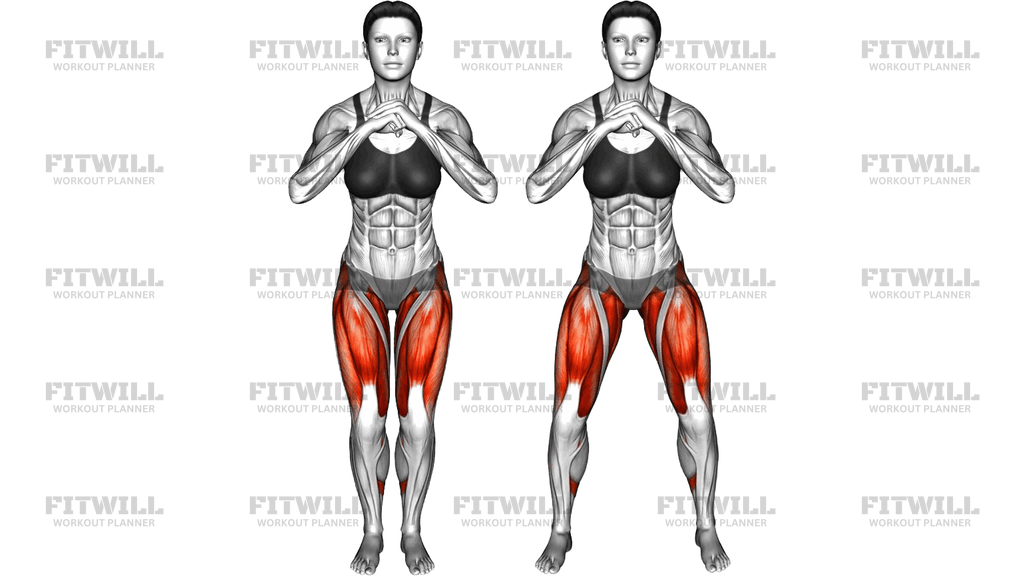
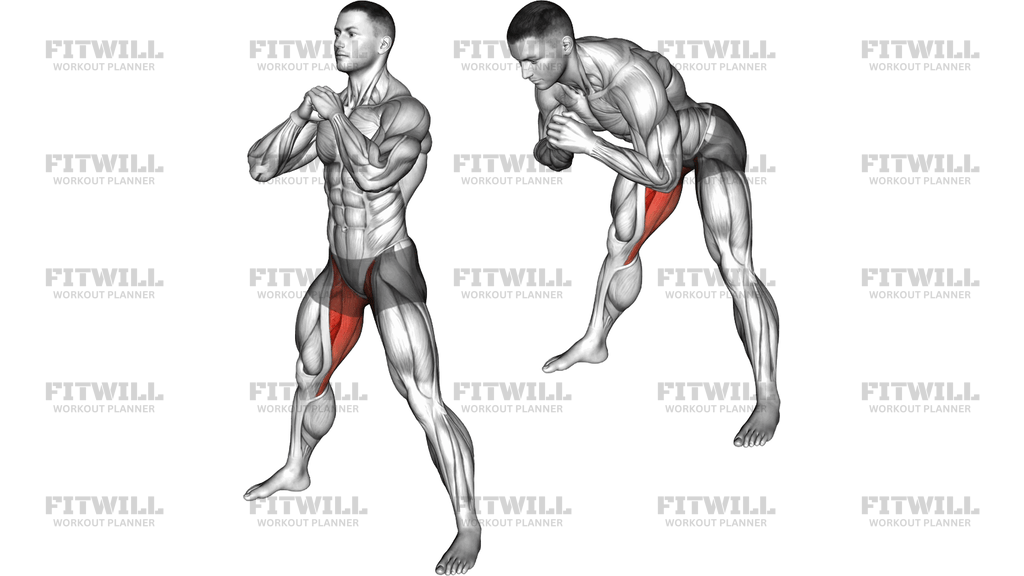
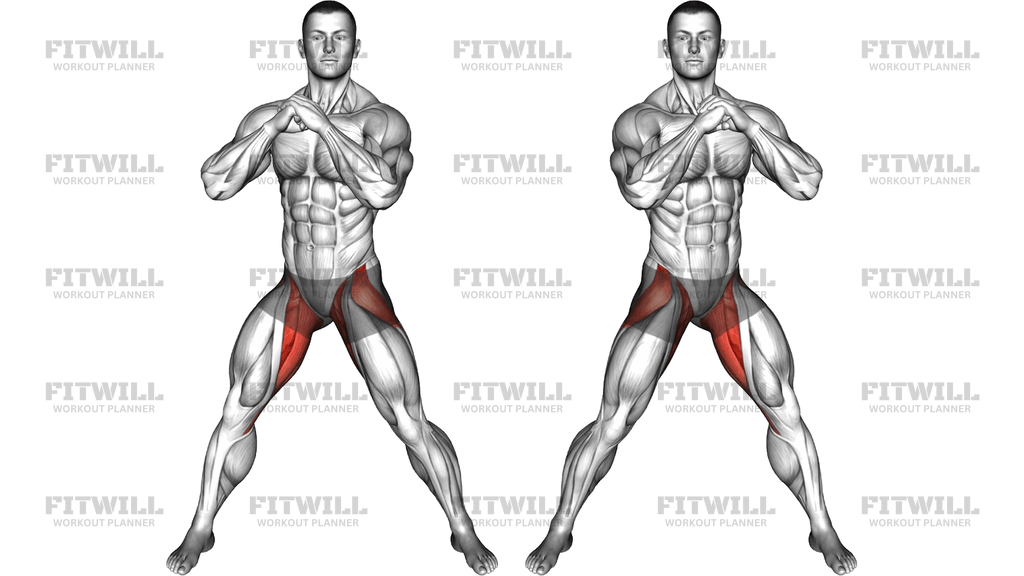
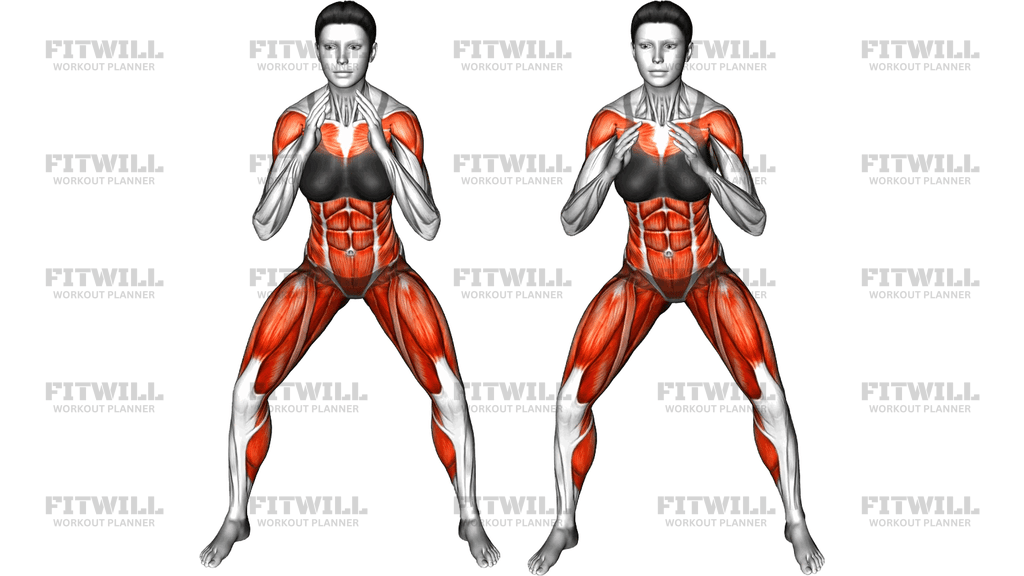
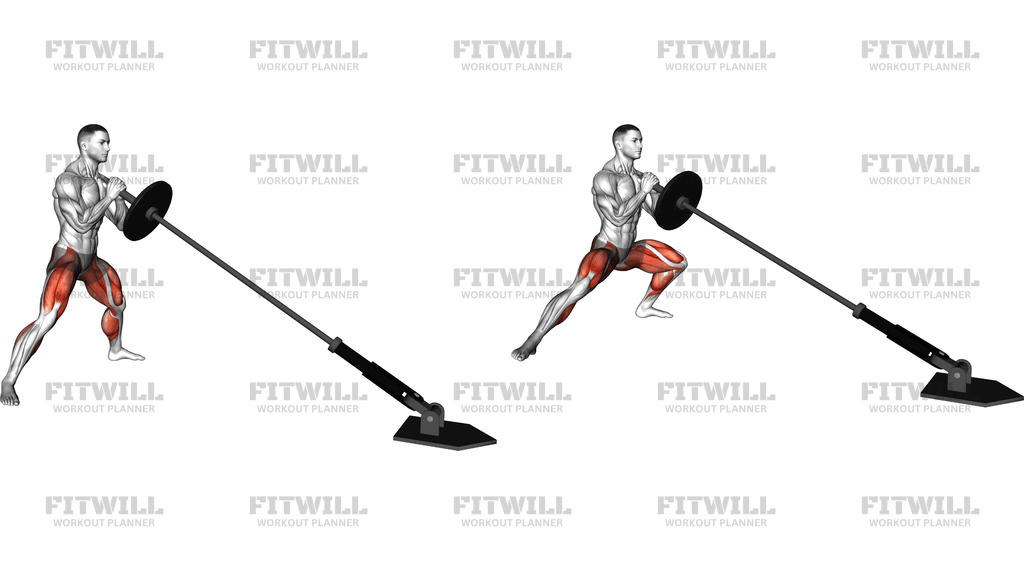
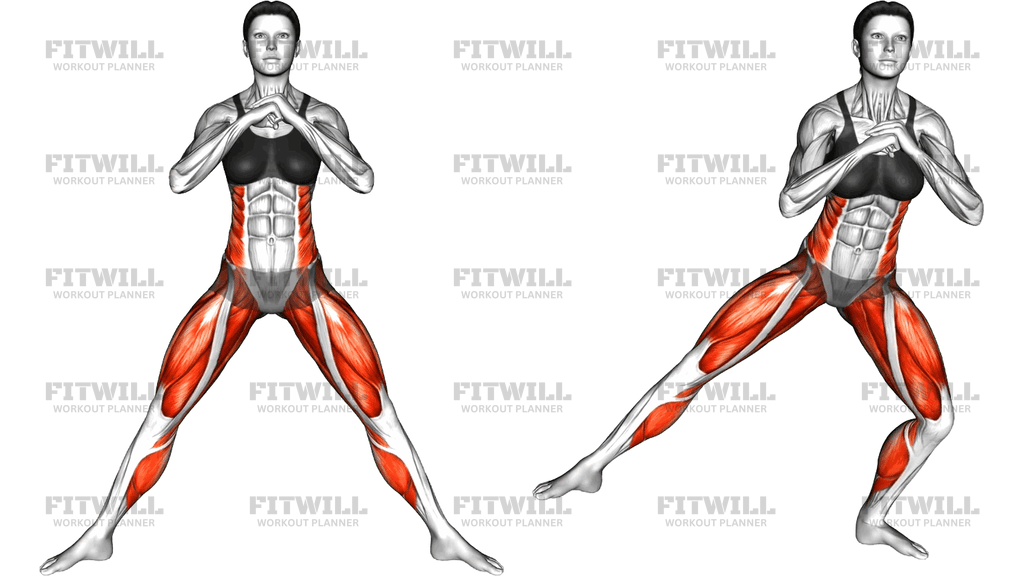
Standing Wide Good Morning
The Standing Wide Good Morning is a bodyweight hip hinge performed with the feet set much wider than shoulder width. Instead of loading a bar across your back, you place your hands behind your head or at your hips and hinge forward at the hips with a flat back, letting the wide stance change where you feel the stretch and pull. The wide foot position turns this into a useful pattern for the inner thigh muscles, hamstrings, and glutes, while the lower back works hard to hold your torso steady through every rep.
What separates this from a standard good morning is the stance. With the feet spread wide, the adductors on the inside of the thigh are placed under a lengthened stretch as you fold forward, and the hips sit in a position that loads the posterior chain differently than a narrow-stance hinge. Lifters often use it as a warm-up or activation drill before squats and deadlifts, or as a teaching tool to groove the hip hinge without the pressure of holding a barbell.
Because there is no external load, this version is accessible to beginners who are still learning what a hinge should feel like, and it is equally valuable for experienced lifters who want to warm up the hips and hamstrings before heavy lower body work. The wide stance also gives you a chance to work on groin and hamstring flexibility under mild tension, which many people find more comfortable than a deep static stretch.
Setup matters here more than you might expect. Your feet should be roughly one and a half to two times shoulder width apart with the toes turned slightly out, and your knees should stay softly bent and tracking over your toes the entire time. If the stance is too narrow you lose the inner-thigh emphasis, and if the knees collapse inward as you fold, the adductors stop doing their job and the hinge turns sloppy.
Execution comes down to pushing the hips back rather than reaching the chest down. Think of driving your glutes toward the wall behind you while your chest lowers as a consequence, not as the goal. Your spine stays long and neutral from start to finish, and the movement stops when you feel a solid stretch through the inner thighs and hamstrings, usually somewhere near torso-parallel or slightly above it. The return is driven by squeezing the glutes and inner thighs to bring the hips back under the shoulders.
A few safety points are worth repeating. This is a bodyweight drill, so resist the urge to rush it or bounce at the bottom. If your lower back rounds or you feel the work shifting into your spine instead of your hips, shorten the range immediately. Anyone with a history of lower back or groin strains should move through a modest range at first and build depth gradually as the hips warm up.
[ Workout Log & Planner ]
Put your next workout in Fitwill
Keep your plan and training log ready when you are.


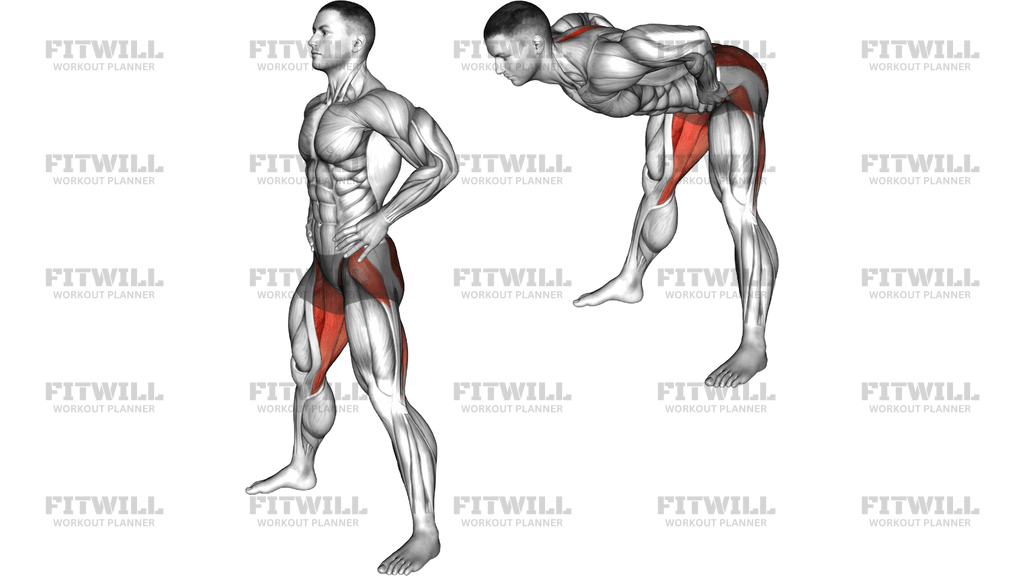
Instructions
- Stand with your feet set roughly one and a half to two times shoulder width apart, toes turned out slightly, and your weight spread evenly across both feet.
- Place your hands behind your head with your elbows flared out, or rest your hands at your hips, whichever helps you keep your chest open.
- Set a soft bend in both knees and make sure each knee is stacked over its toes, not caved toward the middle.
- Brace your core as if bracing for a light push to the stomach, and pull your shoulder blades gently back to set a long, neutral spine.
- Push your hips straight back and let your torso lower forward as a hinge, keeping your knees bent at the same angle throughout.
- Descend until you feel a strong stretch across the inner thighs and hamstrings, usually with your torso near parallel to the floor or slightly higher.
- Pause briefly at the bottom without letting your back round or your heels lift.
- Drive your hips forward by squeezing the glutes and inner thighs until you are standing fully upright again.
- Exhale as you hinge down, inhale at the bottom, and exhale again on the way up.
- Reset your brace at the top before starting the next repetition.
Tips & Tricks
- If you feel this mostly in your lower back instead of your thighs, you are probably rounding at the bottom; cut the depth until your spine stays long and the stretch moves into the inner thighs and hamstrings.
- Knees drifting inward as you fold forward is the most common fault in the wide stance; cue yourself to press the knees out over the pinky toes on every descent.
- Keep the same knee bend from top to bottom. Straightening the legs as you descend turns this into a hamstring stretch and removes the hip hinge you are trying to train.
- The movement should come from the hips, not from rounding forward to touch the floor. There is nothing to reach for in this drill, so stop chasing depth.
- Turn your toes out only slightly. Excessive external rotation combined with a wide stance makes it easy to lose knee tracking as fatigue builds.
- Move slower than feels necessary, especially on the way down. A two to three second descent gives the adductors and hamstrings time to lengthen under control.
- If your groin feels pinched at the bottom, narrow your stance a few inches and turn your toes out slightly more before continuing.
- Keep your heels flat and your weight over the middle of each foot. Shifting weight to the toes pushes the hips too far forward and shortens the hinge.
- Use this as a warm-up before squats or deadlifts for two to three sets of ten to fifteen reps, keeping the effort crisp rather than exhausting.
Frequently Asked Questions
What muscles does the Standing Wide Good Morning work?
The wide stance places the main demand on the adductors along the inner thigh, with strong involvement from the hamstrings and glutes as they extend the hips. The lower back works isometrically to keep the torso in a neutral position throughout the hinge.
How is the Standing Wide Good Morning different from a regular good morning?
The feet are set one and a half to two times shoulder width apart instead of hip width, which shifts the stretch toward the inner thighs and changes the hip position during the hinge. It is also performed without a barbell, so the emphasis is on control and range rather than load.
Is the Standing Wide Good Morning good for beginners?
Yes, it is one of the safer ways to learn the hip hinge because there is no external load and feedback comes directly from the stretch in the thighs. Beginners should start with a modest range and only deepen the hinge once the spine stays neutral comfortably.
Should my knees stay bent during the Standing Wide Good Morning?
Yes, keep a soft, constant bend in both knees from start to finish. Locking the knees out turns the movement into a straight-leg stretch and shifts stress away from the hips and toward the lower back.
Why do my knees want to cave inward when I fold forward?
The adductors are lengthened in this position, so they lose some ability to control the thighs, which lets the knees drift toward each other. Deliberately pressing the knees out over the toes and slightly narrowing your stance usually fixes it.
How deep should I hinge during the Standing Wide Good Morning?
Go only as low as you can keep a flat, neutral spine and feel a clear stretch in the inner thighs and hamstrings, which for most people is near torso-parallel. Depth beyond that point usually comes from rounding the back rather than hinging further.
Can I use the Standing Wide Good Morning as a warm-up?
Absolutely, and that is one of its best uses. Two to three sets of ten to fifteen controlled reps before squats or deadlifts raises the temperature in the hips, primes the hinge pattern, and loosens the groin and hamstrings.
What can I substitute if the wide stance bothers my groin?
Narrow your stance to just outside shoulder width and turn the toes out slightly, which reduces the adductor stretch while keeping the same hinge. If discomfort persists, a standard standing good morning with the feet at hip width is a reasonable fallback.
Is it safe for my lower back?
When performed with a braced core and a neutral spine through a controlled range, it is a low-load way to condition the hip hinge. Stop short of the depth where your back starts to round, and if you have a history of lower back issues, build the range gradually.