Lateral Raise Side Step
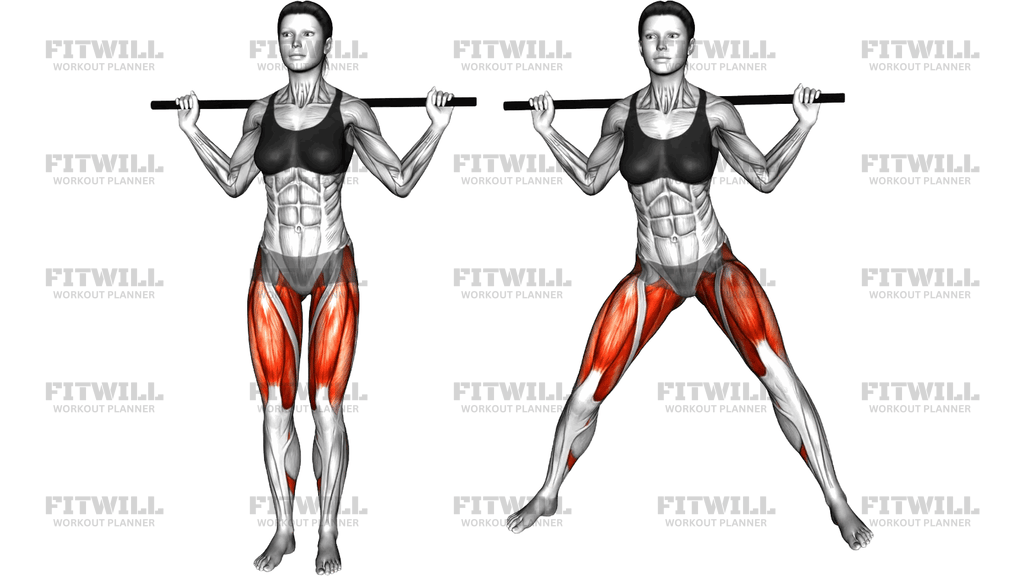
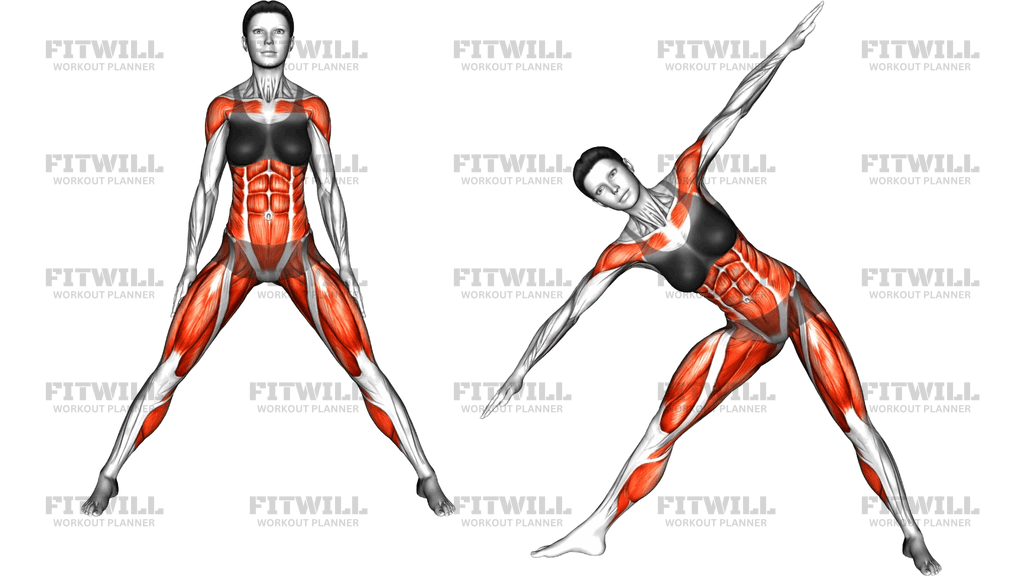
The Lateral Raise Side Step combines two simple movements into one flowing drill: a lateral arm raise performed at the same time as a controlled step out to the side. You stand tall with your arms hanging at your sides, then step one foot outward while lifting both arms away from your body until they reach roughly shoulder height. The arms return to your sides as you bring your feet back together, and the cycle repeats, alternating sides or working one side at a time.
Because it needs no equipment and very little space, this movement works well as a warm-up, an active recovery drill, or a low-impact way to raise your heart rate between strength sets. It is especially useful for people who sit a lot during the day, since the side-step pattern wakes up the outer hips and glutes while the arm raises loosen the shoulders. Beginners can use it to learn shoulder and hip coordination before adding weights or resistance bands.
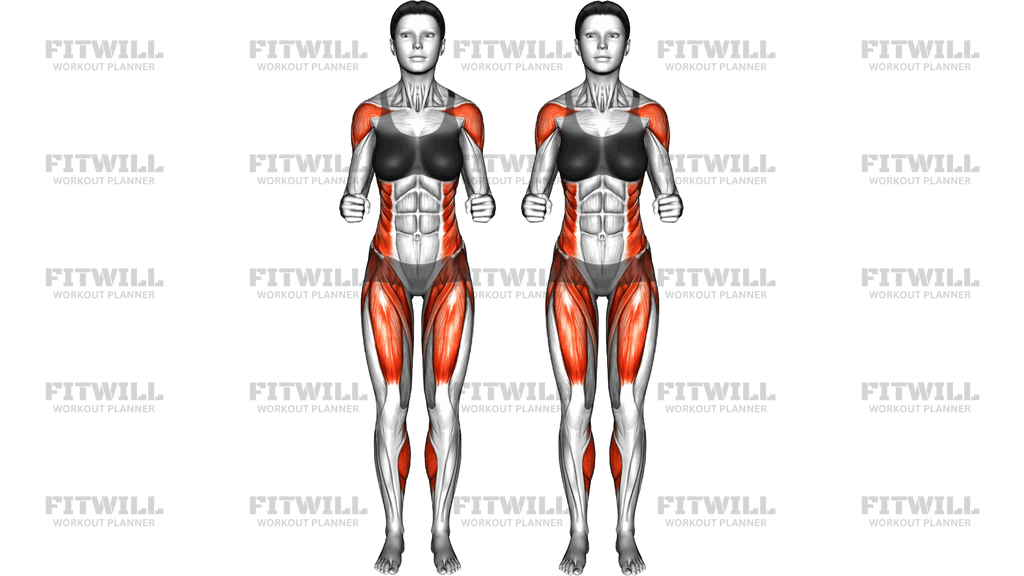
The primary muscle at work is the side portion of the shoulders, which lifts the arms away from the torso. The stepping leg drives the movement from the glutes and outer hip muscles, while the stance leg stabilizes. The quadriceps help control the step and return, and the core works continuously to keep your torso upright and level instead of leaning into each step.
Setup matters more than it looks. Stand with your feet together, shoulders relaxed, and a tall spine before you start. The most common setup error is starting with the arms already tense or shrugged toward the ears, which shifts the work from the shoulders to the upper traps. Keep your hands lightly closed or open, whichever feels natural, and let the lift come from the shoulder itself.
To execute the movement well, time the arm raise and the step so they finish together. Lift your arms just to shoulder height, no higher, and step out only as far as you can while keeping your torso vertical. Lead with the heel on the stepping leg, press through the whole foot to bring yourself back to center, and keep the pace smooth enough that you could hold a conversation. Rushing turns this into an arm swing and robs both the shoulders and the hips of the work.
A practical safety point: keep your knees soft rather than locked, especially on the return step, and stay on a non-slip surface. If you feel pinching at the top of the arm lift, lower the raise slightly below shoulder height rather than pushing through discomfort. Done with control, this is a joint-friendly movement you can use several times a week.
[ Workout Log & Planner ]
Put your next workout in Fitwill
Keep your plan and training log ready when you are.


Instructions
- Stand tall with your feet together, arms relaxed at your sides, hands lightly closed, and your gaze forward.
- Brace your core gently and pull your shoulders down away from your ears so they sit level before you move.
- Shift your weight onto one leg, then step the other foot out to the side about shoulder-width or slightly wider.
- As you step, raise both arms out to the sides with a slight bend in the elbows, leading with the elbows rather than the hands.
- Stop the arm lift at shoulder height, keeping your wrists neutral and your shoulders pressed down.
- Pause briefly at the top with the stepping foot planted and your torso vertical, avoiding any lean toward or away from the step.
- Lower your arms back to your sides with control while pressing through the stepping foot to bring it back to center.
- Exhale as you step and raise, inhale as you return your feet together and arms down.
- Repeat on the same side for your planned reps, then switch, or alternate sides step by step.
- Reset your stance and shoulder position between reps if you notice your shoulders creeping upward or your torso tilting.
Tips & Tricks
- Lead the arm raise with the elbows, not the hands; if your hands end up higher than your elbows, the raise becomes a front swing instead of a true lateral lift.
- Stop the raise at shoulder height. Lifting past that point shifts tension into the upper traps, which is the most common reason people feel this exercise in their neck.
- Keep the stepping foot quiet: land softly on the heel and roll through the foot rather than slapping it down.
- Do not let your torso sway toward the stepping leg. Imagine a string pulling the crown of your head straight up the entire time.
- If you want more shoulder demand, hold light dumbbells or water bottles at your sides; if you want more hip demand, add a mini band around your ankles, but not both on your first try.
- Match the tempo of the arms and legs. When they finish at different times, the drill loses its coordination benefit and the shoulders take over everything.
- Keep a small bend in both knees throughout, especially during the return step, to avoid locking out and stressing the joints.
- Start with a short step. A wide step with a leaning torso is a sign the outer hips are not ready for the range yet.
- Count the movement by full steps rather than speed. Slower, complete reps beat fast, partial ones for both the side delts and the outer hips.
Frequently Asked Questions
What muscles does the Lateral Raise Side Step work?
The side delts of the shoulders handle the arm raise, while the glutes and outer hip muscles drive the step. The quadriceps and core work to control the movement and keep your torso upright.
Is the Lateral Raise Side Step suitable for beginners?
Yes, it is a low-impact body weight movement that is easy to scale. Beginners should start with a short step and stop the arm raise just below shoulder height until the pattern feels smooth.
Should I alternate sides or complete all reps on one side?
Both work. Alternating sides keeps a steady rhythm and is better as a warm-up, while working one side at a time makes it easier to notice and fix left-right differences in strength or balance.
Why do I feel this in my neck instead of my shoulders?
That usually means your upper traps are taking over, often because the arms are lifting higher than shoulder height or the shoulders are shrugged. Pull your shoulder blades down before each rep and stop the raise when your elbows reach shoulder level.
Can I add dumbbells or a resistance band to the Lateral Raise Side Step?
You can, but add one variable at a time. Light dumbbells increase the shoulder demand, and a band around the ankles increases the hip demand; combining both too early usually breaks your form.
How far should I step to the side?
Step about shoulder-width or slightly wider, only as far as you can while keeping your torso vertical. If your hips shift or your body leans, the step is too wide for now.
Is the Lateral Raise Side Step a shoulder or a leg exercise?
It is a combined movement, but the emphasis is on the shoulders since the arm raise is the more demanding part of the pattern. Think of the side step as the driver and stabilizer rather than the main load.
How many reps should I do?
For a warm-up or coordination drill, 10 to 15 controlled steps per side works well. As a standalone conditioning set, go for 20 to 30 continuous steps while keeping the same tempo throughout.
Is it safe for my knees?
It is generally knee-friendly because the movement is low impact and in your own range of motion. Keep a slight bend in the knees, land softly on each step, and stay on a non-slip surface.